They say…

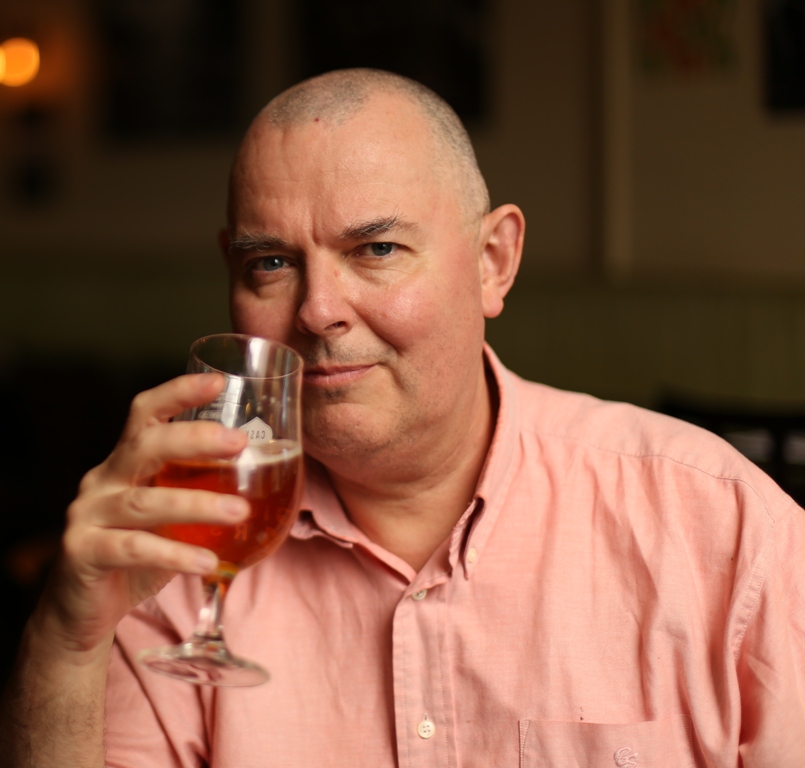
Des de Moor
Best travel writing 2011: Budweiser Budvar John White Travel Bursary -- British Guild of Beer Writers Awards
"A necessity if you're a beer geek travelling to London town" - Beer Advocate
"Essential reading if you are to use your pub time wisely" - Jeff Evans
"Very authoritative" - Tim Webb.
"One of the top beer writers in the UK" - Mark Dredge.
"A beer guru" - Popbitch.

Ads


Green Flash Trippel

Green Flash Trippel Ale

Trippel Ale

ABV: 9.7%
Origin: Vista, California, USA
Website: www.greenflashbrew.com

Created to mark the brewery’s third anniversary in 2005, the curiously spelt Trippel has the traditional looking ingredients list of a Belgian abbey beer, with added sugar, Styrian Goldings and Czech Žatec hops and Trappist yeast, but nonetheless ends up with a contemporary Californian flourish.

This golden beer has a relatively low and fine creamy white head, with notes of honey, sugar, spices and faint fruit on the aroma. A firm honeyed palate has spicy ginger notes and with a definite note of hops, though at only 24 IBU. The beer stays smooth with spirit tones and a faint yeasty pear and detergent note.

The finish is gently bittering and honeyed, lingering with grassy and rooty hop tones. Overall this is a complex and interesting beer that delivers plenty for its high ABV with considerable delicacy as well as vividness of flavour, like a good Belgian with the colour turned up.

The beer helped build Green Flash’s reputation as an accomplished producer of Belgian-inspired styles – you can read more about the brewery in my review of Le Freak. My sample was from a 650ml (22oz) bomber bottle bought at Whole Foods Market in San Diego’s Hillcrest in October 2012.

Ballast Point Black Marlin Porter

Ballast Point Black Marlin Porter

Black Marlin

ABV: 6%
Origin: San Diego, California, USA
Website: www.ballastpoint.com

Underlining the vital link between commercial craft brewing and homebrewing around which the vibrant beer culture of San Diego flourishes, the Ballast Point brewery actually began in a homebrewing supplies shop. Opened in 1992, Jack White’s Home Brew Mart had been inspiring potential future craft brewers for four years when its owner got together with a regular customer, Yuseff Cherney, to create Ballast Point as a commercial brewery inside the shop, named for a small peninsula in San Diego Bay that’s now part of a naval base.

The brewery flourished, expanding in 2004 to its own site on the edge of the countryside area of Scripps Ranch to the north of the city, and now also includes San Diego’s only craft distillery making gin, rum and vodka. Reflecting Yuseff’s other passion, fishing, and the coastal location, the regular beers all take the names of fish species.

Ballast Point beers don’t shout quite as loudly as those of some of their neighbours. Though the brewery has produced its share of barrel aged and unusually flavoured specials, its mainstays are expertly made, well flavoured but balanced and approachable beers in everyday styles like pale ale, amber ale and wheat beer.

Ballast Point’s perfectly poised porter, Black Marlin, is a case in point, seamlessly integrating dark malt flavours with the fruity signature of US hops while keeping a relatively hefty 45 IBUs of bitterness under control. This black beer with a dense and foamy yellow-beige head has a rich aroma of chocolate, coffee and sticky brown malt, with only a light roastiness for the style.

The palate is sweetish but very complex, developing notes of plummy and citric fruit, herbal hop character and chocolate over a slightly cakey malt base. Roast malts make themselves known in a long and coffeeish finish with an emerging hop burr leading to a final powdery dryness.

My notes are based on a sample at the Great American Beer Festival in 2010.

Alpine Pure Hoppiness

Alpine Pure Hoppiness.

Pure Hoppiness.

ABV: 8%
Origin: Alpine, California, USA
Website: alpinebrewing.com

When you think about it, “Pure Hoppiness” is such an obvious punning name for a hop-focused beer, it’s surprising someone didn’t grab it years ago. Instead, it’s fallen to a very small but high achieving craft brewery in the rural reaches of San Diego County to apply the term to one of its signature beers, an outstanding example of a West Coast double IPA.

Brewing brothers Patrick and Shawn McIlhenny, who founded Alpine in 2002, are cagey about the exact ingredients and IBUs of Pure Hoppiness, but do disclose that double the normal quantity of hops is added on the boil, with more in the hopback followed by two sessions of dry hopping, the later one with the addition of oak chips. An even hoppier companion beer, Exponential Hoppiness, has since been added, though I prefer this better balanced example.

My sample, a 65cl (22oz) bomber bottle bought from the Best Damn Beer Shop in downtown San Diego, poured a hazy warm gold with a yellow-tinged head and a very piny, slightly savoury aroma layered with tropical fruit. I detected a faint hint of diacetyl – sometimes regarded as a flaw for an IPA but in this case restrained enough not to detract from the clean fruity hop character.

Hophead beers of this kind can so easily fall into the trap of presenting an aggressive cacophony of bitter resins from the start, but the best examples reward the patient drinker by revealing their riches over successive sips, and Pure Hoppiness is no exception, unfolding a succession of layers of hoppy delights on the palate while remaining lively and cheerful.

Smooth mint toffee and pine kick things off, with firm rooty hops emerging over the support of chewy malt, and even a hint of coffee. A long, very full and bittering finish crackles with rooty, herbal hop flavours, white grapefruit and a dash of mint.

Alpine is a small town so named because it reminded a 19th century resident of Switzerland. Its eponymous brewery has given the place a new peak to admire.

AleSmith Wee Heavy Scotch Style Ale

AleSmith Wee Heavy Scotch Style Ale

Wee Heavy Scotch Style Ale

ABV: 10%
Origin: San Diego, California, USA
Website: www.alesmith.com

I first heard about the buzz around beer in San Diego from some itinerant locals who struck up a conversation with me at Belgium’s Zythos Bierfestival in 2008. They also very kindly gave me a bottle of AleSmith’s celebrated Speedway Stout, which placed one of the city’s numerous highly admired breweries firmly on my map.

Like many new US craft breweries, AleSmith – in the northern suburbs of San Diego not far from the US Marine Corps air station at Miramar – is firmly rooted in the homebrewing movement. Founded by home brewers Skip Virgilio and Ted Newcomb in 1995, it was bought out in 2002 by another home brewer, Peter Zien, also an experienced beer judge, though brewer Tod Fitzsimmons, who has been there almost since the beginning, remains a major influence on the products. The preference is for strongish beers in big, smart bottles that are especially bold and distinctive even by southern Californian standards.

Wee Heavy, originally named J P Gray’s Wee Heavy after co-founder Skip Virgilio’s grandfather, was a relatively early American craft foray into the 90/- style of strong Scottish ale that is now all too rare in its homeland. It’s since become recognised as something of a benchmark, with several awards to its credit.

The beer derives colour and character from dark roasted malt, pouring a rich deep ruby brown with a fine yellowish head. A smooth, winy, slightly woody and chocolatey aroma has notes of rich raisin-tinged malt.

The palate is also full, smooth, rich and winy, but notably dry, balanced by roasted malt, more woodiness and generous hops lending bitter herb and fruit notes. A long and warming finish has bitter herbs, chocolate, a burr of roast malt and tannic cherry-inflected wood. Overall it’s an outstanding example of how US craft brewers have reinterpreted endangered European styles with flair.

My notes are based on a 750ml bottle from City Beer in San Francisco.

Top Tastings 2012

Your author sampling the wares at the Borefts Bierfestival, Bodegraven, Netherlands, September 2012. Pic: Stephen Robinson.

Your author sampling the wares at the Borefts Bierfestival, Bodegraven, Netherlands, September 2012. Pic: Stephen Robinson.

2012 was another great year for tasting beer. Britain’s brewers got ever more eclectic and adventurous, and London’s share of good breweries and top venues multiplied apace. The developing Belgian scene was well reflected in the newly expanded Zythos Bierfestival. My first visit to the Borefts festival at De Molen in the Netherlands amply satisfied my geekiest cravings, while trips to San Diego and to San Francisco again yielded more delight from the ever-growing Californian scene, including some fine new session beers. I also took the opportunity to return to some well loved classics.

For the fifth year running, I’ve tried to whittle the many hundreds of beers I sampled during 2012 down to 30 examples that between them best demonstrate why liquids fermented from cereals are worthy of my and your time, energy and enthusiasm. It’s difficult to say whether they’re the absolute best of the year, but they’re ones that particularly stuck in my mind, and together provide a broad palette of styles and taste sensations, with a limit of one beer per brewer.

Compiling this list never gets any easier, so for the second time I’ve resorted to appending some additional honourable mentions. Both lists are in alphabetical order, with no further ranking intended, and the clickable links will take you to detailed tasting notes and background information.

Honourable mentions: 3 Fonteinen Faro, New Millennium, Augustiner Maximator, Beeston Norfolk Black, Borgo L’Equilibrista, Clarence & Fredericks Best Bitter, Driftwood Spars Alfie’s Revenge, Ducato The Masochist, Durham White Stout, Evil Twin/ Fanø Hey Zeus!, Faust Auswandererbier 1849, Firestone Walker Walker’s Reserve, Heretic Shallow Grave , Jandrain-Jendrenouille VI Wheat, Kernel Export India Bramling Cross, Lion à Plume/Bastogne Pastiche, Logsdon Seizoen Bretta, Lover BeerBera, Magic Rock Bearded Lady Bourbon Barrel, Molen Bommen & Granaten Cascade BA, Nethergate Nicholson’s Lamplighter, Plain Incognito Port Stout, Port/Lost Abbey Red Poppy Ale, Ranke Saison de Dottignies, Redwillow Soulless, Seef/Roman Antwerpse Seef Bier, Senne Zinnebir, Tap East 3 Shades of Black: The barrel-aged, Williams Brothers Nollaig, Worthington Czar’s P2 .

Weihenstaphaner Vitus

Weihenstephaner Vitus

Weihenstephaner Vitus

ABV: 7.7%
Origin: Freising, Bayern, Germany
Website: www.weihenstephaner.de

My 2012 top tastings feature not just the brewery that claims to be Britain’s oldest (Shepherd Neame), but the one that claims to be the world’s oldest too. Weihenstephan, or ‘Holy Stephen’, began brewing as a Benedictine monastery in Freising in Upper Bavaria, now part of the metropolitan area of München. The brewery’s quoted of founding date of 1040 is that of the first known brewing license, though the monks may have been making beer before that.

In 1803 the monastery was secularised by Napoleon but brewing continued on the site under the auspices of the State of Bavaria. Since 1923, it’s operated simultaneously as a working commercial brewery and one of the world’s leading brewing schools, run in partnership with the Technische Universität München.

Though it also brews lagers, Weihenstephan is arguably most famous for its wheat beers, and Vitus, added to the range as recently as 2007, is its big, beefy Weizenbock. Named after a 4th century martyred saint, it tastes appropriately like a decent everyday Bavarian wheat beer racked up several notches in strength and impact.

The beer is a delicate yellow with a massive white head and a complex aroma with plenty of tempting cereal, clove, bubblegum and light creamy hops. The palate is reminiscent of a clove spiced apple crumble dished up with custard, with candyfloss notes, a beautifully rich and fluffy mouthfeel and notable hop bitterness for the style. Similar flavours play on a mouth coating and long lasting finish, with complex fruit, chewy hops and more custard and vanilla spice.

My bottle came from a selection of spares left after judging 2012’s World Beer Awards – where the beer ultimately won World’s Best Wheat Beer, having scooped World’s Best Beer overall the previous year.

Schneider Tap X Mein Nelson Sauvin

Schneider Weisse Tap X Mein Nelson Sauvin.

Weisse Tap X Mein Nelson Sauvin.

ABV: 7.3%
Origin: Kelheim, Bayern, Germany
Website: www.schneider-weisse.de

Of all the great European brewing industries, Germany’s seems the most conservative, complacent and insulated from international trends. Many of the country’s vast numbers of brewers still seem to think no further than their immediate distribution area, whether that’s a region or a village, with little recognition that the world at large is interested in their traditional beers, let alone that brewers beyond that area might have the occasional good new idea from time to time.

In an era where brewing is becoming increasingly globalised, and polarised between an innovative and dynamic craft sector on the one hand and a blanded out, marketing driven mainstream dominated by aggressive multinationals on the other, it’s an attitude that doesn’t bode well for Germany’s much-prized focus on quality.

Thankfully there are some shining examples of German brewers who’ve, so to speak, woken up and smelt the hops, and one of them is Schneider in Kelheim – possibly the most revered producer of traditional Bavarian weissbier.

The brewery hasn’t messed with any of its textbook brews, but it’s responded to interest in export markets by stretching the boundaries of the style with a series of occasional specials, devised by head brewer Peter Drexler and chief executive Georg Schneider VI. All Schneider’s regular brews are now giving “tap” numbers – for example its legendary dark Weissbock Aventinus is designated Tap 6 – and the new beers are pegged as Tap X.

The first experiment was prompted by a request from ABT (Alliantie van Bier Tapperijen), the Dutch association of specialist beer pubs, for a special to celebrate its 25th anniversary in 2011. Far sightedly, the brewery focused on hops, creating a fine strong golden wheat beer which, remarkably for Germany, featured the New Zealand varieté du jour, Nelson Sauvin.

Tap X Mein Nelson Sauvin was a great success not only in ABT pubs but in the US and other export markets – and, interestingly, at home in Germany too. “Public taste has noticeably evolved,” observed Georg. So the beer made a return appearance in 2012, and I wouldn’t be surprised to see it again before long.

The use of an exotic hop has enabled the production of an innovative beer that still complies with traditional purity requirements, otherwise sticking to a grist of barley and wheat malt. One other unusual (and international) touch, though, is the use of a second yeast from Belgium for bottle conditioning.

I bought my elegant 750ml bottle of the 2012 version, number 7843, from Utobeer in Borough Market. It poured a deep and cloudy yellow with a typical thick and creamy wheat beer head. The aroma, though, wasn’t typical – although subtle, the grape and spice character of the hop was evident alongside a slightly tannic note and the more accustomed Weissbier whiffs of cream and banana.

A very intriguing creamy, spicy and fruity palate had more grape notes – muscat rather than sauvignon blanc – and spicy tangerine flavours. The apple, apricot and grape finish had building bitter notes, with more hop bitterness than is usual in the style, finishing with plenty of creamy cereal and seedy, spicy tones.

It’s not only an excellent beer, but a fine example of how a great historic brewery with deeply rooted traditions can respond to those evolving tastes without chucking out what made it great in the first place.

For a brief note on the history of the brewery see my 2007 review of Schneider Weisse.

Tempest Brave New World

Tempest Brave New World

Brave New World

ABV: 7.8%
Origin: Kelso, Scottish Borders, Scotland
Website: www.tempestbrewingco.com

In May 2012 I hosted an IPA tasting downstairs at Mason & Taylor in Shoreditch – one of my favourite new craft beer bars in London until BrewDog made them an offer they couldn’t refuse. Manager Steve Taylor recommended including this example, from a great new brewery in the Scottish Borders.

Historically Scotland is associated in most people’s minds with sweet beers employing relatively little hops, but in the 19th century the country was a major producer of India Pale Ales, with Edinburgh in particular once exporting at least as much to the subcontinent as Burton upon Trent.

Tempest was opened in 2010 by former chef Gavin Meiklejohn, a Scot with an international perspective from working in New Zeland and at the Whistler brewery in British Columbia. Returning to Scotland, he ran the Cobbles Inn in Kelso before getting his own brewery together with Allan Rice, formerly of the Stewart brewery in the capital.

Brave New World signals its contemporary transatlantic inspirations in its name, and includes New Zealand and US hops in its recipe. It pours a hazy warm amber with a thick yellowish head. The aroma is packed with fruit – grapes, figs, mangoes, apricots – but smoothed by the underlying grain.

The palate has a firm underpinning of digestive biscuit and toast with a slightly sticky residual sweetness, a platform for fruity swathes of strawberry and mango and a touch of menthol toffee. A dark and biting finish reminded me of burnt apricot tart, with those notes of menthol returning alongside lettuce bitterness.

It’s a long stretch from the high industry of Victorian Edinburgh to an artisanal setup in the small town of Kelso, but I’d hazard that, well resourced Aberdonian punks notwithstanding, this is currently the best example of the style brewed in Scotland.

Societe The Butcher, the Harlot and The Pupil

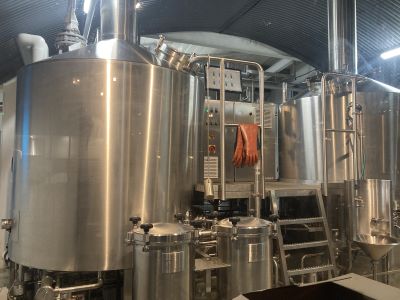
Beers and brewhouse at Societe Brewing, San Diego CA.

Beers and brewhouse at Brewing, San Diego CA.

(The Pupil)

ABV: 9.8%, 6% and 7.7%
Origin: San Diego, California, USA
Website: www.societebrewing.com

San Diego, a naval and university city in California’s far southwestern corner, is also a top craft beer producer, boasting heavy hitters like , Port and Stone in the immediate vicinity. But there’s clearly still room for more, particularly when they’re as fresh and vibrant as Societe, with its smart new brewhouse and taproom among malls and light industry in Kearny Mesa, just off a freeway in the northwest of the city.

Societe – it’s tempting to pronounce it French-style but apparently you just say “society” – was set up in 2011 by Travis Smith and Doug Constantiner, who got together while both working at the Bruery in Placentia, though Travis gained previous brewing credentials at Russian River.

The range of styles is no longer any great surprise in Californian brewing – modern hoppy pale ales on the one hand, big Belgian-inspired monsters on the other. A collection of refill oak casks is already stacking up beside the cylindroconicals. But the considerable subtlety and deftness of touch with which those styles are executed marks Societe out as one to watch. So do the slightly puzzling names with their obligatory definite articles, which make any list of their beers read like the title of something on the Booker Prize shortlist.

Welcome to Societe.

Welcome to Societe.

There are a few surprises too. Reflecting the growing interest among US craft brewers in more everyday beers, The Harlot was inspired by Westmalle Extra, brewed at the West Flemish Trappist brewery for the monks’ own consumption though occasionally bottled and sold commercially. I’m not sure if there’s any satirical intent in giving a monastic-inspired brew such a provocative name, but it might raise an eyebrow among the Fathers.

At 6% the beer is still rather pumped up from the 4.8% of its inspiration, but it shares the latter’s subtlety and easy drinking character. It’s a golden beer with a fine white head and a light coriander accent to a spicy, flowery, creamy and very authentic aroma, with notes of waxy honey and spice.

A smooth lemony palate has grass, spiced orange, roses and violets, with light and gentle but fresh hops taking over in the finish. There’s perhaps just a little too much sweetness to make it truly refreshing but it’s a decent brew nonetheless.

More typically immense and Californian, though reassuringly well-integrated, is The Butcher, a serious dark mahogany beer with a lacey brown head staining the glass yellow. There are already some autolysed gravy notes in a dark, intense and ashy aroma, with an emphasis on roasted grain yielding little fruit.

The huge and slightly phenolic palate has cocoa syrup, roast and tingling hops with an emerging fresh tropical fruit touch, dominated by coffee flavours. The finish is warmly alcoholic but stays smooth, with piny rooty hop resins on the tongue, hints of mature cheese around the edges, and thick cocoa bubbling like larva all over. Grapes and tropical fruit make a late reappearance.

Tasteful decoration at Societe, San Diego, CA. Pic: Sally Monster. Used under license.

Tasteful decoration at Societe, San Diego, CA. Pic: Sally Monster. Used under license.

There are several pale ales that share an approach to hopping favouring aroma and fruitiness over too much bitterness, and all those I tried were cheerful and interesting. Two IPAs were on offer when I called – The Apprentice and its milder counterpart The Pupil. And while I rated both highly, the latter was just my favourite.

It’s a hazy light yellow beer with a fine white head and an alluring tropical fruit aroma – New Zealand Nelson Sauvin is used alongside Citra and other US hops. Freshly squeezed lime also reached my nostrils, alongside a light note of fried egg protein.

That slight but not distracting egginess persisted in a full palate with clean citrus and lychee flavours, and inevitably some bitterness too, but staying rounded and fresh. The finish was squeaky clean and lingering, finally gently warming with a note of pepper and fruit – impressively easy going for such a hoppy beer.

I’m grateful to local expert and beer tour organiser Bill Snider of Ciao Travel who happily made Societe the first call of an evening’s whistle stop San Diego pub crawl.

Ska Steel Toe Working Class Milk Stout

Ska Steel Toe Working Class Milk Stout

Steel Toe Working Class Milk Stout

ABV: 5.4%
Origin: Durango, Colorado, USA
Website: www.skabrewing.com

With my soft spot for the smarter and sharper side of mid-1960s music and fashion and its later revivalist derivatives, I was intrigued to find a Colorado craft brewery calling itself Ska and borrowing its imagery unashamedly from the design vocabulary of 2-Tone Records.

In the cartoon art on their website, former home brewers Bill Graham, Dave Thibodeau and Matt Vincent, who founded Ska in 1995, appear in the standard issue US craft brewers’ uniform of T-shirts, baggy shorts and baseball caps. So I’m not quite sure how they’ve come to reference a largely working class youth culture movement from the English West Midlands in the late 1970s, which itself drew on an even more proletarian youth cult of the previous decade with a somewhat violent reputation.

Still, the graphics look great, the humour engaging, and the product is unquestionably excellent. I’d had several Ska beers before, but Steel Toe, which I bought in a bottle from the pioneering craft beer list at a branch of London independent gourmet burger bar chain Byron, was the first one that moved me to write about it.

It’s particularly interesting as an example of a revival of a threatened style, milk stout, which uses lactose, an unfermentable sugar derived from milk, to add sweetness and texture to the finished beer. Ska’s beautifully balanced example is a near-black beer with a ruby tinge and a creamy, light beige head.

The aroma is dark, malty and sweetish, with a creamy and very toothsome palate, sweet and slightly treacly but dried by roast notes, and revealing deeper layers of ripe fruit, toffee apple, leather and moist cake. A soft swallow leads to a tasty lightly drying finish with rounded, burry hops and a hint of ashy roast.

You have to raise your eyebrow at the name – skinheads shod in steel toed Doctor Martens would surely have regarded milk stout as the sort of drink their grannies liked.