A sample text widget
Etiam pulvinar consectetur dolor sed malesuada. Ut convallis
euismod dolor nec pretium. Nunc ut tristique massa.
Nam sodales mi vitae dolor ullamcorper et vulputate enim accumsan.
Morbi orci magna, tincidunt vitae molestie nec, molestie at mi. Nulla nulla lorem,
suscipit in posuere in, interdum non magna.
|
First published in BEER April 2007 as part of a piece featuring German wheat beers available in UK supermarkets. For more wheat beers see previous post.
ABV: 5.4 per cent
Origin: Kelheim, Bayern, Germany
Website: www.schneider-weisse.de
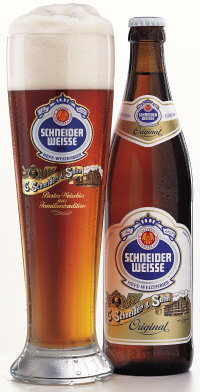 Schneider Weisse Original Georg Schneider was licensed by the Bavarian royals to brew wheat beer at court in 1855, and in 1872 he bought a second brewery at Kelheim, itself dating back to the 1600s and now claimed as the oldest surviving wheat beer brewery in the world.
When the family’s Munich plant was bombed by the Allies in 1944, they abandoned brewing the Bavarian capital and concentrated production in Kelheim, though retained their big pub in Tal.
Still in family ownership, Schneider is widely recognised as a world-class benchmark of Bavarian wheat beer brewing, particularly renowned for its unique strong, dark interpretation, Aventinus. But its standard brew is also very fine indeed.
Schneider’s brownish-amber shade is as dark as some of its competitors’ dunkels, and its sharpish fruity aroma lightly perfumed with vanilla tones is inviting. The palate is highly conditioned with lots of apple toffee and citric fruit, a hint of clove, pleasant acidity and a varnish-like estery note.
A tangy and nicely drying finish has a restrained hop wash, some late banana and a hint of roast. What a delight to be able to pick such a complex but refreshing beer off a supermarket shelf.
Read more about this beer at ratebeer.com: http://www.ratebeer.com/beer/schneider-weisse-original/1762/
Originally published in BEER April 2007 as part of a piece about German wheat beers available from British supermarkets.
ABV: 5.3 per cent
Origin: Erding, Bayern, Germany
Website: www.erdinger.de
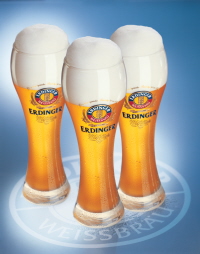 Erdinger Weissbier mit feine Hefe I can think of few beer styles more suitable for springtime drinking than pale unfiltered wheat beer, with its citric and phenolic flavours and cheerful yellow and orange colours. And thankfully the use of wheat in brewing has enjoyed a revival in recent years thanks in part to the successful resurrection of the spiced Belgian style typified by Hoegaarden.
It’s easy to forget that only a few decades back, wheat beer brewing faced obliteration in the face of beers made entirely from more brewer-friendly barley. Only in Germany did wheat beer made conventionally with pitched yeast enjoy an unbroken 20th century, and there principally in that heartland of Germanic brewing tradition, Bavaria.
Bavarian Weißbier is one of the few great German beer styles dedicated British real ale drinkers can feel entirely comfortable with as it is both warm fermented and traditionally bottled “mit feiner Hefe” (with fine yeast), “in der Flasche gereift” (matured in the bottle) and “naturtrüb” (naturally cloudy), so qualifies as Real Ale in a Bottle.
There are also filtered (kristal), dark (dunkel), strong and even smoked malt variants. But this month I’m featuring examples from British supermarkets of the standard pale, cloudy Weißbier of around 5-5.3 per cent ABV. The cloudiness is part of the character – for best results, pour two thirds of the beer and give the bottle a good swirl before pouring the rest.
There are many hundreds of other examples, many of them excellent brews from smaller breweries – but in the UK you’ll have to hunt these down from specialist shops and beer festivals.
Erdinger, based in the town of Erding, outside Munich near the airport, is the biggest dedicated wheat beer brewer in Germany and the biggest German brewery of any kind still in private hands. Its Weißbier is exported to 70 other countries, but biggest doesn’t always mean best, and while perfectly acceptable, it’s not the most distinctive or characterful example of its style.
The beer pours orange-yellow with a good thick off-white head. It has a sharpish wheat and stewed apple aroma with oily, lanolin-like notes, but is short on the spicy, estery quality admired by devotees.
The palate is lively and refreshing with citrus and a touch of burry hops, but a little thin and rough-edged. A tangy, lightly citric finish is pleasant enough with custard cream biscuits and a bitterish hop note developing.
For more Bavarian wheat beers see next post.
Read more about this beer at ratebeer.com: http://www.ratebeer.com/beer/erdinger-weissbier-hefe-weizen/2468/
First published in BEER April 2007 as part of a piece featuring German wheat beers available from UK supermarkets. For more wheat beers see previous post.
ABV: 5 per cent
Origin: München, Bayern, Germany
Website www.franziskaner.com
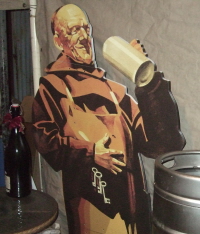 Spaten-Lowenbräu Franziskaner standee at Bierkraft, Brookyln NY Spaten – one of the six big names represented at Munich’s Oktoberfest – is also one of most historic of the world’s beer producers. Like many German breweries it traces its history back to mediaeval times but its modern history begins in 1807 when the royal brewmaster, Gabriel Sedlmayr, took over what was then the smallest brewery in the city.
Sedlmayr’s descendants played a leading role in developing pale lager styles and Festbier but they also owned a wheat beer brewery near the Residenz, named Franziskaner due to its proximity to an old Franciscan friary. In the 20th century the various interests were merged into a single brewery.
Recently the company, now further merged with fellow Oktoberfest contributor Löwenbräu, has come under the control of InBev, but its flagship wheat beer remains for the moment a tasty enough brew, using a higher wheat content than many of its competitors.
The beer is a deep rich amber with a very full banana aroma and a touch of bubblegum and spice. Orange and clove notes enliven a banana-sweet palate with a restrained touch of citrus, resiny hops and a hint of dry chocolate.
A fluffy swallow leads to a bitterish finish with grassy hops and more dark chocolate hints. It’s an easy drinking but characterful beer that’s a good introduction to the style.
For more German wheat beers, see next post.
Read more about this beer at ratebeer.com: http://www.ratebeer.com/beer/franziskaner-hefe-weissbier/1088/
First published in BEER April 2007 as part of a piece featuring German wheat beers available in UK supermarkets. For more wheat beers see previous post.
ABV: 5.3 per cent
Origin: Moos, Bayern, Germany
Website: www.arcobraeu.de
 Arcobräu Weissbier Hell 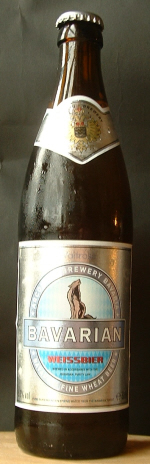 Arcobräu Waitrose Bavarian Weissbier Waitrose has been treating its customers to this own-brand Weißbier for some years, and a recent label redesign has revealed its source as Arcobräu of Moos, formerly the castle brewery of a local duke and still owned by the same family, who added wheat beer to their portfolio in 1826.
This thickly cloudy example has a good estery aroma, with typical vanilla, clove and banana scents. There’s more banana and a distinctive subtle strawberry note on a chewy, wheaty palate.
A squeeze of lemon and faint fennel seeds lift a sweetish, fresh finish, with more soft strawberries. Overall this is a characterful example and more impressive than its own-brand status might suggest.
For more German wheat beers see next post.
Read more about this beer at ratebeer.com: http://www.ratebeer.com/beer/arcobrau-weissbier-hell/16254/
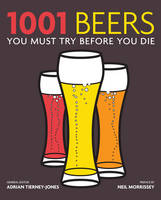 Adrian Tierney-Jones, ed, 1001 Beers You Must Try Before You Die Discerning beer drinkers turning to the bookstore for advice on what to try next currently face an unprecedented choice, with beer writers and publishers queueing up to provide definitive lists of international beers. 3 May sees the British publication of doorstop-sized tome 1001 Beers You Must Try Before You Die, edited by Adrian Tierney-Jones, the latest in a wave of such exercises in zythological canon-forming. The handsome World’s Best Beers, mainly penned by dynamic drinks writer Ben McFarland, appeared last Autumn, while another award-winning writer, Zak Avery, revealed his 500 Beers in March. Meanwhile the pioneer example of the genre, 300 Beers to Try Before You Die! by veteran beer writer Roger Protz, was revised and updated in February.
This last comes from CAMRA Books, one of the leading specialists in the field, but the others are all from mainstream publishers. Ben’s and Zak’s books come from well-respected independent “lifestyle” publishers: Aurum and Apple respectively. I declare an interest in Adrian’s book as I’m one of the less prominent of a starry cast of contributors, but it’s arguably the most significant in publishing terms, standing alongside sister volumes on wines, books, films and places to visit in the popular 1001 Before You Die series from international group Quarto Publishing.
 Roger Protz, 300 Beers to Try Before You Die! These books document a changing landscape. 15 years ago, nearly all the must-read volumes for British beer lovers came from CAMRA Books, which, despite their strengths, would always be perceived as for a specialist, and not particularly trend-setting, audience. The new books represent a far more general pitch from “lifestyle” publishers who clearly now believe there is an opportunity to position the appreciation of good beer alongside the enjoyment of all the other good things in life. They’re targeted squarely at the kind of educated, discerning and eclectic consumer beer writers have long dreamed of cultivating, with a generally broad and unprejudiced selection that even occasionally widens to post-modern irony to embrace iconic industrial beers — 1001 Beers, for example, includes Pabst Blue Ribbon. Whether or not such consumers yet exist in sustainable numbers remains to be seen, but publishers like these don’t invest in big and colourful books just for the love of it.
The chief exceptions to the CAMRA monopoly back in the day were the books of the great Michael Jackson, who took a genuinely international approach to beer appreciation, unhindered by ideological commitment to live yeast. When I first developed a serious interest in beer in the 1990s, Michael’s diminuitive Pocket Beer Book (last published in 2000 by Mitchell Beazley) was a key source that I combed for recommendations for my own wants list. The book was particularly strong on the traditional European brewing countries of the UK, Belgium and Germany, but among Michael’s many other achievements was raising awareness in Europe of the new and vibrant craft beer culture emerging on the other side of the Atlantic. Still, you get the impression that the US breweries he featured were based less on selecting the best of the whole country and more on the places he’d managed to visit — not surprisingly for one man confronted by such a vast territory.
This too has changed, with the development of a well-connected international community of beer critics, industry figures and superfans able to give a more comprehensive appreciation of the world’s brewing scene and to evolve at least some sort of consensus about its most outstanding and representative products. The vehicle for this has, of course, been the internet — tellingly, the list of 1001 Beers‘s 43 contributors includes many names familiar from blogs and other online beer sites. And given the wealth of content that all these people obligingly make available for free online, it’s reassuring that there still appears to be a demand for substantial and authoritative books of this kind.
This communication has also facilitated much international cross-fertilisation of both brewing practice and beer appreciation, and the books mark a clear shift in the dominant energy source from the Old World to the land of the free and the home of the brave. Though the books originate in Britain they are also being published in the US and the publishers will have one eye on flattering that market (for 1001 Beers I was briefed to use American terminology and spellings), but there’s no denying the innovation, imagination and quality of US craft brewers revealed in page after page devoted to fascinating American beers. Perhaps more significantly, it’s also clear that if you’re working to establish a new brewing scene in a country that either lacks a native tradition or has had that tradition obliterated, you’re no longer likely to look first to Britain, Belgium or Germany directly for inspiration, and if you appropriate their styles it’s in a form mutated by the energy and capacity for imaginative reinvention of US craft brewers.
 Ben McFarland, World's Best Beers An excellent example of this is Italy. For its 2000 edition, Michael Jackson expanded the country’s coverage in his Pocket Beer Book to four pages, noting besides old established industrial brewers based on Germanic models the emergence of a handful of intriguing and eccentric new micros such as Baladin and Birrificio Italiano. Today, Ben McFarland includes a substantial chapter on Italian brewing, stating that “of all the up-and-coming brewing nations, Italy is the one to watch,” while Adrian Tierney-Jones’ book references over 25 Italian brewers. Their shared ethos has much to do with specifically Italian factors such as the traditional indigineous appreciation of la dolce vita and recent trends such as Slow Food, but it’s difficult to imagine the hugely exciting range of beers they produce would have emerged in quite the same way without the American example of iconoclasm, experimentation and “extreme beer”.
 Zak Avery, 500 Beers So are the books themselves as essential as the beers they feature? The first edition of Roger Protz’s 300 Beers established a precedent for choosing from a diverse palette and was refreshingly free of CAMRA yeast purism (which, to be fair, rarely troubles CAMRA books other than the Good Beer Guide). Its new incarnation keeps the same design and much the same selection, which is now starting to look rather traditional. Ben McFarland’s is a beautifully designed and presented large format volume taking a country-by-country approach, and gifted with its author’s distinctive, perceptive, inventive and always entertaining if occasionally overwritten prose, which hits such an infectiously celebratory note I can forgive its occasional minor factual errors. Ben has wisely deferred to guest writers when covering particular areas or topics where his expertise would be stretched, so you can also enjoy informed comment from the likes of Canadian Stephen Beaumont and beer and seafood recipes from Rick Stein. Zak Avery’s guide is more modestly proportioned and neatly arranged by style with clever “at-a-glance” assessments of colour and body, though some beers have been forced rather uncomfortably in their categories for the sake of format. The book has a more personal feel, but as the manager of one of Britain’s leading specialist beer shops, Zak is well-placed to make an informed and comprehensive selection.
If you’re like me you’ll want all these books, but if I had to choose just one, I genuinely believe, setting my personal interest aside, that I’d pick 1001 Beers. As a collaborative work, it takes best advantage of that international consensus I referred to earlier, offering a variety of voices and even bringing in writers from non-Anglophone countries who write fluently in English, resulting in an authoritative survey of the current world beer scene. It offers a mouthwatering list which Adrian has chosen to order in a few very broad colour categories, and each beer is profiled by a writer specifically picked for his or her familiarity with it. And there’s something appealing about the 1001 Before You Die format which immediately tempts you to reach for the ticking pencil.
One flaw of all these books is their tacit collusion in the fallacy that canon forming with beers operates under the same conditions as canon forming with the products of the creative industries. Films, books, paintings and albums are relatively fixed entities and where there are variant texts of a work the differences are usually clear. Beer, on the other hand, is a perishable, living product, made using a complex process from a variety of ingredients. Even two casks or bottles from the same batch will change in flavour due to age or conditions of storage and dispense, and while brewers generally aim for as much consistency as possible within the limitations of the brewing process, there are good and not so good reasons for deliberately changing recipes, brewing kit and processes. So there’s no guarantee that the beer you try will taste exactly the same as the sample on which the writer based his or her writeup. This by no means invalidates the exercise — beer’s mutability is part of its charm — but it surely at least requires acknowledgement.
Finally, I’m glad to note that a good proportion of the beers listed in these books still haven’t been ticked off or in many cases yet added to my personal wants list. Another reason to keep living as long as possible!
Buy the books from amazon.com:
Selected reviews
Below are listed all the beers I’ve reviewed for 1000 Beers. Some of the reviews were cut for length in the book, so with the publishers’ permission I’ve included the full length versions here.
- Achel 8 Blond 8% Hamont-Achel, Limburg, Vlaanderen
- Achouffe N’Ice Chouffe 10% Achouffe, Luxembourg, Wallonie
- Bocq Corsendonk Agnus Tripel 7.5% Purnode, Namur, Wallonie
- Bocq Gauloise Blonde 6.3% Purnode, Namur, Wallonie
- Duvel-Moortgat Maredsous Brune 8% Breendonk, Vlaams-Brabant, Vlaanderen
- Hertog Jan Grand Prestige 10% Arcen, Limburg, Netherlands
- Italiano Amber Shock 7%, Lurago Marinone, Lombardia, Italy
- Rabourdin Bière de Brie Ambrée 7.5% Courpalay, Seine-et-Marne, France
- Rulles Blonde 7% Rulles, Luxembourg, Wallonie
- Slaghmuylder Witkap Pater Dubbel 7% Ninove, Oost-Vlaanderen (full version)
- St Christoffel Christoffel Bok 6.5% Roermond, Limburg, Netherlands (full version)
- Van Steenberge Gulden Draak 10.5% Ertvelde, Oost-Vlaanderen (full version)
- Van Steenberge Monk’s Cafe Flemish Sour Ale 5.5% Ertvelde, Oost-Vlaanderen
- Vapeur Saison de Pipaix 6% Pipaix, Hainaut, Wallonie (full version)
A shortened version of this piece appears in the book 1001 Beers You Must Try Before You Die (May 2010).
ABV: 6.5%
Origin: Roermond, Limburg, Netherlands
Website: www.christoffelbier.nl
First brewed: 2005
Serving temperature: 8-10°C
 Christoffel Bok reclame Dutch autumn bokbier must be one of the most underpublicized beer styles outside its home country: world beer surveys often don’t mention it all, or treat it as a footnote to German Bock, with which it does indeed share a common history. Yet it’s really a style in its own right, and in the Netherlands it holds a special place at the heart of the craft beer revival. Back in the early 1980s when pale lager from Heineken and other big brewers completely dominated the country’s beer scene, the few remaining strong, dark specialities which had been brewed as winter warmers since the late 19th century became the principal cause célèbre for a new beer consumers’ organisation, PINT, set up on the model of Britain’s CAMRA.
That movement also spawned a new generation of innovative microbreweries, of which one of the most respected internationally is St Christoffel at Roermond in the southeastern province of Limburg, a southern peninsula of the Netherlands thrust between Belgium and Germany, where brewing traditions have always been strong. Set up in 1986 by Leo Brand, member of an old-established Dutch brewing family, and dedicated to brewing unfiltered quality lager in compliance with the German Reinheitsgebot, it’s been owned since 2001 by advertising executive (and near-teetotaller) Jeroen Hillenaar.
For years Christoffel’s range lacked a seasonal bokbier, effectively excluding itself from PINT’s flagship annual event, the Bokbierfestival in Amsterdam in late October, which to this day, and not without controversy, is open only to brews that fit a strict definition of the style. Finally in 2005 the brewery unveiled a cold-fermented interpretation of this fascinating and historic style which has since been joined by a stronger bottled Winterbock. The wait was worthwhile, as, true to the brewery’s reputation, the beer turned out to be one of the best, most recently winning top prize in its class in 2008.
Tasting notes
Clear, deep red-amber beer with a big bubbly foam head and balsamic traces on a light aroma. A very approachable beer for the style, with a notably dry, malty and nutty palate with emerging hops and burnt malt on a dangerously moreish finish.
Buy the book from amazon.co.uk
Read more about this beer at ratebeer.com: http://www.ratebeer.com/beer/christoffel-bock/52107/
A shortened version of this piece appears in the book 1001 Beers You Must Try Before You Die (May 2010).
ABV: 6%
Origin: Pipaix, Hainaut, Wallonie
Website: www.vapeur.com
First brewed: 1785
Serving temperature: 8-10°C
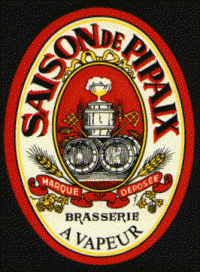 Vapeur Saison de Pipaix “Born in 1785 with the brewery”, says the publicity for this idiosyncratic speciality, though in truth its history over the two-and-a-bit centuries since has not been uninterrupted. The brewery in question is in the centre of the village of Pipaix, deep in the Wallonian brewing heartland in the west of the province of Hainaut, not far from the French border, also home to the rather bigger Dubuisson of Bush/Scaldis fame. Originally a farmhouse operation, it was expanded in the early 19th century into a typical small industrial brewery of the period and flourished into the postwar period under the name of its owning families Biset-Cuvelier. But it finally fell victim to post-war changes in the industry that saw the big brewing groups rise on a tide of fizzy lager, drowning many smaller concerns. By 1984 it was derelict and up for sale.
Enter local teacher and beer fanatic Jean-Louis Dits, who’d nurtured a dream of brewing since a student visit to nearby Dupont. He bought the brewery and with his then wife Sittelle set about restoring it, renaming it “Steam Brewery” after the vintage machine that provided the motive power. Dits dug into the archives for heritage recipes, interpreting them with his own imaginative flair and redeploying long forgotten spices and flavourings. This, his signature brew, is typical, rejecting the contemporary hoppy saison model for a complex and exotic mélange infused with pepper, ginger, sweet and bitter orange peels and star anise, a reminder that past generations of Belgian brewers raided the spice cupboard even more readily than their successors. The result of this labour of love may be wayward but the world of saisons would be a much duller place without it. Call in on the last Saturday of the month and you may be able to catch it in production.
Tasting notes
An amber beer with a fluffy, bubbly white head and a toffeeish malt aroma dosed with herbal notes and invitingly dark aniseedy spicing. The distinctive sweetish slightly smoky malt palate has spice and thyme hints, with gently bittering sappy orange fruit and brown sugar on the finish.
1001 Beers You Must Try Before You Die Buy the book from amazon.co.uk
Read more about this beer at ratebeer.com: http://www.ratebeer.com/beer/saison-de-pipaix/7480/
A shortened version of this piece appears in the book 1001 Beers You Must Try Before You Die (May 2010).
ABV: 7%
Origin: Ninove, Oost Vlaanderen
Website: www.witkap.be
First brewed: 1929
Serving temperature: 8-10°C
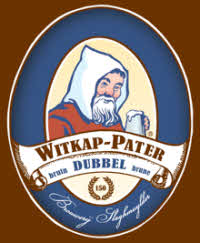 The Witkap beers are the oldest surviving examples of the abbey beer style, predating more famous brands like Leffe and Grimbergen by decades. Although unlike these two they’ve never been linked officially to any religious institution, they can claim a lineage going back to the famous Trappist brewery of Westmalle. Here their inventor, Hendrik Verlinden, self-taught author of a textbook on yeast cultivation, perfected his brewing skills before World War I. In 1916 Verlinden struck out on his own by buying the Drie Linden (Three Linden Trees) brewery, founded in 1890 at Brasschaat near Antwerp. Inspired by the products of his previous employers, he began work on developing his own Trappist-style beer. He named it Witkap, “white cap”, cleverly linking a reference to the white cowls of the Cistercian order of monks from which the Trappists developed with the luscious head of the beer itself. The Witkap beers are the oldest surviving examples of the abbey beer style, predating more famous brands like Leffe and Grimbergen by decades. Although unlike these two they’ve never been linked officially to any religious institution, they can claim a lineage going back to the famous Trappist brewery of Westmalle. Here their inventor, Hendrik Verlinden, self-taught author of a textbook on yeast cultivation, perfected his brewing skills before World War I. In 1916 Verlinden struck out on his own by buying the Drie Linden (Three Linden Trees) brewery, founded in 1890 at Brasschaat near Antwerp. Inspired by the products of his previous employers, he began work on developing his own Trappist-style beer. He named it Witkap, “white cap”, cleverly linking a reference to the white cowls of the Cistercian order of monks from which the Trappists developed with the luscious head of the beer itself.
Back then control of trademarks and appellations was in its infancy and Verlinden marketed his product as “Trappistenbier”, a dubious practice followed by many later brewers until pressure from consumers and Trappist monasteries resulted in the designation “abbey beer” for monastic-styled but secular-brewed ales in the 1980s. By then production at Brasschaat had long since dwindled and in 1979 Drie Linden contracted the brewing and bottling to Slaghmuylder, an 1860-vintage family brewery at Ninove in East Flanders which, until then, had been best known for its lagers. Two years later Slaghmuylder gained full rights to the brand and extended the range to include a double, a triple and a blond. All are unspiced ales fermented quickly at 25°C, cold matured in tanks then further conditioned in the bottle. The brewery recommends pouring the double carefully to leave the yeast in the bottle then tasting with Belgian chocolate desserts – heavenly enough for me.
Tasting notes
A dark ruby-brown beer with a rich soft fawn head and a figgy, fruity, slightly winy aroma. A powerful palate has sweet-sour fruit, cedar, fresh marmalade, tobacco, liquorice and toffee, with a long, rounded, lightly drying angelica and smoke-tinged finish.
1001 Beers You Must Try Before You Die Buy the book from amazon.co.uk
Read more about this beer at ratebeer.com: http://www.ratebeer.com/beer/witkap-pater-dubbel/5395/
ABV: 10%
Origin: Achouffe, Luxembourg, Wallonie
Website: www.achouffe.be
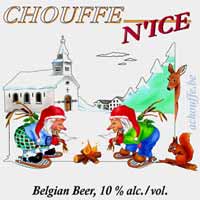 Achouffe N'Ice Chouffe 1001 Beers You Must Try Before You Die A full review of this beer is featured in the book 1001 Beers You Must Try Before You Die, published May 2010 by Cassell Illustrated.
Buy the book from amazon.co.uk
Read more about this beer at ratebeer.com: http://www.ratebeer.com/beer/nice-chouffe/1619/
ABV: 10%
Origin: Arcen, Limburg, Netherlands
Website: www.hertogjan.nl
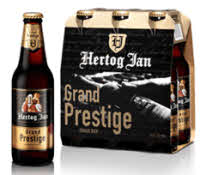 Hertog Jan Grand Prestige 1001 Beers You Must Try Before You Die A full review of this beer is featured in the book 1001 Beers You Must Try Before You Die, published May 2010 by Cassell Illustrated.
Buy the book from amazon.co.uk
Read more about this beer at ratebeer.com: http://www.ratebeer.com/beer/hertog-jan-grand-prestige/5305/
|
|


