A sample text widget
Etiam pulvinar consectetur dolor sed malesuada. Ut convallis
euismod dolor nec pretium. Nunc ut tristique massa.
Nam sodales mi vitae dolor ullamcorper et vulputate enim accumsan.
Morbi orci magna, tincidunt vitae molestie nec, molestie at mi. Nulla nulla lorem,
suscipit in posuere in, interdum non magna.
|
Top Tastings 2008. Featured in BEER February 2009 as an ale to win lager drinkers.
ABV: 4.7%
Origin: Cheddar, Somerset, England
Website: www.cheddarales.co.uk
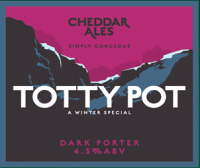 Cheddar Totty Pot Established in 2006, this small brewery near the tourist hotspot of Cheddar Gorge soon won a reputation for good quality beers, including a bottle conditioned range. Its porter, Totty Pot, was originally a seasonal cask beer but became a permanent addition to the bottled range after winning festival prizes.
Brewed from Maris Otter pale and coloured malts, malted wheat and English hops, the beer pours near-black with a thick, mid-fawn head. There’s a restrained malty aroma with a hint of iron, heralding a full but tangy palate with dark malt, cola, caramel toffee and burnt rubber. There’s a note of cough sweets and light herby hops. A sugary notes in the swallow leads to a lightly roast, rooty hoppy finish with dark cake and sultanas. Despite its dark colour the beer has a light touch which is appealing and accessible without missing out on depth of flavour.
Short review from Top Tastings 2008, originally published on facebook January 2009: A flavourful bottle conditioned porter with a hint of bloody iron in a malty aroma, a full but tangy dark malt palate with notes of cola, caramel toffee, burnt rubber, cough sweets and a dusting of herby hops, and a sugary note kicking off a lightly roast rooty-hoppy finish with dark sultana cake. Review bottle from brewer.
Read more about this beer at ratebeer.com: http://www.ratebeer.com/beer/cheddar-totty-pot/84290/
Featured as an ale to win lager drinkers in BEER February 2009.
ABV: 8.5%
Origin: Breendonk-Puurs, Antwerpen, Vlaanderen
Website: www.duvel.be
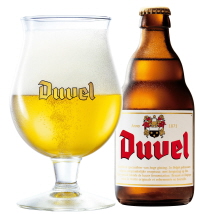 Duvel-Moortgat Duvel Rood Belgium is a rich source of golden ales often mistaken for lagers, but beers like Duvel- Moortgat Duvel, despite their delicate colour and palate, have the fruity complexity of ales. Duvel is an acknowledged world classic, celebrated in book after book of best ever beers. Originally a dark beer brewed to mark the victory over the Germans after World War I, and named after the dialect term for devil, it was lightened up in 1970 to win a new audience. The move was so successful a horde of imitators with “devilish” names has followed in its wake. Among other things, it’s still the only truly decent beer you can buy at the bar on Eurostar trains.
Made with an infusion mash of pale malts made from French and Belgian 2-row summer barleys, it’s hopped three times with Žatec and Styrian Goldings. Interestingly, it’s then, divided into batches for fermentation by two different yeasts, with both batches then reblended and cold conditioned for one month. The version with the red label is the one to go for as this is bottle conditioned and more complex; the green labelled version, also seen on draught, is filtered and more straightforward.
The result is a very pale, almost straw-like golden ale which pours with a famously thick, fine and rocky head. There’s a pleasant creamy hoppy aroma with a very light hint of pear — this estery note, which Michael Jackson identified as Poire Williams, is still there in recent tastings but as a mere smear against lemon sherbert tones. The oily but clean palate develops complex citric and twiggy notes with a hint of spiced marzipan. Following a smooth swallow, the beer dries with more complex spices in the finish, signing off with pistachio and spiced orange.
Such is the beer’s importance to the brewery’s success that a few years back they renamed themselves Duvel-Moortgat from plain old Moortgat, the name of the owning family. The beer’s sales have gone on to finance considerable expansion: with the takeovers of Achouffe, Czech brewer Bernard and the Riva-Liefmans group, the brewery has become a new Belgian national with multinational leanings, but its flagship remains a devil of a beer.
Read more about this beer at ratebeer.com: http://www.ratebeer.com/beer/duvel/1434/
The Hepworth version featured in a piece on ales with which to convert lager drinkers, first published in BEER February 2009. This version may no longer be in production.
ABV: 4.5%
Origin: Holyoke, Massachusetts, USA (original version); Horsham, West Sussex, England (licensed version)
Website: www.highandmightybeer.com, www.papercity.com
 High & Mighty Beer Company While licensing of international lager brands is all too common, a US craft beer brewed under license by a UK brewery in a bottle conditioned version is probably unprecedented. High & Mighty Beer of the Gods was planned by US beer importer Shelton Brothers as a cross between a Kölsch and an Altbier, with the original version contract brewed at Paper City brewery, Holyoke, Massachusetts. The beer was so successful the Will Shelton has since left his brother to focus on importing, and is concentrating on brewing. He’s expanded the range beyond Beer of the Gods, and while still using Paper City he’s now looking to open his own plant.
Among the British beers that Shelton imports is a range from Ridgeway, the brewing company set up by ex-Brakspear brewer Peter Scholey. This is another brewery without its own brewing kit, so most of the beers are contract breweed at Hepworth in Horsham. The connections via the US importer led, in 2008, to Scholey producing a British-brewed bottle conditioned version of Beer of the Gods at Hepworth, sold through Sainsbury’s supermarkets.
It’s easy to understand the appeal of the original. It’s a hazy pale yellow and pours with a good white head, exuding a pale malt aroma with a very Germanic hoppy scent (hops are indeed imported from Germany) and notes of lemon squash. A crisp, dry and tasty palate is hoppy but softened by honeyed notes, a squeeze of lemon and vivid spicy flavours of fennel and citrus peel. A hoppy swallow leads to a citrically bitter finish smoothed by tasty vanilla malt. It’s an unusual, but easy going and refreshing beer.
I didn’t get to taste the British-brewed version side by side with the American one, but my notes suggest this is a slighly more pungent and fuller-bodied beer, substantial but still very refreshing. It’s a delicate gold with a fine white head and a complex creamy, fruity malt and hops, with a lime citrus note dominating. There’s more citrus on a sweetish palate which dries with botanical gin-like notes, yielding crisp malt and pungent peppery hops. There’s more crisp malt along with olives on the finish, which also has fluffy hop resins and a slightly stern, flinty note.
Both beers provide easy and enjoyable refreshment for the serious beer drinker.
Read more about these beers at ratebeer.com:
http://www.ratebeer.com/beer/high-mighty-beer-of-the-gods/60738/
http://www.ratebeer.com/beer/ridgeway-paper-city-high-mighty-beer-of-the-gods/91680/
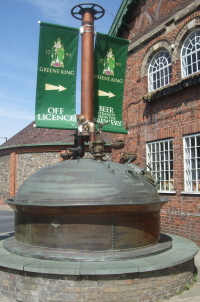 Greene King Visitor Centre entrance: disused copper Brewery visits are some beer writers’ bread and butter but I confess I’ve been on very few. Certainly, visiting Greene King, now probably the UK’s biggest brewer that isn’t a multinational, wasn’t high on my to-do list. But then I was in Bury St Edmunds, Suffolk, with a brief to develop some pub walks (of which more in a later post), with a room at the Dog and Partridge almost opposite the Westgate brewery. I could see the steam venting from the brewing vessels into a balmy June sky, spreading the sweet, slightly sickly aroma of cooking barley malt over the town’s closely packed mediaeval streets. Answering its siren call, I found myself at the brewery visitor centre as part of a small group on a Saturday morning tour conducted by the affable and very knowledgeable Henry Logan.
With its landmark site on the edge of an historic urban centre already rich in visitor attractions, Greene King is well placed to welcome interested sightseers, and has responded in some style: besides the tours there’s a museum on two floors, which perhaps overfavours information boards and dummies in period costume over hard exhibits but is well presented and informative, and an attractive and very friendly shop stocked with bottled beers and breweriana. Quite rightly both tour and exhibition assume no particular prior knowledge of beer and brewing and play their role in raising awareness of beer in general as well as the specifics of how things were and are done at Greene King.
These days, it’s fair to say Greene King may well figure lower in some beer enthusiasts’ affections than its fellow Bury brewer, the tiny Old Cannon brewpub on the opposite side of the town centre, but things were not always so. Back in CAMRA’s 1970s heyday, GK was one of the regional family brewers revered for having kept the faith with cask beer, and its strong bitter Abbot Ale was a real ale icon. The brewery emerged one of the few winners among its peers in the massive shakeup of the industry following the 1989 Beer Orders, transforming itself into a “new national” of a size equivalent to members of the now long vanished Big Six, the reviled national brewers with whom CAMRA had originally locked horns.
It reached its current size by borrowing many of the Big Six’s tactics. Numerous breweries have been bought and shut down, their pub estates absorbed, their brands cherry picked with the best known recreated, not always very faithfully, in Bury. There’s nothing new in this — the company in its present form was created when Frederick King’s St Edmunds Brewery merged with Edward Greene’s neighbouring Westgate Brewery in 1887 (the foundation date on the logo, 1799, is the year it’s assumed the Greene family first bought the Westgate Brewery, the original foundation of which is unknown).
Takeovers have been a regular occurrence throughout its history but a succession of them in the past decade has attracted renewed controversy. In 1999 there was Morland of Abingdon, which had already acquired Rutland brewer Ruddles. In 2005 GK acquired both Belhaven in East Lothian and Ridleys of Essex, including the brands of former Ipswich brewer Tolly Cobbold, then in 2007 Nottingham brewery Hardys and Hansons was absorbed. During the 1990s GK had also finally shut two longstanding subsidiaries, the Wells and Winch brewery in Biggleswade and Rayments of Furneaux Pelham. Its only other remaining production site is now Belhaven’s base at Dunbar.
The pubs acquired through these deals, together with acquisitions of freestanding pub companies, have bloated GK’s estate to 1,700 houses across the UK. This, alongside supply deals with other pubcos, has given it significant clout to control its cannily marketed brands, and a near monopoly of consumer choice in some areas. Production processes have been streamlined — old fashioned square fermenters have been replaced with massive conicals, and whole leaf hops has been rejected in favour of pellets, which, as Henry informs us, have a much longer shelf life and can be bought in greater bulk at more favourable prices. Complaints about loss of character have inevitably followed. The “beer of English Rugby”, Greene King IPA (3.6% ABV), the company’s biggest seller and the best selling cask session ale in the world, is to my taste a rather plain and bland beer — despite its surprise Champion Beer of Britain silver medal a few years back, even in top nick it’s little more than an inoffensive quencher with some cask character. It’s also viewed with disdain by some connoisseurs as the beer most responsible for devaluing the meaning of the term India Pale Ale. The once legendary Abbot, many drinkers will tell you, is a pale shadow of its former self.
And yet…one key difference between Greene King and the old Big Six is that, alongside its fellow new nationals, it holds a commitment to cask ale of a reasonable standard of quality at the heart of its business model. This is reflected in the displays and the tour, both of which raise awareness of cask beer and its importance. At one point Henry shows us both a cask and a keg, explaining the different techniques for filling and tapping them and detailing in particular all the hassle and skill involved in dealing with the former. “At this point you may be asking yourself why we bother,” he comments. “The answer is quality and taste. You simply can’t get the same taste out of a keg as you can out of a cask.” For all the modernisation and the new packaging facility that can fill a cask in 25 seconds, this is still a traditional British ale brewery based on infusion mashing which doesn’t even attempt to brew lager. The kegged and most of the bottled beers, though sterile filtered and recarbonated, are now unpasteurised, the exception being the bottle conditioned Hen’s Tooth. And there are still rows of old fashioned square fermenters supplementing the huge conicals.
Doubtless primed by long experience of the barbs of beer campaigners, Henry robustly pre-empts criticism of the brewery’s takeover record. “The economic reality is that those breweries would have closed anyway,” he says. “It’s thanks to Greene King that brands like Old Speckled Hen, Olde Trip, Ruddles and [the recently revived] Tolly Cobbold are still around, and we’re proud of protecting that brewing heritage.”
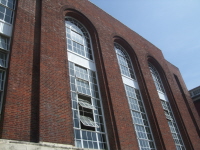 Greene King New Brewery So tradition and heritage are still very much part of the discourse, but less superficially than the strategically positioned horse-drawn drays scattered round the brewery buildings and the vintage copper on the pavement outside the visitor centre might suggest to cynics, genuinely reflecting aspects of everyday brewing practice. The original Westgate Brewery buildings are still part of the site, though the heart of the operation is the red brick art deco landmark next door, still referred to as the “new brewery” though dating from the 1930s. Inside is a brewing palace in Italian marble that still works on the tower principle where the basic ingredients start at the top and gravity gradually nudges them downward through the various brewing processes — the basic pale malt is pumped from silos but the speciality malts are still added by hand to the grist mill from neatly stacked 25kg sacks. The fermenting rooms are in King’s old St Edmund brewery across the road, with a complex of underground tunnels connecting the two, sadly no longer included on the tour for health and safety reasons.
Happily, the health and safety police haven’t yet ruled out a visit to the New Brewery rooftop, the best view in Bury. To the north you can see the site of the town’s most celebrated piece of heritage, the former St Edmund’s Abbey, one of the richest and most powerful institutions in the land before being dissolved and plundered by Henry VIII. There’s the Norman Tower, beautiful St Mary’s church, the cathedral with its tower absurdly added in fetishistically faithful Gothic Revival style in 2005, and the abbey ruins nestling in a fold of the river Lark. Where the abbey precincts end, the brewery land begins, in a vast sweep south and southwest, taking in not only the core brewery sites and the newer packaging plant with its linking pipes but swathes of model houses built for brewery workers and much else besides. The estate includes the freehold of the Theatre Royal, the only surviving Regency theatre in Britain, once used a barrel store but now leased to the National Trust and extensively restored a couple of years back; and extensive flood meadows along the river Linnet, now managed as a nature reserve.
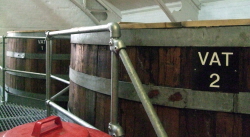 Oak vats at Greene King And then there’s something else that puts Bury St Edmunds firmly on the international brewing map which Henry is certainly not going to miss. “Now I’m going to show you something really special,” he tells us, “that you won’t find in any other brewery in the UK.” Past those old square fermenters are two 100-barrel (16,366l) oak vats which are used for maturing Old 5x, a legendary 12% beer, for between two and five years. There were once three of them, kept in the tunnels linking the sites and famously sealed with Suffolk marl, but one collapsed and the remaining two are in the fermenting room, with no marl in sight. A cooper who can build a new one has finally been located — this is destined for a space where a defunct square that recently suffered an implosion now stands.
Henry is strictly speaking no longer entirely correct to say this is the only remaining example of wood ageing of beer in Britain, but I can forgive him for not acknowledging the odd micro experimenting with the odd empty whisky barrel. Greene King is certainly the only British brewery still maturing in wood on this kind of commercial scale, and in doing so it is preserving a living link with 18th century brewing, where this kind of vatted “stale” beer was key to common styles such as porter. You’d have to visit one of the few Flemish breweries still souring brown ale in wood, such as Rodenbach in Roeselare, to find anything like these vats in another European brewing facility.
GK has long been notoriously reluctant to let 5x out on its own, and currently only sells it in blended form, most notably in its old ale, Strong Suffolk. Here it’s cut with BPA, another historic brew not available on its own, a Burton Pale Ale in a near lost style that’s in fact rather dark and sweet — Young’s Winter Warmer is perhaps the most readily available survivor. 5x has also recently been blended with Old Speckled Hen to create Old Crafty Hen, and an unaged version is used in the new Suffolk Springer. All three of these 5x beers are reviewed in the previous post. It’s frustrating to be within reach of these beery grails but unable to sample their contents — polite enquiries are gently rebuffed with the line that only brewers get to taste Old 5x au naturel.
I think Greene King is missing something here. Henry says that production costs and high duty would make the beer so expensive nobody would buy it. I’ve also read head brewer John Bexon saying the tart, acidic quality of wood aged beer would be offputting to consumers. But the beer world has moved on since these opinions were formed. There’s a growing interest in rare and historic beers, and a willingness to pay for something special.
A bottle conditioned version of undiluted Old 5x, perhaps released as an annual vintage dated limited edition, would attract considerable interest from beer enthusiasts, particularly in the US market. A naked release of BPA might cause rather less of a stir but would certainly be appreciated by connoisseurs. Such a move would reaffirm the brewery’s commitment to its heritage, and remind those who judged Greene King only on IPA that something uniquely special still ripens slowly in the bosom of one of Britain’s biggest breweries.
Update March 2013. In 2012 Greene King made neat Old 5X available in cask at certain beer festivals — read a review here.
Top Tastings 2010 (Strong Suffolk)
ABV: 6%, 6.5% and 6%
Origin: Bury St Edmunds, Suffolk, England
Website: www.greeneking.co.uk
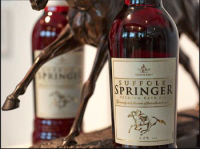 Greene King Suffolk Springer These three beers offer currently the only options for public access to Greene King’s legendary Old 5X, Britain’s only surviving wood aged beer made on a commercial scale. GK have long followed a policy of selling the beer, a 12% strong ale made for maturing for between two and five years in two big oak tuns tucked away in the fermenting room, only as a component of blends. Of these, the best known is bottled old ale Strong Suffolk which, following the withdrawal of St Edmund barley wine, was for a while the only available expression barring an occasional winter cask seasonal. But recently two other beers containing 5x have emerged — 2008 saw the launch of Old Crafty Hen, which marries it with strong bitter Old Speckled Hen, and 2009 brought Suffolk Springer, containing a young version of the beer. None of these beers is bottle conditioned — all are sterile filtered but not pasteurised.
Suffolk Springer is named to commemorate Suffolk’s horse racing heritage — a springer is a horse on whom the odds dramatically shorten just before a race — and made from Suffolk-grown Tipple pale malt, with some crystal, together with six hop varieties: Admiral, Boadicea, Challenger, First Gold, Pilgrim and Target. The resulting paler, weaker beer is blended with 5x, but fresh and not wood aged. It’s a deep ruby brown beer with a fine orange-fawn head and a very malty, lightly caramelly aroma with a hint of orange spice and smooth vanilla flavours. Among the complex herbal notes you could almost imagine some coriander.
A dry palate has a malty mineral note with some caramel, raisns and dried orange peel, and the definite almost metallic, irony, woody old book tang of the old ale, but no obvious sour lactic quality. Despite the rich fruit it’s quite close and stern, very dry and powdery, with the crackle of hops and possibly a roast note. A woody but smooth and rich charred cake finish is lasting and — perhaps surprisingly at only 6% ABV — lightly warming.
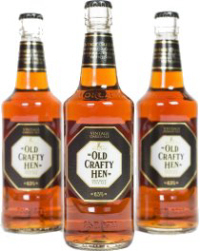 Greene King Morland Old Crafty Hen The 5x that goes into Old Crafty Hen is indeed aged, and imaginatively used as a brand extension of the popular diacetyl-tinged strong bitter Old Speckled Hen, which GK inherited in its takeover and closure of Oxfordshire’s Morland brewery, where it had originated as a celebration beer to mark the 50th anniversary of the MG car plant.
The burgundy-toned Old Crafty is notably darker than Old Speckled, throwing like Suffolk Springer and orangey-beige head. There’s a definite irony and slightly sour note alongside sacky malt and hops on the aroma, with woody and cherry hints. A slightly stewed malt palate takes on fruit pastille notes although remains very dry and chewy, with more minerals and obvious hops and those slightly sour cherry flavours again. The almond and walnut notes and slightly buttery firm malt of Old Speckled certainly show through, matching well with the 5x character. A long and austere woody finish has charred flavours, some stewy malt and a nugget of nutty bitterness — it’s all perhaps just a little too big and overbearing.
 Greene King Strong Suffolk Vintage Ale Finally, trying these two new variants prompted me to remind myself of the old established Strong Suffolk Vintage Ale, which mixes Old 5x with another beer not available separately, BPA. This acronym is often mistakenly glossed as Best Pale Ale but actually denotes Burton Pale Ale, another near-vanished style that was once ubiquitous among English brewers. As beer historian Martyn Cornell points out, the style is often confused these days with the lighter pale ales of the IPA family, but BPA was much darker, only pale in comparison to the brown and dark ales that were the benchmark when it was first formulated. GK’s version adheres to tradition in supplementing pale and crystal malts with additional sugars including molasses-like Special Brewing Sugar. This beer in fact makes up the bulk of Strong Suffolk, which includes only 15% of Old 5x.
The result is certainly a dark sweet beer, but one with a delightful aged tang. Strong Suffolk pours a very dark ruby brown, yet again with that orange tinge to the foamy beige head. The aroma instantly announces something special, with tones of oaky vanilla, tangy salt, iron, plums, leather and caramel. A full creamy palate has sweetish chocoalte and caramel malt delightfully infused with wood, walnuts and a lightly sour saucy tang that gives a vinous quality. A smooth swallow heralds a long lasting bitterish nutty finish with leather and oak, a subtle lactic tang and a lightly charred malty note.
Tasting these beers together immediately reveals their family resemblance, difficult to characterise simply but it’s somewhere in the complex patterning of oak, nuts, iron, charred wood and vinous sourness. While all three beers are to be applauded, Strong Suffolk remains the classic, and the best we’ve got while GK still refuse to bottle the neat product.
It was interesting to note the reactions of my fellow visitors on the Greene King brewery tour, all relatively “lay” people where beers and brewing were concerned, when offered these beers — Suffolk Springer got good reactions all round, but the two that included the aged 5x divided opinion, with that distinctive sourness enough to put some drinkers off even in the relatively small quantities found in Old Crafty Hen. It’s heartening to note that Greene King, now one of Britain’s biggest brewers, is not yet frightened by the acquired taste status of this unique family of beers and is still committed to such rare and historic production methods, even planning to invest in a third oak vessel to replace one that collapsed a few years back.
Update March 2013. In 2012 Greene King made neat Old 5X available in cask at certain beer festivals — read a review here.
Read more about these beers at ratebeer.com:
http://www.ratebeer.com/beer/greene-king-suffolk-springer-bottle/107214/
http://www.ratebeer.com/beer/morland-old-crafty-hen/93354/
http://www.ratebeer.com/beer/greene-king-strong-suffolk-olde-suffolk/881/
First published in BEER August 2008.
One of the pleasures of good weather is al fresco dining, but discerning beer drinkers needn’t feel they have to reach for the bottles of bubbly or, even worse, haul a slab of the amber nectar for from the fridge. Bottle conditioned beers can be subtle, sophisticated and robustly flavoured but still just as quenching and refreshing as that stuff you wouldn’t give a XXXX for.
For general outdoor drinking, pick a decent golden ale of the sort that might also convince lager guzzling guests. Kingstone Kinsons Organic Gold (4 per cent), from a small farm brewery at Tintern near Chepstow that also boasts a shop specialising in Welsh beer (www.meadowfarm.org.uk), is a hoppy but not overbitter ale with a grassy hop and rose aroma, a dry palate with a subtle strawberry note, and a long resiny-dry finish with more thistly hops – First Gold and Belgian-grown Fuggles are used. There’s also a non-organic version but the organic has more character.
Hop Back of Salisbury have a well-distributed bottled range. Summer Lightning is their flagship, but also consider the lemongrass and coriander flavoured Hop Back Taiphoon (4.2 per cent) – it’s designed for Thai food but will compliment other spicy flavours. This soft, light ale has a wheaty, vanilla touch, a bit Kölsch-like but with subtle spicing. Wheat beers in general are a good picnic as you won’t have to worry about clouding them by disturbing the sediment in transit– but do let them settle for a while before opening.
Proper India Pale Ales also stand up well to spicy flavours – try the superb Thornbridge Jaipur (5.9 per cent), from a Derbyshire stately home. This is flavour-packed with dried apricot, sulphur, spiced orange and blackcurrant flavours, finishing with a sustained puckering peppery bitterness.
A darker, more traditional bitter might go better with meatier food. Woodforde’s Norfolk Bitter (4.5 per cent) is a great example from one of East Anglia’s leading micros, easily available as one of Marks & Spencer’s range of exclusive Real Ales in a Bottle. This ruby brown beer has a lovely flowery glycerine aroma with earthy dryness over nutty malt and peach syrup on the palate, and autumn fruit on a drying finish. The same brewery’s celebrated Wherry Best Bitter is a great choice for lighter beer.
Don’t forget dark mild with food – it’s easily quaffable and the smoky, roasty tastes in some of the revivalist versions will complement barbecued food. Look out for Bartram’s Marld from one of Norfolk’s more eccentric small breweries. This has a roast aroma with nettle and geranium, blackberry, elderflower and burnt rubber on the palate and a long chocolate and coffee finish – an awful lot to pack in to only 3.4 per cent ABV.
A shorter version of this review was first published in BEER August 2009 as part of a piece about beers for summer outdoor drinking, featuring this beer under its rebadged Norfolk Bitter label for Marks and Spencer. For more summer beers, see previous post.
The beer also featured in BEER May 2011 as part of a piece on the influence of different malts on beer flavour. For more about malts in beer, see Itchen Valley Pure Gold.
ABV: 4.5%
Origin: Woodbastwick, Norfolk, England
Website: www.woodfordes.co.uk
 Woodforde's Nelson's Revenge Woodforde’s are a reliable supplier of both cask and bottle conditioned ales so it was no surprise they were one of the breweries chain retailer Marks & Spencer approached when it decided to launch a range of own-brand real ales in a bottle. Woodforde’s contribution is a classic recipe brewed with Maris Otter malt and whole flower hops, in fact a rebadged version of the brewery’s Nelson’s Revenge.
This rubyish red-brown beer has a persistent smooth yellowish head and a lovely spicy glycerine, flower and hop resin aroma, with a slightly syrupy peachy malt palate conveying an earthy bitter dryness over chaffy malt and nuts. A refreshing swallow leads to a drying, nutty and slightly woody finish with rich autumn fruit. A tasty, complex and subtle beer, my favourite in the range.
Added May 2011: Traditionally one of the more popular speciality malts in British brewing is crystal malt, containing extra sugars and kilned at higher temperatures to achieve the “non-enzymic browning” associated with caramel flavours. Woodforde’s Nelson’s Revenge (4.5 per cent) from Woodbastwick in Norfolk has a tasty combination of pale and crystal malts, giving a rubyish mid-brown colour with a chaffy, nutty and fruity, almost peachy, malt character nicely offset by bitterish whole Goldings hops.
To download BEER if you’re a CAMRA member, see http://www.camra.org.uk/page.aspx?o=beer.
To find out more about CAMRA membership, see http://www.camra.org.uk/page.aspx?o=joinus.
For more summer drinking beers see next post.
For more notes on the use of malts in beer, see Vale Black Swan.
Read more about this beer at ratebeer.com: http://www.ratebeer.com/beer/woodfordes-marks-spencer-norfolk-bitter/18803/
A shorter version of this review was first published in BEER August 2008 as part of a piece about beers for summer outdoor drinking. For more summer beers, see previous post.
ABV: 4.2%
Origin: Downton, Wiltshire, England
Website: www.hopback.co.uk
 Hop Back Brewery From this Wiltshire micro’s well distributed portfolio of bottle conditioned beers comes this wheat beer brewed to drink with Thai food, launched in 1999. Two spices common in Thai cuisine, lemongrass and coriander, are added to a grist of Optic pale malt, wheat malt, East Kent Goldings and Pioneer hops.
It’s golden with a thick white head and a fizzy, fruity, hoppy and lightly citric wheaty and yeasty aroma. The crisp palate has developing orangey fruit and spicy coriander, with bitter, twiggy flavours emerging. A dry, slightly herby, lightly bitter finish has vanilla notes. It’s a light, rather understated beer, oddly reminiscent of Kölsch but rather harsher and obviously more herby, and a good choice for spicy food.
More summer drinking beers in next post.
Read more about this beer at ratebeer.com: http://www.ratebeer.com/beer/hop-back-taiphoon/12464/
A shorter version of this review was first published in BEER August 2008 as part of a piece about beers for summer outdoor drinking.
ABV: 4%
Origin: Tyndyrn, Sir Fynwy, Cymru
Website: www.meadowfarm.org.uk, www.kingstonebrewery.co.uk
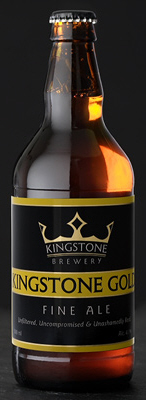 Kingstone Gold Originally established in 2005 at Kinsons Farm, Gwenffrwd (Whitebrook) nearby, this small brewery moved two years later to an idyllic site on the wooded slopes of the Wye valley, not far from the ruins of Tintern abbey and within near-spitting distance of England on the other side of the river. Here it’s part of the Meadow Farm complex including a beer shop stocking not only the brewery’s products but a wide range of other Welsh craft beers.
Gold, formerly known as Kinsons Gold after its original home, is an accessible easy drinking golden ale, made using First Gold and Fuggles hops as well as a touch of wheat malt. It’s a deep amber gold, with a bubbly thick off-white head and a grassy hops and banana yeast aroma. The slightly oily and bubbly light malt plaate has gritty citrus and more banana notes, with firm marmalade leading to a tangy, fruity, slightly gingery finish topped off by grassy hops and puckering zest.
I found the standard version a little too heavy for the style, but the organic version, made with English barley, wheat and First Gold, and Fuggles hops grown in Belgium, is a notable improvement. It’s a slightly lighter colour, with a fluffy foamy white head, less banana and more rose on the grassy aroma. The palate is drier and crisper with a subtle strawberry note. A sharp, spicy bitter note comes to dominate, with the beer finishing resiny dry and lingering with earthy and thistly hops. A decent beer for summer quaffing, particularly to tempt lager-drinking guests.
More summer drinking beers in next post.
Read more about these beers at ratebeer.com: http://www.ratebeer.com/beer/kingstone-kinsons-gold/67145/
First published in BEER July 2008 as part of a piece on beers recently converted to bottle conditioning. For more similar beers see previous post.
Top Tastings 2008. A shorter version appeared on facebook January 2009.
ABV: 4.8 per cent
Origin: Hook Norton, Oxfordshire
Website www.hooknortonbrewery.co.uk
 Hook Norton Double Stout A steam-driven Victorian tower brewery on the edge of the Cotswolds still owned by descendants of the man who founded it in 1849, Hook Norton is one of our remaining treasured independents and a source of excellent cask beers like Old Hooky. Double Stout is also much appreciated as a fine example of a traditional dry stout that can claim a history almost as old as the brewery itself, although it took an extended rest from the portfolio for most of the 20th century before being relaunched in 1996. It now appears on cask as a winter seasonal and has been available all year round in a filtered bottled version which was already pleasant enough. I almost yelped with excitement when I heard this was being replaced by a bottle conditioned version.
A grist of Maris Otter pale, mild, brown and black malts, sugar and Challenger, Fuggles and Goldings hops creates a near-black beer at a relatively modest gravity – as in Belgium, the term “double” doesn’t mean twice the alcohol but reflects the old practice of marking a certain number of crosses on a cask to indicate strength. A rich, straightforward malt and roast aroma has chocolate and slight spice notes.
On the palate the beer is smooth, malty and chocolatey with a pleasant light sparkle, with autumn fruit and acidity emerging over a slick of roast malt with mineral and lead pencil flavours. It turns lightly spicy on the swallow, with a roast coffee finish giving way to chewy, tangy fruit and late blackcurrant and liquorice. You’ll certainly taste the roast, but an exquisite smoothness ensures this remains a drinkable, refreshing bottleful. A minor world classic.
NOTE: This was the last review I wrote for the monthly tabloid BEER. From August 2008, the title became a quarterly in glossy magazine format, and my column changed to including five much briefer reviews on a theme.
Read more about this beer at ratebeer.com: http://www.ratebeer.com/beer/hook-norton-double-stout-cask-bottle-conditioned/44769/
|
|
