A sample text widget
Etiam pulvinar consectetur dolor sed malesuada. Ut convallis
euismod dolor nec pretium. Nunc ut tristique massa.
Nam sodales mi vitae dolor ullamcorper et vulputate enim accumsan.
Morbi orci magna, tincidunt vitae molestie nec, molestie at mi. Nulla nulla lorem,
suscipit in posuere in, interdum non magna.
|
Featured in BEER November 2009 as a strong ale for winter drinking. For more beers in this piece, see previous post.
ABV: 10%
Origin: Rock, Cornwall
Website: www.sharpsbrewery.co.uk
 Sharp's Brewery Massive Ale is one of Sharp’s brewer Stuart Howe’s bottled specialities, an exciting sideline with a distinct Belgian influence for one of the more successful new cask producers. It’s a big dark barley wine, with candy sugar added to the grist and doses of Perle and Northdown hops. Bottle conditioned, it’s intended to mature for up to 10 years.
The beer poured a cloudy burgundy with a fine creamy off-white head and a heady and complex rich malt aroma with cherry and figs. Figs returned along with red berries on a sweetish malty palate with what appeared to be coriander hints, although the herb isn’t declared. There were wood and balsamic onion notes on a mellow dark orange malt finish which seemed a little reserved compared to the palate, with a slight note of Vermouth.
For more strong ales for winter drinking, see next post.
Read more about this beer at ratebeer.com: http://www.ratebeer.com/beer/sharps-massive-ale/92666/
This beer featured in BEER November 2009 in a piece about strong ales for winter.
ABV: 10%
Origin: North Weald, Essex, England
Website: www.pitfieldbeershop.co.uk
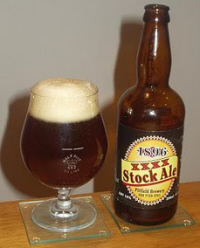 Pitfield's 1896 XXXX Stock Ale Pitfield Brewery is one of the pioneers of the British microbrewing revival, originally set up in 1981 in Pitfield Street, Hoxton, in the days long before the area became associated with edgy club culture, as a home brewing and specialist beer shop. In its latter function it was one of the first in the UK and over the years introduced grateful drinkers not only to British craft brews but to all manner of imported delights from mainland Europe and elsewhere. In 1982 a brewery was added, which gained a high reputation in the second half of the decade for its innovative and award winning premium strength Dark Star. By 1990 the original partnership had dissolved, and though the shop remained open, brewing ceased for a while, then two successors emerged: the Dark Star brewery in Brighton and, from 1996, a revived Pitfield Brewery in Hoxton, which as it progressed into the new millennium specialised more and more in organic beers. In 2006, under pressure from rent rises thanks to neighbours who fancied themselves as New British Artists, the shop closed and the brewery relocated, along with a mail order service, to Essex. As of 2008, there’s a retail outlet once again, as part of Ashlyns Farm Shop.
Just before closing in London, Pitfield had been experimenting with a fascinating range of historical recreation ales, departing from the general organic policy in order to source relatively authentic ingredients, and many of these are still around since the move. Stock Ale is made from Maris Otter barley malt, crystal malt and Northdown hops, following a recipe in the Durden Park Beer Circle’s book Old British Beers and How To Make Them. Stock ale was a term for a very strong ale, kept for long periods at a brewery and often used for blending.
Issues of the beer are now vintage dated, the most recent in 2007, but my first taste of it was in 2004, when I discovered a slightly fizzy peachy amber beer with a yellowish loose head and a dusky orange aroma, with stony hops, roast malt, olives, pepper and spicy hints that reminded me of the Indian breath freshener, pan. A thick and full bodied but dry palate had herbal hops and salty bitter orange, and a warming swallow led to a dry hoppy and smoky mouth-filling finish with more bitter orange and alcohol rounding off a vivid and characterful beer.
See next post for more strong ales.
Read more about this beer at ratebeer.com: http://www.ratebeer.com/beer/pitfield-1896-xxxx-stock-ale/27423/
First published in BEER August 2009.
 Jeff Evans, The Good Bottled Beer Guide, 7th edition The Great British Beer Festival sees the launch of the 7th edition of CAMRA’s Good Bottled Beer Guide, the swelling dimensions of which bear eloquent testimony to the resurgence of UK Real Ale in a Bottle. With each edition editor Jeff Evans uncovers inviting new entries on the wants list, and this one is no exception. Here I’ve tasted five beers new to the Guide, including four débuting breweries.
Nigel Wright’s Hopshackle Brewery in Market Deeping, Lincolnshire, established in 2006 and specialising in superb beers based on historic styles, is one of the real discoveries. His Double Momentum (7 per cent) is an unusual British take on an Imperial IPA, worthy of cellaring. Dosed with generous quantities of Challenger and Goldings and cask aged for at least two months before bottling, this is a golden ale rich in honeyed flowers and ripe plum fruit, with a marvellously complex citrus and rose palate and a rooty, peppery finish, the hops big but smooth around the edges and not overbearing.
Also dating from 2006 is Spire Brewery in Chesterfield, borrowing for its logo the town’s twisted spire landmark. No doubt brewer David McLaren’s former career as a bandsman in the Scots Guards has something to do with the surprising presence, among an already unusual range of ales, of an extremely rare beast: a bottle conditioned Scottish 80/-. 80 Shilling Ale (4.3 per cent) is a mid-brown beer with a toasty aroma and a rich malty, sappy, chewy palate with tart gooseberry notes, finishing roasty dry with a touch of salt.
Newer still is the immodestly named Outstanding Brewery in Bury, launched in 2008 – although the involvement of one of Britain’s leading suppliers of microbrewing kit, David Porter, shows an experienced hand, as does the wide range of beers, from smoked ales to Californian-style extreme hop brews. The one I enjoyed most, though, was a simple classic bitter, OSB (4.4 per cent), full of ripe autumn fruit and biscuity malt, with orange and peach syrup softening a firm bitter finish.
Imperial Stout Acorn Gorlovka, named after the Ukrainian twin town of the brewery’s Barnsley base, is an impressive bottle conditioned début from a renowned cask supplier. At 6 per cent, a relatively low gravity for the style, this still packs plenty of flavour, with cream, nut, blackcurrant, chocolate, coffee and leather, a good wallop of hops and a dash of farmyard aroma – a great addition to the Imperial Stout family.
Old Chimneys in Market Weston, Suffolk, is a Guide veteran for brewer Alan Thomson’s unusual and inventive ales. Among his new beers is Amber Porter (4.8 per cent), based on brewing records from 1785-1827 rescued from Ipswich’s defunct Tolly Cobbold brewery. Authentically reddish brown rather than black, this has a big malt aroma and a smooth but very toasty palate and follows through with tart fruit, charred wood and chocolate.
With Real Ale in a Bottle in such good health, who knows what delights the 8th edition of the Guide will bring?
Buy the books from amazon.com:
See also Jeff Evans’ Inside Beer page.
Featured as a selection from the new Good Bottled Beer Guide in BEER August 2009. For more selections see previous post.
ABV: 4.8%
Origin: Market Weston, Suffolk, England
Website: www.oldchimneysbrewery.com
 Old Chimneys Brewery Former Greene King, Vaux and Broughton brewer Dr Alan Thomson has consistently produced small runs of innovative beers from his Suffolk micro and Old Amber is no exception. It’s an experimental historical recreation based on a recipe found in Tolly Cobbold’s brewing archive, documenting a beer that was on their books between 1785 and 1827, and although it’s unusually light in colour for a modern porter, the colour is quite likely faithful to the brown malt of the times. Alan admits the beer isn’t to his own personal taste, but it’s a fascinating insight into the beers of two centuries ago.
Made with floor malted barley matching as closely as practical the specification of the times, it’s hopped with traditional varieties from Suffolk and Maidstone, Kent, and triple fermented, with a secondary fermentation in cask then a third in the bottle.
The result is dark burgundy with a pinky beige foam head and a restrained cereal malt and chocolate aroma. The dark malt palate is dry, milky and toasty with tart fruit and mineral hints, very slick in the mouth, leading to a roasty charred chocolate finish. A slightly acidic hint lifts an overall smoothness that’s slightly understated, and actually quite elegant for the style.
Read more about this beer at ratebeer.com: http://www.ratebeer.com/beer/old-chimneys-amber-porter/80319/
Featured as a selection from the new Good Bottled Beer Guide in BEER August 2009. For more selections see previous post.
ABV: 6%
Origin: Barnsley, South Yorkshire, England
Website: www.acornbrewery.net
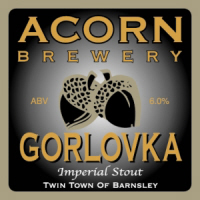 Acorn Gorlovka Imperial Stout Acorn brewery has its origins in the old Barnsley Brewery, well known for its Barnsley Bitter. When this went into liquidation, eventually merging with Blackpool Brewery, brewer Dave Hughes set up his own as Acorn, continuing to brew Barnsley Bitter using the original yeast. Acorn enhanced a well-deserved reputation built on its cask beer in 2009 when it launched its first bottle conditioned line, an imperial stout named after Barnsley’s Ukrainian twin town, known as Gorlovka in Russian, though Gorlyivka in Ukrainian. This beer also uses the renowned Barnsley yeast.
This is a very dark mahogany beer with a big foamy beige head and a big aroma of chocolate, coffee, leather, spiced cream and slight farmyard whiffs. A dry and roasty but lightly textured black cherry fruit and chocolate palate with nuts and a wallop of hops. The finish is very dry and ashy with bitter roast coffee and burry hops, still very impressive though a little more straightforward than the aroma and palate will lead you to expect. At a relatively low gravity for the style, this still packs a lot of flavour, and is a great addition to the range of imperial stouts brewed in Britain.
For more selections from the Good Bottled Beer Guide 2009 see next post.
Read more about this beer at ratebeer.com: http://www.ratebeer.com/beer/acorn-gorlovka-imperial-stout/65504/
Featured in BEER August 2009 as a selection from the latest Good Bottled Beer Guide. For more selections see previous post.
ABV: 4.4%
Origin: Bury, Greater Manchester, England
Website: www.outstandingbeers.co.uk
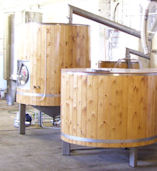 Outstanding Brewery The immodestly named Outstanding Brewery in Bury, Greater Manchester, was launched only in 2008, although the involvement of one of Britain’s leading suppliers of microbrewing kit, David Porter, shows an experienced hand. With the help of collaborators Paul Sandiford and Glen Woodcock, he’s developed a wide and imaginative range of beers, from smoked ales to Californian-style extreme hop brews. The brewery sent me a generous selection, but the one I enjoyed most was a simple classic bitter, OSB.
This is a copper-brown coloured ale with a declining bubbly light beige head. A resiny hopsack aroma has notes of toast and ripe autumn fruit, and the palate is also very fruity and biscuity, with a definite though not overpowering hop bite, notes of washing up liquid and peach syrup. A long and lightly roasty finish has rooty well-balanced hops and a touch of chocolate.
For more selections from the 2009 Good Bottled Beer Guide see next post.
Read more about this beer at ratebeer.com: http://www.ratebeer.com/beer/outstanding-osb/112893/
Featured in BEER August 2009 as a selection from the latest Good Bottled Beer Guide. For more selections see previous post.
ABV: 4.3%
Origin: Chesterfield, Derbyshire, England
Website: www.spirebrewery.co.uk
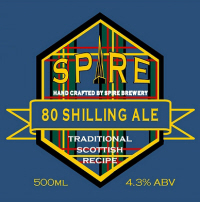 Spire 80 Shilling Ale Founded in 2006 by former Scots Guards musician David McLaren, and named for Chesterfield’s landmark twisted spire, this brewery has developed an interesting range of real ales in a bottle. Most of the beers are musically named — the Sergeant Pepper peppered stout is a great example — and no doubt David’s old career also has something to do with the surprising presence, among an already unusual range of ales, of an extremely rare beast: a bottle conditioned Scottish 80/-. Originally brewed for St Andrew’s Day, it’s now become a regular, its label proudly adorned with the McLaren tartan.
This is a slightly reddish mid-brown beer with a little off-white head and a very toasty crystal malt tinged aroma with twig and cherry notes. A very traditional Scottish toasty malt palate has tart, sappy and chewy flavours with hops (Styrian Goldings and Fuggles) around the edges. There’s more fruit and hops over toasty malt on a generous finish that ultimately turns dry with a touch of salt.
For more selections from the 2009 Good Bottled Beer Guide see next post.
Read more about this beer at ratebeer.com: http://www.ratebeer.com/beer/spire-80-/94051/
This beer featured in BEER August 2009 as a selection from the new Good Bottled Beer Guide.
ABV: 7%
Origin: Market Deeping, Lincolnshire
Website: www.hopshacklebrewery.co.uk
 Hopshackle This is one of several beers I encountered during 2009 from Nigel Wright’s excellent Hopshackle Brewery: see my review of Historic Porter for more background. Double Momentum, an IPA so called as it is based on the brewery’s Momentum pale ale but with twice the quantity of Challenger and Goldings hops, is cask aged for at least two months before bottling, and is worthy of cellaring to see what develops.
This is a hazy golden ale with a thick and slightly yellowish head, and an aroma rich in honeyed flowers and ripe plum fruit. A marvellously complex citrus and rose palate has honeyed blond malt, a sweetish triple-like body and some phenolic yeasty tones. Following a citric swallow, the hops in the long finish are big but smooth around the edges and not overbearing, with a controlled rooty, peppery bitterness and some alcoholic warmth.
For more selections from the 2009 Good Bottled Beer Guide see next post.
Read more about this beer at ratebeer.com: http://www.ratebeer.com/beer/hopshackle-double-momentum/92485/
Featured as a mild for May in BEER May 2009. To read the beginning of this piece see under Hobsons Postman’s Knock.
The beer also featured in BEER May 2011 as part of a piece on the influence of different malts on beer flavour. See additional text below, and to read about other beers featured see Woodforde’s Nelson’s Revenge.
ABV: 3.8%
Origin: Brill, Buckinghamshire, England
Website: www.valebrewery.co.uk
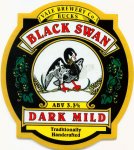 Vale Black Swan Dark Mild Another good bottled choice is Vale Black Swan (3.8 per cent) from former Metropolitan Line outpost Brill in Buckinghamshire. Its maker, Vale Brewery, was founded in nearby Haddenham in 1995 by brothers Mark and Phil Stevens, both of whom previously worked for larger breweries. Such was their success that in 2007 they expanded to their present facility on an industrial estate that now occupies the former station site.
Maris Otter Pale, Crystal and Chocolate malts and Fuggles and Perle hops give this very dark amber brew a subtle roasty bite. A fine fawn head slightly muffles a chaffy malty aroma with a dash of fruit. A well-balanced malty and slightly chocolatey palate has drying hops and a fleetingbut welcome fruit note. The finish is lightly drying with light roast and controlled hops alongside a salt-tinged rich dark malt character, fleeting fruit notes and developing burry, herbal hops.
This beautifully balanced, traditional and very classic mild, named partly in deference to the swan emblem of Buckinghamshire, squeezes impressive amounts of flavour into a relatively low ABV. Not surprisingly it won several CAMRA prizes in cask before joining the brewery’s impressive and reliable range of real ales in a bottle.
Added May 2011: A slightly darker “mild malt” was once common in Britain but has become rarer as the style has declined. Most microbrewed milds deploy dark and roasted malts alongside standard pale, giving a bitter roast character, but a mellower example is Vale Black Swan (3.8 per cent) from Brill in Buckinghamshire, which achieves its dark colour and maltier character by using extra crystal malt. I’ve written about this beer before but it’s worth featuring again – a beautifully complex and fruity-malty dark amber ale with herbal, salt and chocolate notes.
To download BEER if you’re a CAMRA member, see http://www.camra.org.uk/page.aspx?o=beer.
To find out more about CAMRA membership, see http://www.camra.org.uk/page.aspx?o=joinus.
For the next dark mild in this piece see Teignworthy Martha’s Mild, or for more on malts in beer see Hopshackle Historic Porter.
Read more about this beer at ratebeer.com: http://www.ratebeer.com/beer/vale-black-swan/26203/
First published in BEER February 2009.
With real ale bucking the trend of decline in pubs, and with longer days and better weather on the way, it’s a good time to go evangelising among home drinkers looking beyond slabs of Stella. Back in the mid-80s cask ale brewers hoped to meet lager drinkers halfway by inventing golden ale, Britain’s first new beer style in many a decade, and a good few of these have found their way into bottle conditioned form.
Hop Back Summer Lightning (5 per cent, Salisbury, Wiltshire), one of the first golden ales, made an early and seamless transition into a Real Ale in a Bottle. It’s still well worth drinking as a refreshing but more complex alternative to a premium lager – pale gold with a white head and a fine bead, honeysuckle hops on the aroma, a crisp and zesty tangerine palate and a notably dry and long lingering finish.
While licensing of international lager brands is all too common, a US craft beer brewed under license by a UK brewery in a bottle conditioned version is probably unprecedented. High & Mighty Beer of the Gods (4.5 per cent) was planned by US beer importer Shelton Brothers as a cross between a Kölsch and an Altbier, with the original version contract brewed at Paper City brewery, Holyoke, Massachusetts. Now Hepworth of Horsham, Sussex is producing its own version for sale at Sainsburys. It’s a complex but refreshing delicate gold beer with lime-citrus fruit, a slight hint of olives and gin-like botanicals on a crisp malty palate and a hoppy, slightly flinty finish.
Imported wheat beers have assisted a good number of drinkers in developing the taste for ale, but there are some good home-grown ones too. O’Hanlon’s Double Champion (4 per cent, Whimple, Devon) is one of the best and most reliable – delicate gold with an alluring touch of Turkish Delight on the aroma, and lightly citric with some yeasty banana and vanilla hints.
Belgium is a rich source of golden ales often mistaken for lagers, but beers like Duvel- Moortgat Duvel (8.5 per cent, Breendonk, Flemish Brabant), despite their delicate colour and palate, have the fruity complexity of ales. Originally a dark beer lightened up to win a new audience, Duvel is a world classic, with distinct pear and lemon sherbet notes on the aroma, an oily, citric and seedy palate and pistachio in a drying, complex finish. The red label version widely available in British supermarkets is also bottle conditioned.
Finally, rather than trying to mimic the lager experience, it’s worth considering challenging expectations with something completely different. Cheddar Totty Pot ( 4.7 per cent) is one of new range of real ales in a bottle from this Somerset-based brewery – originally seasonal but hastily added to the regular range after competition success, it’s a full-on porter with cola, caramel, burnt rubber and sultana cake, a flavourful but still very approachable half litre. If smoky and intense Islay whiskies can win converts among people who think they don’t like Scotch, then beers like this might just shock some tastebuds into recognising a whole new world of flavour.
|
|
