A sample text widget
Etiam pulvinar consectetur dolor sed malesuada. Ut convallis
euismod dolor nec pretium. Nunc ut tristique massa.
Nam sodales mi vitae dolor ullamcorper et vulputate enim accumsan.
Morbi orci magna, tincidunt vitae molestie nec, molestie at mi. Nulla nulla lorem,
suscipit in posuere in, interdum non magna.
|
First published in BEER July 2008 as part of a piece on beers recently converted to bottle conditioning. Young’s Bitter also included in Top Tastings 2008.
ABV: 4.5 and 4.8 per cent
Origin: Bedford, Bedfordshire
Website www.wellsandyoungs.co.uk
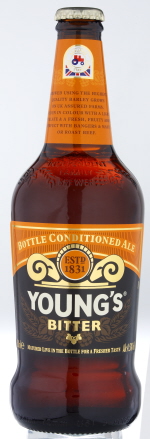 Wells and Young's Young's Bitter When you consider how perilously close British bottle conditioned beer was to extinction a couple of decades or so ago, its resurgence today seems miraculous. The Good Bottled Beer Guide, in which my fellow BEER contributor Jeff Evans aims to provide comprehensive listings of Real Ale in a Bottle, gets fatter with every edition and now lists many hundreds of beers.
Nearly all of these, however, are new launches, the vast majority from new generation small breweries. Few traditional independents offer bottle conditioned beers, and very rarely have brewers been brave enough to take established brands that were previously filtered and/or pasteurised and convert (or restore) them to real versions.
We should be more than usually gladdened, then, to hear that over the past couple of months not one, but two, well-established and already well-rated bottled brands from historic breweries have been relaunched as Real Ale in a Bottle. First came the news that Wells and Young’s was expanding its RAIB portfolio, including converting Young’s Bitter to bottle conditioning. Then Hook Norton announced the bottled version of its classic Double Stout was going live.
These moves follow on from modest but notable increases in support by supermarkets looking to position bottle conditioned beers as a premium product, suggesting the old excuse that “customers don’t like sediment” is becoming increasingly less relevant. Let’s hope that other big supermarket speciality names like Badger, Batemans, Harviestoun, Marstons/Wychwood and Robinsons are taking heed.
Wells and Young’s might now be one of our “new nationals” but I’m impressed with how well Young’s rich legacy is being looked after in Bedford. London real ale drinkers were traditionally expected to offer their loyalty to either Fullers or Young’s – but while London Pride remains the taste of my formative years, I’ve discovered there’s much to be said for the quenching and curiously astringent delights of Ordinary, as Young’s Bitter on draught is known to its aficionados. That character was well preserved in the move from Wandsworth to Bedford, and now the bottled version – long brewed at a more robust gravity than the draught – has gone real, an appropriate compliment to a beer already so rich in heritage.
It’s a pale copper coloured ale made with a traditional grist of Maris Otter pale malt, Fuggles and Goldings hops – the first from a major British brewer to carry the Red Tractor award guaranteeing quality assured production. It pours with a fine white head and an aroma very much like the draught version – sweetish, malty and slightly sour and sulphurous. A firm, tasty barley sugar palate also has a dash of characteristic acidity, with crisp but restrained hops and faint, subtle orange.
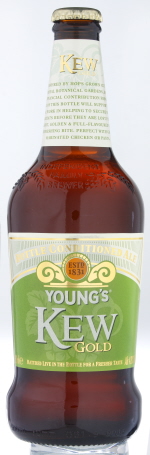 Wells and Young's Young's Kew Gold A moreish, lightly bitter finish offers subtle citric flavours before developing quite peppery hop notes, but overall subtler and noticeably fresher than the previous pasteurised interpetation. It’s a taste experience comparable to sinking a well-kept pint of Ordinary in a pub, and I can’t think of a higher compliment.
Kew Gold is the second beer to emerge from the brewery’s partnership with the Royal Botanic Gardens, Kew, a little way up the Thames from its former Wandsworth site. Rare hops are grown in the Gardens and small amounts have been used at the brewery, but production is limited so this beer is “inspired” by Kew hops – instead Styrian Goldings are matched for flavour, with a grist of lager malt and a small amount of crystal, and a proportion of the proceeds goes to Kew.
This is a rich deep gold beer with a fine white head and grassy lager-like hops in the aroma. A full-bodied slightly syrupy palate has lime citrus notes and a layer of resinous hops from the start, with fresh cereal notes and fruit. A controlled peppery bitterness develops alongside more malt and fruit in a slightly gingery finish. It’s a pleasantly hoppy, quaffable but characterful beer and a good entry level Real Ale in a Bottle for the premium lager drinker.
For more beers recently converted to bottle conditioning, see next post.
Read more about these beers at ratebeer.com:
http://www.ratebeer.com/beer/youngs-bitter-bottle-conditioned–45/104149/
http://www.ratebeer.com/beer/youngs-kew-gold-bottle/86957/
Top Tastings 2010 (Verdi Black Jack)
ABV: 5%, 8.2% and 8%
Origin: Roncole Verdi, Emilia-Romagna, Italy
Website: www.birrificiodelducato.com
 Italy, as I’ve mentioned here before, is currently one of the beer world’s innovation hotspots, with an emerging craft brewing movement fusing native respect for fine food and drink with a creative energy partly inspired by US brewing, and similarly unhindered by a distinctive national brewing tradition. Sadly few of the results of this have so far found their way to Britain. So I was delighted to find myself at a rare tasting of Italian beers, mainly from Birrificio del Ducato, at London’s Rake pub, thanks to a last minute invitation from tasting tutor and Ducato brewer Matteo Milan, who as a former brewer at Scotland’s BrewDog, is still maintaining his British connections. Italy, as I’ve mentioned here before, is currently one of the beer world’s innovation hotspots, with an emerging craft brewing movement fusing native respect for fine food and drink with a creative energy partly inspired by US brewing, and similarly unhindered by a distinctive national brewing tradition. Sadly few of the results of this have so far found their way to Britain. So I was delighted to find myself at a rare tasting of Italian beers, mainly from Birrificio del Ducato, at London’s Rake pub, thanks to a last minute invitation from tasting tutor and Ducato brewer Matteo Milan, who as a former brewer at Scotland’s BrewDog, is still maintaining his British connections.
Ducato’s style is less edgy than BrewDog’s, but the Italian brewer is if anything more willing to push the envelope, with high gravities, blending, souring with wild yeast, wood ageing and a fresh approach to spicing all key components of the brewing toolkit. Starting production in 2007 in the small village of Roncole Verdi near Parma, a household name in Italy as the birthplace of opera colossus Giuseppe Verdi, the brewery has quickly gone on to win awards under head brewer and co-founder Giovanni Campari, formerly of one of the older-established Italian craft brewers Birrificio Italiano. It might be a fanciful comparison, but some of Ducato’s bigger beers are composed on a dramatic and ambitious scale that might be called operatic.
Matteo brought a wide range of the brewery’s beers, both regular and special brews, and I was highly impressed with almost all of them — it was hard to select only three to feature here, but they do demonstrate Ducato’s range.
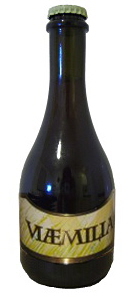 Viæmilia is the brewery’s first beer, its biggest seller and its most suitable offering for easy everyday drinking. “Dedicata alla nostra terra,” it’s named after the old Roman road, the Via Æmilia, which passed nearby on its way from Piacenza to Rimini — the road itself had got is name from the consul that oversaw its completion, and such was its fame that it ended up giving its name to the region through which it passed, still known as Emilia today. The award winning beer is an unpasteurised and properly lagered premium pils-style that in most respects is ultra-authentic, to the extent that the Tettnanger hops is sourced from a small producer in Tettnang itself, necessitating occasional trips to Baden-Württemberg. One important departure from authenticity is the extra addition of whole hops after the primary fermentation, the British-style “dry hopping” technique that’s otherwise completely unknown in traditional lager brewing. Viæmilia is the brewery’s first beer, its biggest seller and its most suitable offering for easy everyday drinking. “Dedicata alla nostra terra,” it’s named after the old Roman road, the Via Æmilia, which passed nearby on its way from Piacenza to Rimini — the road itself had got is name from the consul that oversaw its completion, and such was its fame that it ended up giving its name to the region through which it passed, still known as Emilia today. The award winning beer is an unpasteurised and properly lagered premium pils-style that in most respects is ultra-authentic, to the extent that the Tettnanger hops is sourced from a small producer in Tettnang itself, necessitating occasional trips to Baden-Württemberg. One important departure from authenticity is the extra addition of whole hops after the primary fermentation, the British-style “dry hopping” technique that’s otherwise completely unknown in traditional lager brewing.
The beer is a hazy very pale yellow with a fine fluffy white head. The dry hopping immediately shows itself in the fresh, big and grassy, lightly fruity and resinous aroma, underlined by delicate and slightly honeyed malt. The palate is a wonderful combination of spicy, floral and rather piny hops and chaffy, foamy and lightly grainy soft malt, leading to a notably peppery finish with exotic spices wafting into the nose. The hops are still kept down to earth, though, by decent, slightly bready and floury malt, so the bitterness isn’t overwhelming. Overall it’s a delightfully moreish and refreshing brew.
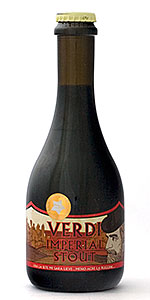 Birrificio del Ducato Verdi Imperial Stout At the other end of the spectrum in terms of colour and strength is Verdi Imperial Stout, its name honouring Roncole’s most famous son, and once again this is a classic and authentic recipe with a stylish twist. Bottled unfiltered and unpasteurised but with no repriming of yeast, this beer is a still, thick black that leaves a brown iodine-like wash on the sides of the glass as it swirls. The aroma is full of dark marmitey malt, coffee, chocolate and liquorice. The relatively thin and winy palate is fully malty, chocolatey and liquoricey with a big roast bite, but then comes the surprise — the gently mouth-numbing warmth it generates in the mouth is not so much from the alcohol as from some studiously blended chilli.
The balance is just right — not so much as to overwhelm the more traditional spicy and roast notes that emerge in a very long finish, which turns sappy, drying and slightly woody. The beer deservedly became the first and so far only Italian craft brew to win a gold medal in its style at an international beer competition when it was named best imperial stout at the European Beer Star in 2008.
It’s also available in a wonderfully mellowed version aged for six months in bourbon casks under the name Verdi Black Jack. This is black with a good yellowy-brown head, a slightly brett-tinged smooth vanilla, coconut and whisky aroma and a very complex dark malt and chocolate palate with a sweet touch, leahter and whisky hints and the tang of wild yeast. A chocolatey finish has rummy spirit and wine notes and layers of bitterness and honey sweetness. Age has mellowed the chilli heat but it’s still present in a stunningly complex blend of flavours.
Even more of an unusual speciality is La Luna Rossa (“the red moon”), an offbeat reworking of a Belgian sour brown ale-based kriek. It’s a blend of three different beers of different ages matured in wine casks with the aid of wild yeast and a quantity of fresh local marasca cherries, a variety of sour morello cherry classically used to make Maraschino liqueur. This is also bottled more or less still and emerges a deep amber colour, with notes of fruit, almonds, balsamic vinegar and the distinctive tang of brettanomyces yeasts on the aroma.
A sappy woody palate has sweet and sour sauce notes and emerging cherry fruit, an irony Rodenbach-like touch but also obvious shades of lambic-type kriek. The long and slightly sticky finish is amazingly complex, with more wood, vanilla, balsamic and cherry skin notes, a touch of salt, walnuts and wafer biscuits. A breathtaking demonstration of what beer is capable of in the hands of a skilful and inspired brewer.
Read more about these beers at ratebeer.com:
http://www.ratebeer.com/beer/birrificio-del-ducato-viaemilia-via-emilia/79805/
http://www.ratebeer.com/beer/birrificio-del-ducato-verdi-imperial-stout/84864/
http://www.ratebeer.com/beer/birrificio-del-ducato-verdi-black-jack/124259/
http://www.ratebeer.com/beer/birrificio-del-ducato-la-luna-rossa/124170/
First published in BEER June 2008 as part of a piece about wheat beers. Read more about wheat beers in previous post.
ABV: 3.1 and 5.4 per cent
Origin: Kulmbach, Franconia (Bavaria), Germany
Website www.kulmbacher.de
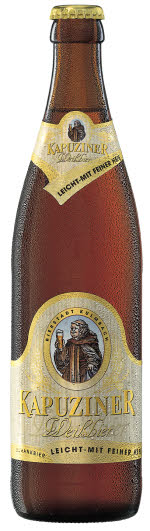 Kulmbacher Kapuziner Weißbier Leicht 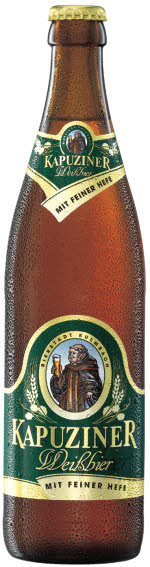 Kulmbacher Kapuziner Weißbier mit feiner Hefe Bavaria is, of course, one of the heartlands of wheat beer brewing and about the only part of the world where brewers didn’t suffer collective amnesia over the use of wheat at some point in the last fifty years. Within Bavaria, it doesn’t get more beery than Franconia, where in the town of Kulmbach you’ll find one of the region’s biggest craft breweries, simply named Kulmbacher, the result of a merger of four local breweries in 1996.
Kulmbacher’s wheat beer range, produced under the monastic moniker Kapuziner, is now being imported into the UK. It includes a standard unfiltered pale wheat beer as well as a lower gravity “leicht” (light) – this being Bavaria, both are made with the pure ingredients of malted barley, malted wheat, hops and water only.
At 3.1 per cent the leicht is as strong as some British standard bitters but is certainly light for the style. It pours an authentic sunny orange-yellow with a thick white rocky head and a characteristically spicy aroma, with grainy and hay meadow scents and a hint of banana. There are cereal notes on a slightly oily palate with a pronounced lemon citrus flavour, turning orangey on a smooth tangy finish. Overall it’s a tasty beer but slightly thin.
The standard cloudy wheat beer is a weightier offering, similar in appearance but with a more complex aroma featuring clear strawberry and banana notes and a touch of farmyard – the distinctive wheat beer yeasts have obviously had a busier time with more gravity to work with. More banana fruit joins rich toffee on a firm, slightly sweet palate, and there are more hops too on a long chewy citric finish.
Read more about these beers at ratebeer.com:
http://www.ratebeer.com/beer/kapuziner-weissbier/5093/
http://www.ratebeer.com/beer/kapuziner-weissbier-leicht/14763/
First published in BEER June 2008 as part of a piece about wheat beers. Read more about wheat beers in previous post.
ABV: 4.4 per cent
Origin: Kewaigue, Isle of Man
Website www.okells.co.uk
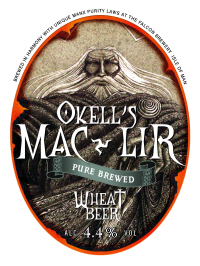 Okell's Mac Lir Wheat Beer From one of the other Celtic nations [Cornwall was featured in the last post] comes a wheat beer at a more quaffable strength. The Isle of Man’s biggest brewery and its only surviving Victorian-era independent, Okells was founded in 1875, though moved to its current site just outside Douglas in 1994. Long known as a bastion of traditional styles on an island renowned for its conservatism, the brewery has in recent years diversified into new specialities to reach markets across and beyond the Irish Sea, under the inspired guiding hand of its Yorkshire-born head brewer, eccentrically moustachioed Dr Mike Cowbourne.
In the process it’s made much of its Celtic heritage: witness unfiltered wheat beer Mac Lir, named after a legendary warrior wizard and sporting label artwork that appears inspired by 2000AD’s Sláine strip. However the launch of this beer occasioned a significant break from tradition. Brewing on Man is regulated by a Bavarian-style purity law that limits ingredients to barley malt, hops, sugar and water, so before they could produce a wheat beer, the brewery faced a six-month wait while the Manx parliament, the Tynwald, considered their application for an exemption.
We can be thankful this was finally approved since the beer is very good indeed. Made with a half-in-half grist of Maris Otter barley malt and malted wheat, it’s a hazy orange-yellow beer with a good white head, and flowery citrus and botanical notes on a creamy wheat aroma. The rich spicy palate is quite well hopped but beautifully balanced with cereal and citrus tones, and a cleansing swallow leads to a chewy tasty finish with a faint hint of roast and burnt wood. There’s a notable hoppiness (seven varieties are used at different stages of the boil) to this big, distinctive and wheaty beer which is one of the best examples of the style I’ve tasted from the British Isles.
Read more about wheat beers in the next post.
Read more about this beer at ratebeer.com: http://www.ratebeer.com/beer/okells-maclir-bottled/19364/
First published in BEER June 2008 as part of a piece about wheat beers.
ABV: 6.8 per cent
Origin: Rock, Cornwall, England
Website www.sharpsbrewery.co.uk
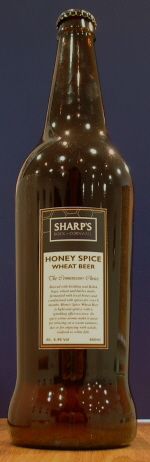 Sharp's Honey Spice Wheat Beer It’s a fine sunny spring day outside as I write this page – perhaps, given the weather so far this year, it’s too much of a leap of faith to assume the days will be warmer still by the time you read it. But even under grey skies you might cheer up by cracking open a bottle of wheat beer. With their buttercup and straw colours, summery fruit flavours and aromas as heady as a wildflower meadow on a hot day in June, they’re the perfect warm weather drink.
Cornwall’s Sharp’s has made waves from its coastal site since 1994 with cask bitter Doom Bar. But dynamic and imaginative head brewer Stuart Howe also has ambitions to brew world class speciality bottled beers that can hold their own against fine wine on the dining table. First he gave us Chalky’s Bike, flavoured with Cornish fennel (BEER, November 2007), and now he’s launching three more bottle conditioned specialities: abbey beer St Enodoc Double, 10 per cent barley wine Massive Ale, and this intriguing strong spiced wheat beer.
Hopped with Goldings and Bobek, enriched with Cornish honey and spiced with cinnamon, coriander and mixed peel, Honey Spice arrives in an elegant 660ml bottle intended for sharing at table, perhaps over a salad, seafood or white fish dish as recommended on the label. Leave it to settle for a clear beer, or do as I did and drink hazy, pouring a rich golden colour with a thick white orange-tinged head.
A spicy aroma has a fresh creamy cereal note and a barely detectable hint of coriander. The palate is firm but subtle, dry and herby, with a delicate, slightly leafy bitterness and a touch of marzipan, with identifiable coriander and earthy cinnamon starting to emerge. A slightly peachy swallow leads to a dry, spicy finish with delicate hops and herbs, a light citrus touch and a hint of old books.
Overall this is a very well-made, distinctive and refreshing beer with a remarkably light touch considering the relatively hefty strength – on a sunny day it would be tempting, though certainly not advisable, to swig with abandon. Beers like these should put Sharp’s in the first rank of modern British brewers.
Read more about wheat beers in the next post.
Read more about this beer at ratebeer.com: http://www.ratebeer.com/beer/sharps-honey-spice-wheat-beer/88623/
First published in BEER May 2008 as part of a piece about Norfolk milds. More Norfolk milds in previous post.
ABV: 3.9 per cent
Origin: Heacham
Website: www.foxbrewery.co.uk
 Fox Nina's Mild A more traditional example of vertical integration [than with Uncle Stuart’s in the previous post] can be found at Heacham, a village on the Wash in northwest Norfolk which is also famous for its lavender. Here the Fox Brewery has been supplying ales to the Fox and Hounds pub since 2002, when the new owners of the pub found a new use for an empty outbuilding, though its large and varied bottled range is also available more widely.
Nina’s Mild is made from Maris Otter pale, crystal and toasted malt from the celebrated Branthill Farm, a little way east along the coast. It’s a dark red-brown beer with a thick and rocky fawn head, and a malty, gently roasty and spicy aroma with black coffee hints.
A slightly thin palate has plenty of chocolate and fruit, with more pronounced, but not overbearing, smoky and roasty notes on the finish. The smokiness is a reminder of what rustic English beer might have tasted like in the days before modern malting, when brown malt kilned over wood or straw was the principle brewing grain. Late fruit and chocolate notes tail an interesting beer which remains easily quaffable despite the intensity of its flavours.
Read more about this beer at ratebeer.com: http://www.ratebeer.com/beer/fox-ninas-mild/51826/
First published in BEER May 2008 as part of a piece about Norfolk milds. More Norfolk milds in previous post.
ABV: 4 per cent
Origin: Lingwood
Website www.littlebeershop.co.uk
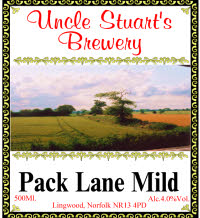 Uncle Stuart's Pack Lane Mild Uncle Stuart’s on the outskirts of Norwich is one of a small but growing number of small breweries that are finding an alternative route to market with a twist on vertical integration, using a bottled beer shop rather than a cask-driven pub as their retail outlet. In this case it’s the Little Beer Shop at Blofield, and they do mean little – it’s essentially a shed run as a franchise in a sprawling garden centre, but it’s packed from floor to ceiling not only with house brews but with a wide range of other hard-to-find East Anglian craft beers, almost all of them bottle conditioned.
The Uncle in question is Stuart Evans, who graduated from home to full-time brewer in 2002 on what was then one of the smallest commercial brewing plants in Britain, though it’s since expanded. The first beer brewed was Pack Lane Mild, named after the street where the business is located, and the rustic scene depicted on the label is actually the view from the brewery, which uses water from a nearby borehole as brewing liquor.
Made from Pearl pale, crystal, black and wheat malts, roasted barley and Goldings and Progress Hops, this mild pours a very dark brown with a generous fawn head as bubbly as the inside of an Aero. The chocolatey impression is complimented by the palate which also has a hint of roast and farmyard scents.
There’s Ovaltine and vivid tart fruit flavours in an interesting chocolatey palate with a herbal hop note, and a mouth-coating cocoa powder finish with a roast hit and a nugget of bitter hops. It’s a distinctive beer that’s on the roasty side for a mild, and well worth trying.
More Norfolk milds in next post.
Read more about this beer at ratebeer.com: http://www.ratebeer.com/beer/uncle-stuarts-pack-lane/35798/
First published in BEER May 2008 as part of a piece about Norfolk milds.
Beer sellers: Beers of Europe
ABV: 3.8 per cent
Origin: Acle
Website www.tipplesbrewery.com
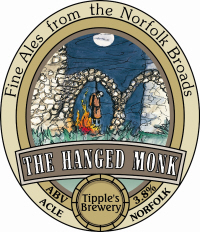 Tipples The Hanged Monk The English region most associated with mild is, of course, the West Midlands, still home to a good few classics in cask. But if you’re planning to celebrate the style indoors this Mild Month with a few decent real milds in a bottle, you’ll need to look further afield for a decent choice. The flat and marshy rural landscapes of England’s eastern counties may be very different from the urban sprawl of the Black Country, but innovative microbreweries are in plentiful supply, and thankfully most of them seem to consider a bottled dark mild an essential entry in a self-respecting craft brewer’s portfolio. This year all three beers featured below come from small-scale but very talented brewers in Norfolk.
Tipples Brewery, on the edge of the Broads, doesn’t take its name from a quaint term for an alcoholic drink but from its owner, the fortuitously named Jason Tipple, who opened it in 2004 after quitting the financial services industry. He’s since gained a high reputation for his well-crafted ales.
Jason is a self-confessed “big fan of milds” and when he sat down to devise a recipe he found himself inventing not just one mild but three. Trying to think of original names, he hit upon the theme of Broads ghost stories, eventually launching the beers as a trilogy just before Halloween 2005. The Hanged Monk, named for a traitorous monk said to haunt the ruins of St Benet’s Abbey on the river Bure, has since become a permanent addition to the bottled range, though the Monk’s spooky companions, Jack’s Revenge and Lady Evelyn, still haunt the brewery in draught form.
The Monk is brewed from pale, crystal and chocolate malts, and three hop varieties, emerging from the bottle near-black with a thick, pillowy head. A very spicy aroma has a sharp blackcurrant fruit note with roast, liquorice, cola and flowery hops.
A complex dark malted milk palate has a hint of fruit and a vivid dry mineral quality, with more cola and blackcurrant pastille and a smooth chewy texture – the upfront roast that’s often found in modern craft-brewed milds is absent here. Subtle roast notes do emerge from a dry but not bitter swallow, and the long finish also boasts refreshing fruit, restrained nettly hops and a late wet stone note.
No nebulous spirit, then, but a firm, satisfying, beautifully balanced and eminently drinkable beer that packs an abundance of flavour into a modest gravity – surely a hallmark of the classic mild.
More Norfolk milds in next post.
Read more about this beer at ratebeer.com: http://www.ratebeer.com/beer/tipples-the-hanged-monk/54976/
First published in BEER April 2008 as part of a piece on beer in Sainsbury’s. More Sainsbury’s beers in previous post.
ABV: 8 per cent
Origin: Buggenhout, East Flanders, Belgium
Website www.bestbelgianspecialbeers.be
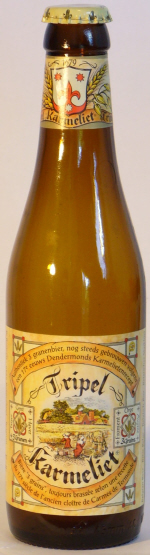 Bosteels Tripel Karmeliet Flemish independent Bosteels, still in the hands of the same family that founded it in 1791, is best known for Pauwel Kwak – or rather for that beer’s elaborate glass, which looks like a piece of lab equipment in a wooden bracket. Kwak itself is a drinkable enough beer with some character, but much better is this lesser known speciality from the same brewery, which comes with rather more sensible glassware.
It’s a bottle conditioned golden abbey beer with a difference, made with three grains – barley, wheat and oats in both malted and unmalted forms, plus Styrian Goldings hops and spices – and allegedly based on a 1679 recipe from the Carmelite monastery in nearby Dendermonde.
The beer pours with a thick white head and a scented coriander and rye bread aroma. A complex, dry cereal palate has a velvety note from the oats and unusual spirity flavours – perhaps genever gin or good vodka – with pear, vanilla and more coriander. Citrus notes lift the obvious alcoholic weight, with a long, bready and botanical spiced orange finish.
The beer is one of a number of interesting Belgian and German imports currently available at Sainsbury’s alongside domestic specialities from Meantime and others.
Read more about this beer at ratebeer.com: http://www.ratebeer.com/beer/tripel-karmeliet/5368/
First published in BEER April 2008 as part of a piece on beer in Sainsbury’s.
ABV: 4.7, 6.5 and 7.5 per cent
Origin: Charlton, London, England
Website www.meantimebrewing.com
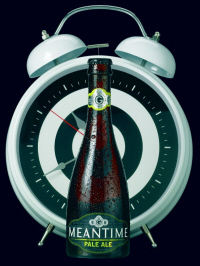 Meantime Pale Ale When Heriot-Watt and Weihenstephan-trained brewer Alastair Hook set up on his own in an industrial unit a stone’s throw from the Thames Barrier in 2000, he chose to follow what for a British microbrewer was a pretty much unprecedented business plan. Rather than touting cask ale around the free trade and festivals, Alastair initially set about using his Bavarian experience to brew quality lager – a beer style unfairly and excessively devalued by big UK brewers’ weak and insipid interpretations of international brands – in bottles or continental-style bright kegs.
Ales and wheat beers have since joined the portfolio, including a good number of bottle conditioned brews, but cask remains absent. It’s an approach that hasn’t always endeared him to real ale purists, but it’s certainly yielded some magnificent, near-world class beers as well as being a living demonstration that there is always another way.
Meantime, named for its location in the borough of Greenwich, originally focused on contract brewing and targeting those pioneering restaurateurs that were starting to recognise fine beer has its place on the menu alongside fine wine. The brewery started to establish its own identity through a partnership with supermarket chain Sainsbury’s. In 2002 the giant multiple retailer was busy establishing its Taste the Difference range of upmarket own-brand products, and worked with Meantime to create several European style beers for the range, including a rare example of a red Vienna lager.
The Sainsbury’s link, continuing interest from the restaurant trade and overtures from a US importer built the brewery’s confidence and it expanded, rebranded and relaunched in 2005, investing heavily in a new filling machine to ensure absolute hygiene, as well as the only corking machine at a British brewery capable of filling, corking and wiring 75cl champagne-style bottles.
This machine is particularly significant: if, as most informed commentators suggest, the key to establishing bottled beer’s gourmet credentials with a wider audience is through promoting it as an accompaniment to food, then there’s a need to present it in ways that won’t look out of place on the most sophisticated dining table.
And the beer that goes into those nice big bottles is well deserving of such VIP treatment. Currently two Meantime lines are presented this way, both of them Real Ales in a Bottle based on ancient British styles – a porter and an India Pale Ale. Both styles, interestingly, were somewhat neglected and forgotten in their native land but have enjoyed a new lease of life among US craft brewers and drinkers, so it’s not surprising Meantime’s pair were originally commissioned for export.
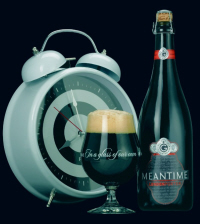 Meantime London Porter London Porter is based on a 1750 recipe and contains seven malts including brown, black and chocolate malts, alongside Fuggles hops. The result is a deep ruby-brown beer with a rich creamy fawn head that yields a spicy, leathery, coffeeish aroma with a hint of roast chestnut. A full bodied but refined palate has a creamy texture, chocolate hints and emerging sappy, roasty, peppery hop and lightly acidic flavours. A long finish has an intriguingly sour coffee character, with roast rather than hops giving an ashy dryness, and late salt and blackcurrant hints.
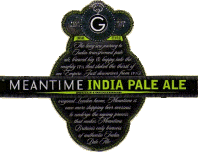 - Meantime India Pale Ale
Meantime’s IPA is arguably the most reliable of a precious handful of authentic British-brewed bottle conditioned interpretations of this historic style. Brewed from pure pale malt with Fuggles and Goldings hops, this strong but refreshing beer is a deep gold, almost copper, with a fine off-white head. A barley sugar aroma has gentle pineapple and earthy notes, leading to a firmly malty palate that unfolds in several layers: fruity and slightly brambly at first, then syrupy with a hint of aromatic peaches, with bitterish but not overpowering grapefruity hops finally emerging. There’s more peppery hops in a long finish over a pineapple cube and barley sugar backdrop.
The brewery also offers a range of intriguing beers in more modest gravities and sizes, most of them in distinctive skittle-shaped 33cl bottles, for example a beautifully fresh-tasting unfiltered Pale Ale dry hopped with Cascade and Willamette. This has a chaffy vanilla and pineapple aroma and a tasty cereal palate with a little fruit, pollen and grassy citric hops. Firm, earthy and peppery but well-controlled hops emerge in the drying, bitterish finish.
Quality and consistency are the watchwords: “We don’t skimp on maturation times,” says Alastair, “and we never pasteurise – why take care over making a beer only to cook it?” The results speak from themselves.
More Sainsbury’s beers in next post.
Read more about these beers at ratebeer.com:
http://www.ratebeer.com/beer/meantime-pale-ale/51741/
http://www.ratebeer.com/beer/meantime-london-porter/48499/
http://www.ratebeer.com/beer/meantime-india-pale-ale/48498/
|
|
