A sample text widget
Etiam pulvinar consectetur dolor sed malesuada. Ut convallis
euismod dolor nec pretium. Nunc ut tristique massa.
Nam sodales mi vitae dolor ullamcorper et vulputate enim accumsan.
Morbi orci magna, tincidunt vitae molestie nec, molestie at mi. Nulla nulla lorem,
suscipit in posuere in, interdum non magna.
|
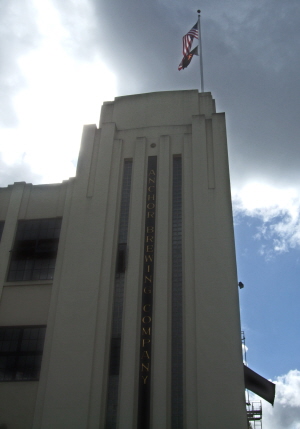 Anchor Brewing Company, Mariposa Street, San Francisco, California 94107 Top Tastings 2012 (Porter)
ABV: 6%, 5.6% and 5%
Origin: San Francisco, California, USA
Website: www.anchorbrewing.com
Despite numerous visits to San Francisco in recent years I hadn’t yet got round to visiting the famous Anchor brewery – arguably the motherlode of the current craft beer revival. I put that right in October 2012, joining a brewery tour and spending some time in the excellent company of head brewer Mark Carpenter.
Mark is something of a brewing legend himself. He’s been with the company, now based just below the summit of Potrero Hill in the east of the city, since 1971 and is now essentially the keeper of the flame since Fritz Maytag, who famously rescued Anchor and its unique Steam Beer in 1965, sold it on to two former executives of SKYY vodka in 2010.
I plan to write up that encounter in more detail at a later date, but the visit also proved a perfect opportunity to catch up on Anchor’s current range in the convivial tasting room next to the brewhouse, and remind myself of just how excellent it is. All the beers were tasted on keg as free samples.
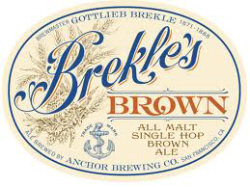 Anchor Brekle’s Brown Brekle’s Brown, launched in 2010 shortly after Fritz’s departure, is the first beer for which Mark was entirely responsible. Like many other Anchor products, it nods to earlier brewing practice. Gottlieb Brekle was a German immigrant who founded what would later become the Anchor brewery in a saloon near Russian Hill in 1871.
Back then, brown malts would have been the most easily available brewing grains and this robust contemporary take on the style nods to the past by including Munich and caramel malt alongside two-row pale to create a rich brown tone topped by a dense orange-tinged head.
I detected a very slight diacetyl note on a gritty malt-dominated aroma, also yielding citric notes from Citra, the single hop used. A lively palate began with toffeeish, slightly sugary malt, developing tingly hops, fresh citrus, orange marmalade and menthol-like spice.
The smooth finish turned lightly toasty with bitterish hop and cough candy notes. Overall this beautifully put together beer has proved a worthy addition to an already strong range, with the well judged use of Citra helping create a beer where fresh and juicy fruit flavours add drinkability and moreishness to a rich and chewy malt base.
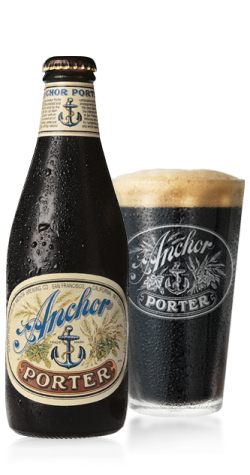 Anchor Porter Having saved steam beer from extinction, Fritz next turned to the resurrection of one of brewing’s great lost styles. Anchor Porter, the brewery’s second beer, first appeared in 1972. Almost certainly it was the first commercial example of a warm fermented porter created since the extinction of the style in Britain in the 1950s, and it made a vital contribution to reinstating porter, which had led the large scale industrialisation of brewing in 18th century London, to the vocabulary of world beer.
Anchor Porter happily remains a benchmark, a beer that’s both serious and approachable. The recipe is little changed since the 1970s – caramel, black and chocolate malts alongside pale to create a near-black colour, with a single hop, Northern Brewer in whole leaf form, for a vintage earthy British character.
A generous foamy and lacy light brown head yielded a very rich and roasty chocolate orange aroma with a hint of brown sugar and a dash of citrus zest. The roasty, grainy chaffy palate had hints of liquroice and caramel with a slightly medicinal, humbuggy note and earthy hop bitterness rumbling beneath. The swallow left a mouthful of smooth, malty, roasty flavour, with light coffee and herbal hints.
Overall the beer was the epitome of that perfect balancing act the best brewers achieve so well, with a deep dusky richness and a rewarding intensity of flavour that stops short of becoming overbearing. It’s one of many remarkable things about Anchor that a beer conceived as one of a kind four decades ago has proved difficult to equal ever since, despite the subsequent proliferation of competitors that Anchor itself helped inspire.
Read an earlier review of Anchor Porter.
It’s a challenge to pick just three featured beers from this brewery when there are so many good ones – Fritz’s second new beer, barley wine Old Foghorn, also remains a classic – but I couldn’t bring myself to leave out the beer that started it all.
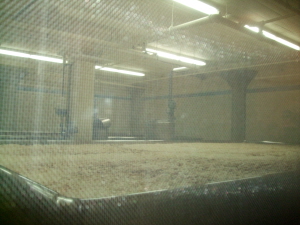 Glimpsed through the glass: shallow steam beer fermenters at Anchor, San Francisco. Steam beer was a response by German brewers schooled in lager techniques to the primitive facilities and mild climate of Gold Rush-era San Francisco. Lack of refrigeration meant cold fermenting yeast strains had somehow to be used at warm temperatures. Broad, shallow fermenting vessels, rather similar to the koelschepen employed in lambic brewing, were a partial solution as the greater surface area permitted more rapid cooling, but the action of the yeast at uncomfortably high temperatures induced a particularly high carbonation and a distinctive flavour.
The origin of the term is uncertain – Anchor claims it referred to the steam given off when hot wort was exposed to the city’s characteristically cool ocean breezes. The brewery retains traditional shallow fermenters just for making steam beer, though they’re no longer exposed to the vagaries of the city’s atmosphere. Instead they’re locked in an airtight room, spotlessly clean and temperature controlled with filtered air, though clearly visible through thick glass.
Steam beer was once San Francisco’s everyday beer, a cheap blue collar refresher flowing from numerous breweries, but Prohibition put paid to almost all of them and by the 1960s Anchor was its last remaining exponent. Fritz Maytag trademarked the term, which is why subsequent revivalist essays in the style by other brewers are obliged to use the post hoc style designation California Common.
Anchor Steam Beer today is a deep golden-amber beer with a sunburst glow created by darkening pale malt slightly with caramalt, and a light, faintly yellowish tinged head. My sample had a crisp, grainy and slightly toffeeish aroma, and a prickly and carbonated but very easy drinking palate with a traditional hop burr – as with the porter, Northern Brewer is the only variety used.
Subtle spice and hint of fruit – an artifact of the hybrid fermentation method – added interest and the beer finished almost pilsner-like, with light hops and a slightly nutty but very rounded chewiness. Another example of the art of balance, it remains a well made and very drinkable beer.
All the brewery’s beers are flash pasteurised – a disappointment to some purists, but something for which Mark is unapologetic. When Fritz first got involved, bad hygiene and the attendant lack of quality and consistency was one of the first challenges he faced, and the priority he gave to cleanliness and reliability remains deeply embedded in the brewery’s tradition.
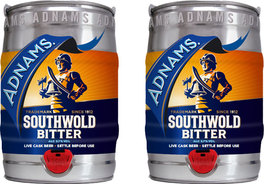 Adnams Southwold Bitter in minicasks. Pic: Adnams. Top Tastings 2012
ABV: 3.7%
Origin: Southwold, Suffolk, England
Website: adnams.co.uk
I’ve long regarded Adnams Southwold Bitter as one of the benchmark examples of a traditional English cask bitter, an outstanding demonstration of the genius of the best old estabished British breweries for achieving depth and complexity of flavour in a low gravity beer while retaining easy going drinkability.
Interestingly, it was only introduced in its current form as a “best” bitter in 1967, though six years later Frank Baillie in his survey of British brewing The Beer Drinker’s Companion is already describing it as “ a very distinct flavoured and popular draught bitter”. In my own early days as a real ale drinker in the late 1970s and early 1980s I looked forward to the rare occasions when it would find its way to my local free house.
Over three decades on, it’s still holding up and indeed on particularly good form in the hands of current head brewer Fergus Fitzgerald. Irish-born Fergus has proved an impressive custodian of the Southwold brewery’s tradition, while also steering it into more contemporary styles. The bitter is still brewed with strictly old school ingredients – East Anglian pale and crystal barley malts, with Fuggles the featured hop, both in a late addition and in dry hopping.
On cask in top condition, it’s a clear, deep amber beer with a bubbly white head and a delicate aroma combining chaffy light malt notes, stewed fruit and subtle spicy hops. The palate is notably dry – perhaps very slightly astringent – but develops impressive complexity, with twiggy spice, marmalade notes and a slightly salty, almost seaweedy touch. Some writers have romantically suggested a whiff of sea air from the brewery’s coastal location.
A chewy, lasting, lightly tart finish has a bit more salt alongside tobacco and more marmalade, with a distinct but controlled peppery bitterness emerging from the hops.
The bottled version, at a higher strength of 4.1%, is filtered and to me lacks the delicacy of the draught, but what really caught my attention in 2012 was the minicask version, which I discovered when researching a piece for Beers of the World about draught beer for the home. It’s essentially the same beer as the pub version, at the same ABV, but conveniently packaged for domestic use.
For those unfamilar with the format, minicasks – or easyKeg ITs as they’re termed by their German manufacturer Huber – are rugged 25cm tall waisted tinplate containers with a 5l capacity, looking much like a miniature version of a real cask stood on end, with a neat pullout tap near the base and an additional reclosable vent at the top.
They were originally intended for filtered German-style beers intended to be drunk quickly at events and parties, and the vent was provided as the simplest way to let air in so the beer could get out. But they have also turned out to be an ideal way of packaging cask conditioned beer for home use, allowing controllable venting like the bung and spile arrangement in a full sized cask.
Adnams has offered minicasks since 2010 as one of a growing number of British brewers adopting the technology to open up a new home drinking market. At first the products were very much a minor sideline, with a few filled by hand alongside conventional casks for the trade. Now demand has rocketed so much the brewery has invested in special equipment for filling them.
“It’s been phenomenal,” Fergus told me. “We sold 30,000 minicasks in 2011 and we easily expect to get past that this year. People are drinking more at home, and they’re also drinking more flavoursome beers, so we expect demand to keep on growing.”
Like their bigger brothers in the trade, minicasks come with a ritual attached, which Fergus sees as part of their charm. They need to be left to settle after transport, then vented, and left to stand for a further 24 hours before the first pint is poured. Once opened the contents should be consumed within three to five days.
“It’s an education,” said Fergus. “Having to look after a minicask helps people to understand more about cask beer as a live product, which helps their appreciation in the pub too.”
To demonstrate, he sent me a minicask of Southwold Bitter on which I lavished due care, venting it with a reassuring hiss and cooling it to something like cellar temperature with that old lo-tech standby, the wet towel.
I was rewarded with a fine looking pint sporting a creamy, lacy head, and all the chaffy freshness and spicy, fruity, marmalade-tinged complexity on the aroma that I’d expect in a pub with a top class cellar, with the smooth, gentle, easy condition of a proper cask beer.
The refreshing palate was packed with earthy, fruity flavour, leading to a smooth and lightly roasty finish, with a good balance of crystal malts and resinous Fuggles leaving lingering pepper, charcoal and even light chocolate notes.
While pub campaigners might bemoan the minicask and similar systems as yet another threat to the beleaguered on-trade, as a drinker I can’t help but be delighted that beer of such quality is now available for dispense in my own kitchen.
 The Lamb Brewery, London W4. PIc: Convivial. The latest and most thorough update to my CAMRA Guide to London’s Best Beer, Pubs and Bars has just gone online, chronicling the development of the capital’s beer culture which shows no sign yet of slowing. The update suggests over 150 new venues and catalogues London’s mushrooming crop of breweries, which are on track to triple in number over just two years.
When the book went to press in April 2011, London entrepreneur and beer importer Martin Hayes had a single pub to his name – the groundbreaking specialist beer bar Cask Pub & Kitchen in Pimlico. Just before the book finally appeared on the shelves in July, Martin opened the first Craft Beer Co in Clerkenwell, immediately raising the bar for London beer venues with its dazzling range of domestic and imported specialist beers in all formats. In a mere 18 months since, three more Crafts have opened, two in London (Angel and Brixton) and another in Brighton, and all appear to be flourishing.
At a time when 18 pubs close every week in the UK, the Craft story is only the most striking example of how an unprecedented growth of interest in “craft” and other specialist beer is happily pushing at least one significant sector of the licensed trade against the depressing trend, in London at least. The three Draft House branches listed in the book are now five, and several other top class independent beer outlets featured have gone forth and multiplied – the Bree Louise, Jolly Butchers, Pineapple and Southampton Arms have all added sister pubs.
Small pub chains – Butcher & Barrel, Convivial and, most notably, Antic – have seen the commercial wisdom in creating showcase beer outlets and upping the ante across their estates. Fashionable bar operators that ten years ago would not have ventured within a long beard’s reach of real ale, like Barworks, Fluid Movement and Lost, are embracing the new age of hops and malt. Even big national pubcos are boosting their beer credentials – Mitchells and Butlers’ beer friendly Castle and Nicholson’s chains continue to improve with even some branches of more mainstream high street bar brands like O’Neill’s being transferred to them.
The turnaround of brewing in London is even more dramatic. When published the Guide contained details of all 13 breweries then operating in Greater London. 18 months later that total has shot up to 36, with further launches imminent. East London and City CAMRA’s Pig’s Ear beer festival in December 2012 featured a Hackney bar, dedicated to the brewing products of a single London borough which until August 2011 had not witnessed commercial brewing within its boundaries since the 19th century. Now there are six, with one of the most eagerly awaited of the new projects soon to join them when Truman’s re-establishes itself in East London at its new site in Hackney Wick this spring.
Pessimists are waiting for the first casualties of this rapid expansion, but so far there have been no brewery closures in London since Battersea folded in 2009. The capital, with just under 8.2million inhabitants, still has only 3.6% of Britain’s breweries for 13% of its population, or one brewery for every 227,000 people. For comparison there are now about the same number of breweries in the whole of Wales, serving a population only just over 3million, so there should still be plenty of room for more.
Keeping readers of the Guide up to speed in this rapidly changing world has proved a considerable challenge, and to keep this latest update within reasonable bounds I’ve finally resorted to including summary “Try Also” listings in the Places to Drink section as well as editing main entries. So every venue previously mentioned is once again included here in some form, and the full length reviews remain available on the website. I’m not sure when or if another update will appear as I’m hoping to agree a publication date for a fully fledged new edition of the book during 2013, but in the meantime please continue to send suggestions and comments to me via the form on the London page. Cheers!
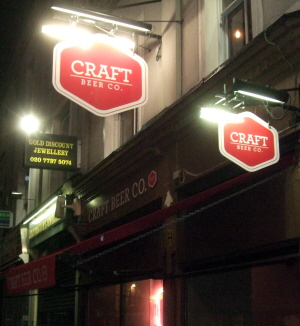 The Craft Beer Co, London SW9. London’s Best Beer, Pubs and Bars updates
Southwest London: Brixton
Bar, specialist (Craft)
11 Brixton Station Road SW9 8PD
T 020 7274 8383 w thecraftbeerco.com/location/brixton-london f craftbeercosw9 tw thecraftbeerco
Open 1600 (1200 Fri-Sun)-2300 (2400 Thu, 0200 Fri-Sat, 2230 Sun, 1 hour later for Mon-Thu Brixton Academy shows). Children welcome at lunchtimes.
Cask beer 10 (Kent, 9 unusual guests), Other beer 20 keg (10 UK, 10 international), 120 bottles (mainly Belgian & US), Also 12 rums, 20+ bourbons and malts, other specialist spirits.
Food Pork pies and Scotch eggs only, Outdoor Front terrace, Wifi. No disabled toilet but flat access.
Beer tastings.
Until recently Brixton was an area of London surprisingly poor in fine beer, but with first the Crown and Anchor reopening in Brixton Road and now with the arrival of London’s second Craft Beer Co branch, the choice for local beer fans has rapidly improved.
Craft, opened in October 2012 in what was once the Hive Bar, doesn’t have the advantage of the Crown’s spacious old fashioned pub building, but it does boast a central site, just round the corner from the Tube, handy for the Academy music venue and markets and a few doors down from Brixton Recreation Centre. This last near neighbour accounts for the succession of track suited and beshorted types passing the big picture windows. A few of them even call in: members of Brixton’s successful Angels Ultimate Frisbee team have made the place a post-practice haunt.
Although the place is small, with a single downstairs bar mainly given to vertical drinking and an additional space with tables up some rickety stairs, it’s nicely and neatly designed, with a preponderance of copper that nods to brewing kit. A copper tube arching over the bar carries the keg clips, while fridges beneath the bar surface display their wares to customers.
As you’d expect from a Craft, the beer choice is exemplary. 10 handpumps dispense the house pale from Kent brewery, rotating options from Dark Star and Thornbridge and guests from the likes of Fyne, Ilkley, Northern, Leeds, Revolutions or Tiny Rebel. 18 keg lines are split between British craft kegs, quality traditional imports like Boon Kriek or Rothaus Weissbier, and beers from international extremists like De Molen and Mikkeller, this last supplying the house lager.
Mikkeller also contributes over 30 entries in the bottled range, alongside New Zealaners 8 Wired, Londoners Kernel and new Dutch cuckoo brewer Rooie Dop. The rest are split between Belgium – mainly Trappists (Achel, Orval, Rochefort) and proper lambics (3 Fonteinen, Boon, Tilquin) – and the USA. Names rarely seen in London include some exclusives to the chain – a typical roll call might incude AleSmith, Anchorage, Cigar City, Clown Shoes, Diamond Knot, Element, Hoppin’ Frog, Jester King, Port, Sly Fox and Weyerbacher. All are also available to take away with a “buy five, get one free” offer.
National Rail Underground Brixton Cycling Link to LCN+ 25
The Lamb Brewery, London W4. PIc: Convivial. London’s Best Beer, Pubs and Bars updates
West London: Chiswick
Contemporary pub, brewpub (Convivial)
9 Barley Mow Passage W4 4PH
T 020 8994 1880 w www.lambbrewery.com f !lambbrewery tw BarleyMowPub
Open 1100 (1000 Sat-Sun)-2300 (2400 Fri-Sat, 2230 Sun). Children welcome until mid-evening.
Cask beer 6 (Lamb, Botanist, 3 sometimes local guests) Cask Marque, Other beer 7 keg (Lamb, international), 25 bottles, Also Around 20 wines.
Food Steaks, traditional and contemporary upmarket pub grub, beer tasting menus, Outdoor Large enclosed front terrace, Wifi. Disabled toilet.
Beer tastings, brewery demonstrations and activities.
Attractively situated in a little alleyway on the eastern apex of Turnham Green, and fronted by a lovely terrace, the Lamb is an independent brewpub in the heart of Fuller’s country. Owners Convivial first dipped their toes into the mash tun in 2011 when sister pub the Botanist on Kew Green added a brewery. Its success prompted a radical reworking of the former Barley Mow, reopened as the Lamb in September 2012.
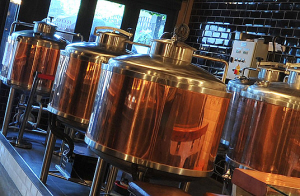
The brewhouse itself is right by the front door, but the brewing theme spreads throughout the long, narrow single bar area of the chalet-style building, with a copper bar matching the brewing vessels, and beer-related bits and pieces in display cabinets and on walls.
Complementing the cask beer focus of the Botanist, the Lamb pursues a more international route, mainly producing keg beers in European and US-inspired styles. Four of these – a pilsner, a weissbier, an American pale ale and a strongish stout – are regularly available alongside German imports Bitburger pils and Köstritzer Schwarzbier, plus British-brewed Sam Adams lager.
The single cask bitter, Lamb Ale, is supplemented on the handpumps by Botanist brews and other often local guests from Redemption and Sambrook’s. There’s some good stuff, too, on the bottled list, with UK choices from BrewDog, Dark Star, Oakham, St Peter’s and Thornbridge lining up alongside Achel Trappist beers, craft cans from Hawaii’s Maui, and Czech options from Budvar and Regent.
The rather upmarket atmosphere may not match everyone’s idea of a place to relax with a good pint, but it’s stylishly accomplished with good food options too. Butcher’s Block steaks, pies, mussels and chips, salads, sandwiches and Mediterranean-influenced sharing boards all appear with beer matching recommendations and with various tasting tray deals and beer-related events, the Lamb is a welcome new evangelist of the brewer’s art.
Pub trivia. The Lamb borrows its name from a now-defunct brewery in nearby Church Street, once owned by the Thrale family who once owned what later became the Barclay Perkins brewery in Southwark, a giant of its age. The Lamb claimed a shared origin with Fuller’s in the domestic brewhouse at Bedford House, and in the 19th century rivalled the Griffin brewery in local importance. It ended up in the hands of Watney, which closed it in 1922, with Fuller’s using the site for a while as warehousing. The brick tower, now converted to offices, still stands today.
Underground Turnham Green, Chiswick Park Cycling LCN+ 35 and links to Chiswick national rail Walking Link to Thames Path
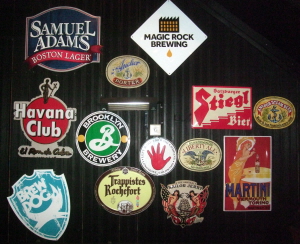 The Lofty Turtle, London SW14 London’s Best Beer, Pubs and Bars updates
Southwest London: Other location – East Sheen
Bar, specialist (Independent)
505 Upper Richmond Road SW14 7DE
T 020 8878 1995 w loftyturtle.com f The-Lofty-Turtle tw theloftyturtle
Open 1700 (1200 Fri, 1100 Sat-Sun)-2400 (2330 Sun). Children welcome until 1930.
Cask beer 1 (unusual guest), Other beer 9 keg, 60 bottles, Also Cocktails, 35 wines.
Food US diner-style menu, Outdoor Front terrace, Wifi. No disabled toilet but ramped access.
Occasional live music, DJs, films, functions, major TV sports, pool, board games, retro video games.
The suburban village of East Sheen, in an area between Richmond and Putney much favoured by successful actors, is perhaps not a place you’d expect to stumble on an impressive range of beer. So the collection of brewery enamels displayed beside the comfortable front terrace of this bar among an unassuming parade of shops may come as a surprise.
The site was a struggling jazz bar and restaurant known as the Naked Turtle until January 2012 when beer loving owners Patrick and Dee reconfigured it in a style inspired by New York loft bars, with a drinks offer to match. The rejig has proved a great success, both as a bar and a party venue – something that might partly be explained by the friendliness of the place, which is warmer and more informal than the crimson-draped cocktail bar look might suggest.
A changing cask beer from the likes of Arbor, Magic Rock or Pin-up is complemented by keg beers from Brooklyn, Innis & Gunn, Samuel Adams (imported, not the Shepherd Neame version) and Stiegl plus rotating guests that might include British craft kegs alongside German imports from bigger breweries like Paulaner. A decent bottle and can range is predominantly sourced from the US – Left Hand, Maui, Odell, Stone, Victory – but stretches to Trappists from Chimay, Rochefort and Westmalle and British entries from BrewDog, Bristol, Harviestoun and Magic Rock.
With three easily separated spaces, the Turtle is well equipped for coping with groups and parties though the main bar is kept available for regulars and casual callers. There’s lots going on, too, including regular film screenings, and the well made but fun menu – burgers, hot dogs, salads, steaks, barbecue shrimp skewers, all with beer matching suggestions – is also available to take away.
National Rail Mortlake Bus Graemesdyke Avenue (numerous Richmond) Cycling LCN+ Chiswick, Richmond Park, link to NCN 4
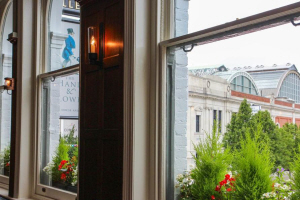 The Hand and Flower, London W14. Pic: Fuller’s. London’s Best Beer, Pubs and Bars updates
West London: Fulham and Hammersmith
Contemporary pub (Fuller’s)
1 Hammersmith Road W14 8XJ
T 020 7371 4105 w handandflower.co.uk f Handandflowerw14 tw handfw14
Open 0700 (0800 Sat, 1200 Sun)-2300 (2330 Th, 2400 F, 2230 Sn). Children welcome until early evening.
Cask beer 6 (Fuller’s, occasional guests) Cask Marque, Other beer 5 keg, 12 bottles, Also A few wines and specialist spirits.
Food Breakfasts, imaginative upmarket pub grub, Wifi. Disabled toilet.
Seasonal parties, functions.
Taken over from Marston’s and relaunched as a Fuller’s pub in January 2012, the Hand and Flower is particularly notable for its useful location right opposite the Olympia exhibition hall, home for the time being of the Great British Beer Festival alongside numerous other events. Sadly the interior of this handsome Victorian corner building at the very top of Hammersmith Road has long since been knocked through into a single canteen-like space that feels rather noisy and brash, with loud music and inescapable big screens, so grab the “Flowers Corner” snug if you can.
The beer range is wider than average – Chiswick, HSB, London Pride, Seafarers and changing seasonals and specials on cask, Brooklyn Lager, Honey Dew and Veltins on keg and 1845, Bengal Lancer, Golden Pride and Vintage Ale alongside various Chimays, Vedett White and the rarely seen Hoegaarden Grand Cru in bottle. A few surprises – blue cheese stuffed roast figs, calves liver with black pudding mash – lurk in a menu of upmarket pub grub, and there are eight boutique bedrooms for hire upstairs.
National Rail Overground Kensington Olympia Underground Kensington Olympia, West Kensington Cycling LCN+ 35, 44, links to Putney
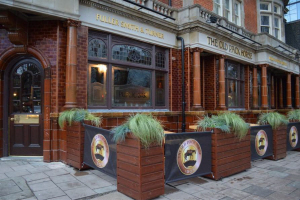 The Old Pack Horse, London W4. Pic: Fuller’s. London’s Best Beer, Pubs and Bars updates
West London: Chiswick
Contemporary pub (Fuller’s) Regional heritage pub
434 Chiswick High Road W4 5TF
T 020 8994 2872 w oldpackhorsechiswick.co.uk f oldpackhorse tw OPHW4
Open 1100 (1200 Sun)-2400 (0100 Thu, 0200 Fri-Sat). Children welcome until early evening.
Cask beer 7 (Fuller’s, 1-2 guests) Cask Marque, Other beer 6 keg, 14 bottles, Also 1 real cider, 20 whiskies, other specialist spirits, 25 wines.
Food Better than average Thai menu, Outdoor Front terrace, side yard, Wifi.
Retro DJs, art gallery, board games, functions.
This big pub overlooking Turnham Green reopened in November 2012 following a refurbishment that successfully combines heritage elements with a more contemporary, funky feel, functioning both as a youthful late night venue and as a fine town centre showcase for nearby owning brewery Fuller’s. A longstanding part of the brewery estate, it was rebuilt in 1910 to the designs of celebrated Edwardian pub architect T H Nowell Parr and well exemplifies his distinctively exuberant style – rich glazed ceramic faïence exterior finishes, elaborate arched doorways, Ionic columns and first floor bay windows.
Inside, a wonderful snug with an Arts and Crafts fireplace housed inside a Tudor arch provides a particularly attractive feature; elsewhere there’s an original bar back and counter and fragments of art deco stained glass. Quirky modern touches include tip-up seats, while a collage of playbills and a lightbox recall a vanished piece of local heritage, the Empire Theatre, which stood nearby until 1959.
ESB, London Pride, Seafarers and numerous Fuller’s specials and seasonals occupy the handpumps – Bengal Lancer features regularly and an external guest from a better known brewery might well be spotted. Keg offerings include Fuller’s own Honey Dew and London Porter besides Hoegaarden, Innis & Gunn and Veltins, while bottles of 1845 and Vintage Ale line up alongside a full range of Chimay Trappist beers, Anchor Steam, Delirium Tremens and Singha.
The Thai food is a cut above the cheap and cheerful stir fry standard you might expect: it can be enjoyed in a bright and cheerful restaurant at the back or elsewhere in the pub if you wish.
Underground Chiswick Park, Gunnersbury Cycling LCN+ 35 and links to Chiswick national rail
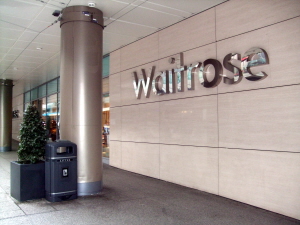 Waitrose Westfield London, London W12 London’s Best Beer, Pubs and Bars updates
West London: Other locations – Shepherds Bush
Shop (Waitrose)
Westfield London W12 7GA
T 020 8749 1201 w www.waitrose.com
Open 0800 (1200 Sun)-2200 (1800 Sun).
Cask beer None, Other beer 90 bottles, Also Wines and specialist spirits.
Food Grocery food, takeaway, food court nearby. Disabled toilet in shopping centre.
Waitrose is about the best of a puzzlingly bad bunch among British national supermarket chains when it comes to beer, so it’s worth bearing in mind that the branch in the massive Westfield London mall is one of the biggest in the capital. The UK range is the strongest, with numerous selections from Brains, Meantime, Rebellion and Thornbridge among the highlights, and a particularly extensive lineup from Fuller’s. A more restricted selection of imports includes reasonable stuff like Budvar Dark, Chimay Bleue, Tripel Karmaliet, and Duvel in big bottles. For more about the area see the review of the Defectors Weld.
Overground Shepherds Bush Underground Wood Lane, Shepherds Bush Cycling LCN+ 35, 39
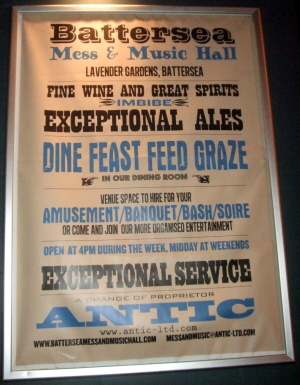 Battersea Mess and Music Hall, London SW11 London’s Best Beer, Pubs and Bars updates
Southwest London: Battersea and Clapham
Contemporary pub (Antic)
51 Lavender Gardens SW11 1DJ
T 020 7223 6927 w www.batterseamessandmusichall.com f Battersea-Mess-and-Music-Hall tw MessandMusic
Open 1600 (1200 Sat-Sun)-2300 (2400 Thu-Sat, 2230 Sun). Children welcome until 2100.
Cask beer 6 (Adnams, 5 sometimes unusual guests), Other beer 4 keg, 20 bottles, Also 2 real ciders/perries, 30 wines including champagnes, specialist spirits.
Food Gastroish enhanced pub grub and cooked bar snacks/sharing plates, Outdoor Beer garden, Wifi. Disabled toilet.
Mon quiz, Sun live music, regular live music and cabaret in upstairs venue, functions, board games, table football, bar billiards.
They mean ‘mess’, of course, in the sense of somewhere to eat, but there’s no ambiguity about the ‘music hall’ bit. Above the bar area of an already sprawling pub behind an unassuming frontage on a side street just off Lavender Hill is the former music hall, complete with stage, mirror balls, flock wallpaper and its own entrance and box office, capable of accommodating 300 people.
And it’s not the only surprise in the warren of eccentrically decorated rooms – behind an unmarked door is the den-like Games Room, with sofas, bar billiards and its own stage. Elsewhere there are attractive window booths, reclaimed kitchen tables, old rocking horses and powder blue walls decorated with junk.
It could only be an Antic pub. This former Walkabout, once home to the first Jongleurs comedy club, was relaunched under its new name by the ambitious south London-based pubco in October 2011.
As with most Antics unencumbered by ties, the beer range is noteworthy. The casks change regularly but there’s always an Adnams beer or two on, with guests often from small and unusual brewers like Stringers or Devilfish, and in a range of styles. Kegs include Meantime London Lager and changing beers from Moor, while classics like White Shield and Duvel are in the fridges alongside less often seen options like Krušovice Černe and Sierra Nevada Kellerweiss. Imaginative home cooked food includes a burger deal on Mondays.
National Rail Overground Clapham Junction Cycling Link to LCN+ 37
|
|
