A sample text widget
Etiam pulvinar consectetur dolor sed malesuada. Ut convallis
euismod dolor nec pretium. Nunc ut tristique massa.
Nam sodales mi vitae dolor ullamcorper et vulputate enim accumsan.
Morbi orci magna, tincidunt vitae molestie nec, molestie at mi. Nulla nulla lorem,
suscipit in posuere in, interdum non magna.
|
ABV: 9%
Origin: Bowburn, Durham, England
Website: www.durham-brewery.co.uk
A shorter version was originally published in BEER November 2008. For more smoky beers see previous post.
 Durham Brewery Also amber (like St Austell Admiral’s Ale — see previous post) but considerably stronger is Durham Bede’s Chalice (9 per cent) one of several fine strong ales perfect for winter drinking from a brewery that emphasises the ecclesiastical heritage of its home territory. It was originally a Christmas beer and is still only bottled on an occasional basis (my tasting sample was from Gyle 1771), but is well worth snapping up if you see it. The grist is Maris Otter pale, lager, Vienna and wheat malts, hopped with Centennial, with a recommended serving temperature of at least 8°C.
It’s a warm amber beer, a glow no doubt down to the Vienna malt, with a fine white head and a smooth and slightly wheaty aroma with notes of angelica and a touch of wood. The palate is rich with orange and peach liqeur character and a spicy wheaty note, with the syrupiness drying on the swallow. A sweet-sour creamy and herby finish develops rooty woody hops and juicy fruit. Overall a very flavourful and impressive beer.
For more smoky beers, see next post.
Read more about this beer at ratebeer.com: http://www.ratebeer.com/beer/durham-bedes-chalice/82045/
ABV: 5%
Origin: St Austell, Cornwall, England
Website: www.staustellbrewery.co.uk
A shorter version was originally published in BEER November 2008. For more smoky beers see previous post. See also Top Tastings 2008.
CAMRA North London tasting February 2010
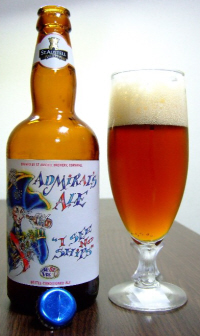 St Austell Admiral's Ale For a more subtle whiff of the bonfire (than Heller Aecht Schlenkerla Rauchbier Weizen – see above), alongside generous and satisfying fruit and biscuity malt flavours, try St Austell Admiral’s Ale, brewed uniquely from Cornish Gold malt which is kilned for the brewery using a special process, making it possible to obtain a rich colour and nutty flavour from a single malt rather than mixing pale and coloured malts as in most amber beers. Hops are Styrian Goldings and Cascade. It was originally developed in 2005 to mark the 200th anniversary of the Battle of Trafalgar.
The beer is a cherry red-brown colour with a little off-white head. A humbug, burnt toffee and malted milk biscuit aroma with a spicy blackcurrant note heralds a full toffee palate with fruity complexity, with vanilla wafer, nuts, liquorice and thick hops emerging. The beer turns tangy towards a drying fruity nutty finish with a subtle roast note. A unique, very juicy and distinctive beer.
For more smoky beers, see next post.
Read more about this beer at ratebeer.com: http://www.ratebeer.com/beer/st-austell-admirals-ale/54788/
ABV: 5.2%
Origin: Bamberg, Franken (Bayern), Germany
Website: www.schlenkerla.de
A shorter version was originally published in BEER November 2008.
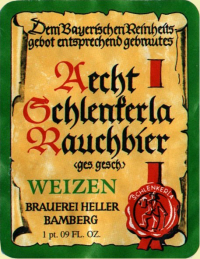 Heller Aecht Schlenkerla Rauchbier Weizen Global warming may have turned late autumn into a balmy season that fools trees into staying up past their bedtime, but according to my childhood programming the cold begins in November, when the half of your body turned towards the Guy Fawkes bonfire toasts while the other half freezes. Smoky bonfires should herald long evenings around roaring log fires, with a beer or two to warm the spirits further.
Smoke and ash are old-established colours on the brewer’s palette: indeed all beers would have had a smoky tang in the days when malt was kilned over wood. Beers made with deliberately smoked malt are still a speciality of Bamberg in Franconia: most examples are filtered, but Heller Aecht Schlenkerla Rauchbier Weizen (5.2 per cent) is a cloudy wheat beer from the bigger of the city’s two smoked beer breweries, made using the brewery’s own beechwood-smoked wheat and barley malt and Hallertauer hops.
This is a cloudy deep brownish amber beer with a thick foamy head and a spicy phenolic aroma with restrained smoke. The palate is well balanced and complex with dried banana flavours leading, followed by lots of smoke and burnt rubber notes over smooth bready malt with spiced apple complexity. A dry hoppy finish has tangy apple fruit and more chewy smoke. The soft wheaty flavours make this possibly an easier entry point into the style than the full-on 100% barley malt versions.
For more smoky beers, see next post.
Read more about this beer at ratebeer.com: http://www.ratebeer.com/beer/aecht-schlenkerla-rauchbier-weizen/8565/
ABV: 5.3%
Origin: Newton Abbot, Devon, England
Website: www.tuckersonline.co.uk
Originally published in BEER May 2007. For more bottled milds see previous post
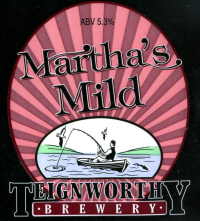 Teignworthy Martha's Mild Tucker’s Maltings of Newton Abbot is one of Britain’s few surviving specialist maltings. The building is now a major tourist attraction as well as a working maltings, and hosts both its own beer shop and a brewery.
The Teignworthy Brewery is independently run by former Oakhill brewer John Lawton but maintains a close working relationship with its host including using Tucker’s malts. A wide range of real ales in a bottle includes a number of beers in historic styles.
Martha’s Mild was named to celebrate the birth baby Martha in 2002, but it’s also filled a gap left on the shelves of the maltings beer shop by the disappearance of bottled Dark Ruby. It’s brewed from pale, crystal, amber and chocolate malts, wheat malt and Fuggles and Goldings hops.
The deep reddish brown beer has a restrained malt, fruit and cola aroma with a hint of cough candy. The palate is dryish but with a good dose of fruit that turns slightly tropical, with notes of liquorice, roast malt, minerals and hops.
The finish has cola, melon, roast coffee and a firm dry chocolate bite – perhaps a little stern for a mild and certainly not as sweet as the label claims, but with plenty of quality and distinction. Martha should feel duly honoured.
This beer also featured in a shorter review in BEER March 2009, as one of several milds for May. For the previous mild in this piece, see Vale Black Swan.
Teignworthy Martha’s Mild (5.5 per cent) from Tuckers Maltings, Newton Abbot, Devon, is another ratebeer top 10 entry. Launched in 2002 to celebrate the birth of the brewer’s daughter Martha, this is a dark red-brown beer with notes of cough candy, liquorice, cola and melon, with a rather stern and ashy coffee finish.
The next mild featured in this piece is Hoggleys Mill Lane Mild.
Read more about this beer at ratebeer.com: http://www.ratebeer.com/beer/teignworthy-marthas-mild/22001/
ABV: 4%
Origin: Kislingbury, Northamptonshire, England
Website www.hoggleys.co.uk
Originally published in BEER May 2007. For more bottled milds see previous post.
CAMRA North London tasting 2010
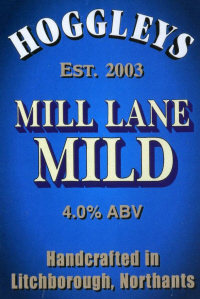 Hoggleys Mill Lane Mild Meanwhile if Sarah Hughes Dark Ruby (see previous post) remains impossible to obtain, there are an increasing number of other good bottle conditioned milds to console yourself with, including this one from a relatively new micro in a village west of Northampton that has just started bottle conditioning after success with cask.
Hoggleys, opened in 2003 by former home brewer Roy Crutchley with Julie Hogg (thus the name), proclaims itself dedicated to quality, and it certainly shows in Mill Lane Mild, brewed from mild, crystal, black and chocolate malts, torrefied wheat and Challenger and Fuggles hops.
At 4 per cent it’s strongish rather than strong, and pours a very dark brown, almost black until held to the light, with a mushroom coloured head. Pastilley malt, roast coffee and sharpish fruit make for an inviting aroma.
A complex palate has dark fruit, malted milk, spice, chocolate and a faint hint of burnt rubber. The roasty finish turns powdery dry with emerging hops, ash and coffee.
It’s on the dry side compared to more traditional milds – a common trait in more recent interpretations – but you can’t fault the quality and richness of flavour, particularly if, as the bottle advises, it’s drunk at room temperature.
This beer also featured as a mild for May in BEER May 2009 in a much shorter review. For the previous review in this piece, see Teignworthy Martha’s Mild.
Hoggleys at Litchborough, Northamptonshire, once claimed to be the smallest brewery in Britain but has since expanded to more commercial proportions, thanks to the sort of quality evident in Hoggleys Mill Lane Mild (4 per cent), a very dark, creamy and pastilley example with blackcurrant, coffee and burnt rubber notes, its roasty bite soothed by a lovely malted milk texture.
For the final beer reviewed in this piece, see Tryst Brockville Dark.
Postscript: I featured this beer at a tasting hosted for North London CAMRA in February 2010 to much appreciation from the attendees, some of whom including a couple of CAMRA veterans had never heard of it. The beer was an easy second favourite (after Fuller’s Vintage Ale and in stiff competition with some former Champion Bottled Beer of Britain winners), reinforcing my admiration for the Hoggleys and their craft.
Read more about this beer at ratebeer.com: http://www.ratebeer.com/beer/hoggleys-mill-lane-mild/54708/
See next post for more bottled milds.
ABV: 6%
Origin: Sedgley, West Midlands, England
Website: www.sarahhughesbrewery.co.uk
Originally published in BEER May 2007
Preface (March 2010):
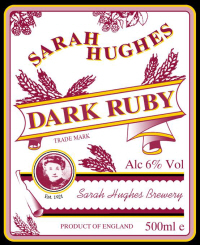 Sarah Hughes Dark Ruby The Beacon Hotel brewpub on the outskirts of Sedgley, deep in the Black Country near Wolverhampton and Dudley, may be an unlikely home to a world classic, but its Sarah Hughes Dark Ruby mild is arguably the benchmark of this traditional style. Originally revived as a cask beer in the pub, in the late 1990s it was briefly available more widely in bottle conditioned form, but the contract bottler went out of business and the brewery failed to arrange a replacement. Ever since I’d started writing my CAMRA column I’d always made a point of featuring milds in May to link with CAMRA’s Mild Month campaign aimed at bolstering what at one point seemed a fast disappearing style: Dark Ruby was always top of my list, and every year I’d doggedly pester the brewery for news of the bottled version.
My efforts were in vain until in 2007 I was told bottling was likely to restart soon if there was a demand – the brewer had even carried out some tests and sent me two bottles for review. Tasting one, I was so excited I decided to break my normal rule of only writing about currently available bottled beers, and used Dark Ruby to lead that May’s column.
Almost three years on I’m sad to say there’s still no sign of bottled Dark Ruby, though the cask version continues to be available at the pub and leaks out occasionally to a few free houses and festivals. Meanwhile I stashed my second sample bottle away to see what became of it with age, and finally cracked it open this winter. What follows is the text of my original piece, and appended are some tasting notes on the aged bottle. Two other bottled milds featured in May 2007 appear in succeeding posts.
Original review:
Around the world there are a few beers that every dedicated beer lover ought to try at least once, not just for their intrinsic quality but also their deep links to the heritage of brewing. Consider the likes of Worthington White Shield, Anchor Steam, Guinness Foreign Extra, Budvar and most of the Trappist ales – beers so precious, UNESCO should slap a World Heritage designation on them.
One deserving entrant on this list originates from a small brewpub in the little-known town of Sedgley, a bus ride from Wolverhampton in the Black Country of the English West Midlands. The Beacon Hotel is a gem of a pub, listed in CAMRA’s National Inventory for preserving its multi-roomed layout, but perhaps most celebrated as the home of Sarah Hughes Dark Ruby Mild.
The hotel and its brewery date from 1850, and Sarah Hughes herself presided for 50 years from 1921. The brewery fell out of use in the late 1950s but was revived in 1987 by Sarah’s grandson, John Hughes, who still owns the pub today.
John dug his grandmother’s recipe out of a bank vault and resolved to stick to it as closely as possible, recreating an authentic strong early 20th century Black Country mild of the sort that once slaked the thirst of local workers in the days when this area earned its uninviting name from the smoke of a thousand factory chimneys.
Dark Ruby is originally a cask beer, but its robust strength and character make it ideal for the bottle. A bottle conditioned version helped spread the beer’s reputation for a while, but then the contract bottler went out of business, and the brewery never found the time to sort out a replacement.
Recently bottling has been back on the agenda at the Beacon, and head brewer Andrew Brough has produced a number of test brews. When my colleague Jeff Evans reviewed a sample in Beers of the World magazine, hinting that regular bottling would resume shortly, the brewery was overwhelmed by enquiries.
The truth is that there are no finalised arrangements for commercial bottling yet, but the more interest generated in the beer, the more confident they’ll feel about making the investment. That’s partly why for this year’s Mild Month I’m ignoring my usual rule of sticking to easily available beers by featuring a rare test bottling.
The beer is brewed from Maris Otter pale and crystal malts, caramel, invert sugar and a very traditional blend of Fuggles and Goldings hops. The result is indeed a rich dark ruby brown, with a creamy yellow head.
A very fruity aroma of blackcurrants, overripe plums and fruit cake has a distinctive sharpish note. The palate is nicely sweet and fruity at first, but firm burry hop and roast notes add plenty of backbone.
A long finish has more fruit, moreishly drying but not particularly bitter hops and a late tarry touch. Overall it’s a luxurious and grownup beer without the forward smoky roast flavours with which many modern micros now dose their dark milds.
The beer’s pleasures deserve to be shared with the millions of potential devotees who will never get a chance to catch that bus from Wolverhampton. The Campaign for Real Dark Ruby in a Bottle starts here.
Tasting notes on aged bottle, bottled early 2007, tasted December 2009.
A very dark and slightly hazy ruby beer that pours with a thick, fine and creamy yellow-orange head yielding a mature marmalade aroma with notes of brown sugar, herbs and ripe fruit. The complex malt palate has thinned and developed oxidised Madeira notes with minty marmalade, cherryish port wine and brown sugar, and very mild hops: the hop and roast characteristics noted in the younger beer have certainly mellowed out. A fruity cherry finish has caramel, port, light woody tones and a slight alcoholic kick. Perhaps aged a little too long and starting to turn a bit papery, not as spectacular as the younger beer but still interesting and complex.
See next post for more bottled milds.
Read more about this beer at ratebeer.com: http://www.ratebeer.com/beer/sarah-hughes-dark-ruby-mild/5113/
ABV: 4.2%
Origin: Downton, Wiltshire, England
Website: www.hopback.co.uk
CAMRA North London tasting February 2010
 Hop Back Crop Circle Hop Back have grown into one of the major British craft brewers with an innovative but cannily targeted range of speciality ales led by the trendsetting Summer Lightning, and a strategy that pursues the takeout trade through reliable bottle conditioned supplies to supermarkets as well as cask ale drinkers. Crop Circle is one of those take home beers particularly aimed at warm days where otherwise a can of anaemic mass produced lager might fall to hand.
Back when I first started taking tasting notes, I was rather unkind to Crop Circle, noting it was refreshing but so was water, and wondering if the urge to lure drinkers raised on blandness had gone rather further than meeting them halfway.
But when putting together the list for the CAMRA North London beer tasting I decided to include it as a different and contrasting taste, a reliable example of a British wheat beer that nods to both German and Belgian models, using malted rather than unmalted wheat like the former but adding coriander for spicing like the latter. Besides barley malt and wheat malt the grist includes flaked maize and the hops are an interesting blend of British and Middle European, including Pioneer, East Kent Goldings, Tettnanger and Žatec.
It’s a hazy pale golden beer with a good but not especially thick white head and a rather strange and singular aroma of coriander, citrus, sulphur and more than a hint of flour paste. The crisp dry cereal palate is again a bit pasty and also a bit thin with some odd metallic flavours, a definite but not overstated coriander note, plenty of citrus fruit and some gritty minerals. A dry, creamy, lightly hoppy finish has more herbs and citrus, with a definite bitterness developing from slightly metallic hops. It’s a bit of an oddity – the brewery claims the inclusion of flaked maize “hints at crisp corn flavours” but I find the pappy quality it lends a little offputting.
My tasters hummed and hah’ed – one of them really liked it; most thought it interesting but not for them. Someone observed that on the right occasion, for example relaxing after mowing the lawn on a hot summer’s day, a well-chilled bottle would be just the job – exactly the sort of application I imagine the brewers had in mind.
Read more about this beer at ratebeer.com: http://www.ratebeer.com/beer/hop-back-crop-circle/1240/
 Aromatherapy... Photo: Tom Stainer Here are 30 beers which really stood out from the many others I tasted during 2009. They’re not necessarily new beers, just beers I hadn’t tasted before, or for a long time, and that from the first taste made me want to laugh, jump, shout or simply chill out in a warm dark corner with a satisfied smile on my face, contemplating the riches of international beer culture and the pleasures it can deliver. They’re not necessarily the “best” beers I tasted during the year, though all of them scored on the high side for quality, but they’re all rich in interest and speak of the skill, dedication, imagination and urge for self-expression of their creators.
The selection inevitably reflects my personal tastes but I’m still pleased it’s quite varied. There are some big hitters from the USA in there — I’ve been really impressed with the variety and quality of American beers this year — and some decent stuff from Franconia. One great evening I spent in the Monk’s Kettle in San Francisco where I tasted two astonishing brews, Hair of the Dog Adam and North Coast Brother Thelonious, in succession, but even more memorable was a tasting at Fuller’s that included three variously aged samples of the incomparable Vintage Ale.
The beers are in alphabetical order — picking thirty was challenge enough, ranking them would be too much! Click on the links for detailed tasting notes and background information.
- [intlink id=”317″ type=”post”]Ale Smith Speedway Stout[/intlink] 12%, San Diego, California, USA
- [intlink id=”323″ type=”post”]Amager Imperial Stout[/intlink] 10.1%, Kastrup, Hovedstaden, Denmark
- [intlink id=”329″ type=”post”]Binchoise / Belgoo Luppoo[/intlink] 6.5%, Binche, Hainaut, Wallonie
- [intlink id=”335″ type=”post”]Bryncelyn Buddy Marvellous[/intlink] 4%, Ystradgynlais, Powys, Cymru
- [intlink id=”341″ type=”post”]Concertina Bengal Tiger[/intlink] 4.5%, Mexborough, South Yorkshire, England
- [intlink id=”344″ type=”post”]Dogfish Head 90 minute Imperial IPA[/intlink] 9%, Milton, Delaware, USA
- [intlink id=”348″ type=”post”]Dolle Cosmos Porter[/intlink] 8%, Esen, West Vlaanderen
- [intlink id=”353″ type=”post”]Fuller\’s Vintage Ale 1999 / 2005 / 2009[/intlink] 8%, Chiswick, London, England
- [intlink id=”358″ type=”post”]Glazen Toren Saison d\’Erpe-Mere Speciaal Eindejaar[/intlink] 9%, Erpe-Mere, Oost Vlaanderen
- [intlink id=”362″ type=”post”]Grasser Huppendorfer Vollbier[/intlink] 5%, Huppendorf, Franken/Bayern, Germany
- [intlink id=”366″ type=”post”]Hair of the Dog Adam[/intlink] 10%, Portland, Oregon, USA
- [intlink id=”373″ type=”post”]Hobsons Postman\’s Knock[/intlink] 4.4%, Cleobury Mortimer, Worcestershire, England
- [intlink id=”377″ type=”post”]Hopshackle Historic Porter[/intlink] 4.8%, Market Deeping, Lincolnshire, England
- [intlink id=”383″ type=”post”]Molen Bloed, Zweet en Tranen (Bruichladdich)[/intlink] 8.1%, Bodegraven, Zuid Holland, Netherlands
- [intlink id=”390″ type=”post”]Neder Schwarze Anna[/intlink] 5.2%, Forchheim, Franken/Bayern, Germany
- [intlink id=”395″ type=”post”]North Coast Brother Thelonious[/intlink] 9.4%, Fort Bragg, California, USA
- [intlink id=”398″ type=”post”]Orkney Dark Island Reserve[/intlink] 10%, Quoyloo, Orkney, Scotland
- [intlink id=”402″ type=”post”]Port Old Viscosity Ale[/intlink] 10%, San Marcos, California, USA
- [intlink id=”416″ type=”post”]Red Squirrel IPA in the USA[/intlink] 5.4%, Hertford, Hertfordshire, England
- [intlink id=”419″ type=”post”]Rodenbach Vin de Céréale[/intlink] 10%, Roeselare, Oost Vlaanderen
- [intlink id=”422″ type=”post”]Russian River Temptation[/intlink] 7.3%, Santa Rosa, California, USA
- [intlink id=”425″ type=”post”]Theakston Old Peculier[/intlink] 5.6%, Masham, North Yorkshire, England
- [intlink id=”442″ type=”post”]Thiriez Vieille Brune[/intlink] 5.8%, Esquelbec, Nord, France
- [intlink id=”464″ type=”post”]Thornbridge Alliance Strong Ale Reserve 2007[/intlink] 11%, Ashford-in-the-Water, Derbyshire, England
- [intlink id=”451″ type=”post”]Traquair House Ale 1000th Brew 2001[/intlink] 10%, Innerleithen, Scottish Borders, Scotland
- [intlink id=”454″ type=”post”]Troch Chapeau Oude Lambik[/intlink] 5%, Wambeek, Vlaams Brabant, Vlaanderen
- [intlink id=”480″ type=”post”]Weltons Pridenjoy[/intlink] 2.8%, Horsham, West Sussex, England
- [intlink id=”482″ type=”post”]West Dunkel[/intlink] 4.9%, Glasgow, Scotland
- [intlink id=”487″ type=”post”]Westmalle Extra[/intlink] 4.8%, Malle, Antwerpen, Vlaanderen
- [intlink id=”490″ type=”post”]Whitewater Belfast Ale[/intlink] 4.5%, Kilkeel, Dúin, Northern Ireland
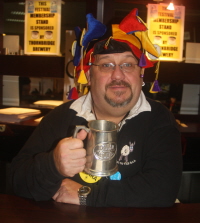 Would you buy a CAMRA membership from this man? National Winter Ales Festival, Manchester 2010. Photo: Tim Hampson The National Winter Ales Festival is very much the little brother of CAMRA’s two national festivals: with an attendance of 8,350 this year, it’s about an eighth the size of the Great British Beer Festival — though still manages to offer some 200 different beers, ciders and perries compared with GBBF’s 500. And it’s a much more relaxed and enjoyable occasion, leaving a warm glow despite the inhospitability of Manchester weather in January.
This year the festival moved about 1km from its long established venue at New Century Hall to the Sheridan Suite on Oldham Road in Ancoats, a bit of a bleak area a stretch of the legs or a bus ride from the city centre. The place is a bit corporate but comfortable and civilised, and much better able to handle the numbers — there was very little queueing. When I visited on the Wednesday there was also plenty of seating, usually a bugbear at festivals, and moving around the single big bar space on the first floor was no problem. The posse of northern-based beer writers and bloggers I stumbled upon proved most congenial company.
If you’re a lover of strong and/or dark beers like me, then this is the fest for you, with lots on offer, and well-chosen too, though there’s still a good range of lighter and lower gravity stuff for those that prefer. A fine array of casks covers the country, but with a detectable bias to the north of England, and a range of breweries that gives plenty of space to micros but also honours worthy independents. The Real Ale in a Bottle bar had rarities from the likes of Dunham Massey and Three B’s, while imports continued the winter theme, with plenty of German Bock and Eisbier and strong Belgian and Dutch winter beers (a trio from Alvinne named after the Three Kings), though on the lighter side there was the unfiltered Kvasniove Pivo from Duvel-Moortgat’s Czech subsidiary Bernard. An unusual range of Danish craft brews added to the interest, with their importer on hand to provide further information.
The Winter Ales section of the Champion Beer of Britain competition is also judged at the festival — there’s a regional round, and a national round with the winning beers going forward to the main CBoB competition at GBBF. Some very worthy brews went off with gongs, with overall winner the highly deserving Elland 1872 Porter, last year’s runner up. Also in the Top 3 of the national round were Breconshire Ramblers Ruin and Acorn Gorlovka Imperial Stout.
My one gripe was the food, a mainly Indian-themed buffet. At any other event I would have welcomed what was indeed tasty food at a very reasonable price and with plenty of vege options, but it was just too spicy for serious tasting — it took a good half hour and quite a bit of water for my tastebuds to reboot. And there was plenty on offer that richly rewarded the capacity to taste.
Overall well worth making a regular event in your beer calendar, and there are some great pubs in Manchester that also put on a show at festival time. The Smithfield Hotel in Swan Street runs its own fringe festival with around 60 beers, mainly on stillage in the cellar and brought up to order, though quite a few seemed to be ticker-friendly specials…much to the delight of an elderly gentleman at my table who’d brought his own jug along, the better to pour his beers into recycled 250ml plastic mineral water bottles for reasons best known to himself.
Top 3 Festival Tastings:
- [intlink id=”511″ type=”post”]Elland 1872 Porter[/intlink] 6.5%, Elland, West Yorkshire, England
- [intlink id=”517″ type=”post” /]Leeds Midnight Bell[/intlink] 4.8%, Leeds, West Yorkshire, England
- [intlink id=”514″ type=”post” /]Marble Chocolate Marble[/intlink] 5.5%, Manchester, England
National Winter Ales Festival 2010
ABV: 6.5%
Origin: Elland, West Yorkshire, England
Website: www.eandsbrewery.co.uk
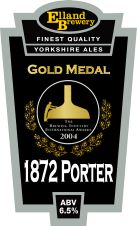 E&S Elland 1872 Porter 2010’s overall Champion Beer of Britain is a previous runner-up, the highly deserving Elland 1872 porter, based on a recipe from the eponymous year. The brewery, in the small Calderdale town of Elland, originates from a merger of the Barge & Barrel brewpub and the West Yorkshire brewery.
It’s a dark ruby beer with an off-white head and a relatively restrained aroma with faint liquorice notes. A bitter toasted malt palate is packed with flavour: meaty, salty and liquorice hints, roast chicory coffee, burnt toast, banana and spreading hops. A soft swallow leads to a long bitterish finish with some fruit and liquorice. Its dryness makes for quite a challenging beer but it’s very well made and top quality.
Read more about this beer at ratebeer.com: http://www.ratebeer.com/beer/elland-1872-porter/23663/
|
|
