A sample text widget
Etiam pulvinar consectetur dolor sed malesuada. Ut convallis
euismod dolor nec pretium. Nunc ut tristique massa.
Nam sodales mi vitae dolor ullamcorper et vulputate enim accumsan.
Morbi orci magna, tincidunt vitae molestie nec, molestie at mi. Nulla nulla lorem,
suscipit in posuere in, interdum non magna.
|
National Winter Ales Festival 2010
Top Tastings 2010
ABV: 5.5%
Origin: Manchester, England
Website: http://www.marblebeers.com/
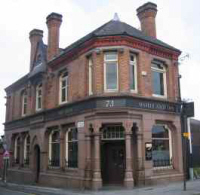 Marble Arch, Manchester M4 The Grade II-listed Marble Arch in Ancoats, on the Rochdale Road just north of Manchester’s city centre ring road, would be an essential stop for anyone with an interest in historic pubs, with its polished façade and glazed tile interior. But it’s also a brewpub with an inviting beer offer of well-brewed own brands, all organic, supported by an imported beer list.
The strong mild Chocolate Marble is one of the most acclaimed of the pub’s own beers. It’s a very dark amber brown, with a fine yellowy-beige head and a fruity and lightly spicy dark malt aroma with coffeeish hints. The palate is definitely coffesish, very smooth, silky and luscious but dry with some sweet chocolate body, mineral and berry flavours emerging. Bittering herb notes blossom in the swallow, with dark roasty malt on the finish still characterised with a sweetish chocolatey slick and some gritty mineral notes. A great beer, and deservedly a multiple award winner, most recently winning gold in the regional strong mild categroy at the National Winter Ales Festival in 2010.
Read more about this beer at ratebeer.com: http://www.ratebeer.com/beer/marble-chocolate-marble/83397/
National Winter Ales Festival 2010
ABV: 4.8%
Origin: Leeds, West Yorkshire, England
Website: www.leedsbrewery.co.uk
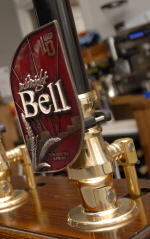 Leeds Midnight Bell Midnight Bell is a fine and rich dark mild named in honour of its brewery’s showcase pub in Leeds’ round foundry development. The brewery, opened in 2007, is currently the only independent in the city, with some well-made, imaginative and stylishly presented lines.
Roast and chocolate malts yield a dark chestnut/amber beer with a foamy light beige head and a strong and spicy blackcurranty hop aroma with a touch of roast. A full flavoured roasty palate has some firm coffee quality, with the sort of blackcurrant fruit notes found in some fine coffees. There’s a jab of dry roast and some caramel sweetness with spicy retronasals. The roasty chewy fruity berry finish is dry and sappy overall and notably long for the style. One of the most complex and enjoyable milds I’ve tasted in a while, it took the silver medal in the strong mild class at the National Winter Ales Festival in 2010.
Read more about this beer at ratebeer.com: http://www.ratebeer.com/beer/leeds-midnight-bell/77331/
Top Tastings 2009
ABV: 4.5%
Origin: Kilkeel, Dúin, Northern Ireland
Website: www.whitewaterbrewing.com
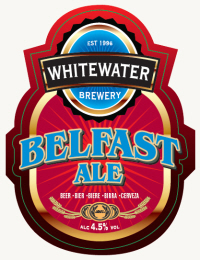 Whitewater Belfast Ale Ireland is a mixed bag of a country for the beer connoisseur. The island gave us one of the world’s classic styles in dry Irish stout, but domestically the nitrogenated evolution of that style has been instrumental in building what’s now the duopoly of two global giants, Diageo and Heineken. In the Republic, a handful of micros struggled to grab and maintain a toehold on the market even during the boom years of the Celtic Tiger economy. In the six counties of Northern Ireland, there’s been something of a resurgence in cask ale in recent years, thanks partly to the growth of the Wetherspoons pub chain, which has a presence in most of the major towns, and partly to the space for cultural change opened up by the “peace process”. Wetherspoons import quite a lot from the mainland, but there are two now well-established Northern Irish micros and two more recently opened.
In early summer of 2009 I finally pinned the last of the major British capitals on my facebook TripAdvisor map with a trip to Belfast, and took the opportunity to try some local brews. The one that brought the biggest smile to my face was Belfast Ale from the Whitewater brewery, founded in 1996 near Newry. I might also have been influenced by first encountering it on handpump at the mosaic and stained glass-encrusted Crown Liquor Saloon, one of the star heritage pubs of the British Isles, which still manages to be a relaxing and welcoming drinking hole with top notch beer despite being an essential stop on the city’s growing tourist circuit.
Belfast Ale has been classed here as a bitter but it displays its local provenance by exhibiting shades of the near extinct style of red Irish ale, as well as a biscuity maltiness reminscent of traditional Scottish styles — besides geographical proximity, the region has deep and tangled historical and cultural ties with the West of Scotland. The colour and grainy biscuit quality result from the presence of torrefied wheat and unmalted roast barley, the latter also an essential ingredient in classic dry stout.
The beer is a good rich reddish-amber with a mainly malty aroma. A smooth malty palate has tasty red fruit notes and a light but drying bite of hops. The swallow is quite pursing, setting up a drying finish with light but definite hops, a minerally touch of roast and a late treacle toffee notes. A substantial, well-balanced and very decent beer named for a fascinating and welcoming city.
Read more about this beer at ratebeer.com: http://www.ratebeer.com/beer/whitewater-belfast-ale/31973/
Top Tastings 2009
ABV: 4.8%
Origin: Malle, Antwerpen, Vlaanderen
Website: www.trappistwestmalle.be
 Westmalle Extra The Cistercian Trappist Abdij Onze-Lieve-Vrouw van het Heilig Hart van Westmalle, on the main N12 road between Antwerpen and Turnhout in the Belgian Kempen, is home to arguably the most influential, and alongside Chimay the most commercially active, of the Trappist breweries. Its brace of regular beers, the dark Dubbel and golden Tripel, have provided the template for scores of secular imitators. It’s lesser known that the abbey brews a third, lower gravity, beer primarily for consumption by the monks themselves, a beer sometimes referred to for obvious reasons as Singel but officially named Extra.
Until recently the beer was almost impossible to obtain publicly, though it occasionally hopped across the main road to the famous (and recently rebuilt) Café Trappist opposite, the unofficial brewery tap. Given the compulsion for all things bearing the Authentic Trappist Product seal among certain members of the international beer appreciation community, this made it one of the world’s most recherché beers, scarcer even than the strictly rationed output of the Westvleteren monastery. When Tim Webb and Joris Pattyn listed it as one of their 100 Belgian Beers to Try Before You Die in 2008, there was some criticism of the implicit elitism in including beers the general reader would find completely inaccessible. But Tim and Joris probably had inside information, as since then Extra has become a little less scarce. Supplies are now finding their way to a few specialist pubs and beer festivals — I got my first taste at the Kulminator in Antwerpen.
It would be a shame if Extra suffered the same scale of fuss and bother as Westvleteren’s beers, as, appropriately for its intended consumers, it’s a modest and unassuming brew. Joris describes it as “the ultimate Belgian session beer.” Like the other Westmalle beers it uses French and Bavarian malts, German and Czech Žatec hops and the house yeast, though I’m unsure if it also includes the candy sugar added to the stronger brews.
It’s a blond beer with a rich and creamy white head and a light creamy, malty and slightly hoppy aroma which is quickly disappated if served in the traditional Westmalle goblet glass. A pale, slightly lagery palate has sharp citric and sweat notes, strawberry fruit and prickly edges. The swallow is refreshingly dry, leading to a lightly dry but creamy finish, excellent balanced with slightly chewy hops. Not quite enough to make me want to become a monk, but it sure must brighten up their days.
Read more about this beer at ratebeer.com: http://www.ratebeer.com/beer/westmalle-extra/25406/
Top Tastings 2009
ABV: 4.9%
Origin: Glasgow, Scotland
Website: www.westbeer.com
 West For four decades cask ale has been the focus of the British beer consumer movement, and the technical specifications for its production and dispense have become embedded in the ideology of beer appreciation as if they’re judgements of value and quality, with “lager” as their polar opposites. This was always problematic, but was just about sustainable so long as practically the only decent beer being brewed in the UK was cask ale, and the only alternatives were ghastly substandard travesties churned out by industrial breweries to maximum profit margins and cacophanies of marketing hype. But the emergence of craft-brewed beers that don’t conform to the specs of “real ale” (and, by grudging extension, bottle conditioned ale) is now challenging both the prejudices of beer drinkers and the Talmudic complexities of CAMRA’s official policy. Craft-brewed lagers designed for filtering into bottles or for gas pressure dispense are at the sharp end of the debate.
A short beer review is not the place to go into these issues in detail, but it’s important context, as Glagow brewpub West is one of the founders of Lagers of the British Isles (LOBI), a joint initiative by artisanal lager brewers to help promote their products. The brewery is also remarkable for its location in a corner of the old Templeton Carpet Factory overlooking Glasgow Green, a jaw-droppingly camp and extravagantly polychromatic late 19th century industrial building popularly known as the Doge’s Palace as it parodies the iconic Palazzo Ducale in Venice.
West is the brainchild of a Franconian expatriate, Petra Wetzel, and brews with appropriately Germanic Reinheitsgebot-compliant rigour, to standards of quality that have even seen it win out in Germany in competition with native brews. Its flagship pale lager St Mungo, named after Glasgow’s patron saint, is also available outside the brewpub and is probably among the top three best golden lagers brewed in the UK. But when I found myself at a dark wood table in the brewpub’s cavernous interior one uncharacteristically balmy afternoon last summer, I particularly appreciated the Dunkel, a rare style for a British brewer.
Brewed from five different malts, it’s a dark chestnut brown with a fine beige head and a soft chocolate malt aroma lifted by hops and spice. There’s lots more chocolate malt on the full palate, given interest by subtle slightly acidic fruity tones and spready chewy hops. A mild but moreish finish follows with more dark chocolate, and developing herb and cream notes. Overall it’s a beer that’s achingly authentic, beautifully fresh, easily drinkable and thoroughly satisfying.
Read more about this beer at ratebeer.com: http://www.ratebeer.com/beer/west-dunkel/57108/
Top Tastings 2009
ABV: 2.8%
Origin: Horsham, West Sussex, England
Website: www.weltonsbeer.com
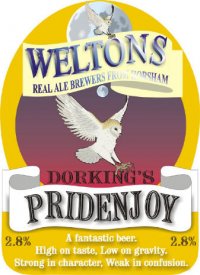 Weltons Pridenjoy Overall this Top Tastings selection exhibits a bias towards very strong beers demanding contemplative sipping, but I also have an affection for low gravity beers, which in many ways are a more demanding test of the brewer’s art. Ray Welton, creator of this 2.8% beer, says it’s the hardest of all his range to brew as there’s “less to work with”.
As a rugby player Roy longed for a cask ale weak enough to drink immediately after a match and developed Pridenjoy to fill that gap in 1997. It’s proved consistently popular and was given wider exposure a few years back when Roger Protz chose to feature it in his book 300 Beers to Try before you Die, alongside an all-star cast of familiar world classics. I sampled it on cask at the Great British Beer Festival in 2009. It’s also available bottle conditioned though for a beer at this strength I’d recommend you make sure your bottles are fresh.
Established styles of low gravity beer tend to use malt and sweetness to add character and body — think of mild, sweet stout or Dutch oud bruin — but Ray has adopted a different approach, brewing a pale and quite hoppy beer. The grist is mainly Optic pale malt with chocolate, amber, Munich, crystal and wheat malts, and Northdown and Bramling Cross hop varieties.
The result is a coppery gold colour (mine was slightly hazy) with a fine bubbly white head. There’s a casky, lightly malty and hoppy aroma with a sweet note. The palate has a light malt base with citrus and pineapple hop flavours, blackcurranty around the edges, with a cleansing swallow leading to a notably peppery bitter finish. It has to be said the body is slightly thin, perhaps a little too thin to support the big hop bouquet in adequate balance, but set against the achievement of getting so much flavour and complexity into so low a gravity, that’s a minor and perhaps inevitable flaw. Not a world-beater, agreed, but a welcome and worthwhile stitch in the tapestry.
Pridenjoy will be off to a head start if the current CAMRA campaign for the so-called “People’s Pint”, demanding the abolition of duty on beers of 2.8% or less, is successful. Such a move would inevitably prompt far more brewers to stretch their skills on low gravity beers and the results would be fascinating to taste.
Read more about this beer at ratebeer.com: http://www.ratebeer.com/beer/weltons-pridenjoy/26774/
Top Tastings 2009
ABV: 5%
Origin: Wambeek, Vlaams Brabant, Vlaanderen
Website: www.detroch.be
 De Troch Chapeau Lambic De Troch of Wambeek is one of the lambic breweries you really wish you could think more highly of. Its pedigree is impeccable: it’s a farmhouse brewery founded by Pieter de Troch in 1780 in the lambic heartland of Pajottenland, and remains in family ownership, with links by marriage to other lambic-brewing families like De Neve. Unfortunately for those of us who care about such things, its business model since at least the mid-1980s has been to ape the multinational-owned lambic brands and more, with a range of sweetened lambics in ever more peculiar and exotic fruit flavours under the Chapeau brand, seemingly devised by the same consultants that develop air fresheners for toilets. Their glass design, shown left, demonstrates quite how keen they are to deaden the challenge of a traditional lambic — the chapeau in question appears to have been borrowed from Carmen Miranda.
And yet…if you want a reason to feel better about De Troch, here’s one — at the base of all this is a competent, traditional spontaneously fermented lambic, although it rarely emerges in its own right. I experienced it at the Zythos festival in Sint-Niklaas in 2009, poured from a re-used plastic mineral water bottle at the brewery’s stand, and I’ve since discovered it can be found increasingly on draught at a few speciality pubs in the environs of Brussels. I approach pure, unblended lambic with trepidation and with more of a sense of duty than an anticipation of delight, but I can confirm this is one of the most approachable plain lambics I’ve tasted, and well deserving of wider exposure.
My sample was a hazy gold colour with an orange tinge, and almost flat with a few bubbles by way of a head. A complex sharp typically lambic aroma presented to the nose, with mineral and orange notes and a hint of mature cheese. The palate was tart but relatively soft, with lemon juice and a trace of candy, its forgiving sweetness not overstated but enough to drive the pursing quality to the edges. A long, sappy, chewy and sourish finish had a light marmalade touch. Purists will no doubt advocate the steely acidity of a Cantillon or a Girardin — this was as genuine, but easier, and certainly not deserving of the fruit syrup atrocities it is normally condemned to suffer.
Read more about this beer at ratebeer.com: http://www.ratebeer.com/beer/de-troch-oude-lambik/24075/1/2/
Top Tastings 2009
ABV: 10%
Origin: Innerleithen, Scottish Borders, Scotland
Website: www.traquair.co.uk
 Traquair House by James McIntosh Patrick, National Galleries of Scotland Traquair House is the oldest inhabited stately home in Scotland and a new wave craft brewer ahead of its time. In 1965, several years before the launch of CAMRA, the rediscovery of Britain’s diverse brewing heritage and the subsequent rise of the microbrewery, the then laird, Peter Maxwell-Stuart, discovered an Elizabethan brewhouse in the grounds (what a thing, to own a house so huge you stumble upon bits of it you never knew existed) and brought it back into use with the help of Sandy Hunter from the nearby Belhaven Brewery, now a subsidiary of Greene King. Peter has since died but his daughter Catherine continues the family tradition.
For years the brewery turned out only one beer, Traquair House Ale, to a traditional recipe, but started to diversify a bit in the 1990s, and also experimented with a few commemorative ales. In 2001 it celebrated its 1000th brew with a limited extra-strong edition of its signature beer which, like its standard products, is filtered but unpasteurised and capable of ageing. I found a batch at Ville Nouvelle Wines, in a basement on Broughton Street in Edinburgh’s New Town (thus the name), a nifty little wine merchant that also does a small but well chosen range of Scottish microbrews. Noting the best before date of December 2010, I bought a trio with a view to seeing how they developed.
I first opened one in 2003, discovering a soothing, rich and well-balanced very dark brown beer with a reddish tinge and a moderate foamy head. A rummy, cakey aroma had Turkish Delight notes, heralding a prickly malty cakey palate with rum and raisin and blackcurrant and mint flavours reminscent of Australian Cabernet Sauvignon wines. A toffeeish warming finish had more malt, burnt toffee, and lingering hints of subtle smoke and hops.
In January 2009 I dipped into my stash again to find a dark mahogany beer with a bubbly yellow head and a finish that had turned leathery, with meaty gravy notes and spice. There were also thick gravy notes in the sweetish, rummy, spirity palate, with mint and dry wood to balance the maltiness. A long and complex finish dried out with a touch of roast, more mint, powdery hops and woody red wine tannins. Surprisingly the beer slipped down easily, registering little of its true alcoholic weight.
I’ve still one bottle left which, I suspect, has a good few years’ life left in it. Look out for future reports.
Read more about this beer at ratebeer.com: http://www.ratebeer.com/beer/traquair-1000th-brew/11994/
Top Tastings 2009
ABV: 11%
Origin: Ashford-in-the-Water, Derbyshire, England
Website: www.thornbridgebrewery.co.uk
Thornbridge is currently one of the most exciting and innovative breweries in Britain, complimenting a range of high quality cask ales with a selection of bottled specialities including fine India Pale Ales and Imperial Stouts and the unclassifiable dark honey beer Bracia. It arose from a collaboration with Sheffield’s Kelham Island brewery at stately home Thornbridge Hall, originally to provide own-brand beer to sell to visitors. It was soon earning a string of awards, and gave a launch platform to Martin Dickie, one of those since responsible for creating the headline-grabbing BrewDog brewery in Aberdeenshire. At the end of 2009, Thornbridge expanded to a new site in Bakewell though brewing still takes place at the hall.
Thornbridge’s place on the rapidly developing international craft brewing circuit is demonstrated by Alliance, a remarkable limited edition that emerged from a collaboration with boundary-pushing Italian head brewer Stefano Cossi and one of the world’s most famous brewers and leading advocate of beer and food matching, the ever-globetrotting Garrett Oliver of New York City’s Brooklyn brewery. In March 2007 the pair brewed a barley wine at Thornbridge specifically for barrel ageing, dosing it with champagne yeast to achieve a high gravity. Some of the resulting beer was matured for 18 months in madeira casks, some was matured for a similar time in refill Pedro Ximinéz sherry casks, while a “control” portion was matured conventionally for comparison.
All three versions were bottled in August 2008, bottle conditioned in champagne-style half bottles like a fine gueuze. I was dead pleased to receive a full set for review when they were finally released in April 2009 — it’s not often you get the chance to taste the results of such an experiment from such a reliable source at your own leisure.
The non-wood aged version, simply called Alliance Reserve, is a fine beer in its own right. It’s amber, with a fine lacy off-white head, and sour plums, bitter herbs and fruity balsamic vinegar notes on a toasty amber malt aroma. There’s a smooth, malty and very fruity palate with dark oily marmalade and lighter citrus flavours to shock the tongue, a savoury note, toffee and whiskyish retronasals. A very satisfying fruity-malty finish has a bite of hops and lingering chewy resins.
Alliance Madeira Reserve is recognisably the same beer but adds an obviously wood aged dimension. It’s similarly amber though my sample was cloudier than the plain Reserve, and has a thick yellowy-white head. There’s wood and wine notes on a mellow casky aroma with notes of whisky and salt. The palate is big and complex with hops rumbling over a sweetish winy background, and a lightly acidic pippy hint, perhaps from the maturation, perhaps from something that intruded during bottling. Wood and toffee flavours spring up on the swallow, and there are vanilla notes and warming alcohol on the fruity-malty finish, ending after a long development with the dryness of sucked wood.
The sherry cask version, labelled Alliance PX Reserve, emerges as the best of the three, with a lustrous but mellow balance and a heady brew of complex flavours that knocks it up into world class. This amber beer with a fine white head has a mellow but estery fruit salad, sherbet and hop aroma. A rich and soft malt palate has figgy fruit, buttery tones, brazils and walnuts, vanilla, woody notes and a distance dance of hops. The bitterness notably steps forward on the tongue-drying finish, but still balanced by satisfyingly dense malt and fruit. A truly fine beer that’s perfect for lengthy savouring.
Read more about these beers at ratebeer.com:
http://www.ratebeer.com/beer/thornbridge-alliance-reserve-2007/98859/
http://www.ratebeer.com/beer/thornbridge-alliance-madeira-reserve-2007/98780/
http://www.ratebeer.com/beer/thornbridge-alliance-px-reserve-2007/98778/
Top Tastings 2009
ABV: 5.8%
Origin: Esquelbec, Nord, France
Website: www.brasseriethiriez.com
 Brasserie Thiriez Daniel Thiriez seems incapable of making uninteresting beer: everything I’ve tasted from his self-named brewery has had something to say for itself as well as being consistently of high quality. The brewery is in the historic beer country of French Flanders, still dotted with old-established farmhouse breweries producing the traditional bière de garde style of the region. Daniel’s work pays respect to that heritage without letting it prevent him from pushing the boundaries and innovating in the more recent tradition of the international craft brewer.
Vieille Brune is a case in point, a beer clearly inspired by the sour red ale of East Flanders, some way north on the other side of the Belgian border, but reconceived as a personal interpretation that also connects with the growing interest among specialist drinkers in wood-aged beers. Matured in French oak casks previously used for wine, it was originally conceived as an ultra-limited edition one-off, though more of the same now seems to be trickling from the brewery. I managed to persuade the effusive Simon Thillou of the Cave à Bulles beer shop in Beaubourg, Paris, to sell me a 750ml bottle from the small stock he was keeping back for regular customers, and it was bottle 60 of 250. That was back in July 2008, and I hung onto the beer for six months before tasting.
Vieille Brune pours a very dark ruby brown, with a smooth and plentiful fawn head, and a fruity, woody, balsamic aroma with hints of orange peel that immediately calls to mind the East Flanders classic, Rodenbach. A very complex and sourish malty palate has dates, brown sauce, chocolate, violets, bitter orange and minerally retronasals. The swallow is smooth and fluffy, leading to a tangy slightly citric finish with wood and dirty metal notes.
Read more about this beer at ratebeer.com: http://www.ratebeer.com/beer/thiriez-vieille-brune/84726/
|
|
