A sample text widget
Etiam pulvinar consectetur dolor sed malesuada. Ut convallis
euismod dolor nec pretium. Nunc ut tristique massa.
Nam sodales mi vitae dolor ullamcorper et vulputate enim accumsan.
Morbi orci magna, tincidunt vitae molestie nec, molestie at mi. Nulla nulla lorem,
suscipit in posuere in, interdum non magna.
|
Rake Welsh Beer Festival February 2010
Top Tastings 2010
ABV: 6.5%
Origin: Aberhonddu, Powys, Cymru
Website: www.breconshirebrewery.com
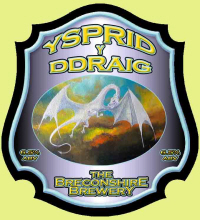 Breconshire Ysprid y Ddraig Breconshire Brewery under the leadership of brewer Justin “Buster” Grant has become one of the best breweries in Wales, mixing innovation with consistency and a sense of tradition and place. Buster is adept at making easy going session beers with a stylish twist, but with Ysprid y Ddraig he proves capable of more esoteric specialities too, joining the growing international band of innovative brewers discovering the delights of ageing in wooden casks. In this case the casks in question are refill Scotch malt whisky – the name means Spirit of the Dragon, with “ysprid” having the same double meaning in Welsh that “spirit” has in English. It’s an appropriate label for a malt cask beer made in Wales by a Scotsman.
Like many of Buster’s beers, this is light in colour. He’s clearly fascinated by how much flavour he can get out of a golden beer, such as Ramblers Ruin which has the distinct bite of black and roasted malt, and he’s still puzzling over how to brew a blond Schwarzbier. First made last year to great acclaim by those in the know, it remains an occasional cask-only treat – ours was an advance sample of the second brew, in a polycask and still slightly too young.
It’s a warm gold in colour with very little head, and a flowery grapefruit and honey aroma with clear notes of whisky and sherry – in fact like many whisky casks the one in question once held sherry. A very smooth and honeyed palate with a firm wine-like body and some wheaty notes develops lots of fruit and twiggy, spicy hops, with very gentle whisky notes providing a hint of sophistication. The casking is more obvious on the long, well-balanced and slow developing finish, emerging as charred oak alongside tasty fruit, with a very late note of hops. Unlike with some beers in the style, the spirit remains subtle and elegant throughout, and shouldn’t cause you to breathe too much fire.
Read more about this beer at ratebeer.com: http://www.ratebeer.com/Ratings/Beer/Beer-Ratings.asp?BeerID=90722
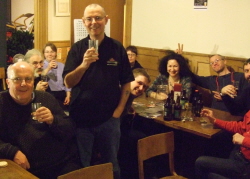 Des de Moor and CAMRA North London tasters, Wenlock Arms, London N1, February 2010. Photo: John Cryne Visiting a great beer pub like the Wenlock Arms, in London N1 on the uncertain border between Hoxton and Islington, reminds me I don’t go to the pub enough. And I wasn’t even here to enjoy its ragged but relaxed atmosphere and excellent selection of top quality cask beers (always including at least one mild), but to host a bottled beer tasting at the behest of North London CAMRA.
A good bunch of people, of mixed ages and genders, found their way to the upstairs room to sample eight Real Ales in a Bottle that I’d chosen to demonstrate both range and quality, including a couple of Champion Bottled Beer of Britain winners. The obliging people at realale.com and alesbymail.com provided most of the supplies and Fuller’s had very generously dug out a case of aged Vintage Ale. Unsurprisingly this proved to be most people’s top beer of the evening, but there was also much satisfied humming for Hoggleys Mill Lane Mild, while Hopback Crop Circle and Red Squirrel IPA in the USA split opinions.
If you’re interested in attending future tastings, watch this space.
The Beer List:
- [intlink id=”265″ type=”post”]Cropton Two pints[/intlink] 4% Cropton, North Yorkshire, England
- [intlink id=”548″ type=”post”]Hop Back Crop Circle[/intlink] 4.2% Downton, Wiltshire, England
- [intlink id=”555″ type=”post”]Hoggleys Mill Lane Mild[/intlink] 4% Litchborough, Northamptonshire, England
- [intlink id=”567″ type=”post”]St Austell Admiral\’s Ale[/intlink] 5% St Austell, Cornwall, England
- [intlink id=”582″ type=”post”]Titanic Stout[/intlink] 4.5% Stoke, Staffordshire, England
- [intlink id=”416″ type=”post”]Red Squirrel IPA in the USA[/intlink] 5.4% Hertford, Hertfordshire, England
- [intlink id=”598″ type=”post”]Downton Chimera India Pale Ale[/intlink] 7% Downton, Wiltshire, England
- [intlink id=”353″ type=”post”]Fuller\’s Vintage Ale[/intlink] 2004 8.5% Chiswick, London, England
ABV: 4.6% and 4.7%
Origin: Ansley, Warwickshire, England
Website: www.tunnelbrewery.co.uk
Originally published in BEER, February 2007, as part of a review featuring reader recommended beers. For more, see previous post.
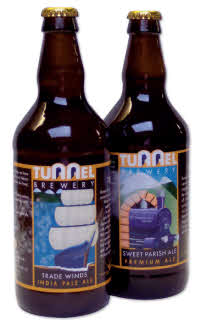 Tunnel Trade Winds and Sweet Parish Ale The Tunnel Brewery at the Lord Nelson Inn at Ansley, near Nuneaton in one of the more rolling and rural parts of Warwickshire, is a true enthusiast-driven operation. It owes its foundation to a group of friends who attended beer connoisseur classes at a local catering college.
The whole group pitched in to finance the brewery at the Lord Nelson, which, with the additional help of a grant from Defra, first fired up its mash tun in 2005 with Mike Walsh – tutor of said classes – as head brewer. Real Ale in a Bottle followed in 2006 and Tunnel’s reputation has continued to grow ever since.
Something of everything they brew goes into bottles, and I picked out two from a wide and varied range. Trade Winds – an IPA at a more contemporary, lower gravity with a nod across the Atlantic – makes an interesting comparison with Downton’s stronger interpretation discussed above.
It’s a warm golden-amber beer with a bubbly off-white head and a moderate, slightly grassy hop aroma with some pineapple and vanilla notes, also made with pure Maris Otter pale malt, and Cascade hops added twice during the boil.
Piney, citric hop notes soon assert themselves on a nicely malty palate, developing a peppery bitterness. The hopping remains prominent, though not overly so, on a slightly sweetish gingery finish with another citrus squeeze. While lacking the complexity of stronger IPAs, it provides easy drinking without sacrificing the hop impact.
Sweet Parish Ale, designated a “premium bitter”, is better still. It’s another Maris Otter product, this time coloured by a little crystal, with East Kent Goldings hops on the boil and Styrian Goldings for aroma.
The result is a deep reddish brown, with a thick yellow head that subsides to persistent bubbles. There’s a refreshing sharply fruity whiff on a notably malty aroma, with blackcurrant pastille notes.
The biscuity gingerbread palate also boasts nuts, fruit, slight smokiness and a touch of herbal cough pastille complexity. A refreshing swallow leads to a dry, leafy finish with well-balanced hops, faint roast and plenty of juicy fruit.
The stylish label designs include lengthy and imaginative but wholly spurious explanations of each beer’s origins under the heading “Rumour has it…”, penned by brewery partner Bob Yates. While I’m the sort of killjoy that would prefer some of the space to be given to more factual information, these pieces are eccentrically engaging and certainly contribute to brand identity.
The bottles also display numbers indicating the order in which the recipes were launched – the pair above are numbers 3 and 2 respectively – a ploy guaranteed to engage the collecting instinct. Bob reports that they now receive requests for samples of bottles and beer mats from all around the world.
If rumour has it that Tunnel brews some very good beers, you can be sure that on this matter at least, the rumours are true.
Read more about these beers at ratebeer.com:
http://www.ratebeer.com/beer/tunnel-tradewinds-ipa/51661/
http://www.ratebeer.com/beer/tunnel-sweet-parish-ale-spa/48933/
ABV: 6% and 7%
Origin: Downton, Wiltshire, England
Website: http://www.hampshirebrewery.com/
Originally published in BEER, February 2007
CAMRA North London tasting February 2010 (IPA only)
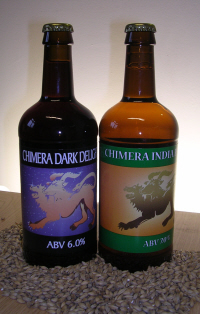 Downton Chimera Dark Delight and India Pale Ale As sharp-eyed readers will have noticed, this page has for some time carried an open invitation for beer suggestions by email, all of which are gratefully received. Both breweries featured this month came to my attention through reader recommendations.
Hop Back brewery once used to boast it was the only brewery in Downton, a large and historic village (or town, depending on who you ask) near Salisbury. It lost that distinction in 2003 when a new micro opened on the very same industrial estate.
Far from being a hostile rival, however, Hop Back has been a friendly neighbour – in fact Downton brewer Martin Strawbridge once worked for the bigger brewery. Hop Back leased Downton space and plant, and bottle and sell its beers.
Two impressive real ales are offered in a bottle under the Chimera brand name. Dark Delight is an old ale that was a Tesco beer challenge runner up in 2004, and became Downton’s second bottled beer in November last year.
A grist of Crisp Norfolk-grown Maris Otter pale malt, maize, roast barley, crystal wheat malt and chocolate malt from Warminster maltings is hopped with Challenger and East Kent Goldings, with a late dose of Pioneer for aroma.
The beer is a rich deep chestnut colour with ruby hints and a light off-white foamy head. The aroma is generously malty and chocolatey, developing a chaffy cereal note and lightly perfumed raspberry fruit.
The palate is surprisingly light hearted, with moist fruit cake, Demerara sugar, a blast of dry coffee and spicy ginger and cinnamon notes. A dry leafy finish has a hint of roast, leaving the impression of a full-bodied but very drinkable beer.
The brewery’s other bottled beer is an award-winning revivalist India Pale Ale, with a golden colour, robust gravity and generous use of hops recalling the late 18th century founders of the style. East Kent Goldings and Pioneer do the honours, with a dash of Organic Fuggles for aroma in more recent brews and a grist of pure Maris Otter with a dash of maize.
My bottled poured a lightly cloudy yellow gold, with a fine bubbly white head. Oddly, the perfumed hoppy aroma turned out to have something of a Germanic character, with honeyed and vanilla notes.
A crisp but quite soft, full and sweet palate is quick to turn hoppy, with resins, pepper, hints of pineapple and a slightly soapy note that isn’t at all unpleasant.
Hops persist in the finish which is peppery and twiggy, but again with that sweetish malt to soften things out. A little more sweetness would have been cloying, but instead the beer manages a perfect balance with vivid flavours.
The Chimera itself puts in an appearance on both labels – an impossibly monstrous creature from Greek mythology with the heads of both a goat and a lion, and a snake for a tail. The beers also bring together disparate ingredients, but with a considerably more harmonious and agreeable result.
For more reader recommended beers see next post.
Read more about these beers at ratebeer.com:
http://www.ratebeer.com/beer/downton-chimera-dark-delight/43300/
http://www.ratebeer.com/beer/downton-chimera-india-pale-ale/44496/
ABV: 3.9%
Origin: Liverpool, Merseyside, England
Website: http://www.wappingbeers.co.uk
Originally published in BEER October 2007 as part of a review of that year’s Champion Bottle Conditioned Beer of Britain winners. For more see previous posts.
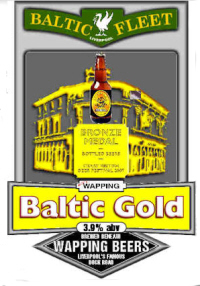 Wapping Baltic Gold One beer bucked the dark trend among this year’s medallists, and from an unfamiliar name that prompted a few puzzled looks among the assembled scribbling experts at the GBBF awards ceremony. Bronze winner Wapping is the modest microbrewery at the historic Baltic Fleet pub on Liverpool’s regenerated dockside which for the past six years has mainly brewed cask for the pub – bottling is a new activity, accomplished by hand straight from the fermenters.
Baltic Gold is a light golden hoppy beer with shades of a US craft-brewed pale, in sharp contrast to the stouts but also of impressive quality. There’s a lovely creamy, slightly floury malt and nettly hop aroma – it’s a single hop, but brewer Stan Shaw prefers not to say which.
The palate is crisp and almost Riesling-like, slightly salty with rich vegetal and resiny hop flavours turning bitter in the mouth, with a gentle condition like a fresh draught pint. A refreshing swallow leads to a lemony finish that turns bitter and peppery over soft, juicy malt.
Stan and owner Simon Holt were as surprised as anyone to see their beer emerging triumphant among such well-known names, but it well deserves its placing. And it’s reassuring too that a blind-tasted competition like the Champion Beer of Britain can turn up talented newcomers regardless of style.
Read more about this beer at ratebeer.com: http://www.ratebeer.com/beer/wapping-baltic-gold/71242/
ABV: 4.6%
Origin: Stoke Lacy, Herefordshire, England
Website www.wyevalleybrewery.co.uk
Originally published in BEER October 2007 as part of a review of that year’s Champion Bottle Conditioned Beer of Britain winners. For more see previous posts.
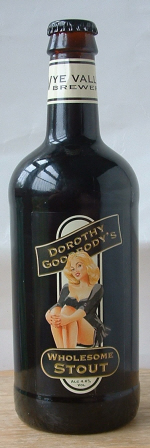 Wye Valley Dorothy Goodbody's Wholesome Stout Wye Valley is another name well-known to fans of British RAIB, especially for its Dorothy Goodbody brand – named after a fictitious blonde bombshell whose 1940s-retro image graces the brewery’s flagship brands. Its cask beers are also well-appreciated, but this year’s joint silver medal is its first CBoB award for bottled beer, and not before time.
Wholesome Stout, brewed from Maris Otter pale, crystal and chocolate malt plus roasted and flaked barley and hopped with only Northdown, is a very dark brown beer with a thick creamy fawn head, and an amber tinge in the light. There’s firm malt, roast and coffee in a tangy, fruity aroma.
A classically roasty dry stout palate has good acidity and an early hop note, while a mild and fruity underlying maltiness is slightly kinder than the Titanic beer. There’s still plenty of edgy roast dryness on the lengthy finish, with a rooty hop bite again softened by malt. Memory may be unreliable, but I can’t recall ever tasting an old-fashioned Guinness as rich and complex as this.
For more Champion Bottle Conditioned Beer of Britain winners, see next post.
Read more about this beer at ratebeer.com: http://www.ratebeer.com/beer/wye-valley-dorothy-goodbodys-wholesome-stout/5808/
ABV: 4.5%
Origin: Stoke-on-Trent, Staffordshire, England
Website www.titanicbrewery.co.uk
Originally published in BEER October 2007 as part of a review of that year’s Champion Bottle Conditioned Beer of Britain winners. For more see previous post.
CAMRA North London tasting February 2010
 Titanic Stout With its joint silver medal, Titanic Stout secured a place in the top three for the fourth consecutive year this year, continuing a run which began when it took the gold in 2004. It’s a noteworthy achievement that speaks volumes for the consistent quality of this well-known and well-loved micro based at Burslem, Stoke-on-Trent.
Notably only roasted barley is added to pale malt to darken this beer near-black, with wheat malt to help give a thick pillowy fawn head. A smoky aroma has coffee and blackcurrant yoghurt notes with emerging spiciness. There’s plenty of roast on the palate too, sweetened just enough by slightly caramel-laced malt with hints of liquorice, tangy fruit and cola.
A refreshing swallow leads to a tongue-puckering finish mainly dried by smoky, ashy flavours but developing burry hops with fleeting traces of sweetish malt. Titanic’s name nods to the fact that the captain of the doomed transatlantic liner hailed from the Potteries, but with quality like this it should prove genuinely unsinkable.
For more Champion Bottle Conditioned Beer of Britain winners, see next post.
Read more about this beer at ratebeer.com: http://www.ratebeer.com/beer/titanic-stout/5758/
ABV: 4.8%
Origin: Whimple, Devon, England
Website www.ohanlons.co.uk
Originally published in BEER October 2007
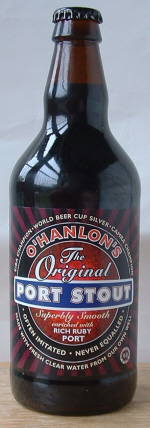 O'Hanlon's Original Port Stout Lovers of the darker side of brewing had cause to smile at the results of this year’s Champion Beer of Britain competition – not only did a dark mild emerge as supreme champion among the cask beers, but three of the four medals awarded in the Real Ale in a Bottle category, including the gold, went to a handsome trio of stouts.
All three are smooth, dry stouts with the bite of roasted barley, designed at least in part to fill the sizeable hole left by the sad decline of bottled Guinness. At the inception of CAMRA, standard bottled Guinness from the Irish giant’s Park Royal plant was one of only five British-brewed bottle conditioned beers.
Park Royal is now flats and business units, and the bottled Guinness “Original” brewed in Dublin for the British market is pasteurised, a pale shadow of its former self in character if not in colour. But if you’re a former Guinness drinker still wallowing in nostalgia and despair, one of these superb beers should soon snap you out of it.
O’Hanlon’s has a name well-suited to a brewer famed for dry stout, but though co-founder John O’Hanlon has Irish roots, the brewery itself started at Vauxhall, London, before being transplanted to rural Devon, where it’s since blossomed into one of Britain’s best speciality breweries.
Original Port Stout, which began as a cask speciality, is no stranger to CBoB success, having previously won gold in 2003. Allegedly based on a Dublin hangover cure, this year’s champion bottle conditioned beer adds a twist by dosing a good dry stout – made from Optic pale, crystal and caramalts, roasted and flaked barley and Phoenix and Styrian Goldings hops – with Ferreira port at the rate of two bottles per barrel, roughly equivalent to two teaspoons per litre.
The result is a very dark ruby brown beer with a creamy yellowish head and a fresh chocolatey and malty aroma that brings to mind a German dunkel, but with a spicy, fruity and winy note. The rich fruity palate has geranium, treacle toffee and slightly peppery herbal flavours.
True to style, a distinct roast flavour soon emerges, and hops supplement the roasty dryness in a smooth winy finish with late bitter chocolate and a hint of cedar smoke. The port isn’t an empty gimmick – it enriches and complements an already superbly made beer with subtle wine and fruit notes.
For more Champion Bottle Conditioned Beer of Britain winners, see next post.
Read more about this beer at ratebeer.com: http://www.ratebeer.com/beer/ohanlons-original-port-stout/11452/
ABV: 8%
Origin: Alva, Clackmannanshire, Scotland
Website: www.harviestoun.com
A shorter version was originally published in BEER November 2008. For more smoky beers see previous post.
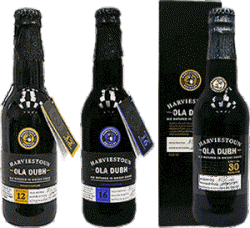 Harviestoun Ola Dubh Special Reserve For a fine but mellow lightly charred experience I recommend Harviestoun Ola Dubh Special Reserve – not bottle conditioned but currently one of Britain’s most remarkable beers. It’s a version of the Clackmannanshire brewery’s Old Engine Oil (the name means “black oil” in Gaelic) matured in wooden casks previously used for Highland Park malt whisky, itself one of the top rated of world whiskies.
There are three “expressions” matured in casks previously used to hold malts of different ages, and they make for a fascinating compare and contrast. The “youngest” is from a 12 year old cask, a black beer with a creamy brown head and a woody whiskyish aroma with a hint of olives over dark malt. There’s thick chocolate and malt flavours on the soft and luscious palate, with a woody background and lightly vinous notes, toffee and woody dryness. More whisky is revealed in the swallow, and the finish is warming with more chocolate, chewy malt, a note of hops and a final impression of charred tanginess.
My favourite is the balanced yet complex example from a 16-year-old cask – a viscous black liquid with a fine deep fawn head and dark malt, wood and black cherry fruit as well as a whiff of whisky on the aroma. There’s chocolate and wood on the palate with a lightly vinous sharpish note, and tangy slightly warming alcohol on the finish with sherry, more chocolate, charred flavours and late but long hop tones.
Finally, the 30-year-old is a very dark ruby black with some fine fawn head and a vinous fruit cake aroma from which emerges big plummy malt notes and that familiar whiff of the water of life. The palate is full and malty with a gentle canided peel note and subtle whisky, perhaps more fruity and less chocolatey than the other versions. A fruity finish has woody dryness and smooth malt, with bitter green herbs and roast notes eventually emerging.
Most of the first batch has gone to the USA but if you spot one on UK shelves, grab it unhesitatingly. You could round off your quest for smoky flavours by lighting up a good cigar to accompany it – so long as you’re not in enclosed public premises, of course.
Read more about these beers (including my own tasting notes) at ratebeer.com:
http://www.ratebeer.com/beer/harviestoun-ola-dubh-12-year-old/84035/
http://www.ratebeer.com/beer/harviestoun-ola-dubh-16-year-old/84058/
http://www.ratebeer.com/beer/harviestoun-ola-dubh-30-year-old/84059/
ABV: 3.5%
Origin: Wrecsam, Cymru
Website: www.jollybrewer.co.uk
A shorter version was originally published in BEER November 2008. For more smoky beers see previous post.
Top Tastings 2008. A shorter version also published on facebook January 2009.
 Jolly Brewer Roasted unmalted barley lends an unmistakeable sharp roasty bite to Irish-style dry stouts. A distinctive example is Jolly Brewer Suzanne’s Stout from a tiny but delightful craft brewery in Wrexham. The recipe also includes pale barley malt, flaked barley and Target and Goldings hops.
Beneath the deep fawn head this seriously dry near black beer is has a nutty roasted barley, fruit cake and cough sweet aroma and a light-textured but full dry roasty rye bread palate with notes of rooty dry herbs and toasted vine fruit. Hops emerge over the estery swallow, leading to a dry bitter chocolate finish with caramel and pepper. . Overall this is a beer packed with flavour but with the drinkable lightness that comes with being a surprisingly modest 3.5 per cent ABV.
For more smoky beers, see next post.
Read more about this beer at ratebeer.com: http://www.ratebeer.com/beer/jolly-brewer-suzannes-stout/87308/
|
|
