A sample text widget
Etiam pulvinar consectetur dolor sed malesuada. Ut convallis
euismod dolor nec pretium. Nunc ut tristique massa.
Nam sodales mi vitae dolor ullamcorper et vulputate enim accumsan.
Morbi orci magna, tincidunt vitae molestie nec, molestie at mi. Nulla nulla lorem,
suscipit in posuere in, interdum non magna.
|
First published in BEER September 2006 as part of a page marking the publication of the latest Good Bottled Beer Guide. For more beers featured on this page, see previous post.
ABV: 4.2 per cent
Origin: Horsham, Sussex, England
Website www.suthwykales.com
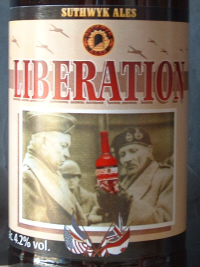 Hepworth Suthwyk Liberation Contract brewing is sometimes viewed with suspicion, but if it’s honestly done there are many advantages for the would-be bottler, not least of which is finding a well-equipped and experienced contractor who can be relied upon to ensure your brands are bottled at their best. And they don’t come much more reliable than Hepworth & Co, the discreet collaborator in several excellent brands marketed by others.
Hepworth customer Suthwyk Ales may not actually brew the beer bearing its name but still has a special claim to its provenance – the Optic barley used in the grist is grown at its own farm on Portsdown Hill, Southwick (“Suthwyk” is the local pronunciation), overlooking Portsmouth Harbour.
Liberation, another GBBG starred beer, earns its name partly from its status as a single hop brew containing only US Liberty hops, but also nods to Eisenhower and Montgomery, who planned the D-Day landings from nearby Southwick House. Thanks to the wonders of Photoshop, they’re depicted on the label inspecting a Suthwyk bottle.
The beer itself is a rich warm golden with a sparse, sticky sediment, a good white head and a fragrant, slightly sweetish pineapple aroma. The smooth, clean, dry palate has a subtle blackcurrant leaf note and a drying bite of hops.
There’s more blackcurrant in a light, refreshing finish that turns quite bitter and peppery, though staying supremely quaffable. An international compliment in the best possible taste.
For more beers featured in the Good Bottled Beer Guide 2006 see next post.
Read more about this beer at ratebeer.com: http://www.ratebeer.com/beer/suthwyk-liberation/38409/
First published in BEER September 2006 as part of a page marking the publication of the latest Good Bottled Beer Guide. For more beers featured on this page, see previous post.
ABV: 5 per cent
Origin: Bowburn, Durham, England
Website: www.durham-brewery.co.uk
 Durham Evensong A particularly welcome (and, in my view, long overdue) innovation in the latest GBBG is a simple system for highlighting quality. Rosettes indicate breweries producing Real Ale in a Bottle to a consistently high standard, while a select few outstanding individual beers earn a star.
Bottle conditioning is a tricky business, and it has to be admitted that not all small British brewers offering RAIB have quite got the hang of it yet. Let’s hope the GBBG awards become the coveted Michelin stars of British bottled beer, encouraging brewers to the pursuit of excellence.
One entrant boasting not only a well-deserved rosette but a constellation of stars is the Durham Brewery of Bowburn, a former mining village just to the south of Durham city. This multi-award-winning micro, founded in 1994, excels in both cask and bottle with tasty and imaginative brews.
The label designs on the bottled beers might reference the ancient ecclesiastical heritage of the region, but the beers combine contemporary styles and techniques with inspiration from the more recent past.
Star beer Evensong, CAMRA’s Champion Bottled Beer of Britain in 1995, is based on a 1937 recipe from Whitakers of Halifax, closed by Whitbread in 1969. Maris Otter pale, crystal, amber and Munich malts, wheat malt, Goldings, Fuggles and Challenger hops combine to create a speciality with elements of both old ale and strong bitter.
The result is a rich burgundy with a creamy yellowish head, lots of lace and a toasty fruit cookie aroma with a note of dry cooking apples. The sappy palate has rich malt, autumn fruits and hints of dark marmalade but remains light and refreshing.
There’s a salty mineral tang to the finish, with more orchard fruit and faint roast, finally turning dry with twiggy hop notes. Well worth seeking out, and particularly recommended to drinkers of lighter beers that haven’t yet discovered the delights of the dark side.
Read about more beers featured in the 2006 Good Bottled Beer Guide in the next post.
Read more about this beer at ratebeer.com: http://www.ratebeer.com/beer/durham-evensong/23346/
First published in BEER September 2006 as part of a page marking the publication of the latest Good Bottled Beer Guide.
ABV: 5.2 and 6 per cent
Origin: Wrexham, Denbighshire, Wales
Website: www.jollybrewer.co.uk
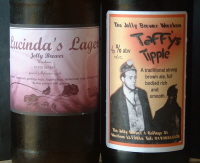 Jolly Brewer Lucinda's Lager and Taffy's Tipple This year’s Great British Beer Festival saw the launch of the the sixth edition of Jeff Evans’ Good Bottled Beer Guide, a book that’s become as indispensable to beer enthusiasts as its big brother the Good Beer Guide, not only providing a snapshot of an increasingly large and confident industry but itself acting as an inspiration to further growth.
Each edition has been reassuringly fatter than its predecessor and the latest has the dimensions of a respectable novel rather than a slim volume, its extra pages packed with new entrants. Among them is the Jolly Brewer of Wrexham, a welcome addition to the small group of Welsh brewers listed.
The Brewer is in fact a long-established home brew supplies and specialist beer shop run by Penelope “Pene” Coles, who expanded into brewing back in 2000. The beers are filled by hand into elegant continental style bottles, and even the ABV is handwritten on the attractive labels, acknowledging that each mash is different.
Having just returned from Germany where I’d enjoyed several craft-brewed unfiltered lagers, I was especially intrigued by Lucinda’s Lager, brewed with Pilsener malt and proper cold-fermenting yeast, hopped with Goldings, Fuggles and Hallertau and stored for “longer than usual” before being released.
It pours a pale, slightly hazy yellow-gold with a good white head, the rich zesty floral orange aroma tinted by the honeyed notes often found in unpasteurised pale lager. But the palate has more of an Anglo-American intensity, with resiny hops from the start over crisp but slightly syrupy malt.
A flash of bitter orange on the swallow leads to a long leafy, peppery hop finish with a touch of ginger. Overall this is a big, dry beer that still remains crisp and refreshing.
In a contrasting shade, but exhibiting the same love of hops, is strong dry brown ale Taffy’s Tipple. This is a rich dark amber-brown beer with a thick creamy yellow head, and a slightly smoky dark malt and straw aroma.
The full palate with its tangy cola and blackcurrant notes is soon leeched dry by assertive burry hops. Hints of brown sugar soften complex hops and tart plum skins on the finish.
Chocolate and amber malts add colour to Maris Otter pale in the recipe, and that big hop bite comes courtesy of Target, Goldings, Challenger and a dose of Northern Brewer at the end of the boil. A fine brew from a brewery to watch.
Read about more beers featured in the 2006 Good Bottled Beer Guide in the next post.
Read more about these beers at ratebeer.com:
http://www.ratebeer.com/beer/jolly-brewer-lucindas-lager/108042/
http://www.ratebeer.com/beer/jolly-brewer-taffys-tipple/86453/
First published in BEER August 2006
 Great British Beer Festival 2006 The Great British Beer Festival is sometimes known as the biggest pub in the world, but for the dedicated beer hunter it’s also one of the best offies in the world as well. You’d be hard put to find anywhere else that offers such an imaginative and eclectic international mix of classics and rarities in convenient portable form.
Although the imported beers at the Bières sans Frontières bars are an attraction in themselves, British bottled beers have long had a presence too and in recent years the choice has widened and deepened, following both the growth in the market and CAMRA’s increasing committment.
This year I’ve been privileged to get an advanced peek at the RAIB bar beer list, which excited me so much I’ve decided to suspend this column’s usual focus on just three beers. From around 75 different lines on order, I’ve picked a dozen — not necessarily “the best” but a selection that captures the richness and diversity of live bottled beers currently on offer from British brewers.
I should qualify “British” because, with the exception of one beer each from Scotland and Wales (neither of which I’ve found room for here), this year’s list is entirely from England. While regrettable, this fact is more of a reflection on the curious rarity of bottle conditioning in the other countries of the UK than, I think, the chauvinism of the buyers.
The selection runs the gamut of British beer styles, including four welcome examples of that still relatively rare beast, the bottle conditioned mild. Of these Banks & Taylor Black Dragon Mild (4.3 per cent ABV), from Shefford, Bedfordshire, is an excellent interpretation of the style, with a light and refreshing but generously malty palate, slightly sourish fruit and herbal flavours, finishing with fruit, malt and a moreish roasty edge.
There’s a strong choice of bitters including from the likes of RCH and Woodfordes, but I’d plump for Hogs Back BSA (4.5 per cent), recently praised in this column for its rich malt, wet stone notes and citrus aroma, biscuity palate, and leafy hop finish with a good dose of peppery bitterness. It comes from an exemplary farmhouse micro in Tongham, Surrey.
The list reflects the growing popularity of blond and golden ales, including a gluten-free choice, and, given the season, I’ve allowed for a couple of these. Oakleaf Hole Hearted (4.7 per cent), from an award-winning Gosport, Hampshire-based micro, is an American-inspired single hop beer featuring the floral, fruity notes of Cascade over a relatively full-bodied cereal palate.
Also targeting summer thirsts is Wychwood Duchy Originals Summer Ale (4.7 per cent), another beer with a hoppy accent, this time from Belgian-grown Fuggles and Goldings and English Target. Originally commissioned by Waitrose supermarkets and hard to find otherwise, this is the only bottle conditioned beer in the Duchy Originals range of organic products (proprietor HRH The Prince of Wales), supplied from Witney, Oxfordshire.
Wheat beers include O’Hanlons Double Champion [since renamed Goldblade] (4 per cent), one of several offerings on the list from this excellent micro in Clyst St Lawrence, Devon. Spiced with coriander and late-hopped with First Gold and Cascade, this subtle beer has a touch of Turkish delight in the aroma and is dry and clean, with banana, vanilla and citric tones.
Stepping up the strength, the list includes five interpretations of Britain’s hoppiest traditional style, India Pale Ale, including arguably the best revivalist example available, Burton Bridge Empire Pale Ale (7.5 per cent), from IPA’s spiritual homeland of Burton-on-Trent, Staffordshire. This impressive beer has ozone and orange zest on the aroma and assertive vegetal hops on a rich complex palate with peach notes on a very long finish.
Newly-launched Cornish interpretation St Austell Proper Job (5.5 per cent) is at a more approachable though less authentic strength for a true IPA, but is packed with flavour including roses, honey, pineapple, strawberries, lime and pepper – the chewy hop finish never overpowers.
Several other pale ale variants inspired by old recipes can be found on the list: Fullers 1845 and White Shield, surely two of the best British bottled beers around, are hard to pass over but widely available elsewhere. Spare some space, though, for Youngs Special London Ale (6.4 per cent), a big nutty, malty and figgy ale made with “phenomenal amounts” of Fuggles and Goldings hops – this will be some of the last made in London, before production moves to Bedford.
In a darker mood, the selection of porters and stouts includes several established RAIB classics, notably RCH Old Slug Porter (4.5 per cent) and Wye Valley Dorothy Goodbody’s Wholesome Stout (4.6 per cent). The former, from Weston-super-Mare, Somerset, belies its unappetising name with a tempting liquorice and vanilla pastille aroma and nutty herbal coffee and burnt fruit flavours with a hint of sage.
The latter, from Stoke Lacy, Herefordshire, is inspired by dry Irish stout but knocks the spots off the best-known commercial examples of the style. It’s much tastier than it deserves to be at this strength, with smooth malted milk, fruity acidity, leather and a long roasty finish with a hint of cinnamon.
Several notches of gravity upwards are a trio of Imperial stouts, including current benchmark interpretation Harveys Imperial Extra Double Stout (9 per cent), from Lewes, Sussex. This masterfully complex and marvellously cakey, oily brew, redolent of fennel seeds and mocha, will develop for many years in the bottle.
For a final bottle to cellar away for bedtime sipping in years to come, there’s a choice of three barley wines. I’d pick Woodforde’s Headcracker (7 per cent) – light of both alcohol and heart for the style, with fecund hops, orange marmalade and fluffy fruit salad in the finish. The brewery, in Woodbastwick, Norfolk, is something of an RAIB specialist, with several excellent examples of the heights bottled beer can reach in talented and sympathetic hands.
It’s understandable if in the past you’ve just stuck to the enormous choice of draught beers at GBBF, but there couldn’t be a better time to stretch the benefits of admission by joining the carry out club. By the way, you can spot us by our suspiciously clanking rucksacks.
Great British Beer Festival Real Ale in a Bottle Bar 2006
ABV: 4.5%
Origin: Weston-super-Mare, Somerset, England
Website: www.rchbrewery.com
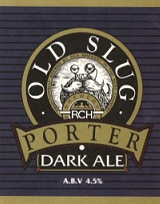 RCH Old Slug Porter Dark Ale RCH, a veteran among British micros of bottle conditioned ales, originated behind the Royal Clarence Hotel at Burnham-on-Sea in 1983, thus its acronymic title, but moved to a former cider mill in Weston a decade later and significantly expanded at the turn of the millennium.
Old Slug porter, named after the shell-less molluscs that infested the hotel garden, might sound unappetising but is justly celebrated and multi-award-winning as one of the earliest revivalist porters still in production. There’s a grist of pale, crystal and black barley malts, with traditional Fuggles and Goldings hops.
It’s very dark, with a rich cream head and a burnt pastilley liquorice and vanilla aroma. A bubbly palate has nutty coffee and liquorice, with slightly herbal burnt fruit, firmly dry with developing hoppy bitterness. There’s dark malt and coffee notes in the finish with some burnt vine fruit, tangy plum and sage flavours.
Read more about this beer at ratebeer.com: http://www.ratebeer.com/beer/rch-old-slug-porter/5846/
Great British Beer Festival Real Ale in a Bottle Bar 2006
ABV: 5.5%
Origin: St Austell, Cornwall, England
Website: www.staustellbrewery.co.uk
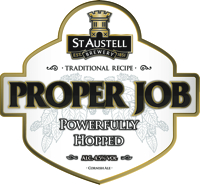 St Austell Proper Job This Cornish interpretation of an old-fashioned IPA is a little light in alcohol to be true to the style, but very approachable and tasty. Dedicated to the 32nd (Cornwall) Regiment, who fought in Indian Mutiny, it’s made from Cornish-grown Maris Otter pale barley malt and three North American hop varieties: Willamette, Cascade and Chinook.
It’s a bright golden with a soft foamy white head and a resiny fruit salad, rose and honey aroma. The palate is crisp and fruity, its light malt laced with strawberrry, pineapple and lime, tangy on the tongue and with flinty background flavours and peppery hops emerging. A soft swallow leads to a strawberry finish with grainy malt underlying the emergence of big chewy hops that never quite overpower the beer.
Read more about this beer at ratebeer.com: http://www.ratebeer.com/beer/st-austell-proper-job-bottle/59023/
Great British Beer Festival Real Ale in a Bottle Bar 2006
ABV: 7.5%
Origin: Burton upon Trent, Staffordshire, England
Website: www.burtonbridgebrewery.co.uk
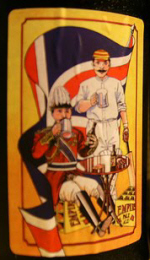 Burton Bridge Empire Pale Ale This is one of the better British revivalist interpretations of the India Pale Ale style, from its spiritual homeland of Burton, brewed with Pipkin pale malt, invert sugar and Challenger and Styrian Goldings hops to a decent ABV.
It’s a gorgeous bronze-gold beer with a low but rich head, a hoppy aroma with ozone and orange zest, and full malty palate supporting assertive slightly vegetal hops. There are iodine and sulphur notes, vanilla and a slightly metallic tang. The hops are very full but not chokingly bitter or harsh, and linger long in a peachy, flowery finish.
Read more about this beer at ratebeer.com: http://www.ratebeer.com/beer/burton-bridge-empire-ale/5827/
Great British Beer Festival Real Ale in a Bottle Bar 2006; also featured as an ale to win lager drinkers in BEER February 2009.
NOTE: This beer was originally briefly reviewed under an earlier name, Double Champion.
ABV: 4%
Origin: Clyst St Lawrence, Devon, England
Website: www.ohanlonsbeer.com
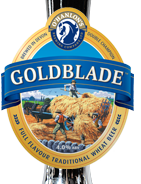 O'Hanlon's Goldblade This is one of several bottle conditioned offerings from this excellent micro in Clyst St Lawrence, Devon. It’s brewed from Optic pale malt, wheat malt and caramalt, with Challenger as the bittering hop, then late-hopped with First Gold and Cascade. Coriander seeds are added, but to subtle effect.
It pours a pale delicate gold with a bubbly white head. A rich and creamy hoppy aroma with definite wheat notes and a whiff of Turkish Delight leads to a dry, clean and quite hoppy palate with a slight banana hint. There’s vanilla and some lightly citric juicy sweetness developing later, followed by a cleansing swallow and a dry, lightly bitter, cereal finish that turns roundedly tangy.
Read more about this beer at ratebeer.com: http://www.ratebeer.com/beer/ohanlons-goldblade/74069/
First published in BEER July 2006 as part of a page about beers from the USA available in the UK. See previous post for more beers from the USA.
ABV: 5.6 per cent
Origin: San Francisco, California, USA
Website www.anchorbrewing.com
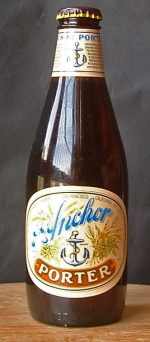 Anchor Porter The Anchor brewery of San Francisco has a special significance both in the US and worldwide as the surviving home of arguably the country’s only genuine pre-Prohibition native style, lager-ale hybrid Steam Beer.
The brewery dates from the 1850s, but was apparently on its last legs by 1965 when businessman and keen Steam Beer drinker Fritz Maytag bought in and started turning things round. Maytag ended up as sole owner, and both he and the brewery became beacons for the blossoming craft brewing movement.
Steam Beer is still a world classic, but its importance shouldn’t detract from the merits of Anchor’s other products, in particular this outstanding brew which pioneered porter brewing in the US when first launched in the early 1970s, at a time when the style was still near-extinct back in England.
The malt grist is a secret recipe but the brewery do admit to using Northern Brewer hops and water from the Hetch Hetchy reservoir, a flooded glacial valley in Yosemite national park.
The result is a very dark ruby, near black beer, with a thin but persistent fawn head. There’s a fruity blackcurrant malt aroma with some cream, liquorice and roast.
The palate is creamily rich but dry, with malted milk, cream toffee, date-like fruit, leather and a note of acidity, soon overlayed by spreading hops. A drying mix of hops and roast develops on a long finish with a charcoal sting, softened by malted milk and fruit syrup.
Truly one of the world’s great dark beers, and an unarguable demonstration of the achievement of US brewers.
Read more about this beer at ratebeer.com: http://www.ratebeer.com/beer/anchor-porter/48/
First published in BEER July 2006 as part of a page about beers from the USA available in the UK. See previous post for more beers from the USA.
ABV: 4.3 per cent
Origin: Chicago, Illinois, USA
Website: www.gooseisland.com
 Goose Island Honker's Ale When marketing man John Hall opened his Goose Island brewpub in 1988, in a district of Chicago once associated with pre-Prohibition brewing, there were only 16 brewpubs in the USA. Hall believed seeing the brewing process in action would help educate the inhabitants of a region in which mass-produced beer was very much part of the culture.
Goose Island now has a purpose built brewery with a capacity of over 100,000 hectolitres a year selling beer across the Midwest. There’s a wide and imaginative range, some of which occasionally pop up in British outlets courtesy of importers James Clay.
Honker’s Ale was one of the brewery’s early lines and still one of their most popular. Reflecting the original aspiration to establish an English-style atmosphere in the brewpub, it’s inspired by British bitters but is still very much an American beer.
It’s a nutty amber brown colour with a good white head and a fairly restrained nutty-malty aroma, with a touch of liquoricey spice and a light hint of coal dust roast – some roasted barley is used alongside pale and cara-malts and wheat.
The firm nutty and biscuity palate has a distinctive fruit edge with a syrup note, lifted by subtle and slowly developing rooty, burry Styrian Goldings hop flavours. Slight roastiness gives a chewy edge to a tangy finish with plenty of peppery hops and resiny, estery notes.
For more beers from the USA see next post.
Read more about this beer at ratebeer.com: http://www.ratebeer.com/beer/goose-island-honkers-ale/811/
|
|
