A sample text widget
Etiam pulvinar consectetur dolor sed malesuada. Ut convallis
euismod dolor nec pretium. Nunc ut tristique massa.
Nam sodales mi vitae dolor ullamcorper et vulputate enim accumsan.
Morbi orci magna, tincidunt vitae molestie nec, molestie at mi. Nulla nulla lorem,
suscipit in posuere in, interdum non magna.
|
First published in BEER September 2007.
ABV: 5 per cent
Origin: Maldon, Essex, England
Website www.maldonbrewing.co.uk
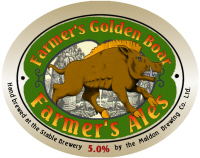 Farmer's Ales (Maldon) Golden Boar The Golden Boars were flying off the shelf at the Little Beer Shop just outside Norwich a couple of months back. While I nerdily checked my wants list I noticed two obviously regular customers back for repeat orders, and the manager couldn’t sing the beer’s praises too highly. So I squeezed in a bottle and was delighted to discover they weren’t wrong: this is a boar that lives up to its precious colour.
Farmer’s Ales, opened in 2002 and also known as the Maldon Brewery, is based in the stable block of the Blue Boar Hotel in Maldon, a pretty town on Essex’s Blackwater estuary, on the edge of Eastern England’s microbrewing hotbed.
Head brewer Charles Saville formerly worked at nearby Crouch Vale, and admits to the influence of that brewery’s seasonal Amarillo when devising Golden Boar as a cask ale for the Pig’s Ear Beer Festival in east London. But while the Crouch Vale brew uses eponymous Amarillo hops, the Boar uses “loads” of another North American variety, Cascade, alongside pale and amber malts. The brewery’s Chris Farmer says there’s a further ingredient but the brewers refuse to tell her what it is!
The Real Ale in a Bottle version is hand bottled and hand labelled at the brewery, and comes out a slightly hazy deep gold with a thick off-white head. Those “loads” of hops come over clearly in a flowery pineapple aroma – you can almost see the resin oozing out of a freshly squeezed cone.
The toasty, biscuity, creamy textured palate is bursting with bright and cheerful flavours: citric fruit, more flowers, rooty hops, fresh yeastiness and a detectable coloured malt note. The finish is equally flavourful and complex, with seedy peppery-bitter hops and herbal flavours over juicy sweet malt, and a not unpleasant whiff of burnt rubber.
As the choice of Real Ales in a Bottle from British craft brewers continues to expand, it sometimes seems difficult for new beers to make a distinctive and memorable impression. But every so often you’re awestruck by the fact that a simple combination of malt, hops and water can produce something so sublime, especially when virtually hand made in a pub shed. Golden Boar gave me one of those moments and is well worth grubbing up.
Read more about this beer at ratebeer.com: http://www.ratebeer.com/beer/farmers-ales-golden-boar/77026/
First published in BEER August 2007.
 30th Great British Beer Festival 2007 Earl's Court London CAMRA The Great British Beer Festival is not only a huge celebration of indigenous real ale but also regularly presents one of the best showcases for international beer you could hope to find. The imported beer bars, collectively known as Bières sans frontières, are an attraction in themselves, with a significant minority passing up on the vast choice of British cask beers to sample an expertly chosen selection of the rest of the world’s finest.
You may be surprised to learn that the presence of “foreign” beers is almost as old as the GBBF itself, expanding from a single table with 15 beers in 1980 to today’s three large and prominent bars offering a choice of hundreds.
BSF has played a major role in educating drinkers about the beery riches to be found beyond these shores, whether it’s rare cask ales from the Pacific Northwest, unfiltered Franconian lagers or stouts from Sri Lanka. This year a wider selection than ever is promised: organiser Andy Benson and his enthusiastic volunteer crew are aiming to stock beers from 30 countries to mark GBBF’s 30th anniversary.
Andy gave me an advanced peek at the bottled beer list so I could pick out a mixed dozen to recommend you clank home with. This was at an early stage with many more beers to be confirmed and already it was a tough choice – the full list should be posted at www.b-s-f.org.uk by the time you read this so prepare to be further dazzled.
To whet the appetite, let’s start at the German and Czech bar with one of Germany’s finest and hoppiest pale lagers, Jever Pils (4.9 per cent). The brewery, in the German part of the ancient territory of Friesland, is now part of the giant Oetker group but the beer still impresses with its strong earthy hop aroma, lively bone dry palate and a finish that softens slightly with hints of vanilla and cream.
From the opposite end of Germany comes another established classic, Heller Aecht Schlenkerla Rauchbier Märzen (5.1 per cent), the benchmark smoked beer from the celebrated brewing city of Bamberg in Franconia. Deep chestnut with a thick yellowy head, this has a smoky bacon aroma, a dry but smooth and nutty palate and a marmalade finish with a whiff of smoke reminiscent of Islay malt whisky.
A must-have from the Dutch and Belgian bar is Schans Van Vollenhoven Extra Stout (7 per cent), a once-legendary Irish-inspired Amsterdam beer now lovingly revived. Van Vollenhoven’s “Gekroonde Valk” (Crowned Falcon) brewery was once the biggest in the Dutch capital, but was absorbed by Heineken in the 1940s and later closed.
For decades afterwards a version of the stout was brewed by cold fermentation at Heineken’s megabrewery in ‘s-Hertogenbosch but dwindling volumes saw it phased out in 2002. Then late last year, after much lobbying, Uithoorn micro De Schans launched a smooth, roasty and bitterish authentic warm fermented and bottle conditioned version under license, based on the rediscovered 1946 recipe.
Another outstanding Dutch beer is Christoffel Blond (5 per cent) from Roermond in Limburg, an unpasteurised and unfiltered lager in the pils style but so good its brewers have opted not to brand it with that much-devalued label. This world class peachy golden beer has light malt, chewy almonds and stern herby hops on the palate and a long complex finish with honeyed yeasty notes.
The long Belgian list includes beers from small micros hard to find even in their own country, such as Loterbol Bruin (8 per cent) from a small brewpub in Diest. This very dark brown bottled conditioned ale is brewed without candy sugar and thus drier than most Belgian strong browns, and very fruity with a chocolatey, slightly tart finish.
Also unusual by Belgian standards is the modest gravity of Dupont Biolégère – a mere 3.5 per cent. But this hazy blond unfiltered organic beer from a classic saison brewer in Tourpes is full of flavour, with slight farmyard notes on the aroma, and a crisp toasty citric palate with a good dose of hops.
BSF buyers can always be relied upon to find unusual and high quality Belgian fruit beers, avoiding the sickly sweet excesses of the more commercialised brands. From this year’s list I’d pick Girardin Framboise (5 per cent), a raspberry brew from a traditional lambic brewer near Brussels: it’s dry and tart but softer than some, and bursting with natural raspberry fruit.
Moving to the rest of the world, Brooklyn Black Chocolate Stout (10.6 per cent) is a modern classic imperial stout from New York. Created by celebrity brewer Garrett Oliver, this black and powerful brew overflows with complex flavours: coffee, marmite, red fruit, cocoa, liquorice and burry hops.
Another dark delight, Asahi Premium Black (Kuronama) (5 per cent), is an old-established Tokyo speciality inspired by German Schwarzbier. Dark burgundy with a slightly spicy aroma, it has a dry but luscious blackcurrant roast palate and milky coffee on a long, dry but soft finish.
Coopers Sparkling Ale (5.8 per cent) from Adelaide, Australia, is now much better known among beer lovers but still unique and surprising. This deliberately cloudy bottle conditioned beer smells of pineapple chunks and fresh baked biscuits, with a prickly sharp palate softened by honey and fruit and a rounded peppery citric hop finish.
Finally I’ll chance a beer I’ve not encountered before – like a Durban pale ale or pineapple beer from the Shongweni brewery of Natal, making its GBBF debut. For many years now, the BSF crew have been busy proving that there’s more to US beers than Anheuser-Busch and more to Dutch beers than Heineken – let’s hope they can now show there’s more to South African beers than SAB-Miller Castle Lager. I have every faith they will.
Bières sans frontières, Great British Beer Festival 2007. For more selections see previous post.
ABV: 5.7%
Origin: Polo Pony, KwaZulu Natal, South Africa
Website: www.shongwenibrewery.com
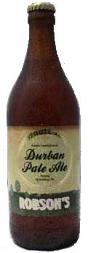 The South African beer market is unsurprisingly almost exclusively dominated by homegrown global brewer SABMiller, but there is a scattering of micros and brewpubs, and the one that’s gained the most prominence internationally is Shongweni. It was founded in 2006 by Englishman Stuart Robson and his South African wife Sherene in the idyllic setting of the Valley of a Thousand Hills in the eastern province of KwaZulu Natal — “imagine the Lake District or Scottish lowlands, but in a subtropical setting,” as Stuart put it to beer writer Ben McFarland. The South African beer market is unsurprisingly almost exclusively dominated by homegrown global brewer SABMiller, but there is a scattering of micros and brewpubs, and the one that’s gained the most prominence internationally is Shongweni. It was founded in 2006 by Englishman Stuart Robson and his South African wife Sherene in the idyllic setting of the Valley of a Thousand Hills in the eastern province of KwaZulu Natal — “imagine the Lake District or Scottish lowlands, but in a subtropical setting,” as Stuart put it to beer writer Ben McFarland.
Durban Pale Ale is inspired by traditional British IPAs, to which there is some local claim as when these beers were exported to India the boats often stopped off in Durban and some of their cargo may have found its way ashore there. Brewed from South African malt and imported Cascade and Challenger hops (40 IBU worth), the beer comes out a cloudy light amber from bottle conditioning, with a fine creamy white head and a slightly vegetal orange and barley sugar aroma. A firm orange citric palate starts plain and then turns more complex with strawberrry fudge and caramel tones, thistly hops and slight farmyardy hints. It stays mainly dry through to a hoppy and herby but not especially bitter finish, with touches of roast, angelica and a nugget of coal tar soap. It’s an unusual and distinctive take on the style, if not yet a world beating one.
More Bières sans frontières selections in the next post.
Read more about this beer at ratebeer.com: http://www.ratebeer.com/beer/shongweni-robsons-durban-pale-ale/76872/
Bières sans frontières, Great British Beer Festival 2007. For more selections see previous post.
ABV: 5.8%
Origin: Regency Park, South Australia
Website: www.coopers.com.au
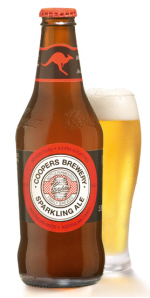 Coopers Sparkling Ale The survival of the Coopers brewery with its unique style of Adelaide sparkling ale amidst a tide of amber nectar you wouldn’t give a XXXX for, as recently as 2007 fighting off a hostile bid from Australasian giant Lion Nathan, has been widely discussed and celebrated by beer writers. So I won’t go into detail here about the history of this extraordinary beer, originated in 1862 by a recently-emigrated Yorkshire couple.
Made with pale and crystal malts and pelleted Pride of Ringwood hops and dosed in the bottle with unfermented wort and sugar to reawaken the unique house yeast, it’s a rich golden beer designed to be served cloudy. A subtle sweetish aroma has a pineapple chunk note with spice and fresh baked biscuits, followed by a prickly sharpish but mild, fresh and fruity palate that has light hops and building honeyed tones. The long finish turns drier with rounded pepper, honey and juicy lemon fruit, and a late resiny leafy hop note. A refreshing quencher with plenty of subtle interest to linger over if you care.
More Bières sans frontières selections in the next post.
Read more about this beer at ratebeer.com: http://www.ratebeer.com/beer/coopers-sparkling-ale/1589/
Bières sans frontières, Great British Beer Festival 2007. For more selections see previous post.
ABV: 5%
Origin: Sumida, Tōkyō, Japan
Website: www.asahibeer.co.jp
 Asahi Premium Black Kuronama The Japanese beer market exhibits a taste for dark lagers inherited no doubt from the German brewers who helped set up the country’s brewing industry in the late 19th century. Even so, this black beer from what’s now Japan’s biggest brewery, Asahi (“rising sun”), established as Osaka Brewing in 1889, is a recent addition — launched in 1995, it’s been seen as a brave departure for a brewer better known for its ultra-clean and pale lager Super Dry.
The beer acquires its dark burgundy colour and yellow-fawn head from three different roasted malts, although there are also rice and maize in the mash. A lightly malty-roasty aroma has hints of spice and sharpish fruit, and there’s a luscious but dry and roasty palate with blackcurrant and coffee notes. A milky coffee swallow sets up a drying roasty and slightly astringent finish with chocolate, burry hops and burned flavours over soft malt. Overall this is a beautifully balanced example of how to set off intense roast flavours with rich and tasty malts.
More Bières sans frontières selections in the next post.
Read more about this beer at ratebeer.com: http://www.ratebeer.com/beer/asahi-black-kuronama/6792/
Bières sans frontières, Great British Beer Festival 2007. For more selections see previous post.
ABV: 10.6%
Origin: Brooklyn, New York, USA
Website: www.brooklynbrewery.com
 Brooklyn Black Chocolate Stout The Brooklyn brewery, with its world famous and well travelled head brewer Garrett Oliver, needs little introduction — originally established to revive the pre-Prohibition style of quality lager as a contract brewery in 1985, it’s had its own plant in a former steel foundry since 1996 and has consistently turned out high quality beers inspired by a range of world styles. Black Chocolate Stout is one of its very best, a fine Imperial Stout made from three separate mashes with six malts including black and chocolate, bottle conditioned and capable of long ageing.
This black beer has a fine mid-brown head and a rich pastilley liquroice and roast aroma tinged with coffee and Marmite. The smooth, thick palate is meaty, spicy and tingling, with a definite roast espresso coffee note, though lacking in hard edges. Burry hops and fine cocoa spread across the tongue on a long and very powerful finish with notes of red fruit, ending sternly dry.
More Bières sans frontières selections in the next post.
Read more about this beer at ratebeer.com: http://www.ratebeer.com/beer/brooklyn-black-chocolate-stout/531/
Bières sans frontières, Great British Beer Festival 2007. For more selections see previous post.
ABV: 5%
Origin: Sint-Ulriks-Kapelle, Vlaams-Brabant, Vlaanderen
Website: www.brouwerijgirardin.com
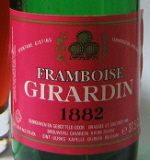 Girardin Framboise This traditional lambic brewery in the heart of the Pajottenland, founded in 1882, is especially famed for its unfiltered black label gueuze. Its fruit beers are filtered but far from the artificially sweetened products of some of the more commercially-oriented lambic makers.
The raspberry-flavoured framboise is ruddy-brown with a pinkish head reminiscent of spiced chai syrup. The raspberrry aroma has a note of cherry cough mixture and hops, and a dry foamy palate has lots of natural raspberry fruit over a tart tannic backdrop. Tannic tartness returns in the finish after a sweet raspberry swallow, and the finish is long and bitterish. It’s not overly complex and lacks the pungency of some lambics, but it’s wonderfully fruity and dry.
More Bières sans frontières selections in the next post.
Read more about this beer at ratebeer.com: http://www.ratebeer.com/beer/girardin-framboise/6036/
Bières sans frontières, Great British Beer Festival 2007. For more selections see previous post.
ABV: 3.5%
Origin: Tourpes, Hainaut, Wallonie
Website: www.brasserie-dupont.com
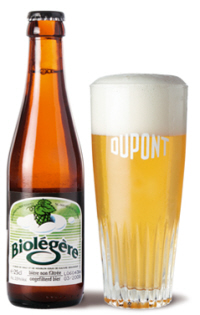 Dupont Biolégère Dupont, founded in 1844, is the highest regarded of the traditional farmhouse saison breweries of Hainaut though its talents stretch far beyond the traditional parameters of this sturdy, rustic style. There are several organic beers, including this “bio mild”, launched in 1992 as a rare Belgian speciality at near-table beer gravity.
It’s a cloudy dark straw colour with a fine white head and a polleny, slightly farmyardy aroma wiht flowery and light malt notes. A toasty, crisp and smooth palate has lemon and orange flavours with a good dose of hops and herbal bitterness. The cleansing swallow leads to a creamy and rounded lime-tinged finish with a note of vegetal hops. This final flourish is slightly underplayed compared to the palate, but this is still a refreshing and well-made beer.
More Bières sans frontières selections in the next post.
Read more about this beer at ratebeer.com: http://www.ratebeer.com/beer/dupont-biolegere/21100/
Bières sans frontières, Great British Beer Festival 2007. For more selections see previous post.
Top Tastings 2008
ABV: 8%
Origin: Diest, Vlaams-Brabant, Vlaanderen
Website: www.loterbol.be
 Café-brouwerij Loterbol One of a batch of newer microbreweries gradually bringing new techniques and flavours to the Belgian beer scene, Loterbol describes itself as a brewpub — café-brouwerij — though in fact the pub is open only on the first Saturday of every month. Instead most of the beer from the 28hl plant goes into bottles for distribution via food and drink distributor and exporter Weynants, which owns the brewery. In fact the site, in the town of Diest in the far northeast corner of Flemish Brabant, was historically a brewery known as De Brouwketel (The Copper or brewing kettle) since at least 17o6. This ended up in the hands of the Duysters family and finally stopped brewing in 1973. Its contemporary brewing history begins in 1995 when Marc Bierens installed a tiny microbrewery in a renovated part of the property — for a while the name Duysters continued to be used, but the brewery has since taken the name of the pub and the main beer brand, which comes in several varieties as well as in a blend with lambic known as Tuverbol. A “loterbol” is a dialect term for a comic figure from local folklore, a person who is attractive but talks absolute twaddle.
History records that Duysters was known in the late 19th century for satisfying the local taste for strong brown beers, so Loterbol Bruin is keeping up a local tradition with some style: the sample I tried, in Antwerpen’s Kulminator, was of excellent quality. It’s a very dark brown beer with a thick yellowish head that leaves lots of lace on the glass. A dark malt aroma has liquorice, raisins, candied fruit and spiced bun notes, heralding a mouth numbing dark malt and herb palate which gets more complex as it warms, rich in estery, almost detergent-like notes. A fresh finish has sherry, marmalade and vegetal flavours but is relatively dry — unlike many strong dark Belgian ales, the only fermentable used is malt, with no candy sugar, giving a pleasing alternative to the sometimes cloying sweetness typically found in the style.
More Bières sans frontières selections in the next post.
Read more about this beer at ratebeer.com: http://www.ratebeer.com/beer/duysters-loterbol-bruin/22337/
Bières sans frontières, Great British Beer Festival 2007. For more selections see previous post.
Beer sellers: De Bierkoning
ABV: 6%
Origin: Roermond, Limburg, Netherlands
Website: www.christoffelbier.nl
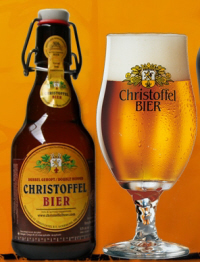 St Christoffel Christoffel Blond Another of the Netherlands’ most outstanding beers, this is the flagship brew of St Christoffel, founded by Leo Brand, scion of the Brand brewing dynasty, in the Dutch traditional brewing heartland of Limburg in 1986. Though the brewery has since undergone several changes of ownership, its consistent achievement of quality is reflected in the fact that it is one of only a couple of Dutch brewers that have any kind of presence in the Belgian market. Although the blond is unfiltered and bottle conditioned, it is in essence a quality Pilsener-style lager brewed to conform to the Reinheitsgebot, though the brewers have opted not to brand it with that much-devalued label. The legend “dubbel gehopt” refers to the fact that fine Žatec hops are added twice to the boil, achieving an EBU of 45.
The beer is a cloudy, peachy golden colour with a thick white head and a restrained sweetish barley sugar, herb and orange aroma. A lively, tangy light malt palate has chewy almond notes and quite stern, herby and faintly metallic hop softened by a honeyed, yeasty quality. A long and complex finish yields herbal hop resins over sweetish and faintly peachy malt.
More Bières sans frontières selections in the next post.
Read more about this beer at ratebeer.com: http://www.ratebeer.com/beer/christoffel-bier–blond/4567/
|
|
