A sample text widget
Etiam pulvinar consectetur dolor sed malesuada. Ut convallis
euismod dolor nec pretium. Nunc ut tristique massa.
Nam sodales mi vitae dolor ullamcorper et vulputate enim accumsan.
Morbi orci magna, tincidunt vitae molestie nec, molestie at mi. Nulla nulla lorem,
suscipit in posuere in, interdum non magna.
|
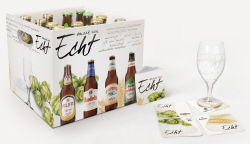 De Smaak van Echt 2010 Following the success of a similar initiative last year, four Dutch independent family brewers have worked together again to launch De Smaak van Echt 2010 (The Real Taste), a gift pack featuring four new and exclusive one-off beers, all warm fermented and unpasteurised.
Alfa of Schinnen, Limburg, has contributed Alfa Echt 2010 (5.5%), a lightly cloudy amber beer with a touch of caramel and herbal hop bitterness. Budels Echt 2010 (5%), from Budel in Noord-Brabant, is a German-style wheat beer with a genuine German yeast. From Gulpen in Limburg comes Gulpener Echt 2010 (5.5%), an unfiltered spelt beer with a slight fruity sourness. Finally Lindeboon, of Neer, Limburg, offers Lindeboom Echt 2010 (5.5%), a pure malt finely hopped light blond.
All the beers are available only in the packs, not individually, with each pack containing three 300ml bottles of each beer, a special branded tasting glass, four beermats and an information booklet. They can be ordered from the participating brewers from the end of May.
 Brouwerij Florindia A number of new brewing enterprises have launched in the Netherlands in the past year, reports PINT Nieuws, journal of Dutch beer consumers’ organisation PINT.
Launched in April 2009, Brouwerij Florindia is the brainchild of Mikael Kok, formerly a home brewer whose commercial ambitions developed brewing beer as gifts for clients of his international IT business. It’s based in Heerhugowaard, near Alkmaar in the province of North Holland, originally a small village on the edge of a drained peat fen known as the Waardsepolder but expanded since the 1960’s into a major new town with a population currently at 52,000 and planned to double over the next few decades. Perhaps surprisingly, Heerhugowaard enjoys a decent beer culture with several specialist pubs and shops, and Florindia, named after Mikael’s daughters Floor and India, makes a point of selling through this local market.
As with a number of small Dutch brewers, Florindia doesn’t own its own plant, though there are plans for a brewpub at some stage. For the moment all the beers are brewed at de Praght in nearby Dronten, where head brewer Maurice Bouma works closely with Mikael on small batches of 5ool. There’s an very special local connection too in the hopping — some of the bittering hops are grown by Mikael himself on a local property owned by his father-in-law.
The regular beers are the standard Waerdsepolderbier (5.3%), a pils-style beer with pils and cara-amber malt, malted wheat, Northern Brewer, Premiant and Perle hops (34 IBU) and Czech yeast; a blond (5.3%) made to a similar recipe but with Kölsch yeast; and a tripel (8%) with pils, Munich type 1 and cara-Munich tupe 3 malt, malted wheat, similar hops to the pils and a Trappist yeast. Occasional specials include a stout, a strong blond Duvel-style ale and a 12% barley wine called Waerdse Reus. Discussions are underway with supermarkets for wider distribution. For more see http://florindia.nl.
Slightly further south, Amsterdam acquired another brewing firm in November 2009 — Brouwerij Zeeburg, borrowing its name from the part of the city where founders Jan Ronald Crans and Robert van Lil live, which in turn is named after a well-known inn and brewpub that stood there in the early 18th century. Once again the brewers currrently lack a brewery, and their only beer so far, the well-received Zeeburg Tripel, currently originates from fellow Amsterdam brewery De Prael. There are plans for a brewpub. For more see www.brouwerijzeeburg.nl.
A brewery that does have its own kit is Stadsbrouwerij Wittenburg in Zevenaar, Gelderland, and it’s just been expanded, with a copper, three fermentation vessels and three lagering tanks arriving on 25 March 2010, bought second hand from a German brewpub for a bargain price of €100,000. Brewery partners Peter van Schijndel, Jaap Blok, Toon Berens and Rik den Breejen brew under the brand De Jonkheer — the name is taken from the title of a minor noble, as the brewery is based on the property of Jonkheer van Nispen van Zevenaaar. Founded in 2008, the brewery now offers four beers: a Wit (wheatbeer, 5%), a Blond (6.2%), a Dubbel (7%) and a Tripel (7.8%). For more see www.stadsbrouwerijwittenburg.nl.
A wealth of detail about Dutch brewers can be found (in Dutch) on the newly revamped Dutch beer portal at www.cambrinus.nl.
First published in BEER December 2007 as part of a piece about strong beers for the festive season. For more strong festive beers see previous post.
ABV: 9 per cent
Origin: Montignies-sur-Roc, Hainaut, Wallonie
Website www.abbaye-des-rocs.com
 Abbaye des Rocs Spéciale Noël Belgium excels at producing strong bottle conditioned ales for laying down, including seasonal specials that are well worth keeping for a few years after release. This is a great example from the rural commune of Honnelles near the French border. Abbaye des Rocs isn’t an official abbey brewer – the abbey in question now lies in ruins – but it is an outstanding brewery that since 1979 has blossomed from a weekend hobby into one of Belgium’s best new generation micros.
The Noël is based on the brewery’s flagship Abbaye des Rocs dark ale brewed from seven different malts and Belgian, German and Czech hops, with subtle spicing. It pours a hazy ruby colour with a thick sediment and a good yellow head.
A seedy, spicy dried fruit and juicy malt aroma leads to a big mouth-numbing palate that’s notably dry and hoppy for the style, unfolding slowly with rich fruity grape and incense flavours. A satisfying finish is initially quite stern and dry with mineral notes, warmed by alcohol and a subtle background sherried sweetness.
Some brewers of Christmas beers seem to take the traditional sweet baked goods of the season as their model and produce sickly concoctions: that’s certainly not the case in this refined and delicious beer that should help ensure your Noël is indeed joli.
Read more about this beer at ratebeer.com: http://www.ratebeer.com/beer/abbaye-des-rocs-speciale-noel/9446/
First published in BEER December 2007 as part of a piece about strong beers for the festive season. For more strong festive beers see previous post.
ABV: 11.5 per cent
Origin: Middleton Junction, Manchester, England
Website www.jwlees.co.uk
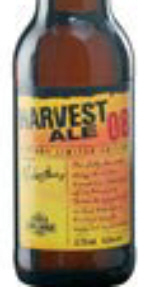 JW Lees Harvest Ale The term “vintage”, which strictly speaking refers to the grape harvest, is often misapplied to beer – unlike wine, beer is made from dry ingredients and its provenance doesn’t depend on one particular year and season. But this barley wine from Manchester family brewer Lees is an exception.
Harvest Ale is brewed annually in limited quantities that season’s harvest of Maris Otter barley malt and East Kent Goldings hops, and released, vintage-dated, in December. A special yeast strain is used and, although the beer isn’t Real Ale in a Bottle, it gains complexity and loses sweetness with age, and even throws a sediment.
A well-matured 2002 poured dark ruby-brown with a fizzy and quickly declining nutmeg-coloured head. The heady fumes of a rich, winy, Dundee cake and olive aroma heralded a still sweet but fine and oily malt palate with cherry fruit, artichokes, port and salt. A very long and mouth coating sherryish finish developed chewy marmalade notes and a hint of wood.
I’ve not yet been able to track down any of the occasional special releases matured in port, sherry and whisky casks – a special treat for Christmases yet to come.
More strong beers for the festive season in the next post.
Read more about this beer at ratebeer.com: http://www.ratebeer.com/beer/jw-lees-harvest-ale/6070/
First published in BEER December 2007 as part of a piece about strong beers for the festive season.
ABV: 11.7 per cent
Origin: Whimple, Devon, England
Website www.ohanlons.co.uk
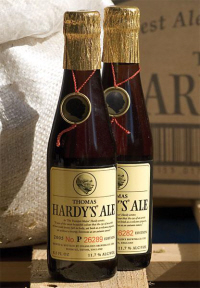 O'Hanlon's Thomas Hardy's Ale When it comes to the festive season, I’m something of a bah humbug type by nature, but one of the things I do look forward to is venturing into my beer cellar. Or rather, the dark cupboard in which, for the past few years, I’ve had the remarkable self-discipline to stash bottles that deserve time to think about how they’re going to taste.
It’s not just a beer geek’s affectation – a good beer of reasonable strength really will develop complexity with age, especially if it’s bottled conditioned. Sharp hoppy flavours gain comfortably rounded corners, malt and fruit learn to mingle harmoniously and unexpected tastes emerge from the complex chemistry of secondary fermentation.
Setting a regular date to dip into your hoard is a good way of resisting the temptation to open the bottles too soon. And since many of the beers that benefit from cellaring make great winter warmers, enjoyed at leisure, the Yuletide holiday provides the perfect excuse.
Thomas Hardy’s is the ultimate British cellaring beer, and many readers will already be familiar with its fascinating story. Inspired by a quote from the eponymous novelist which still appears on the label, it was first brewed in 1968 to mark the 40th anniversary of his death. It was originated by family brewer Eldridge Pope of Dorchester, a town which, under the name Casterbridge, is a key location in Hardy’s Wessex novels.
Launching a super strength sedimented ale was an odd move at a time when most British brewers had abandoned bottle conditioning, slashed gravities and were now scrambling to dump cask. But someone at EP must have had faith that there was a niche in the market for a specialist brew and, as one of the famous five bottle conditioned British ales still in production at the inception of CAMRA, the ale became revered among the first generation of modern beer connoisseurs.
In 1997 the Dorchester brewery closed, a victim of the mania for severing brewing from retailing that gripped many traditional independents in the wake of the Beer Orders. Its famous strong ale joined the long list of lost classics until, in 2003, it was rescued thanks to interest from the burgeoning beer enthusiast community in the United States. The appropriately named Phoenix Imports of Maryland acquired the rights and commissioned first class microbrewery O’Hanlon’s to recreate the beer.
Thomas Hardy’s Ale is made mainly from pale malt and maltose syrup with only a touch of crystal malt – much of the colour comes from a long 200-minute boil. Hopped with Challenger, Goldings, Styrian Goldings and Northdown, it’s fermented for three months, hopped again and conditioned for two months before being bottled unfiltered with a vintage date. If looked after, it’ll continue to mature in the bottle for 25 years or more.
A 2006 vintage poured a delightful burgundy colour with very little head and low condition, and a sweetish cakey, winy and fruity aroma with a hint of figs. Fresh orange, peaches and marzipan fruit cake were evident on a smooth, nectar-like palate leading to a warming and very long finish with well-balanced burry hops, creamy toffee and a woody tang.
Bottles of the later Dorchester vintages have revealed soapy and peppery notes, spices, tannic red wine and marsala flavours. So don’t just buy one – get some spares and grow old gracefully together.
More strong festive beers in next post.
Read more about this beer at ratebeer.com: http://www.ratebeer.com/beer/ohanlons-thomas-hardys-ale-vintage-2003-and-later/31915/
First published in BEER November 2007 as part of a piece about beers from Booths supermarkets. More Booths beers in previous post.
ABV: 7.2 per cent
Origin: Witney, Oxfordshire
Website www.brakspear-beers.co.uk
 Wychwood Brakspear Triple Like Young’s, Brakspear is another revered Thames-side name now achieving good results at a new location. Most readers will be familiar with the story of how beer marketing company Refresh UK acquired Brakspear’s brands and most of its brewing kit when the owning family sold off their historic Henley brewery for redevelopment, and after a period of contract brewing installed both brands and kit in their own separate section of the Wychwood brewery in Witney [now owned by Marstons].
Triple was created by head brewer Jeremy Moss to celebrate the return of the brand to Oxfordshire. The unusually high strength may mislead you into thinking it’s in the strong golden Belgian abbey style but in fact it’s more a souped-up English bitter, deep amber in colour with a thick yellowish head – the name alludes to the fact that the beer is hopped and fermented three times. Maris Otter pale, crystal and black malts, Northdown hops on the boil and Cascade on the aroma make up the recipe.
A toffeeish, sacky and spicy hop aroma leads to a rich nutty palate with a powerful dose of hops and hints of almonds, yeast and orange marmalade – but creamy, slightly syrupy malt dominates, recalling Speyside malt whisky. A sappy and slightly warming finish has estery varnish notes and a controlled but quite peppery hop bite. A fine sipping beer that will mature past its best before date, and you can even look up the bottling date of each individually numbered bottle on the brewery website.
Read more about this beer at ratebeer.com: http://www.ratebeer.com/beer/brakspear-triple/46132/
First published in BEER November 2007 as part of a piece about beers from Booths supermarkets. More Booths beers in previous post.
ABV: 5 per cent
Origin: Bedford, Bedfordshire, England
Website www.youngs.co.uk
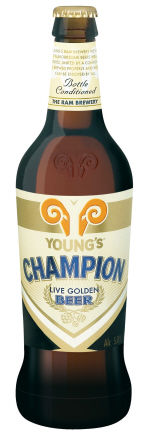 Wells & Young's Young's Champion Live Golden Ale Like many people I was sad to see Young’s quit Wandsworth but I’ve been impressed with the subsequent flavour matching at Bedford’s Eagle Brewery, including for the bottled specialities which had made the venerable ram trademark a brand to watch on supermarket shelves.
A case in point is Champion Live, a beer that, as a former Tesco Beer Challenge winner, actually owes its existence to another supermarket chain. Made simply from English lager malt and Styrian Goldings hops, this very drinkable rich golden beer with a good white head could be seen as a quality lager made with the techniques of a bottle conditioned ale.
A biscuity barley sugar aroma with hints of lemon squash, grapefruit, peaches and honey leads to a crisp but full malty palate that starts sweetish and turns tangy with a flinty edge. The detectable sour, slightly apply note is something of a house characteristic also found in the Young’s standard draught bitter, or “Ordinary”. A clean swallow leads to a dry mineral finish with chewy, slightly earthy hops and a very slight sulphur note. If not especially complex, this is a light-hearted, easy-going and very enjoyable beer.
For more Booths beers see next post.
Read more about this beer at ratebeer.com: http://www.ratebeer.com/beer/youngs-champion/25540/
First published November 2007 as part of a piece about beers stocked by Booths supermarkets.
ABV: 6.8 per cent
Origin: Rock, Cornwall, England
Website www.sharpsbrewery.co.uk
 Sharp's Chalky's Bite If you’re a speciality bottled beer enthusiast, the chances are you’ll have heard of Booths Supermarkets even if you live a long way outside its Lancashire heartland. Under enthusiastic and knowledgeable beer buyer Dave Smith, this family-owned regional grocery chain has built a reputation for offering the best supermarket beer selection in Britain at prices that still meet and often beat those of the national giants.
Two years ago, CAMRA recognised Booths’ achievements by awarding it Best Retail Chain in the Real Ale in a Bottle Retailer awards. Earlier this year, industry colleagues concurred by naming it Multiple Beer Retailer of the Year in the Drinks Retailing Awards organised by trade publication Off License News. The judges spoke favourably of Booths’ ‘deep-rooted commitment to the beer category…not just using price promotions to drive sales but really adding value and excitement to their beer offering.’
The company now boasts almost 200 different British bottled ales plus imported specialities. Inevitably the majority are not Real Ale in a Bottle, but there’s a noticeably higher live yeast quotient than usual, and a good few hard-to-find lines – such as three bottle conditioned beers from Blackburn’s Three B’s (also selling locally through Threshers’ stores – see June’s Beer) and a newly added duo from 2007 Champion Beer of Britain medallist Wapping Brewery in Liverpool (see last month’s issue).
The selection reviewed below demonstrates the range of flavours on the current list, though note that none of the beers listed is exclusive – all are stocked by one or other national retailer. But you’ll be hard pressed to find them all in one place at bargain prices outside Booths’ 26 stores scattered between Keswick, Knutsford, Settle and Blackpool. And as the company’s online mail order wine business hasn’t yet been extended to beer, I for one am on the lookout for excuses for my next trip up the M6.
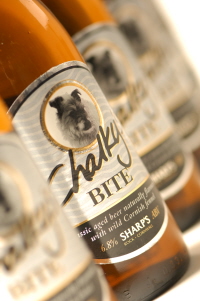
Sharp’s Chalky’s Bite has already enjoyed coverage elsewhere in Beer as a rare British attempt at a fine speciality beer to compete with Belgian imports on the dining table. It was created at award-winning Cornish micro Sharp’s by head brewer Stuart Howe at the behest of Padstow-based celebrity chef and seafood enthusiast Rick Stein, and named after Stein’s (subsequently deceased) Jack Russell terrier, who appears on the label.
Brewed from low colour Cornish Maris Otter barley malt, wheat malt and candy sugar, and hopped with Northdown for bitterness and Goldings for aroma, the beer is conditioned for two months at 0°C with Styrian Goldings and wild Cornish fennel seeds, then bottled with Belgian yeast and warm conditioned for a further two months before sale.
This elaborate recipe yields a rich glowing golden beer with a fine white head and a wheaty, spicy palate with subtle herb, citric and orange notes – I thought I smelt coriander but it’s not among the ingredients. The tangy palate, notably refreshing for such a strong beer, has unusual grassy mineral flavours and a certain sweetness dried by herbal and citric flavours.
Fennel registers subtly as the finish develops, alongside more mineral notes, finally quite peppery hops and sweetish fruit. This is an unusual and noteworthy beer, with obvious shades of a Belgian witbier but stronger, drier and more complex. It should go down a treat with seafood as intended but is also well worth sampling on its own.
More beers from Booths in next post.
Read more about this beer at ratebeer.com: http://www.ratebeer.com/beer/sharps-chalkys-bite/65068/
First published in BEER September 2007.
ABV: 4.9 per cent
Origin: Grafty Green, Kent
Website www.whitstablebrewery.info
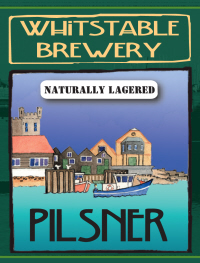 Whitstable Pilsner Whitstable, on the North Kent coast overlooking the lowest reaches of the Thames estuary, is synonymous with oyster fishing, and, since oyster eating is an activity where even fanatical oenophiles might consider beer when food matching, it was delightfully appropriate when some years back the town also gained an Oyster Stout to its name.
The stout originated at the Swale Brewery, originally in nearby Sittingbourne but eventually moving over the North Downs to the village of Grafty Green between Ashford and Maidstone. The brewery was bought and renamed in 2003 by the Whitstable Oyster Fishery Company, an old-established family concern that now owns the oyster beds, and at first supplied only the company’s own hotels and restaurants.
The new owners didn’t inherit the Swale recipes, so brewer Rafik Abidi developed his own version of Oyster Stout. This new stout is tasty enough, but better still is a craft-brewed pilsner-style beer, made from a pure malt mash of Fanfare lager malt with Czech Žatec hops added twice to the boil, cold fermented with a genuine lager yeast. The draught version is cask conditioned; the bottled version is lightly filtered but unpasteurised.
The slightly hazy golden beer pours with a fizz and a rapidly declining white head that brings to mind that other, more extravagant, natural partner for oysters, champagne. There’s an aroma of soft malt with slightly sharp orange, and a very biscuity and ice cream-soft palate turning bracingly hoppy with a citric tang.
The finish has full flavoured malt perfectly balanced with a squeeze of fresh lemon acidity and developing lightly bitter hops. And an elegant 33cl bottle with an attractive art nouveau label gives the beer the presentation it deserves.
Read more about this beer at ratebeer.com: http://www.ratebeer.com/beer/whitstable-bohemian-lager–pilsner/37797/
First published in BEER September 2007. Since then the brewery has taken over Cumbrian Legendary Ales at Hawkshead and relocated brewing to this site.
ABV: 4.3 per cent
Origin: Loweswater, Cumbria
Website www.kirkstile.com
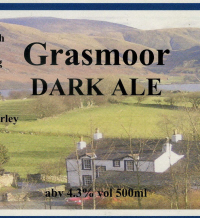 Loweswater Grasmoor Dark Ale Another local CAMRA award-winning small pub brewery [in addition to Farmer’s Ales, responsible for Golden Boar, reviewed in the previous post] is Loweswater, in the hamlet and close to the lake of the same name in the northwest corner of the Lake District national park, south of Cockermouth. Head brewer Matt Webster restored a brewery to the picturesque Kirkstile Inn in 2003 after a break of almost two centuries, with such success that this year they had to build an extension to the brewery buildings.
Real Ale in a Bottle has been added very recently and, as in Maldon, they bottle by hand – the brewery’s Roger Humphreys tells me he thinks they’re the only brewer in Cumbria bottling on site. At the moment two RAIBs are on offer – the brewery’s popular Kirkstile Gold and this dark delight.
Grasmoor Dark is a Maris Otter-based beer, with additional crystal and chocolate malts and Progress and Challenger hops. It’s a dark brown colour with a red tinge and pours with a creamy off-white head. Herbs and spices dominate a fruity aroma with a trace of roast, leading to a complex, quite dry palate with malted milk and roast notes and burry bitter hops emerging over smooth chocolate.
A very creamy swallow is followed by a bitter chocolate and roast almond finish with interestingly tangy herbal hops. Overall it’s a dark but not at all sweet beer that’s unusual and very tasty. Perhaps the local fells inspire a certain rugged grittiness – Grasmoor is the highest peak hereabouts and its name, continuing the porcine theme of the previous review, derives from the Old Norse for “wild boar”.
Read more about this beer at ratebeer.com: http://www.ratebeer.com/Ratings/Beer/Beer-Ratings.asp?BeerID=81643
|
|
