A sample text widget
Etiam pulvinar consectetur dolor sed malesuada. Ut convallis
euismod dolor nec pretium. Nunc ut tristique massa.
Nam sodales mi vitae dolor ullamcorper et vulputate enim accumsan.
Morbi orci magna, tincidunt vitae molestie nec, molestie at mi. Nulla nulla lorem,
suscipit in posuere in, interdum non magna.
|
First published in BEER March 2008 as part of a piece about Welsh beers. For more Welsh beers see previous post.
ABV: 4.2 per cent
Origin: Upper Cwmbran, Torfaen
Website www.cwmbranbrewery.co.uk
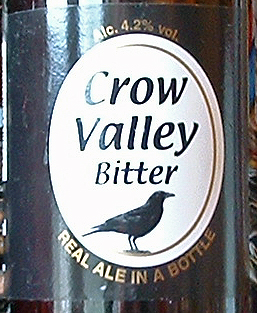 Cwmbran Crow Valley Bitter When Martin Lewis and Keith Gullick first created this cottage brewery fed from a mountain spring under the shadow of Mynydd Maen in 1996, they decided to concentrate on perfecting just one beer – the nicely balanced Crow Valley Bitter. Since then they’ve added a number of different cask beers as well as their only Real Ale in a Bottle, a version of their still-impressive flagship. It’s made from a traditional recipe of Maris Otter pale, crystal and dark crystal malts with Goldings, Fuggles and Northdown hops.
This rich amber beer starts with a relatively reserved lightly nutty aroma with hints of minerals, burnt toffee and hops. A lightly oily and juicy palate has more mineral salts, nuts, citrus and grassy hops, with a hint of raspberry on the swallow. Straw and hop flavours emerge over subtle fruit and faint boiled sweets in a chaffy finish with some late delicate leafy notes. Overall this is a subtle and characterful beer of very high quality, well repaying the time the brewers have spent on getting it right.
Read more about this beer at ratebeer.com: http://www.ratebeer.com/beer/cwmbran-crow-valley-bitter/31550/
First published in BEER March 2008 as part of a piece about Welsh beers. For more Welsh beers see previous post.
ABV: 3.9 and 5.5 per cent
Origin: Capel Dewi, Sir Gaerfyrddin
Website www.ffosyffinbrewery.co.uk
 Bragdy Ffos y Ffin Dairy farmer Glyn Lenton took over Ffos y Ffin farm outside Capel Dewi in rural Carmathenshire in 1990. Some years later he and friend Steve Smith, both enthusiastic home brewers, discovered a spring on the farm was the perfect source of brewing liquor. They installed the brewery in 2005, designing and building the kit from scratch rather than buying an off-the-peg system. Their reputation for quality is spreading – a celebrity chef had been on the phone in search of samples just before I called.
Cothi Gold is named for a gold mine on a tributary of the brewery’s local river, the Towi. This is a tasty golden ale with a good bubbly head and a light mineral malt aroma with a yeasty banana-ish hint. A firm flavoursome and fresh palate has strawberry, vanilla and citric notes with light hops, while a cleansing swallow leads to a biscuity malt finish with deeper pepper hops and a very slightly soapy quality.
It’s a great example of refreshing session beer, brewed with floor malted Maris Otter pale barley malt from Warminster maltings, crystal malt, flaked maize and torrefied wheat, with Boadicea hops for bittering and Goldings, Progress and Zatec (Saaz) for aroma.
The name of the more robust Paxton’s Pride refers to a nearby folly built in 1812 by Sir William Paxton to celebrate Nelson’s victories. This reddish amber ale with its thick yellow head is actually brewed from the same grains as Cothi Gold, but in different proportions. The burst of hops on an intoxicating fennel and spiced orange aroma comes courtesy of Northdown, Fuggles, Styrian and a late addition of Zatec. The palate contrives to be both firmly malty and bone dry with incense and orange oil and a hint of smoke. The orange fruit turns pithy and marmaladey on a lingering and satisfying finish.
Four other real ales in a bottle are also well worth trying.
More Welsh beers in next post.
Read more about these beers at ratebeer.com:
http://www.ratebeer.com/beer/ffos-y-ffin-cothi-gold/79597/
http://www.ratebeer.com/beer/ffos-y-ffin-paxtons-pride/66118/
First published in BEER March 2008 as part of a piece about Welsh beers.
Beer sellers: Meadow Farm Shop
ABV: 4.8 and 8 per cent
Origin: Pontypridd, Rhondda Cynon Taf
Website www.otleybrewing.co.uk
 Otley O-Garden Last month’s BEER previewed CAMRA’s Members’ Weekend in Cardiff by featuring Welsh beer and breweries, with my colleague Brian Glover reporting Wales is “fermenting furiously again, with more than 35 breweries.” What Brian didn’t mention is that an impressive proportion of these breweries are now bottling their beer, including as Real Ale in a Bottle.
I’ve long made a point of featuring Welsh beers in the March issue as it appears just before St David’s Day, but I once used to struggle to find even one bottle conditioned example to feature. This year there are so many to choose from I’ve opted to feature South Wales only, and leave the north till next year.
There are now enough brewers bottling in Wales to sustain a dedicated Welsh beer shop – the Meadow Farm Shop opened last year at Tintern, Monmouthshire (tel 01291 680101, email meadowfarm1@aol.com, no mail order yet but it’s planned this year). This is part of Kingstone Brewery which also offers its own wide range of bottle conditioned beers.
With its stylish white-on-black labels and minimalist names featuring the letter O, the Otley brewery gives its beers the presentation they. The beers exist because in 2005 Nick Otley and his fellow owners of the small independent pub and restaurant company that runs the Otley Arms and two other outlets in Pontypridd decided it made sense to add a brewery.
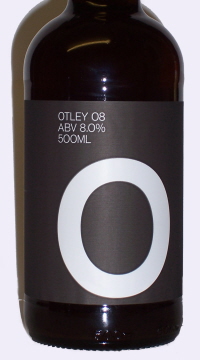 Otley O8 O-Garden is the brewery’s take on a wheat beer, with coriander and orange peel but curiously without the wheat! It pours a slightly cloudy golden with a creamy white head and an interesting hops and spiced orange aroma, with hints of hay and herbs. A dry palate integrates hops with orange and herb flavours and a slight apricot note. Coriander becomes more obvious in the finish which lingers with more spiced orange and a light hint of roast. Hopefully InBev haven’t contacted their lawyers yet!
The hefty O8 is an amber barley wine lent an aromatic edge with US Willamette hops. It starts with moist cake, citrus and orchard fruit and doughy pale malt on a complex floral-perfumed aroma. A firm, dry palate has sherbet fruit and mousse-textured malt with nectary orange notes and peppery hops. There’s more orange fruit in a peppery, slightly vegetal bitter finish w a hint of orange liqueur. “Dangerously drinkable” has become a cliché with strong beer but it’s well-deserved here– this strong but delightfully fresh and juicy beer slips down with perilous ease.
For more Welsh beers see next post.
Read more about these beers at ratebeer.com:
http://www.ratebeer.com/beer/otley-o-garden/76223/
http://www.ratebeer.com/beer/otley-o8/58323/
 O'Hanlon's Brewing Company Ltd First published in BEER February 2008.
ABV: 5 per cent
Origin: Whimple, Devon
Website www.ohanlons.co.uk
[Note this beer may since have been discontinued.]
In the interests of variety and even-handedness I aim to avoid featuring the same brewer on this page more than once a year. Over the past few months I’ve made a rare and well-deserved exception for O’Hanlons, and having just tasted the own label Real Ale in a Bottle they’ve just started brewing for Tesco, I’m obliged to do so again, especially following recent discussion in What’s Brewing on Marks and Spencer’s new RAIB lines.
Own brands aren’t always the most characterful products but that’s not the case with this substantial but refreshing brew. The beer is mid-brown with a good off-white head and a notably spicy aroma with blackcurrant, toasty malt, liquorice and humbug notes. A dry, nutty palate fills the mouth with spicy hops and seedy, twiggy flavours without being overbitter. The finish dries out further with some smoky malt, developing peppery hops and a deliciously fruity undertow.
The fact that Tesco has moved so quickly in launching an own brand British bottle conditioned ale is a vote of confidence for Real Ale in a Bottle that would be good news even if the beer turned out to be only reasonably good. But I’d welcome a beer of such quality to the shelves of Britain’s biggest supermarket no matter what label it was under. What a cheering start to the year.
Read more about this beer at ratebeer.com: http://www.ratebeer.com/beer/tesco-finest-bottle-conditioned-ale/80290/
First published in BEER February 2008.
ABV: 3.9 per cent
Origin: Hebden Bridge, West Yorkshire
Website www.littlevalleybrewery.co.uk
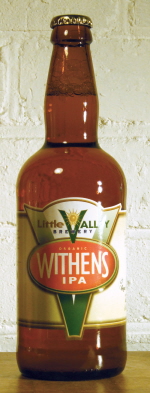 Little Valley Withens IPA As most readers will know, India Pale Ales were originally high gravity, generously hopped export products that later evolved into the more session-friendly draught interpretations still supplied by the likes of Caledonian and Greene King. It’s the original style that’s most caught the imagination of the many contemporary craft brewers who’ve recently added revivalist IPAs to their ranges – a trend that’s been taken to extremes on the West Coast of the USA.
So it’s good to see a small brewer demonstrating that pale ale can still be supremely tasty and satisfying at quaffable strength. Withens IPA is one of six Real Ales in a Bottle from 100% organic Little Valley Brewery, founded in 2005 in attractive Calderdale in the South Pennines by Dutch-born and Bavarian-trained master brewer Wim van der Spek and his English partner Sue Cooper.
The beer takes its name from nearby Withens Clough Reservoir, fed by water from the surrounding moors which supplies the brewing liquor. The all-organic ingredients list comprises pale malt, caramalt, wheat malt, First Gold and Cascade hops.
An appropriately golden colour with a lightly foamy white head, the beer yields a tangy aroma with pineapple fruit and resins. The dry light malt palate develops more complex orange and spice notes, and a not unpleasant farmyard hint. A tangy finish has tart fruit and a flash of roast, developing a late flower petal hint.
Wim set out to brew a hoppy but drinkable beer with a pleasantly light body – in this he’s succeeded admirably with friendly and flavoursome results. “Beer produced with love and passion,” runs the strapline on the label, and I don’t doubt that it’s true.
Read more about this beer at ratebeer.com: http://www.ratebeer.com/beer/little-valley-withens-ipa/52372/
First published in BEER February 2008.
ABV: 3.8 and 5.5 per cent
Origin: Allendale, Northumberland
Website www.allendalebrewco.co.uk
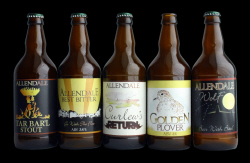 Allendale Brewery beers The small and remote riverside town of Allendale, just shy of Hadrian’s Wall, is home to one of England’s most youthful breweries. For brewer and co-founder Tom Hick it’s his first job since leaving college: he went from a zoology degree to a brewing masters at Sunderland then set up his own business with the help of his father Jim.
Last year they branched into small scale bottle conditioning for the local market, with such success that they’ve now had to supplement their own bottles by contract bottling two beers in filtered form at Hambleton Ales. Tom says the bottle conditioned versions sell best at farmers’ markets, while lager drinkers are more easily persuaded to try filtered beers.
Tom sent me both filtered and bottle conditioned incarnations of his standard session ale and local best seller, Best Bitter, affording the rare opportunity of a direct comparison. This is a pale amber ale with a traditional grist of Maris Otter pale and crystal malts, hopped with Goldings, Fuggles and English Target and pouring with a fine yellowish head.
The filtered version has a lightly malty, brambly aroma leading to a crisp, dry and quite sternly hoppy palate, with notes of boiled sweets and burnt toast. Bitterish, lettucey resins in the finish are balanced by slightly syrupy malt – a straightforward, pleasantly drinkable beer on the hoppier side of bitter.
The “real” version is clearly the same beer, but with extra freshness and complexity and no slightly cooked notes – a clear demonstration of the extra dimension live yeast can bring. It poured with a more pillowy head and a spicier aroma, with sulphur and yeasty banana notes that recall wheat beer. These persist in a fresh and creamy palate that does a better job of offsetting the stern hops, with a good citric tang. Juicy malt softens an assertive hoppy finish that turns quite bitter at the end.
Wolf, only available in bottle conditioned form, occupies the stronger end of an imaginative range. This is dark reddish-brown with a low but smooth yellowish head and a tart fruit and toffee aroma with a herby, coriander-like Belgian dubbel hint.
Spicy, juicy orange emerges on an intense palate with notes of vanilla, pepper, blackcurrant and roasty malt – Challenger hops give an emerging bitterness while US variety Willamette adds some fruity notes. A fresh, tart and bitterish finish has a whiff of smoke and green herbs. It’s a characterful and robust beer, with a touch of wildness worthy of its name.
Read more about these beers at ratebeer.com:
http://www.ratebeer.com/beer/allendale-best-bitter/58836/
http://www.ratebeer.com/beer/allendale-wolf/58598/
First published in BEER January 2008 as part of a piece about imperial stouts. For more imperial stouts see previous post.
ABV: 11 per cent
Origin: Newport, Oregon, USA
Website www.rogueales.com
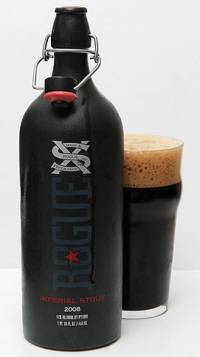 Rogue XS Imperial Stout Founded in 1988, Rogue are now a mainstay of the craft brewing hotbed of the Pacific Northwest and among the handful of small US brewers whose products regularly pop up on British shelves. XS Stout first appeared in 1994 and has since won multiple awards at home. It’s a typically robust and characterful bottle conditioned beer made from a complex mash of seven malts including chocolate and Munich, with rolled oats, Cascade, Willamette and Chinook hops and two secret ingredients.
A black and viscous beer that leaves iodine-like traces on the side of the glass, it pours with a notably dark head and an inky dark fruit, gravy and chocolate aroma. The palate is surprisingly light-textured but bursting with vine fruits, Marmitey malt and drying burry hops. Chocolate and roast come to the fore in a very long finish that turns dry with vegetal resins.
Since I bought my mature tasting sample – the brewery recommends keeping for at least a year – the stout has been relaunched as one of a series of XS beers packed in stylish black ceramic swing-stoppered bottles. Don’t be deterred – although it betrays the American fondness for hops, it’s much less “extreme” than some of its compatriots and stays well within the parameters of the time-honoured Courage style. Albert Le Coq himself would have been proud.
Read more about this beer at ratebeer.com: http://www.ratebeer.com/beer/rogue-imperial-stout/5266/
First published in BEER January 2008 as part of a piece about imperial stouts. For more imperial stouts see previous post.
ABV: 10.5 per cent
Origin: Ansty, Sussex, England
Website www.darkstarbrewing.co.uk
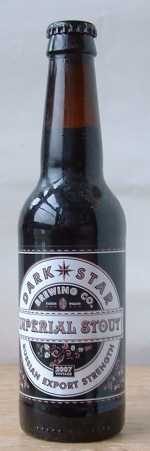 Dark Star Imperial Stout Dark Star originated at the Evening Star brewpub in Brighton in 1991. Ten years later the brewery, which now owns three pubs, moved to a dedicated plant near Haywards Heath. They don’t do much bottling, but this Imperial Stout is an exception. Brewed annually from Maris Otter pale and crystal malt, malted barley, Target and East Kent Goldings hops, it was originally intended only as a stock beer for blending but according to the brewery’s Nigel Hartley “word got out” and it’s now in its third year as a Real Ale in a Bottle.
A black beer with a thick yellowy fawn head, it yields an intoxicatingly fruity and estery aroma with raisins and petrol hints. A slick winey, cakey palate has dark roast malt and blackcurrant with tingling alcohol on the tongue. A coffeeish swallow leads to a warming malt finish with resiny, peppery hops and a late whiff of mature Camembert. Fruitier than some, this is a delightful beer that should mature well.
For more imperial stouts, see next post.
Read more about this beer at ratebeer.com: http://www.ratebeer.com/beer/dark-star-imperial-stout/55061/
First published in BEER January 2008 as part of a piece about imperial stouts. For more imperial stouts see previous post.
ABV: 10 per cent
Origin: Fraserburgh, Aberdeenshire, Scotland
Website www.brewdog.com
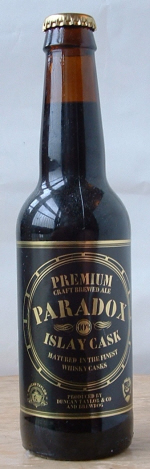 BrewDog Paradox James Watt and Martin Dickie opened Grampian-based Brewdog only a year ago but they’ve already caused a stir with their original and distinctive brews, and a youthful approach that’s more like an iconoclastic US craft brewer than a British real ale micro. Paradox, based on their Rip Tide Imperial Stout and matured in single malt whisky casks supplied by whisky merchants Duncan Taylor & Co, also nods across the Atlantic where collectable small-run cask-matured beers have a cult following.
The bottling I tried was from a Caol Ila cask, and the smoky, peaty whiff of Islay was instantly recognisable on the complex malt and liquorice aroma. The juicy palate is lighter and slightly sweeter than some stouts but still full of flavour and slightly yoghurty, while a long tart finish has hints of apple, drying out with burry hops and whisky-scented wood over generous smooth malt.
Although filtered and not bottle conditioned, this is a fine and innovative beer and I look forward to trying alternative versions matured in different casks.
For more imperial stouts see next post.
Read more about this beer at ratebeer.com: http://www.ratebeer.com/beer/brewdog-paradox-islay-batch-001/73221/
First published in BEER January 2008 as part of a piece about imperial stouts.
ABV: 9%
Origin: Esen, West-Vlaanderen
Website: www.dedollebrouwers.be
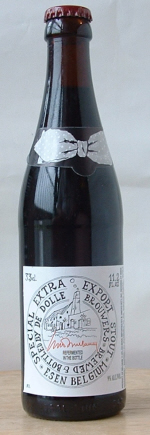 De Dolle Brouwers Special Extra Export Stout Imperial Stout was a souped-up 19th century development of London porter that found favour in Tsarist. A century later the sole surviving original brand from Barclay Perkins ended up in the dubious custodianship of Courage as one of the famous five bottle conditioned beers still in production at the inception of CAMRA. The giant brewer finally got round to clearing out its attic in 1993 when the last brew emerged from John Smith’s at Tadcaster.
The loss of Courage Russian Stout sparked renewed interest in the style, particularly across the Atlantic – it was for the US market that Harvey’s recreated the recipe originally brewed for 19th century exporter A Le Coq, who pioneered sales of English stout to Russia. Brewers in the Low Countries and Scandinavia have since entered the fray and in the US itself the style’s high gravity, generous hopping, strong flavours and historic pedigree have endeared it to a generation of “Extreme Beer” brewers.
Imperial Stout isn’t the sort of thing you’ll find on every supermarket shelf and the more flamboyant US versions remain unseen in Britain, but you should be able to source the four beers featured here from UK specialists. Other good examples you might encounter are from Alvinne (Podge), Bartrams, Brooklyn (Black Chocolate), Pitfield, Proef (SNAB Czaar Peter) and Thornbridge, plus of course Harvey’s excellent and very traditional version – all of them fit for a Tsar.
De Dolle Brouwers, the “mad brewers”, first fired their mash tuns in 1980 when cycling and home brewing enthusiasts the Herteleer brothers took over an ailing 1835 rural brewery. They’re now among the best-known and best-loved of new generation Belgian brewers for their distinctive and eccentrically marketed bottle conditioned beers.
The brothers are long-term admirers of British stouts and their own is partly inspired by a Whitbread recipe but uses their house yeast which includes a lactic culture – as Kris Herteleer says, two centuries ago British stouts would also have been sour. It’s brewed from pale, roasted and caramalts – interestingly there’s no roasted barley – and hopped with whole Nugget flowers from Poperinge.
This lively dark ruby beer has an incense-laden aroma with notes of cardamom and smelling salts. The blackcurrant and chocolate palate has something of the thick gravy-like quality of the old Courage version and a notable sourness from the lactic yeast. Brown sugar notes emerge before a mouth-numbing finish with ashy chocolate roast well-blended with burry hops, dark marmalade and sultana fruit. A little wild when young, perhaps, but it will mellow slowly for years.
For more imperial stouts, see next post.
Read more about this beer at ratebeer.com: http://www.ratebeer.com/beer/de-dolle-extra-export-stout/31936/
|
|
