A sample text widget
Etiam pulvinar consectetur dolor sed malesuada. Ut convallis
euismod dolor nec pretium. Nunc ut tristique massa.
Nam sodales mi vitae dolor ullamcorper et vulputate enim accumsan.
Morbi orci magna, tincidunt vitae molestie nec, molestie at mi. Nulla nulla lorem,
suscipit in posuere in, interdum non magna.
|
Top Tastings 2008. A shorter version was first published on facebook January 2009.
ABV: 2.7%
Origin: Fraserburgh, Aberdeenshire, Scotland
Website: www.brewdog.com
 BrewDog Founded in 2007 by iconoclasts James Watt and Martin Dickie, the latter formerly of Thornbridge, BrewDog has rapidly become one of Britain’s most exciting breweries. It’s also caused some controversy particulary through its pursuit of massive gravities using freezing, as achieved in Tactical Nuclear Penguin (32%) and Sink the Bismarck! (41%), and then courted further controversy by following these up with an 0.5% beer called Nanny State. Slightly less extreme but still on the low gravity side is this occasional cross between a 60/- and a mild.
This very dark ruby beer with its persistent bubbly fawn head has a slightly sugary caramel, blackberry and restrained roast malt aroma. The palate is chalky dry but packed with flavours of malt, wood and burnt toffee and swimming in hoppy resins. Artichoke tinges a dark marmalade and roast finish which finally develops a dash of pepper. It’s perhaps a bit hoppy for the style but there’s so much else going on too.
To be honest not all BrewDog beers entirely live up to the fuss, but this one is astonishing.
Read more about this beer at ratebeer.com: http://www.ratebeer.com/beer/brewdog-edge/83000/
Top Tastings 2008. A shorter version was first published on facebook January 2009.
ABV: 4.4%
Origin: Caerdydd, Cymru
Website: www.sabrain.com
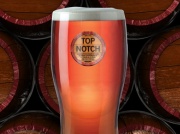 Brains Top Notch Old established Cardiff family brewer Brains offers several cask classics such as SA and Brains Dark but this is a relatively new addition to the range that deserves better exposure. Originally a festival special selected following a tasting of trial ales organised by CAMRA, it’s been promoted to a regular November seasonal, which was when I caught it at the city’s Chapter Arts Centre, but I could happily drink it all year round.
Coloured malts along with pale malt give it a reddish nut-brown colour with rich nutmeggy head. There’s a sweet nutty malty autumn fruit aroma, a complex chewy palate with more nuts, caramel toffee and a bit of powdery-dry hops (it’s late hopped with Fuggles and Goldings), with lightly woody old ale-like hints creeping through. The creamy dry finish has a burry hop wash and a touch of roast and overall that leaves a big impression.
Read more about this beer at ratebeer.com: http://www.ratebeer.com/beer/brains-top-notch/95083/
Top Tastings 2008. A shorter version was first published on facebook January 2009.
ABV: 3.9%
Origin: Millom, Cumbria, England
Website: http://www.beckstonesbrewery.co.uk/
 Beckstones Black Gun Dog Freddy Mild Ale When this won gold in its class and silver overall at the 2008 Champion Beer of Britain you could hear people muttering “who?”. But it was well-deserved for this tiny brewery housed in a barn beneath Black Combe in a remote corner of Cumbria, started in 2002 by home brewer and long distance drayman Dave Taylor.
Named after Dave’s own dog, this is a complex mild, very dark brown in a colour with smooth and creamy off-white head. There’s a notably roasty blackcurrant and caramel dark malt aroma, a slightly smoky and yoghurty berry fruit palate with definite bitterness turning ashy with a slight caramel hint, and a long, moreish, slightly tart finish with subtle roast and strawberry fruit. Cask at Great British Beer Festival.
Read more about this beer at ratebeer.com: http://www.ratebeer.com/beer/beckstones-black-gun-dog-freddy/66179/
Top Tastings 2008. A shorter version was first published on facebook January 2009.
ABV: 7.3%
Origin: Bavikhove, West-Vlaanderen
Website: www.bavik.be
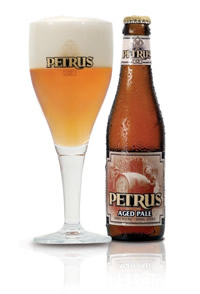 Bavik Petrus Aged Pale Established in 1894 and now a sizeable family-owned independent, Bavik (sometimes known as De Brandenbere after the owning family) made its name with sour brown ales, some of which were blended with a pale ale aged for 20 months in oak casks that was never released on its own. Requests from Michael Jackson and the brewery’s US importer persuaded it to bottle the pure pale, initially only for export, thus the English name, but it now also enjoys a following in the domestic market, where I found it on the list of specialities at Antwerpen’s excellent Waagstuk pub.
This deep golden beer has a light and bubbly white head and a perfumed orange aroma with a touch of sharpness and candied fruit. A sweet-sour almost geuze-like palate has pale malt, lactic notes and a dash of marmalade, and an oily swallow leads to a tart citric finish, with bitter hops giving way to late vanilla and old books. We should be thankful this one-of-a-kind, surprisingly light textured and well-balanced beer has finally seen the light.
Top tastings 2008. A shorter version was first published on facebook January 2009.
Beer sellers: Bierkraft
ABV: 9%
Origin: Portland, Maine, USA
Website: www.allagash.com
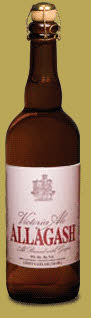 Allagash Victoria Ale Victoria is a very special golden ale brewed with Chardonnay grapes, part of the brewery’s “tribute” series, with $1 from each bottle going towards restoration of Portland’s historic Victoria mansion. Allagash, established in 1995, is one of the US craft brewers particularly focused on Belgian inspired brewing, with a range of fine bottle conditioned specialities in 750ml bottles that includes Victoria’s brother, Victor.
Cloudy golden with a low but decent white head, the beer exudes a refined grape aroma with ripe light malts. A subtle, slightly sweet crisp malt palate that’s not overpoweringly grapey has hints of rose, coloured malt and liquorice, leading to a chewy finish with restrained vegetable hops, staying very elegant despite the alcoholic kick. My bottle was sourced at Bierkraft in New York City.
Read more about this beer at ratebeer.com: http://www.ratebeer.com/beer/allagash-victoria-ale/58234/
Top Tastings 2008. A longer version was first published on facebook January 2009.
Beer Sellers: Cerveteca
ABV: 4.5%
Origin: Mediona, Barcelona, Catalunya
Website: http://masia-agullons.com/
 Ales Agullons I tasted this unpasteurised on draught at the Cerveteca in Barcelona. It’s from a tiny farmhouse brewery that at the time of tasting was very new but had already got its beers into British and Belgian festivals. This tasty US-inspired pale ale, named after the brewer’s first son, was tweaked by Barcelona-based beer guru and Cerveteca staff member Steve Huxley.
It’s a hazy deep golden beer with some fine white head and a lightly sweet hoppy aroma with some nice malt character and a touch of phenols reminiscent of wheat. A full dry palate has crystally burnt rubber notes and a grapefruity bite of hops turning thistly on the tongue. A lasting finish is hoppy and peppery with late resins. An impressive beer that’s definitely hoppy but not overbitter, and easy to see why it helped to win the brewery a reputation.
Read more about this beer at ratebeer.com: http://www.ratebeer.com/beer/agullons-bruno-pale-ale/64415/
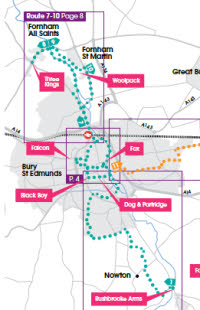 The Great Blighty Ale Trail If exploring real ale pubs, country footpaths and historic towns sounds to you like a great way to spend a day, you should check out the downloadable walks booklet I’ve compiled for UKTV’s Blighty channel as part of this summer’s Great Ale Trail promotion, featuring walks around Bury St Edmunds. See http://uktv.co.uk/blighty/homepage/sid/8361/homepageID/3926/.
At the beginning of June I spent several demanding but enjoyable days walking a total of around 100km to research walking routes linking 20 pubs, all of them serving cask beer, in Bury and its surrounding villages. The pubs had already been chosen by UKTV so inevitably there are some places where finding good off-road routes proved too much of a challenge. Consequently there’s a little more road walking than I’d normally like, but there are some fantastic routes too, through rich and green but generally flat and easy countryside.
I’m especially pleased with the linear route that starts at Sicklesmere and runs north along the river Lark through country parks and water meadowns into Bury, where there are two alternative routes either through the mediaeval streets or the abbey gardens, continuing along the valley to the Fornhams. The routes east of Pakenham and Ixworth are also particularly delightful, including old mills, woodlands, former Roman vineyards and marshes.
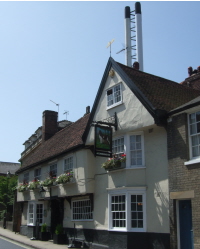 Dog and Partridge, Bury St Edmunds Inevitably many of the pubs are Greene King houses but there are some classic free houses too, offering a range of East Anglian beers. I didn’t manage to get inside all of them and the need to drive prevented me from sampling the beer offer in some of ones I did visit, but I had a particular welcome in the 15th century White Horse at Badwell Ash and the Blue Boar at Walsham Le Willows.
Sadly the most unmissable pubs I found in Bury weren’t included in the list I was sent, so I’ll recommend them now. The Old Cannon brewpub in Cannon Street has some fine own-brewed ales, locally craft-brewed lager, good food and a tasteful choice of British and imported bottled beers in a clean and modern but relaxing ambience. The essential Greene King house is the Rose and Crown, on the corner of Whiting Street and Westgate Street, a genuine retro local that serves GK and guest ales, including hard to find XX Mild, in flawless condition. I also took the chance to visit Greene King’s brewery: more here.
For those who prefer a slightly faster mode of travel, Bury and several of the villages lie along National Cycle Network route 51, and there’s even a chance to win Millets vouchers before 23 August.
Originally published in BEER November 2009.
The British have an issue with strong beer. In a beer culture centred round swilling down several pints at 4 per cent ABV or less, there’s a tendency to see higher gravities as a route to quicker inebriation. It’s not surprising, then, that British bottle conditioned strong ales are still relatively scarce. A shame, as stronger beers generally do better as real ale in a bottle than weaker ones – the danger of infection is reduced, and there’s more potential for developing complexity with age.
Of course, as anyone familiar with Belgian beer culture will know, it’s possible to enjoy strong beer responsibly by taking it slowly and in moderation. Contemplative sipping has its own rewards, so with the nights drawing in, it’s time to raise a small glass to the British brewers who offer something worth contemplating – as well as a Scandinavian visitor well worth seeking out.
Pitfield Brewery is one of the pioneers of the British microbrewing revival, and now offers a range of historical recreations at gravities that predate the ubiquity of “session strength”, such as the annually brewed Pitfield XXXX Stock Ale (10 per cent). Based on a recipe for the 1890s when stock ale meant strong beer laid down for later blending, it’s a characterful full-bodied, peppery and mouth-filling amber ale with hints of roast and smoke.
In between turning out batches of best selling Doom Bar, Sharps brewer Stuart Howe has developed some more esoteric specialities, including the appropriately named Sharps Massive Ale (10 per cent). This burgundy brew with a slight Belgian accent, hopped with Perle and Northdown, could mature for up to a decade but is already heady and complex, with cherries on the aroma, a figgy berry note on the palate and a mellow orange malty finish, tinged with vermouth and balsamic onions.
Another historical recreation is Woodfordes Norfolk Nip (8 per cent), based on a barley wine from former Norfolk brewery Steward and Patteson, closed by Watney in 1970. I’ve kept bottles of this dark ruby beer for five years and found it rich with toffee apple, custard and wine-like notes, touches of mint and olives and spicy rounded hops.
Something genuinely unusual is Thornbridge Bracia (9 per cent) from Derbyshire. It includes chestnut honey from brewer Stefano Cossi’s native Italy – along with no less than six malts, four hop varieties and roast barley. Honey is obvious on the aroma of this near-black brew, and a sweetish and cakey but extremely complex palate has lightly bittering herbs, savoury notes and peat, with a warming coffeeish finish.
No roundup of winter brews would be complete without a real imperial stout, and one of the very best I’ve tasted comes from under the flight path of Copenhagen airport, and the shadow of mighty Carlsberg. Amager Imperial Stout (10.1 per cent) is one of a number of exciting beers now emerging from Scandinavia, dark brown with chocolate, vanilla and exotic spice on the aroma, a rich chocolate palate with a petrolly note and pursing dry roast over sappy malt in the finish.
With this post I’ve finally caught up with myself as far as my reviews in BEER are concerned — all of them are now archived, except for the most recent which are on an agreed three-month delay after publication. Hurrah!
Featured as a strong ale for winter in BEER November 2009. For more strong beers see previous post.
ABV: 9%
Origin: Ashton-in-the-Water, Derbyshire, England
Website: www.thornbridgebrewery.co.uk
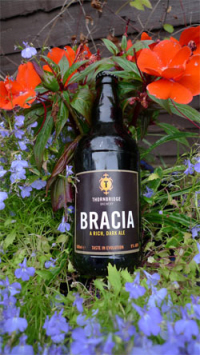 Thornbridge Bracia. Pic by Andy of beerreviews.co.uk, used by permission. Rising star of British craft breweries Thornbridge have an impressive range of unusual beers but perhaps this is the most remarkable one they’ve produced so far, although it won’t be to everyone’s taste. It certainly caused a stir when chosen as the beer to match the dessert course at the British Guild of Beer Writers’ dinner in 2008.
According to the brewery, it’s based on a Celtic beverage allegedly called Bracia that involved cereals and honey, although this account has been challenged. Whatever the truth, the Thornbridge interpretation is a complex creature, with an ingredients list that runs to Maris Otter pale, brown, Munich, dark crystal, black, chocolate and peated malt, roasted barley, Target, Pioneer, Hallertau Northern Brewer and Sorachi Ace hops, chestnut honey from beekeper Onelia Pin, based near brewer Stefano Cossi’s former home in northeast Italy. The whole is fermented with champagne yeast and should mature for at least a year.
This is a black beer with a big, thick brown head and a dark malt, honey, date and spice aroma. A thick and cakey gravy, peat and leather palate is mainly sweet but with complex bittering herbs, perhaps a tangy of savory and a definite splash of roast coffee. A very long and tasty warming but fresh vegetal finish has more dates, late emerging honey and a roast barley and bittering hop bite just about offsetting the sweetness.
Whatever you make it, be thankful there are now brewers in Britain contemplating leftfield brews like this.
The final beer selected for this piece was Amager Imperial Stout.
Read more about Thornbridge Bracia at ratebeer.com: http://www.ratebeer.com/beer/thornbridge-bracia/97342/
Featured in BEER November 2009 as a strong ale for winter drinking. For similar beers, see previous post.
ABV: 8%
Origin: Woodbastwick, Norfolk, England
Website: www.woodfordes.co.uk
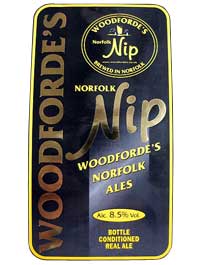 Woodforde's Norfolk Nip Established in 1980, Woodforde’s is now quite a veteran, and a leading player in the burgeoning microbrewing scene of East Anglia. As well as a number of standout cask products, its range is immensely strengthened by bottle conditioned beers, including a number of strong options. One such is this minor classic barley wine, based on a 1929 recipe from Norwich’s Steward & Patterson’s brewery, brewing of which ceased in the early 1960s under the ownership of Watneys, who later shut the brewery. The brand name was preserved as the title of the local CAMRA magazine, and Woodforde’s recreated the beer to celebrate the 10th anniversary of that publication in 1992. It’s since become an annually released limited edition special, brewed from Maris Otter pale, crystal and chocolate malt, roasted barley and Goldings hops and matured for six months before being racked and bottled with unfermented wort.
A vintage dated 1999 bottle on sale at the Great British Beer Festival in 2001 and tasted two years later turned out a very dark burgundy, with a low yellow head, a mellow malty liquorice aroma with faint spice and perhaps some banana, and a smooth palate developing roasted malt, blackcurrant, nuts and enlivening hops. A smooth swallow led to a roasty finish with mellow hops, chocolate, warming alcohol and late bitterness, very soothing but not sweet.
In 2002 I bought two more bottles, no longer vintage dated but with a best before date of August 2004, and tasted the first relatively young. This was a dark ruby beer with a very thick off-white head and a rich malty toffee-apple aroma with apple core and custard hints. The palate was smooth and malty but surprisingly light, fizzy and winy, with stewed apple notes. A cleansing swallow heralded a warming rounded hop finish with more toffee apple, again very long and quite fruit, with a late bitterness. The second bottle didn’t age as well as I expected — tasted in December 2006, it had gained sherry, mint and olive notes but seemed to have started to deteriorate.
Read more about strong ales for winter in next post.
Read more about this beer at ratebeer.com: http://www.ratebeer.com/beer/woodfordes-norfolk-nip/18393/
|
|
