Promoting an international beer culture that recognises and celebrates beers of quality, distinctiveness and local character, brewed with care and passion.
Etiam pulvinar consectetur dolor sed malesuada. Ut convallis
euismod dolor nec pretium. Nunc ut tristique massa.
Nam sodales mi vitae dolor ullamcorper et vulputate enim accumsan.
Morbi orci magna, tincidunt vitae molestie nec, molestie at mi. Nulla nulla lorem,
suscipit in posuere in, interdum non magna.
Closed brewery Star Brewery, 19 High Street, Romford RM1 1JU (Havering) First sold beer: 1708 Ceased brewing: 1993
Closed brewery Barley Mow Brewery, Newell Street E14 8HZ (Tower Hamlets) First sold beer: c1735 Ceased brewing: 1960
Romford was a rural Essex market town in 1708 when George Cardon started brewing at the Star Inn. In 1799 the business was bought by Edward Ind in partnership with John Grosvenor, who later sold his share to John Smith.
It was Smith’s son Henry who, along with his brother-in-law, head brewer John Turner, quit the firm in 1845 to become a partner at the Griffin brewery in Chiswick, creating Fuller Smith & Turner. C E Coope joined the firm in 1856, when it became Ind Coope, the name under which it was registered as a limited company in 1886.
By 1889, the town centre site had expanded to 16 ha, with 400 staff and an annual output of almost 330,000 hl, sourcing water from eight wells and delivered by 62 horses and 40 drays and carts as well as trains using over 3 km of private railway sidings.
Like several other London breweries in the mid-19th century, Ind Coope built a satellite brewery in Burton upon Trent to take advantage of the local water, which was more suitable for brewing pale ale than London water. The substantial site on Station Street opened in 1856.
In 1934, Ind Coope took over its Burton neighbour Allsopp & Sons to become Ind Coope & Allsopp, a substantial concern with an estate of around 1,800 pubs. Founded in the 1740s, Allsopp was a venerable Burton name widely credited with first introducing pale ale brewing to the town, but had found itself faced with financial and management difficulties, described by two influential brewing historians as ‘the most recklessly run brewery in England’. Ind Coope inherited what became its signature red hand logo from Allsopp.
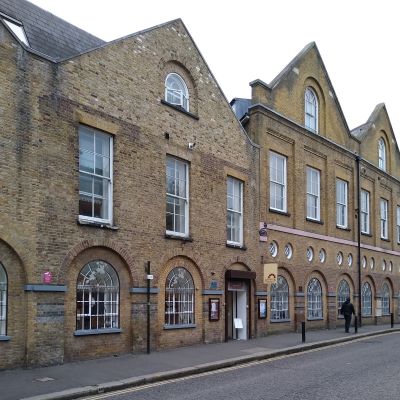
Part of the Ind Coope Romford brewery, now Havering Museum.
In 1959 the company, now once again known simply as Ind Coope, took over Taylor Walker in Limehouse E14 (see below), closing it the next year. A year later it became the heart of one of the Big Seven breweries by merging with Tetley Walker in Leeds and Ansells in Birmingham to create Ind Coope Tetley Ansell. Renamed Allied Breweries in 1963, it was the largest drinks company in Europe and the second biggest beer producer in UK, owning 11% of the nation’s pubs.
In 1978, the parent group merged with catering and baking company J Lyons & Co, renaming itself Allied Lyons in 1981. A restructure in 1980 saw the Star assigned to a new subsidiary, the Romford Brewing Company. By now the site had been reduced to just over 10 ha, with 870 staff producing 800,000 hl a year. Allied continued to develop the brewery throughout the decade, and by 1987 it had an annual capacity of 1.6 million hl. But even so Romford remained a junior partner to Burton.
In the early 1970s, the Romford brewery produced cask mild (~3.1%) and bitter (~3.8%) for outlets in southern England, sometimes branded Superdraught. From 1979, it also produced cask bitters under the names of breweries Ind Coope had closed down, in line with Allied’s policy of reapplying these names to some of its pubs in the hope of making them appear more ‘local’.
These beers, all around 3.5%, were branded Benskins (Watford, founded 1722, bought 1957, closed 1972), Friary Meux (Guildford, founded 1865, bought 1964, closed 1969) and Taylor Walker (see below), although it’s possible that Benskins and Friary Meux, at least, were the same beer under different badges. In 1986, all Ind Coope cask production was centralised in Burton, with Romford shifting its focus to lager-ale hybrid Long Life (4.5%) in keg and can, originally developed here in 1956.
Ind Coope’s two best known brands were of Burton origin and were always brewed there. Double Diamond originated as a primarily bottled premium pale ale at Allsopp in 1876, and was one of Britain’s best-selling bottled beers by the late 1950s, when it was brewed at around 4.5%. Ind Coope subsequently marketed it as their main keg bitter, its strength reduced to around 3.6%. The much-admired Draught Burton Ale (4.8%) was launched in 1976 in response to renewed consumer interest in cask beer. Despite its name, it wasn’t a historic ‘Burton ale’, which was a darker style dating back to the Baltic trade of the late 18th century, but a cask version of a pale ale based on a 1950s Double Diamond recipe.
In 1993, Allied began preparing for a further merger with international drinks company Domecq, originally a Spanish-based sherry firm, to create Allied Domecq, and sold 50% of its brewing interest to Carlsberg. The Star was deemed surplus to requirements and promptly closed. Carlsberg bought the rest of the shares in 1997 and sold the pubs to Punch in 1999, by which time the ‘local’ cask brands had been discontinued.
The managed pubs passed to the Spirit group in 2011 and were later sold to Greene King. The Burton brewery was sold to Bass in 1998 and is still in operation as part of Molson Coors. Most of the brands remain with Carlsberg. Long Life, despite its name, was retired in the 1990s as a regular brand, though occasionally emerged in the 2000s from Carlsberg’s lager plant in Northampton. Double Diamond remains available as a 2.8% keg beer aimed at clubs, perhaps brewed at Banks’s in Wolverhampton.
Following the sale of the Burton plant, Draught Burton Ale was contract brewed, most recent at J W Lees in Manchester, but was discontinued in 2015. There are a few reconstructed versions around, most notably Burton Bridge DBA (4.8%), introduced in 2015 at a brewery founded by ex-Bass employees who were involved with developing the original.
Curiously, well-known Scottish multinational craft brewery BrewDog bought the Allsopp trademark, including the red hand, from Carlsberg in 2017 but did little with it. In 2021, it was sold on to Jamie Allsopp, a descendant of the original brewery’s founders. He relaunched the brand in 2022, initially through cuckoo brewing.
Things to see
By the time it closed, most of the Star brewery’s buildings were recent, though several historic buildings fronting onto the High Street survived, including the main entrance, a brick arch once leading to the brewery yard, and a boiler house with chimney. These buildings now house the Havering Museum (19 High Street RM1 1JU), which includes numerous brewery-related items among its collection. The rest of the site was demolished, replaced with the Brewery shopping centre and car park.
Taylor Walker
Several sources claim that Taylor Walker originated as the Stepney Brewery, owned in 1730 by James Salmon and Richard Hare, and was later relocated to the site in Limehouse where it continued to brew until 1960. But Martyn Cornell says there’s no evidence for this, suggesting that the brewery was likely always on the Limehouse site and confusion has arisen over place names. Limehouse was part of Stepney parish until 1709 and the names continued to be used imprecisely: for example today’s Limehouse rail and DLR station was opened as Stepney and only received its current name in 1987.
Salmon and Hare were likely brewing on the Limehouse site, then known as the Ship or Ship House Brewery, by 1735 and certainly by 1740. The brewery, which initially specialised in porter, appears on a map drawn around 1745, between Narrow Street, then Fore Street, and Ropemakers Field, a street that has since partly disappeared. The brewery tap was at 78 Fore Street, later renamed and renumbered 133 Narrow Street, known since at least 1805 as the Barley Mow.
Richard Hare’s son Robert emigrated to Philadelphia, Pennsylvania, in 1773 and started a porter brewery there, sometimes claimed to be the first such brewery in the Americas.
John Vickris Taylor became a partner in 1792, and in 1816 his future son-in-law Isaac Walker joined him. By the 1880s the firm was known as Taylor Walker, and in 1889 added a substantial additional brewhouse, named the Barley Mow after the pub, north of Ropemakers Field, with the main entrance to the site eventually located on Newell Street (previously known as Church Row) by the junction of today’s Oak Lane. The business was registered as a joint stock company in 1907, becoming a public limited company in 1927. It ceased brewing porter in the 1930s.
The brewery grew through acquisition in the 20th century. Its purchases included John Furze, Whitechapel, founded 1838, bought and closed 1901; Highbury Brewery, Holloway Road, founded 1740, bought and closed 1912; Smith, Garrett & Co of the Bow Brewery, successor to Hodgson’s, founded in 1752, and renowned in the mid-19th century as the leading exporter of pale ale to India, bought and closed 1927 and demolished 1933 to make way for social housing; Glenny’s, Barking, founded 1864, bought and closed 1930; Cannon, St John Street, Clerkenwell, founded 1720, closed 1955; and the Westerham Black Eagle Brewery (Bushell, Watkins & Smith) in Kent, founded c1840, bought 1948 and remaining operational until after Taylor Walker’s own acquisition.
When it was taken over by Ind Coope in 1959, Taylor Walker had 1,360 pubs and off-licenses, including 650 in London, and was particulary noted for its bottled beer, including Cannon Stout (3.6%), inherited from the Clerkenwell brewery, and a pale ale exported to Belgium (5%). Its cask mainstay was Mainline Mild (3.5%). Brewing ceased in 1960 and the site was sold in 1961. Production continued at Westerham until 1965.
As mentioned above, the name made an unexpected reappearance in 1978 when Allied tried to improve the ‘local’ image of its pubs in southern England by rebranding them with names of breweries it had closed. Hundreds of London pubs were rebadged Taylor Walker, including some that had never belonged to the brewery, using the cannon logo inherited from the Cannon brewery in Clerkenwell. By 1980, these pubs were being supplied with a newly formulated Taylor Walker Bitter (3.5%) brewed in Romford, with production shifted to Burton by 1986. The practice ceased in 1999 when Allied sold its pub estate to Punch, but a few pubs still bear the legacy of this period.
Punch revived the name yet again in 2010 as a sub-brand for a selection of upmarket managed pubs, but it was dropped in 2015 when these pubs became part of the Greene King estate. Greene King has occasionally brewed a cask bitter branded Taylor Walker 1730 (4%) as a special.
The brewery was entirely demolished in the mid-1960s, including the Barley Mow pub, and the site is now flats and green space, with the Limehouse Link road tunnel running beneath. Only street and building names recall its past: Barleycorn Way, the Barley Mow Veterans Club, Brewster House and Malting House. In 1989, when a Grade II-listed former customs house a short distance west along Narrow Street, beside the Thames at the entrance to Limehouse Basin, was converted to a pub, it initially revived the name Barley Mow. It’s since become a restaurant, Gordon Ramsay’s Bread Street Kitchen (44 Narrow Street E14 8DP).
Some remnants of Taylor Walker’s acquisitions are still visible. Part of the Cannon brewery can be seen at 156 St John Street EC1V 4LE, the arch in its attractive facade still giving access to the brewery yard with its clock; it continued in use as offices both for Taylor Walker and Allied though is now used as flats. Some of the Furze brewery buildings still stand at 33 Commercial Road E1 1LD, subsequently a warehouse for Johnnie Walker whisky but now converted to flats, student halls, retail and offices.
Though the Highbury brewery was demolished, its tap remains: it operated as brewpub the Flounder and Firkin between 1985 and 1999 and is now known as the Lamb (54 Holloway Road N7 8JL). Only the brewer’s house remains of the Westerham brewery, on the east corner of Black Eagle Close and the High Street (TN16 1RG), though a new Westerham Brewery was founded in 2004, using the old Black Eagle yeast strain.
Courage Brewery Closed brewery Anchor Brewhouse, Horseleydown SE1 2LY (Southwark) First sold beer: 16th century (under an unknown name) Brewing ceased: 1981
Barclay Perkins & Co Closed brewery Anchor Brewery, Park Street SE1 9EQ (Southwark) First sold beer: 1616 (as Monger’s Brewery) Brewing ceased: by 1963
The Anchor Brewhouse stood on the south bank of the Thames at Horseleydown, immediately to the east of the present Tower Bridge, at least from the 16th century. It was one of many small brewhouses that once flourished beside or close to the Pool of London, the stretch of river that formed London’s original port. In 1571 it appears to have been owned by a Flemish expatriate, Wessell Webling. This was a time when most beer drunk in England was still unhopped ‘ale’, and hopped ‘beer’ was a continental novelty introduced by immigrants from the Low Countries.
In 1787, then-owners the Ellis Family sold the brewery to a consortium led by John Courage (1761-97), an ambitious shipping agent born in Aberdeen of French Huguenot descent. By now, adding hops had become the norm in English brewing, and the term ‘ale’ had changed its meaning, among other uses applied to modestly hopped ‘running’ or ‘mild’ ales intended to be drunk fresh, as opposed to long-matured beers like the porter for which London was now famous. Courage bucked the porter trend by focusing on ale brewing.
From 1797 the firm was known as Courage & Donaldson but by the time it was registered in 1888 it was simply Courage. The site had by then expanded significantly and was rebuilt in 1894-95.
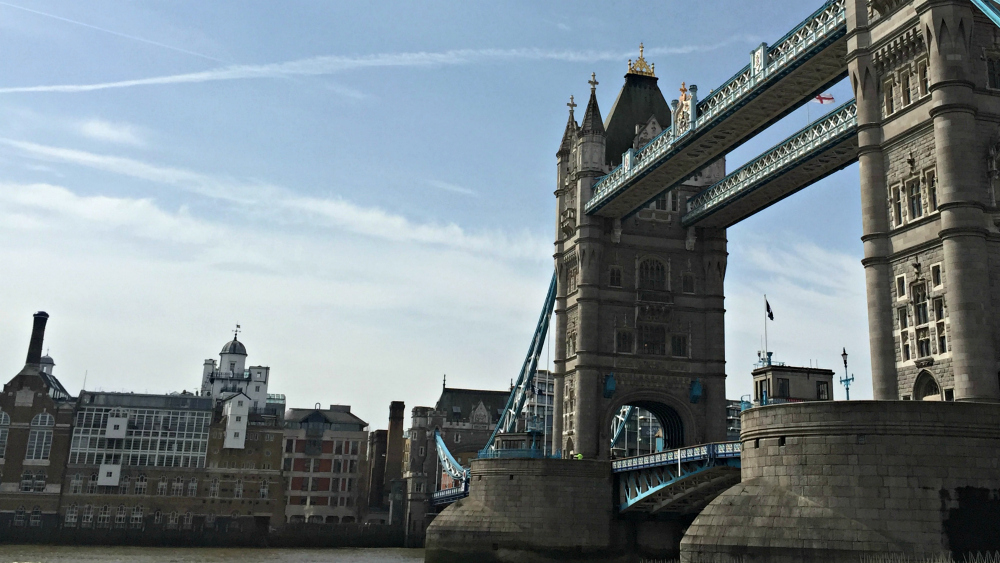
The former Courage Anchor Brewhouse at Horseleydown, seen from St Katherine’s across the Thames.
Courage continued to expand in the 20th century, taking over other brewers in London and elsewhere and eventually becoming one of Britain’s ‘big seven’ brewing groups, starting with the Alton Brewery in Hampshire in 1903. In 1955 it merged with nearby Barclay Perkins (see below) to become Courage & Barclay, and five years later merged again with Simonds of Reading to create Courage, Barclay & Simonds. In 1961, it acquired the Bristol Brewery (George’s) along with its near-1,500 pubs. Another big takeover was John Smith’s in Tadcaster, North Yorkshire, in 1970, a substantial regional with around 1,800 pubs.
Among its other London acquisitions were the Camden Brewery (opened 1859, bought 1923, closed 1925), Hodgson’s in Kingston upon Thames (opened c1610, bought 1943, brewing ceased 1949), Reffell’s in Bexley (opened 1874, bought and closed 1956), Harman’s Uxbridge Brewery (opened c1730, bought by Mann’s 1925, sold to Courage 1962, closed 1964) and Charles Beasley in Plumstead (opened 1845, bought 1963, closed 1965).
By the 1970s, Courage was particularly noted for three beers: cask Best Bitter (~4%), which was likely made to a slightly different recipe at the various breweries to suit local tastes; cask Directors Bitter (~4.8%), which originated at the Alton Brewery in the late 19th century as a brew reserved for the directors and their guests but was subsequently commercialised; and Imperial Russian Stout (~10.5%), a bottle-conditioned beer inherited from Barclay Perkins (see below). All of these were produced in London, though not necessarily exclusively.
According to the 1977 Good Beer Guide, Horseleydown also brewed a cask dark mild (~3.2%). Among the other Courage brands were Tavern keg bitter (~3.9%) and various bright bottled beers like Light Ale (~3.4%, brewed in Plumstead between 1963-65), Brown Ale, Velvet Stout, John Courage strong pale ale (by now likely no stronger than 5%) and Barley Wine, though some of these may well have been produced at other sites.
Where are they now?
In 1972, the group, now known simply as Courage, was itself taken over by the Imperial Tobacco Group. Like many other large London-based brewing groups, the company began reconsidering its future in the capital, and finally closed its historic Horseleydown site in 1981, transferring production to other sites like Bristol (closed 1999 and since redeveloped) and a new brewery at Worton Grange in Reading which had replaced Simond’s in 1980 (itself closed in 2010).
By then, many of the once-busy surrounding wharves and warehouses, like the rest of London’s historic docks and port areas, had fallen into disuse and dereliction, incapable of accommodating ever-larger container vessels. Following the creation of the London Docklands Development Corporation (LDDC) in 1981, Horseleydown became one of the earliest former port areas to be regenerated. The Courage site was redeveloped between 1985-89, converted to upmarket flats, offices and shops.
When Imperial changed hands in 1986, the new owners sold Courage to Australian national brewer Elders IXL, later renamed Fosters Group after its best-known brand. Following the 1990 Beer Orders, a set of government regulations aimed at restricting the tied house system which had far-reaching consequences for the structure of the brewing industry, Fosters’ Courage subsidiary took over the brewing side of Grand Metropolitan (Watney) in 1991 while both breweries’ pubs were spun off into an arm’s-length, jointly-owned company, Inntrepreneur. This pub estate has long since passed into other hands, primarily Stonegate.
Another former Big Seven brewing group, Scottish & Newcastle, bought Courage from Fosters in 1995 to create Scottish Courage, which also had extensive brewing interests outside the UK. This in turn fell to a hostile joint takeover bid by two multinationals, Carlsberg of København and Heineken of Amsterdam, in 2008, with Heineken taking control of the UK brewing side.
The Courage beer brands were sold to Wells & Young’s of Bedford (see Young’s) in 2007, passing to Charles Wells in 2011 when Young’s withdrew from the consortium; to Marston’s when it bought the Wells Eagle Brewery in 2017; and to Carlsberg when it acquired majority control of Marston’s brewing interests in 2020. Following the sale of the Eagle to Damm of Barcelona in 2022, Courage beers are now brewed at Marston’s in Burton upon Trent. The only beers still in regular production are cask Bitter (4%) and Directors (now subtitled ‘Superior Ale’, 4.8%) and bottled Light Ale (3.3%), though Imperial Russian Stout (10%), which was last brewed in London in 1981 and last brewed by Courage at Tadcaster in 1993, was sporadically revived at Wells in the early 2010s.
Things to see
The 1895 brewhouse, boiler house and malt mill with its distinctive cupola and chimney, still stands immediately downstream of Tower Bridge. There’s a good overview from the east side of the bridge, and the landward side, still with its Courage nameplate and various plaques, can be admired from Shad Thames (44 Shad Thames SE1 2LY). An alleyway on the left side of the building leads to Horseley Down Old Stairs dating from at least the early 18th century, giving access at low tide to the foreshore where you can enjoy a closeup view of the brewhouse, including mooring rings for boats making deliveries and collections.
The Anchor Tap, 20A Horseleydown Lane SE1 2LN, was built as the brewery tap likely in the first half of the 19th century. It’s now Grade II-listed and operated by Samuel Smith. It has a one-star heritage interior in recognition of its original bar counter, panelling and fireplaces. Another historic brewery building adjoins it to the southwest, and the brewery site extended into what’s now Brewery Square behind.
The Jacob the Dray Horse statue is a short walk away at the Circle, Queen Elizabeth Street, SE1 2JE. This powerful sculpture by Shirley Pace, installed in 1987 as the centrepiece of a luxury housing development, marks the former site of the brewery stables.
Barclay Perkins
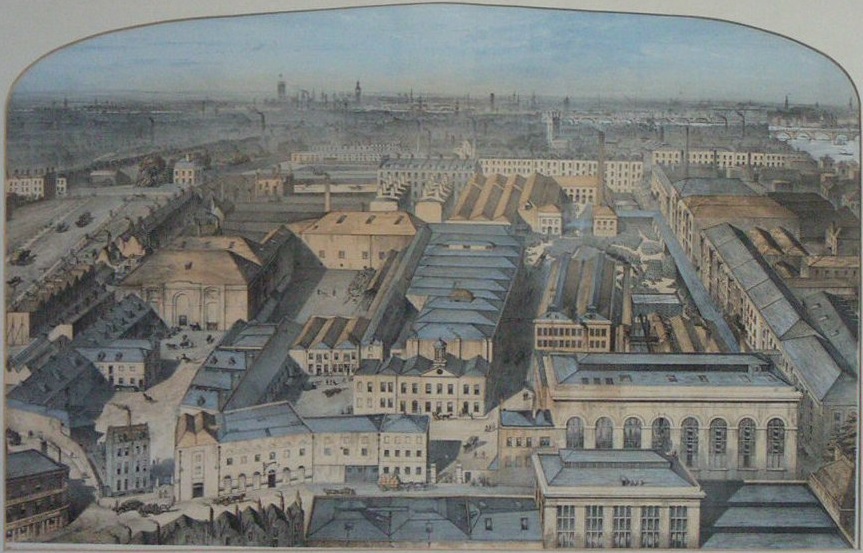
Barclay Perkins in its pomp in the late 19th century: an aerial view looking west from above Borough Market, with Park Street running left to right at the bottom of the image and the river Thames visible top left. Blackfriars Bridge is in the distance: Southwark Bridge hadn’t yet been built. The head brewer’s house on the corner bottom left still stands today.
Just upriver on Park Street, Bankside, was another celebrated London brewery, confusingly known as the Anchor Brewery rather than Brewhouse. It was built by former clothworker James Monger (d 1657) in 1616 adjacent to the site of William Shakespeare’s original Globe theatre, which had burned down three years previously (the current Globe, overlooking the river 230 m to the north, is a 1997 replica). It later passed through the hands of the Child and Halsey families and was likely already a relatively important brewery by 1693, when one of the partners, James Child, was appointed Master of the Brewers’ Company.
Ralph Thrale (1698-1758), nephew of another partner, Edmund Halsey, bought the brewery in 1731 and he and his son Henry (1724?-81) developed it into a substantial porter brewery, the seventh-largest in London by 1760 when it was producing over 50,000 hl a year. It was particulary technologically advanced for its day: it was likely the first brewery to adopt regular use of the saccharometer for precisely monitoring the progress of fermentation in 1770, and one of the first to commission a steam engine from James Watt in 1789.
Henry Thrale was born in a pub on nearby Harrow Corner, now the stretch of Park Street that bends towards Stoney Street and Borough Market, so possibly on the site of what’s now the Market Porter (see Old London Bridge Brewery). In 1763, he married Hester Salusbury (1741?-1821), a diarist, writer, arts patron and proto-feminist. Profits from the brewery were substantial enough for the couple to enjoy something of a bohemian lifestyle at Streatham Park, a country mansion originally built for Ralph in Tooting, where their circle of ‘Streatham Worthies’ included writers Edmund Burke and Oliver Goldsmith, actor David Garrick and painter Joshua Reynolds. They became particularly close friends with writer, lexicographer and coiner of bons motsSamuel Johnson (1709-84), who occupied apartments at Streatham Park and sometimes stayed at the brewery. Indeed it seems Hester and Samuel’s relationship went beyond ordinary friendship.
Henry, who lacked technical expertise in brewing, largely left management in the hands of chief clerk John Perkins. Hester, meanwhile, took an active interest in the business but wasn’t particularly fond of Perkins. When Henry died in 1781, she decided to sell, and enlisted Johnson, one of the executors to assist her. They entered successful negotiations with Robert Barclay and his nephew David Barclay, of the well-known Quaker banking family. When the bankers questioned the brewery’s value on the day of the sale, Johnson riposted: ‘We are not here to sell a parcel of boilers and vats, but the potentiality of growing rich beyond the dreams of avarice”, which gives some indication of the wealth London breweries were generating at the time. Perkins was cut into the deal as a partner and the brewery renamed Barclay Perkins & Co.
The brewery prospered under new management, becoming what’s widely thought to be the biggest in the world by 1815, when it was producing just under 500,000 hl a year. It expanded further following a fire in 1832, and with its impressive halls of tall porter tuns and cutting edge technology it became a VIP attraction. Among its visitors were German statesman Otto von Bismarck, French politician Louis-Napoléon Bonaparte (later Napoléon III), Egyptian general Ibrahim Pasha and Italian revolutionary Giuseppe Garibaldi. An 1850 visit by Austrian general Julius Jacob von Haynau, notorious for his bloody and ruthless suppression of the revolutions in Austria-Hungary in 1848, resulted in an international incident when he was attacked and badly beaten by draymen and other brewery workers chanting ‘Down with the Austrian butcher!’
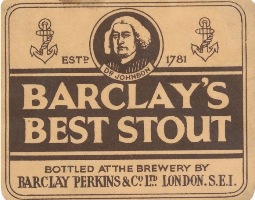
Barclay Perkins label. Pic: Ron Pattinson, barclayperkins.blogspot.co.uk.
Like other porter breweries, Barclay Perkins brewed porter at several different strengths and by the end of the 18th century, the strongest porters (likely 10%+) were particularly known for their popularity in the Baltic trade, with a claim in 1796 that Barclay’s version was ‘specially brewed for the Empress of Russia’, Catherine II (‘the Great’, Екатери́на Вели́кая, reigned 1762-96). Though this trade had dwindled by the end of the 19th century thanks to various political and taxation barriers, the brewery continued to market strong bottled porter domestically, branding it Barclay’s Imperial Russian Stout.
By this stage, with an annual output now exceeding 800,000 hl, the brewery was no longer exclusively a porter brewery, having added facilities to make fresher, lighter ‘running’ ales in 1885. In 1922, following five years of experiments and the installation of chilled tanks, it widened its repertoire still further by launching a pale London Lager (5.4%), as well as a dark version (5.1%). British-brewed lager was then a rarity, but Barclay’s was so successful that it installed an additional German-style brewhouse in 1930.
By the 1950s the lager was Barclay’s biggest seller, accounting for 20% of sales, which was what attracted the attention of ambitious near neighbour Courage, leading to the merger that created Courage Barclay in 1955. Courage soon wound down brewing activity at Park Street, converting much of the site to a bottling plant in 1958, though lager brewing continued until 1962, by which time a large purpose-built brewery had been commissioned at Courage’s Alton site for Harp lager (closed 2015), produced in partnership with Guinness, Mitchells & Butlers (later Bass Charrington) and Scottish & Newcastle.
The site continued as a bottling plant and depot for a few years, but was disused by the mid-1970s then almost entirely demolished in 1981, replaced by a housing estate and hotel. Had it clung on a few more years, most likely at least some of the historic buildings would have been saved and redeveloped.
Things to see (Barclay Perkins)
The Anchor pub at 34 Park Street SE1 9EF (Bank End) is the former brewery tap. It occupies a Grade II-listed mid-18th century building incorporating some elements from earlier in the century, including a staircase and fireplace, with a later panelled room preserved as the Shakespeare Room on the first floor. It’s now operated by Greene King and a popular tourist spot thanks to its location on the Thames Path.
Various commemorative plaques were installed around the site as part of the 1980s redevelopment. A list of owners can be seen on the western reach of Park Street, behind the hotel (SE1 9EQ). Further along, a depiction of Samuel Johnson is at the corner of Porter Street (SE1 9EA), with the street name also recalling the brewery. Halfway along Park Street towards Maiden Lane (SE1 9EA) is a commemoration of the Haynau incident. Other related street names are Perkins Square and Thrale Street.
At 21-23 Park Street SE1 9EQ is a pair of imposing Grade II-listed yellow brick houses from around 1820, likely built for the Head Brewer and Chief Clerk. The gable end with its 1960s ‘Take Courage’ branding is a familiar landmark to commuters using the railway lines between London Bridge and Charing Cross or Cannon Street.
Up on Southwark Bridge Road along the western perimeter is Anchor Terrace (1-15 Southwark Bridge Road SE1 9HQ), a smart parade of eight houses built for senior brewery employees in 1834 and later used as brewery offices. These were restored in 1958 to match the original design and converted to luxury flats in the 1990s. The northern end of the terrace (closest to the bridge) occupies the site of the original Globe Theatre.
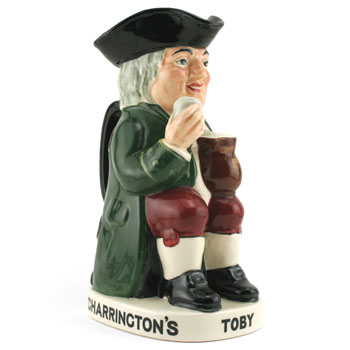
A classic Charrington Toby jug, originally used as a logo by the even more historic Red Lion brewery.
Closed brewery 129 Mile End Road E1 4BG (Tower Hamlets) First sold beer: Prior to 1757 Brewing ceased: 1975
Robert Westfield entered the brewing industry as an employee in 1738, and by 1757 had set up his own brewery at Bethnal Green in partnership with Joseph Moss. In 1770 the partners built the Anchor Brewery (or Blue Anchor) on a larger site on the Mile End Road near Stepney Green. John Charrington joined the partnership in 1766 and he and his brother Henry were in full control by 1783. Their descendants continued to manage the brewery into the 19th century, and a limited company was registered in 1897.
Among other acquisitions, Charrington took over and closed the historic Red Lion brewery at St Katherine’s Docks in 1934, inheriting the well-known Toby jug logo of previous owners Hoare & Co. The Red Lion was then said to be the oldest brewery in Britain and one of the oldest continuous businesses in London. It likely originated as the brewhouse of the Hospital of St Katherine’s by the Tower, founded in 1147, with the earliest record of commercial brewing from 1492. It subsequently played a major role in the perfection of porter in the 1730s when then-owner Humphrey Parsons (c1676-c1741) became likely the first brewer to mature the beer in large oak vats. By the time of the takeover, it was particularly noted for a bottled pale ale, Toby Ale (~5%), which Charrington continued to brew.
Another notable acquisition was the Abbey Brewery (Meakin & Co, London and Burton Brewery) in Burton upon Trent, giving Charrington a presence in this increasingly important brewing town. This closed in 1925 with production reassigned to London: the building was sold as a maltings before being demolished in the late 1960s.
In 1963, Charrington’s independence fell to the brewery group generally regarded as kicking off ‘merger mania’, United Breweries, established by colourful entrepreneur E P “Eddie” Taylor (1901-89), of Canadian Breweries, originally as a vehicle to market Carling lager in the UK. In 1967 Charrington United merged with Bass Mitchells & Butlers (itself the product of a 1961 merger between the historic Bass brewery in Burton-upon-Trent and large regional Birmingham brewer Mitchells & Butlers) to form Bass Charrington, then the largest brewery group in the UK.
Reminder of Charrington Brewery on Cephas Street.
In the early 1970s Charrington was still brewing some cask brands in London: dark Mild (~3.4%), Crown Bitter (~3.6%) and IPA (~3.9%). But the site was mainly functioned to distribute the group’s keg products through its pubs, including its flagship keg ale Toby Bitter (~3%).
Where are they now?
In one of the big brewers’ earliest moves to dismantle their capacity in London, brewing ceased entirely in 1975, though the brands remained available for a while with production transferred to M&B in Birmingham. Bass Charrington retained the brewery offices for some years as their London headquarters though the site was largely redeveloped as the Anchor retail park in the 1980s.
In 2000 the brewing interests of Bass Charrington were sold to Interbrew of Leuven, Belgium, which has since become AB InBev following mergers with Brazil’s AmBev and St Louis, Missouri-based giant Anheuser-Busch. Following intervention from the European Union competition regulator, the Burton brewery and some of the brands including Charrington were sold on in 2001 to Coors of Golden, Colorado, now Molson Coors.
Following the sale, Toby Bitter, in keg and occasionally even in cask, continued to appear intermittently, sometimes contract-brewed, and in the 2020s is still available as a keg product, though at an even lower strength of 2.8% ABV. Toby Ale was brewed by Molson in Québec at least into the mid-2000s (historically Molson was a rival to Canadian Breweries but had merged with its successor company Carling O’Keefe in 1989).
Charrington IPA was recreated in cask and bottle with the consent of Molson Coors in 2015 by Steve Wellington at the Heritage Brewing Co in what was then the National Brewery Centre, the former Bass Museum, in Burton upon Trent. It’s since become part of the regular range, using a vintage recipe at a respectable 4.5% ABV and the original Charrington yeast strain. Heritage subsequently revived another Charrington brand, Oatmeal Stout (4%).
The former Bass Charrington pub arm eventually renamed itself Mitchells & Butlers after the Birmingham brewery, which was closed by Coors in 2002.
Things to see
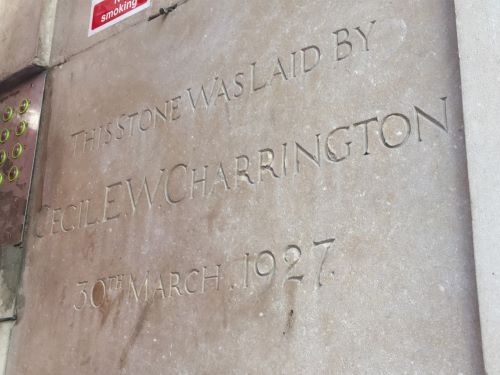
The most obvious remains of the brewery itself are the two former office buildings on the corner of Mile End Road and Cephas Avenue which remained in use by Bass for some time after the demolition of the rest of the site. 129 Mile End Road E1 4BG is an imposing mid-19th century Grade II-listed yellow brick building. The red brick building behind it, now converted to flats, was added to the office complex in 1927: a plaque laid by one of the Charrington family can be seen in an entrance way off Cephas Avenue.
The wall of the uninviting retail park car park fronting onto Mile End Road is recent but follows the line of the brewery’s main gates and at least makes an attempt at being a gateway feature. There are some genuine rear gates still standing, though, at 16 Nicholas Road E1 4AF: note the shields depicting a C for Charrington and an anchor.
A little further east along Mile End Road at no 137 is Grade II-listed Malpaquet House E1 4AR, a large four-storey house built in 1742. Henry Charrington lived here from 1794 to 1833, and it has an interesting subsequent history. To the west of the brewery site, accessed through a gate between Cleveland Way and Coopers Close, is a secluded row of late 18th century cottages originally built for brewery workers, known as Bellevue Place (E1 4UG). Sadly, another row of brewery cottages behind Stepney Green station, built in 1842 and known as XX Place after one of the brewery’s popular mild ales, is now lost beneath the student flats of Stocks Court (E1 4AH).
The Dickens Inn at St Katherine’s Docks (Marble Quay, St Katharine’s Way E1W 1UH), a converted timber-framed warehouse dating from around 1780, may be the last surviving fragment of Hoare’s Red Lion Brewery. Predating the construction of the docks, which opened in 1828-29, it was once closer to the brewery site but was moved 70 m west in 1975 to facilitate redevelopment. It has no direct connection with Charles Dickens, though was officially opened as a pub in 1976 by his great grandson Cedric Dickens. In the mid-1980s it briefly sold beer from its own off-site brewery, across the river Thames by London Bridge station: see Tooley Street Brewery.
Also known at various times as Beach’s Ales, Bishop’s Brewery and Market Brewery (Market Porter).
Brewpub no longer brewing Market Porter, 9 Stoney Street SE1 9AA (Southwark) First sold beer: December 1981 (as Market Brewery) Brewing suspended: 1984 Brewing resumed: May 1985 Ceased brewing: 1988
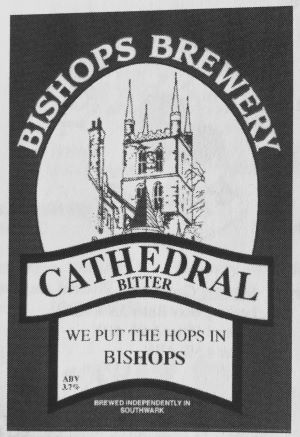
Closed brewery 2 Park Street SE1 9AD (Southwark) First sold beer: November 1993 (as Bishop’s Brewery) Brewing suspended: February 1998 Brewing resumed: 2000 (as Old London Bridge Brewery) Ceased brewing: 2000
The central area of Southwark and the Borough immediately south of London Bridge boasts a tradition of beer appreciation dating from long before the development of the nearby Bermondsey Beer Mile in the 2010s. Historically, it was one of London’s main brewing centres, particularly noted for the Anchor Brewery, otherwise known as Barclay Perkins, as well as the headquarters of the capital’s hop trade. Becky’s Dive Bar, in that part of the cellars of the Hop Exchange on Southwark Street now occupied by the Sheaf, was from the late 1950s one of Britain’s (and the world’s) first ‘craft beer bars’, at its peak offering a choice of around 250 beers and with several of the founders of the modern beer consumer movement among its customers.
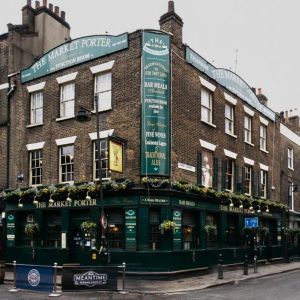
The Dive Bar closed for hygiene reasons in 1975, but the beer loving tradition continued in places like the Market Porter, a traditional 1890s pub on a corner site where refreshments for workers at the adjacent Borough Market had been offered since at least the 17th century. Back then, the market was still a fruit and vegetable wholesale market at its busiest early in the morning, and the pub retained (and retains) a license enabling it to open from 06.00-09.00.
In 1981, licensee John Beach decided to further the pub’s developing interest in ‘real ale’ by turning it into a brewpub, installing a small malt extract kit. It was known as the Market Brewery but also used the brand Beach’s Ales after its owner. The next year, Andy Bishop took over the brewing duties, but it apperas that despite his brewing experience at various Firkin pubs, production proved difficult to sustain on the small kit and was suspended in 1984.
Brewing activities resumed the following year with the acquisition of a better, though likely still extract-based, kit, installed in a separate unit at the rear of the premises at 1 Park Street. The pub’s drinking area has since been extended to occupy this space but it’s still readily identifiable as a separate building from the exterior. Once again the names Market Brewery and Beach’s Ales were both used.
Bishop’s Brewery, London SE1.
By 1988 the facility was producing around 12 hl of cask beer a week and supplying two other pubs: its core beers were a bitter at around 3.7% and a special at around 4.7%. Nonetheless it fell out of use later that year, though there was a failed attempt to revive it in 1989.
The kit remained in situ until 1993, when Andy Bishop bought it to set up his own Bishop’s Brewery, moving it to a unit in an old grain warehouse immediately opposite on the other corner of Park Street and Stoney Street. In Spring 1996 he upgraded to a 10 hl full mash plant, making use of the existing split-level floor to stagger the brewing vessels.
By 1997, the brewery was reaching capacity, with five or six brews a week. Like most small breweries of its day it primarily produced cask, with core beers including Cathedral Bitter (3.7%), referring to nearby Southwark Cathedral as well as Andy’s last name, and stronger pale ale Willie’s Revenge (4.7%). Despite this, production ceased at the end of 1998.
In 2000 a new owner bought the lease and equipment and briefly revived production under the name Old London Bridge Brewery but this initiative didn’t survive the year. The kit was removed shortly afterwards and renowned specialist coffee roaster Monmouth Coffee then converted the premises into a shop which still trades today. Monmouth owner Anita LeRoy recalls the market trustees still referring to the space as ‘the brewery’, and the split level layout remains visible.
There’s a pleasing circularity to the fact that Monmouth was one of a group of specialist food and drink businesses that rented arches in Bermondsey’s Druid Street nearby in the 2000s, which is how The Kernel came to be located there initially, inadvertently founding today’s Bermondsey Beer Mile.
Hollywood Bowl Finchley, Leisure Way, High Road N12 0GL (Barnet) First sold beer: 1996
Hollywood Bowl Surrey Quays, Surrey Quays Leisure Park, Surrey Quays Road SE16 7LW (Southwark) First sold beer: 1998
Both ceased brewing: 2000
Both these breweries were the result of a short-lived US-inspired experiment by then-national brewer Bass (see Charrington) to install small 8 hl breweries in its chain of Hollywood Bowl bowling alleys, beginning with its Leicester venue in 1995.
The first London venue in the chain to start brewing was in Finchley the following year. By the time Bass opened a Hollywood Bowl complete with brewing facilities at the new Surrey Quays Leisure Park in 1998, 13 of its bowling alleys were similarly equipped. All the brewhouses were decomissioned in 2000 when Bass sold off its brewing arm to InBev (now AB InBev: see Stag and Whitbread).
The chain subsequently operated as part of Mitchells & Butlers, Bass’s successor managed pub company, until 2010 when it was sold to a new owner. It was sold again in 2015. The Finchley alley remains open, though the Surrey Quays site was closed for redevelopment in 2024.
All the venues brewed keg bitters and lagers to standard recipes.
Brewery moved outside London 114 Randall Road SE11 5JR (Lambeth) hanlonsbrewery.com First sold beer: 1996 Moved outside London: 2000
John O’Hanlon, originally from Kerry, Ireland, and his wife Liz bought a small Grade II-listed ex-Whitbread pub in Clerkenwell, the Three Crowns (8 Tysoe Street EC1R 4RQ), in 1995. They renamed it O’Hanlon’s and it quickly became a popular London Irish pub.
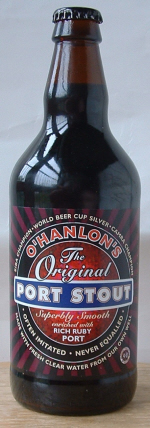
Bored with selling so many pints of Guinness, John decided to try making his own stout, and in March 1996 began brewing in a Vauxhall railway arch on a 13 hl kit installed by Rob Jones (see Pitfield Brewery), initially primarily to supply the pub. His first beer was Port Stout, a dry stout modestly fortified with port wine, based on memories of a Dublin pub that served stout with a dose of port as a ‘corpse reviver’ for tired customers.
The beer caught drinkers’ imagination and further brands followed, with the brewery selling increasing amounts to third party stockists and adding bottled beers. The big supermarkets also began to take an interest.
Struggling with limited space, the O’Hanlons decided to relocate themselves and the brewery to a more rural setting in Devon, in 2000 completing a move to Great Barton Farm, Whimple, Exeter EX5 2NY. The pub was subsequently sold and is now known as the Old China Hand.
The relocated business received substantial investment from business mogul Gerry Robinson after featuring on Dragon’s Den-style TV series Gerry’s Big Decision in 2009. It was sold to new owners in 2014 and renamed simply to Hanlons. The same year it was relocated closer to Exeter at Half Moon Village, Newton St Cyres EX5 5AE where it remains in operation, although no longer produces Port Stout on a regular basis.
Brewery, no visitors please Sidcup DA15 (Bexley) tankleysbrewery.com Active since: November 2015 First sold beer: May 2024 Ceased brewing: January 2025
Australian-born homebrewer Glenn Heinzel first brewed commercially under the name Tankleys (an obscure family pun) at UBREW late in 2015. A year later, fellow UBREW users Beerblefish began brewing in their own right on a larger scale at a site in Enfield, and Glenn was brought in full time to run the operations.
Glenn continued Tankleys as a side project, developing recipes on a Grainfather homebrew kit at his Sidcup home and cuckoo brewing at Beerblefish and elsewhere. In 2023 he revived his brewing license and began brewing commercially at home in spring 2024.
Initially he planned to install a larger 1.6 hl kit but following the closure of Beerblefish in early 2025, Tankleys too stopped brewing as Glenn took a full time job outside the industry. It’s possible he may return at some future stage.
Beers were mainly in cask, with some small scale bottling, sold locally and at festivals.
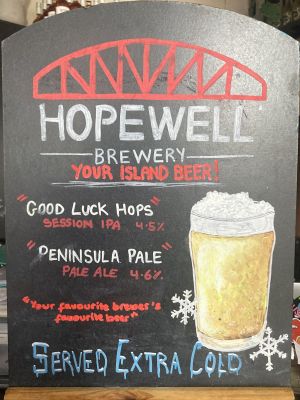
Brewpub Hopewell Square, London E14 0SY (Tower Hamlets) thelockdownroom.com First sold beer: March 2024
As the name Lockdown Room suggests, this popular bar-restaurant and event venue on London City Island, a recent development in a horseshoe meander of the river Lea near Canning Town, evolved from an initiative to supply the community during the lockdowns. Local resident and beer expert Allan was asked to advise on the craft beer side and subsequently helped build it into a noted beer venue supporting numerous independent London breweries.
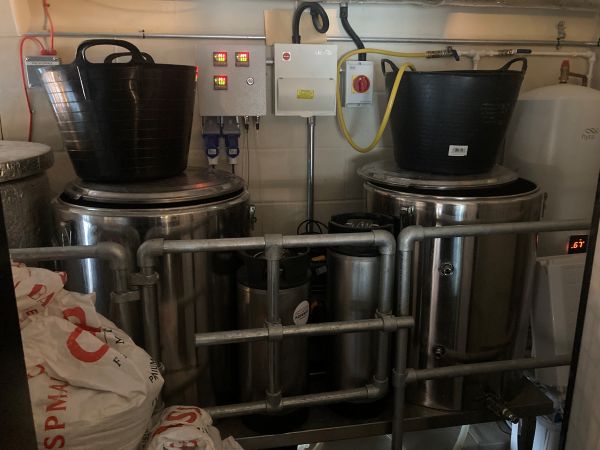
Allan then added a 1.5 hl nanobrewery with three small fermenters tucked away on the mezzanine to produce beer under the Hopewell Brewery name.
Brewing equipment at Hopewell Brewery, London E14
Beer is currently in keg only for sale exclusively on the premises.
5 openings and revivals, 20 suspensions and closures, net change -15.
By the end of December 2023, there were 107 commercial breweries operating in London, including 25 brewpubs. 10 were parts of multinationals (M). Those breweries were:
Babel Beerhouse (formerly Little Creatures Regents Canal) N1, Camden, brewpub REVIVED! was also briefly active this year again under the new ownership of Odyssey, but brewing was suspended again by December 2023 and the business has been sold on again.
Closed this year
BBNo (Brew by Numbers, Bermondsey) SE16, Southwark, closed by May 2023.
Beavertown Brewery (Tottenham Hotspur, Heineken M) N17, Haringey, brewpub, suspended spring 2023 and equipment subsequently removed, production continues at other sites
Boxcar Brewery E2, Tower Hamlets, suspended February 2023, cuckoo brewing shortly afterwards but ceased by June 2024.
Brick Brewery SE8, Lewisham, bought by BREAL Group June 2023 and closed in November with brands relocated to other breweries in the group outside London.
Macintosh Ales N16, Hackney, cuckoo brewing exclusively since July 2023
SALT London (Ossett, formerly Hop Stuff) SE28, Greenwich, closed May 2023, brewing continues outside London and may revive on a brewpub scale at one of the SALT bars in London.
Spartan Brewery SE16, Southwark, closed June 2023 though have subsequently cuckoo brewed, site and kit sold to Battersea to become Battersea Substation
Beer firm, now brewing outside London bigdropbrew.com Active since: October 2016 Brewing transferred outside London: September 2024
Former lawyer Rob Fink and designer James Kindred launched Big Drop as a specialist brewer of beers of 0.5% ABV and less after Rob noticed a gap in the market when he gave up drinking for an extended period. They began by cuckoo brewing at now-closed Bermondsey shared brewery UBREW in 2016 but by 2017 had expanded to partnerships with larger producers, appointing former Wild Beer brewer Johnny Clayton as head of production.
As of 2023, the business is based in Ipswich, Suffolk, though the beer was long brewed in London at Fourpure. The relationship was strengthened in May 2023 through a licensing deal which saw Foupure owner In Good Company invest in Big Drop.
With the closure of Fourpure, brewing has been transferred to In Good Company’s other plant at Magic Rock in Huddersfield, so I’m no longer regarding them as a London-based beer firm. As of January 2025, Magic Rock is facing voluntary administration, so production may move once again.
Beers are in can and keg, in a variety of styles from lagers to brown ales and stouts, including changing specials. They are exported internationally and also brewed in Australia and the USA for local markets.