Promoting an international beer culture that recognises and celebrates beers of quality, distinctiveness and local character, brewed with care and passion.
Etiam pulvinar consectetur dolor sed malesuada. Ut convallis
euismod dolor nec pretium. Nunc ut tristique massa.
Nam sodales mi vitae dolor ullamcorper et vulputate enim accumsan.
Morbi orci magna, tincidunt vitae molestie nec, molestie at mi. Nulla nulla lorem,
suscipit in posuere in, interdum non magna.
Brewery Original site: 8 Tyrrell Trading Estate, Tyrrell Road SE22 9NA (Southwark) Second site: 283 Belinda Road SW9 7DT (Lambeth) Current site: 497 Ridgway Road SW9 7EX (Lambeth) clarkshaws.co.uk First sold beer: 29 September 2013 (at original site)
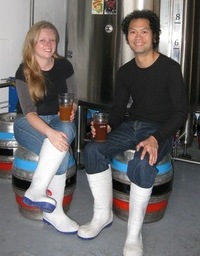
Self-styled “beer imps” Ian Clark and Lucy Grimshaw’s enterprise began in a small industrial unit in East Dulwich. It expanded in early 2015 to a railway arch near Loughborough Junction in partnership with the London Beer Lab, with the intention of sharing the 8 hl kit with other small brewers.
Lucy and Ian of Clarkshaws.
This didn’t work out, and Lucy and Ian took the unusual decision to downscale rather than attempt to expand, figuring that a smaller brewery selling mainly through an on-site taproom would suit them better both financially and in lifestyle terms. They completed the move to their current home, in another arch close to Loughborough Junction station, in October 2017, installing a compact 1.5 hl brewhouse and three small but high-spec cylindroconical fermenters, with the old kit going to Southey.
For a while they supplemented their capacity by cuckoo brewing at Bexley in response to the occasional big order, with their own fermenter kept on the site, but this arrangement had ceased by the end of 2019.
The brewery works hard to reduce its environmental impact and makes a point of using UK ingredients even for its hop-forward beers. Its products are all unfined and vegan friendly, packaged in cask, keg and minikeg and hand bottled. They’re mainly sold directly through the taproom and on market stalls.
Brewery Arch 1127 Bath Factory Estate, 41 Norwood Road SE24 9AJ (Southwark) birdhouselondon.com First sold beer (as Canopy): 30 October 2014 Brewing suspended: November 2022 Brewing resumed (as Bird House): March 2024
Small independent hospitality group Bird House was founded by Frazer Timmerman, formerly at London Fields and Truman’s, with Wil Fuller, who previously worked for several pub groups. Its first site, opened in 2019, was The Hawks Nest, a railway arch bar in Shepherds Bush. This was followed by two venues in Peckham, also in arches.
In 2023, the group acquired the site and equipment of the former and much-loved Canopy brewery, located alongside various mechanics in a railway arch under the Thameslink line near Herne Hill station and Brockwell Park. Restoring production and refurbishing the taproom took longer than expected, but was finally completed by the end of March 2024 when the arch reopened under the name Bird House Brewery.
The head brewer is Heriot-Watt-trained William Hiscocks, who initially plans to brew mainly for the company’s own outlets, though with the possibility of expansion to supply third parties too.
In 2025 the company expanded the taproom into two adjoining arches, and acquired a further outlet by taking over the former BrewDog Shepherds Bush, renaming it the Bush Tavern.
Beers are in tank, keg and can with occasional cask.
More about Canopy
Canopy was founded by Estelle and Matt Theobalds after the birth of their first child prompted a lifestyle change, beginning with 6.5 hl kit from a brewery in Wakefield that never got off the ground.
Canopy Brewing, London SE24
The installation evolved through various often home-built additions until it was capable of producing 18 hl, with a canning line added to coincide with a rebrand in autumn 2018. An atmospheric taproom was much appreciated locally.
Production was around 60% keg, 40% canned, with a small amount of cask and minikeg.
The brewery sadly announced its closure in November 2022, stating that “the current economic situation makes our position untenable. We are choosing to close in order that we have control over the process…We have tried, without being afraid of failing.” Brewing had already ceased by the time the closure was announced, though trading of existing stock continued until the end of December.
Camden Town Brewery, London NW5 and Enfield (London) EN3
Formerly Horseshoe Brewery, McLaughlins.
Breweries Original site: Horseshoe, 28 Heath Street NW3 6TE (Camden) Arch 55 brewery and beer hall: 55 Wilkin Street Mews NW5 3NN (Camden) Production brewery: Morson Road, Enfield EN3 4TJ (Enfield) camdentownbrewery.com First sold beer: May 2006 (as McLaughlins)
Now one of London’s biggest breweries, Camden Town began with a single vessel in the cellar of Hampstead pub the Horseshoe: look carefully and you’ll see a horseshoe still appears on the logo. The first brews bore the name McLaughlins, from a long-closed brewery in Rockhampton, Queensland, once owned by founder Jasper Cuppaidge’s family.
Struck by the popularity of his beer among pub customers, Jasper found investment to expand with the help of friends and family, including his father-in-law, prominent advertising executive John Hegarty, and pub and bar group Barworks (see Saint Monday Brewery). The expanded brewery was relaunched in June 2010 using a 20 hl computerised brewhouse from BrauKon, Germany, installed under two railway arches by Kentish Town West station. The site has expanded several times since and now occupies an entire run of arches.
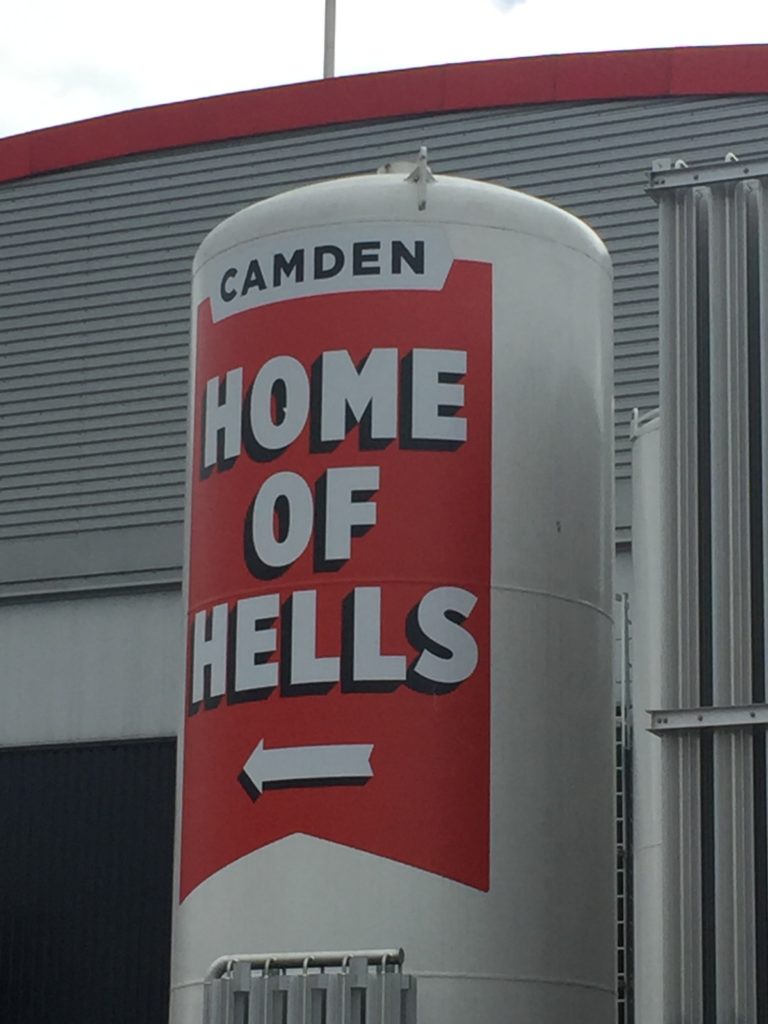
Camden Town’s ‘Big Brewery’ makes no secret of its flagship brand.
In May 2013, Camden Town became the first new London brewery, and one of the first microbreweries in Britain, to invest in a canning line. By 2014 growth in demand had necessitated contract brewing some of the beer in Belgium. In February 2015 the brewery launched a crowd funding campaign to raise £1.5 million with the intention of expanding to a new site.
Then just before Christmas 2015, Camden Town announced it had been bought by the world’s biggest brewer, Anheuser-Busch InBev, in a deal thought to be worth £85 million, the second multinational acquisition of a London craft brewer following Meantime. Crowdfunders were offered what was reported as a 70% premium to sell back shares. Initially, the business continued to operate as a separate company within the group, with Jasper as chief executive.
AB InBev’s involvement enabled a major expansion with £30 million invested in a new and much bigger site on an industrial estate in the Lea Valley in Enfield. In operation since June 2017, at the time this represented the biggest new brewing facility created in London since Guinness opened the now-closed Park Royal in 1936, a feat Camden also previously achieved with its 2010 expansion. Brewing is now a 24-hour operation: the 100 hl brewhouse supplied by German company Krones can brew 12 times a day to fill 36 fermenters; the total capacity is around 200,000 hl a year with space to increase to 350,000 hl, enabling all brewing to brought back in-house.
In 2021, the brewery was fully integrated into AB InBev’s UK brewing operation, Budweiser Brewing Group, though Jasper was retained as a consultant.
The Enfield brewery was built with a visitor centre and taproom but these have never regularly opened to the public. The Kentish Town site has been retained as a brewery as well as a taproom, now mainly producing specials under the Arch 55 brand: the public areas were refashioned in 2021 into a Bavarian-inspired ‘beer hall’. Camden Town still owns the Horseshoe, and though a second pub, Camden’s Daughter, was closed after three years of operation in 2018, there are plans for more pubs in future.
Numerous talented brewers have worked for Camden Town. Troels Prahl of yeast supplier Whitelabs helped develop the initial recipes and establish good fermentation practices. Rob Topham, formerly of Fuller’s, was involved in commissioning the 2010 brewhouse, and is still head brewer. Brewing director Alex Troncoso left in 2016 to set up Lost and Grounded in Bristol.
Camden Town beer is unpasteurised but packaged bright, with over 80% sold in keg, the rest in can and bottle. Most of the beer produced is lager.
Brewery moved outside London and since closed 25 Summerstown SW17 0BQ (Wandsworth) bythehorns.co.uk First sold beer: October 2011 Suspended brewing in London: by December 2021
Alex Bull and Chris Mills, then only three years out of university, started brewing on an industrial estate between Earlsfield and Wimbledon in September 2011, using a bespoke 9 hl kit from Oban Ales. Their site was opposite Wimbledon Greyhound Stadium, the last of its kind in London.
A new 18 hl brewhouse, also from Oban, was installed in 2015, and the space began expanding into adjacent units, eventually occupying a whole row. A canning line was added in 2018.
Even this wasn’t enough, and in March 2021 the main production facility was transferred to Salfords, near Redhill, Surrey, just outside London (11 The IO Centre, Salbrook Road Industrial Estate, Salfords, Redhill RH1 5GJ), with a 30 hl semi-automated kit. A pilot brewery remained at the old place alongside an expanded taproom.
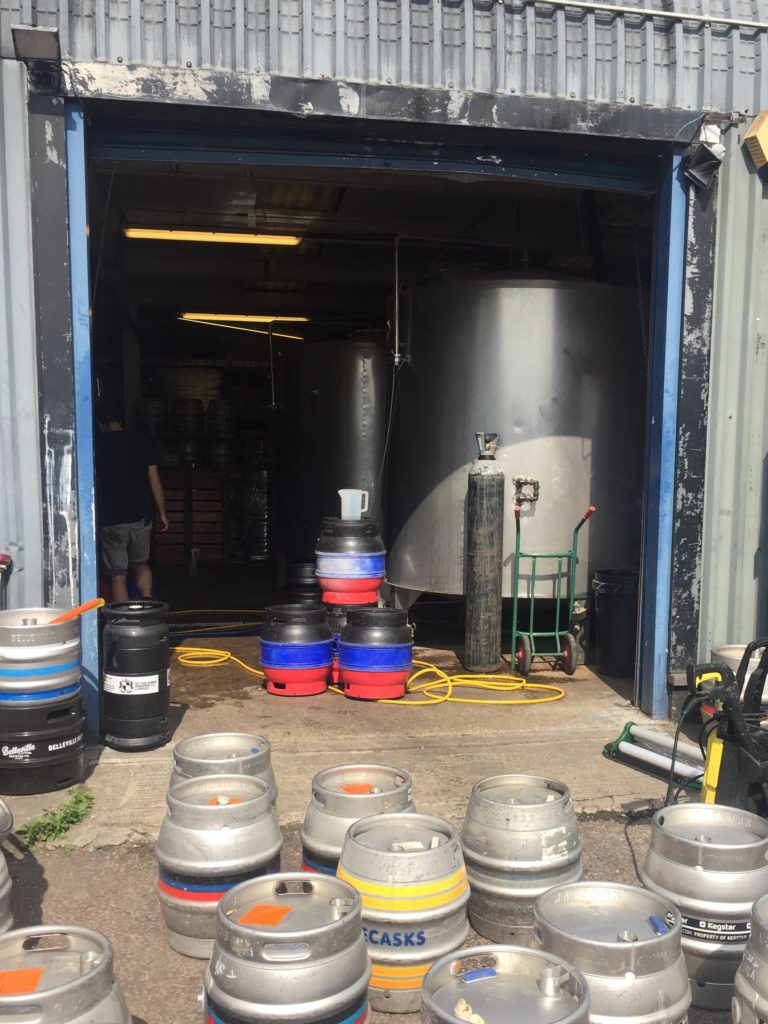
A glimpse inside By the Horns in 2019, with the old brewhouse.
Meanwhile the greyhound stadium closed in 2017 and was soon demolished, replaced by a new development including a stadium for League One football team AFC Wimbledon alongside housing and shops. The Cherry Red Records Stadium, as it was named, opened in November 2020. By the Horns began brewing an exclusive beer for the stadium, Crazy Gang Pale Ale.
The relationship deepened in December 2021 when the brewery took over the Phoenix pub within the stadium (Plough Lane SW17 0NR), open to the public except during matches, as the new official taproom.
The old brewery site and taproom across the road were then closed, though with a long-term aspiration to install a small brewhouse in the Phoenix.
Sadly, the brewery went into administration in December 2024. The Phoenix remained open temporarily but closed as a By the Horns venue at the end of the football season in May 2025, with all plans for an in-house brewery abandoned.
The Phoenix reopened with the new season, now managed by the stadium and only open on match days, with a new house beer sourced from Wimbledon Brewery not far away.
George and Dragon Brewpub, no longer brewing 151 Cleveland Street W1T 6QN (Westminster) First sold beer: December 2016 Ceased brewing: November 2017
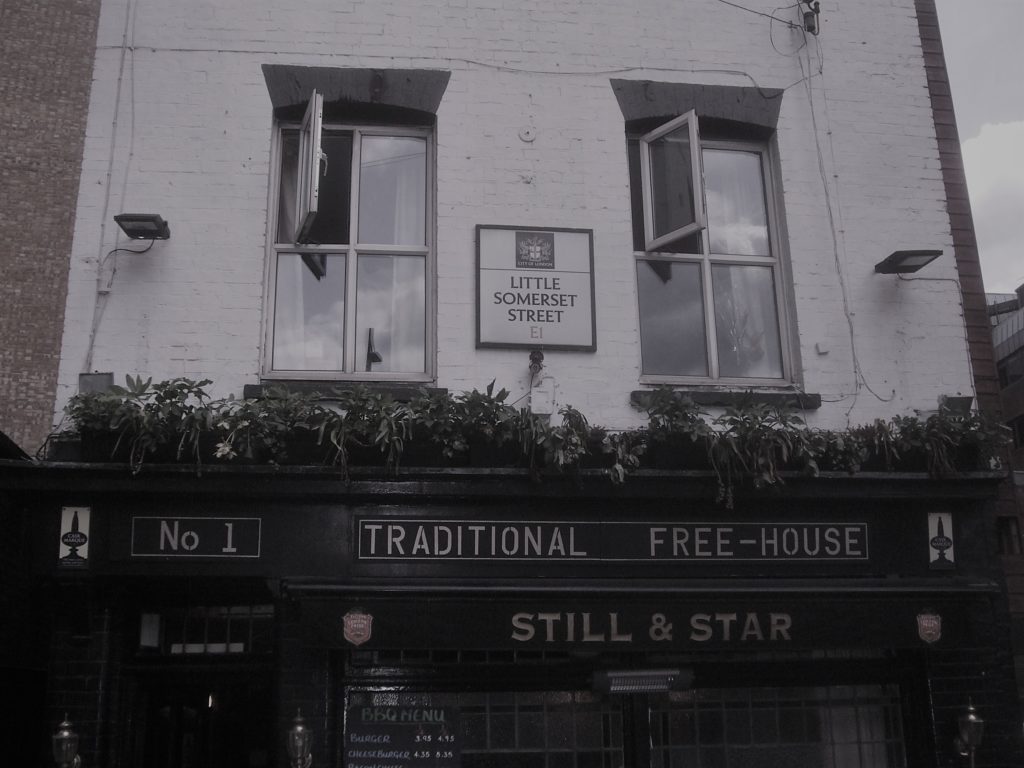
Still and Star Closed brewpub 1 Little Somerset Street E1 8AH (City of London) First sold beer: December 2014 Ceased brewing: June 2015
W1 (Burlington Arms) Brewpub, no longer brewing 21 Old Burlington Street W1S 2JL (Westminster) First sold beer: December 2014 Ceased brewing: by 2016
During 2014, a company called BrewIT began marketing a device called the Truebrew, an automated 100 l ‘technobrewery’ with pre-programmed recipes, intended as hassle-free way to create an instant brewpub. Broadly the same size as a dishwasher, the machine could supposedly be used by anyone with no brewing knowledge or skills required, and enabled pubs to make cask beer in batches of two firkins more cheaply than they could buy it in. Unlike the DIY brewpub kits of an earlier generation, it used a full mash system, starting like a ‘proper’ brewery from dry grains and hops rather than extracts. Those of us who follow London brewing considered with trepidation the prospect of a new rash of tiny brewpubs to keep track of. It turns out we needn’t have worried.
The prototype Truebrew was installed on a test basis at the Still and Star pub near Aldgate in 2014, which briefly became the only commercial brewery in the City of London (a distinction currently held by BrewDog Outpost Tower Hill). Landlord Michael Cox began with the default recipes but soon began adapting them to his own specifications and buying in raw materials from third parties. But quality proved variable and brewing became increasingly intermittent. These were the only Truebrew beers I managed to taste, with Michael in 2015, and to be frank they weren’t good. Within a year the kit had been removed and though there was talk of an upgraded replacement, the pub now had other problems as its site was earmarked for redevelopment. Despite opposition, the pub closed early in 2018 and is currently the subject of a planning application for demolition.
The same month as the Still and Star, beers from a second Truebrew system began appearing at the Burlington Arms, a smart free house tucked away near West End Central police station . Licensee Taran Cheema used it to make beers under the W1 brand on what must have been a very occasional basis, as I never met anyone who tried them, and only other people’s beers (generally very good ones too) were on sale whenever I called. Activity had petered out by the time the pub was sold to new owners in 2017 and current staff have no knowledge that it once brewed its own beer.
Meanwhile, the Still and Star kit resurfaced at the George and Dragon in Fitzrovia in 2016. Production here was also erratic, and was officially suspended just under a year later, with the promise of an upgrade and relaunch. This still hadn’t happened when the pub closed for a major refurbishment in June 2018 and didn’t reopen for another 15 months. BrewIT, the company behind the kit, was wound up in June 2019, so we can conclude the experiment failed. It seems these devices were unable to substitute for the skills of an experienced brewer after all.
Includes information for Bull and Finch and So What Brewing Co.
Bullfinch Brewery, London SE24
Brewery Original site: 118 Druid Street SE1 2HH (Southwark) Current site: 886 Rosendale Road SE24 9EH (Lambeth) thebullfinchbrewery.co.uk First sold beer: 1 February 2014
Brewpub Bull and Finch, 126 Gipsy Hill SE19 1PL (Southwark) First sold beer: April 2022
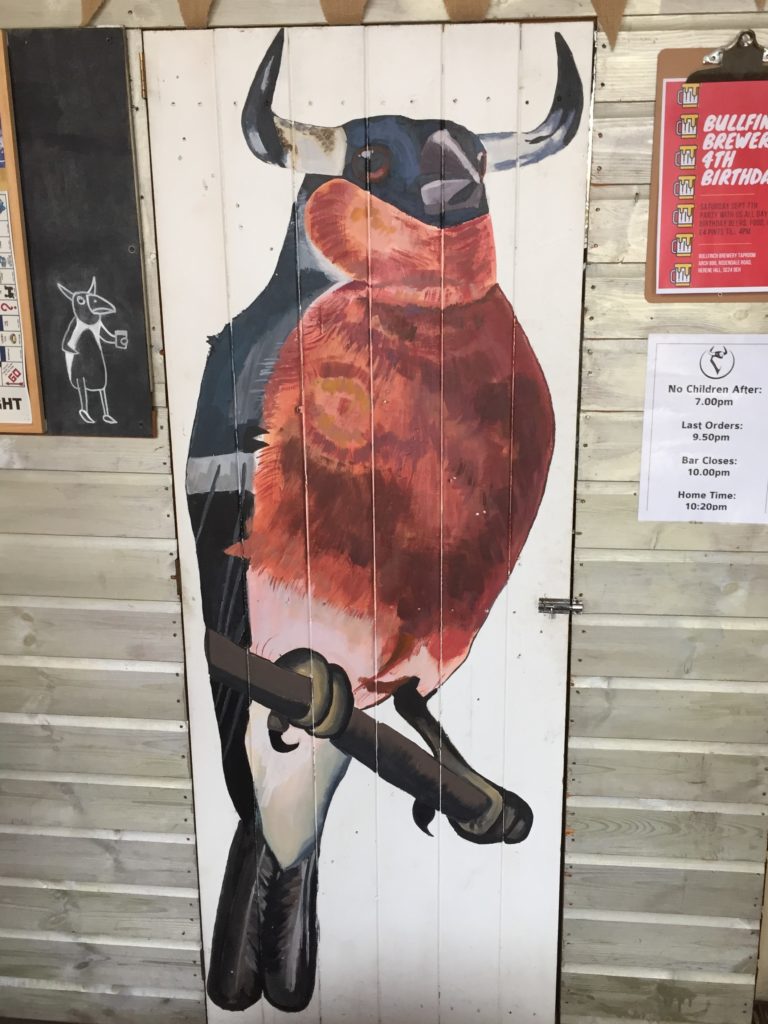
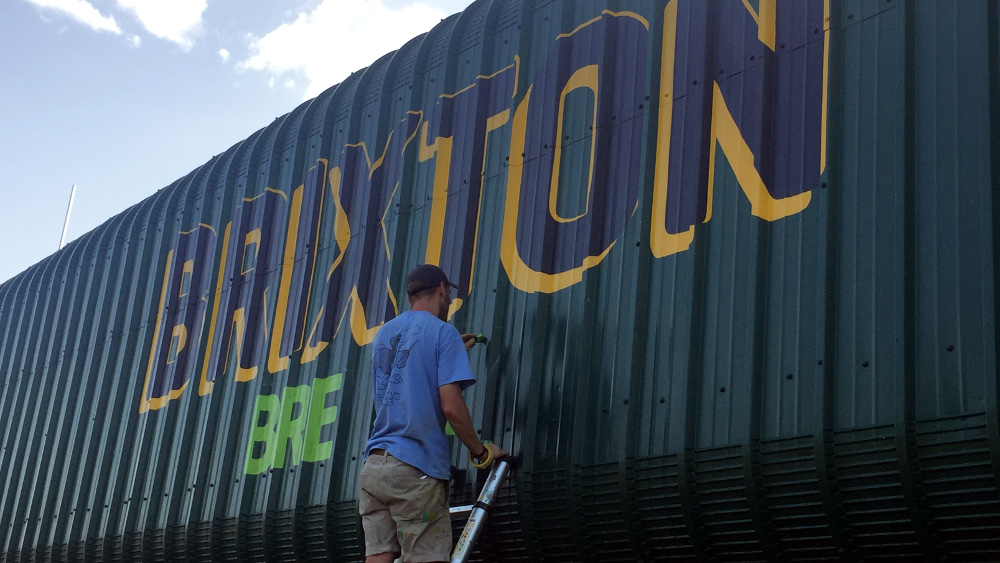
Bullfinch mural at the like-named brewery.
Ryan McLean, originally from Ballymena, discovered international craft beer while travelling extensively for work as a live sound engineer. He began brewing commercially as a cuckoo at Anspach & Hobday in Bermondsey in February 2014, but this arrangement was soon outgrown thanks to the quality of the beers.
Cuckoo brewing ceased in April 2015, and in December, following a lengthy search for premises, Ryan and his wife and business partner Carly resumed business in two smallish railway arches just a few steps from Brockwell Park and a short walk from Canopy. One of the arches just about packs in an 8 hl brewhouse that began its life as a pilot kit at Charles Wells in Bedford, alongside numerous fermenters, some of them added after a 2016 crowdfunding round. The other houses a taproom.
Since May 2019 there’s been a second outlet, the Bull and Finch opposite Gipsy Hill station, previously one of Late Knights’ Beer Rebellion bars (see Southey). A 1.5 hl nanobrewery was installed here early in 2022 under the supervision of lead brewer and bar manager Jon Griffiths, with trial brewing starting in February 2022 and beers expected on sale in April.
From 2021, longer runs of Bullfinch beers have been cuckoo-brewed outside London, though some brewing continues at the Herne Hill site.
Jon Griffiths in the Bull and Finch nanobrewery.
Bullfinch core beers, usually named with astronomical references, are in keg, cask and minicask, though bottling may be restored. Beers from the nanobrewery will be either in traditional styles branded Bull and Finch, including revivals of old Bullfinch recipes in cask and keg, or small batch wild and mixed fermentation specialities under Jon’s own So What brand. Each batch of these will be divided between several small fermenters and treated with different yeasts and mixed cultures.
Beer firm, former brewpub
Original site: William IV, 816A High Road E10 6AE First sold beer: November 2000 (as Sweet William), 20 August 2008 (as Brodie’s) Ceased brewing: July 2016
The story of this major early contributor to the revival of London brewing in the early 21st century begins at the Brodie family’s Leyton pub the King William IV in November 2000. An 8 hl kit designed by Pitfield’s and Dark Star founder Rob Jones started producing beer under the name Sweet William in a former stable building at the back. Although the Brodies owned the kit, the brewery was operated by a separate business, which failed in 2005. The brewhouse was mothballed, only to be restored and relaunched under the family name in August 2008 by siblings James and Lizzie Brodie, originally as a point of interest to attract more customers to this very large pub.
The initiative turned out to be one of the earliest shoots of a vigorous crop of London craft brewers, and Brodie’s became the true maverick of the new community, creating many hundreds of unusual and innovative beers in cask, keg and bottle in a vast range of styles, sometimes with over 50 different beers on sale at the William’s annual Bunny Basher easter beer festivals. The beers found their way into the family’s two central London pubs, the Old Coffee House in Soho and the Crosse Keys in Covent Garden, as well as other pubs and bars in the UK and abroad, and the brewery collaborated with such luminaries as Mikkeler and Three Floyds. By 2015 there were plans to expand to a new production brewery on a separate site and even talk of opening a bar in Cardiff.
In the restless creativity of the brewery’s heyday, the beers varied from the sublime to the ill-advised, but at their best they were exceptional. Brodie’s was instrumental in popularising light single hop pale ales in the capital, became an early adopter of New Zealand hops, experimented with sour Flemish reds, helped revive the brewing of big porters, including some using smoked malt, and gamely priced 10%+ Imperial stouts at the Bunny Basher events at the same level as session ales.
Unfortunately Brodie’s faced a difficult year in 2016, due to technical problems at the brewery as well as personal and financial issues. The brewhouse was closed, initially for refurbishment, with brewing transferred outside London, but by October 2016 the brewing business had been wound up completely. The William was sold in 2017 and reopened in January 2018 under new ownership, with the former brewhouse converted to additional drinking space.
Since then, Brodie’s beers in cask and keg have been on sale intermittently in the central London pubs, cuckoo-brewed at various locations including Wobbly in Hereford; Rhymney in Blaenavon, Torfaen, Wales; and more recently at Battersea, where former Brodie’s head brewer Tom Barlow, who currently owns the brands and recipes, now works.
Production has sometimes been intermittent due to time and capacity restraints, but the brand received an unexpected boost in 2025. Walthamstow’s Exale Brewery acquired the William IV as part of its expanding pub estate, reopening it in April, and from November 2025 has revived several classic Brodie’s brands in cask and keg in collaboration with Tom for sale not just in the William but its other outlets. So Londoners are thankfully still enjoying these ‘fabulous beers’.
Brewery 28 Chiltonian Industrial Estate SE12 0TX (Lewisham) brockleybrewery.co.uk First sold beer: November 2019
Suspended brewery (remains open as bar) 31 Harcourt Road SE4 2AJ (Lewisham) First sold beer: 22 March 2013 Brewing suspended: September 2024
Brockley was founded at the initiative of Andy Rowland and five neighbours in 2013 in response to a demand for quality local beer. They installed an 8 hl kit from ABUK in a small industrial building in a back street close to Brockley station, previously home to a builder’s workshop, and soon established a following in a neighbourhood with a strong sense of community. Initially, the brewery was open to the public only for takeaway sales, but this evolved into a regular taproom.
In November 2019, the brewery launched a second, larger facility on an industrial estate between Hither Green and Lee, using a 30 hl brewhouse formerly at Fourpure (and originally at Purity in Warwickshire). Following a succession of open days, a regular taproom opened here in 2021.
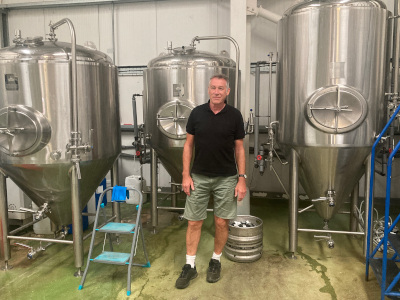
Andy Rowland at Brockley Brewery, Hither Green.
The brewery’s original home initally remained active, used for specials and additional capacity as well as a taproom. There have been several head brewers including Craig Vernon, formerly at Camden Town. In August 2023, Gianluca d’Andrea, formerly at Southwark, was appointed head brewer.
Andy retired in March 2024 and the company was taken over by four of the existing staff, including Gianluca. They aim to maximise community ties and secure the future of the business through a ‘Support your local brewery’ campaign, inviting local investment and using the brewery’s spaces for community activities.
Brewing at the original site was suspended in September 2024 with some of the equipment removed and production now concentrated in Hither Green, though the bar remains open. A pilot kit for specials may be installed in future.
Beers tend towards the more traditional, with cask still a major part of the business, though with significant amounts of keg and bottled beers, bag-in-box and occasional canning on a mobile line.
Since 2020, Brockley has produced beers for the owners of the Old Truman Brewery site in Brick Lane, originally under the Brick Lane brand, more recently as Truman.
Brewery 547 Brixton Station Road SW9 8PF (Lambeth) brixtonbrewery.com First sold beer: October 2013
Closed brewery 1 Dylan Road SE24 0HL (Lambeth) First sold beer: June 2018 Ceased brewing: September 2024
Conceived as early as 2011 by homebrewing neighbours Jez Galaun and Mike Ross, Brixton eventually opened two years with a 10 hl brewhouse from Oban Ales in a railway arch a little east of Brixton station at 547 Station Road. Soon establishing a keen local following, the operation later expanded into the next arch east, 548.
The new Brixton brewery is duly branded in August 2018.
Many in the industry were surprised when this small outfit became the fourth new London brewery to attract funding from a multinational group Heineken bought a 49% stake in November 2017. The strong brand and association with an iconic neighbourhood were doubtless part of the attraction.
Though the founders retained control, the Dutch brewer’s resources enabled a major expansion to a much larger industrial unit in Herne Hill, under a kilometre from the brewery’s birthplace. Operations began here in June 2018 on a 50 hl automated brewhouse from UK supplier Gravity Systems and a new canning line installed on a hi-tech floor, with a potential capacity of 30,000 hl a year.
The Brixton arches were retained: 547 houses the brewhouse, which is still in regular use, while 548 has been converted into a regular taproom.
Heineken acquired full ownership in Feburary 2021, though the existing management remained in place.
In August 2024, Brixton announced that it was in the process of closing its main Herne Hill production site and shifting its core brands to the big Beavertown site in Ponders End, also now owned by Heineken. This was due to capacity restrictions in Herne Hill, where the lease was soon due for renewal. The Brixton arches were retained and remain in use for small runs and specials as well as providing a taproom, and the company is looking for a warehouse nearby to service local deliveries.
Beers are in keg and can, with some bottling and occasional cask, named with local references.
An unrelated earlier Brixton Brewery operated as a Conway brewpub in the 1980s.
Brewery moved outside London Original site: 209 Blenheim Grove SE15 4QL (Southwark) Final site in London: 13 Deptford Industrial Estate, Blackhorse Road SE8 5HY (Lewisham) brickbrewery.co.uk First sold beer: November 2013 (at original site) Brewing ceased in London: November 2023
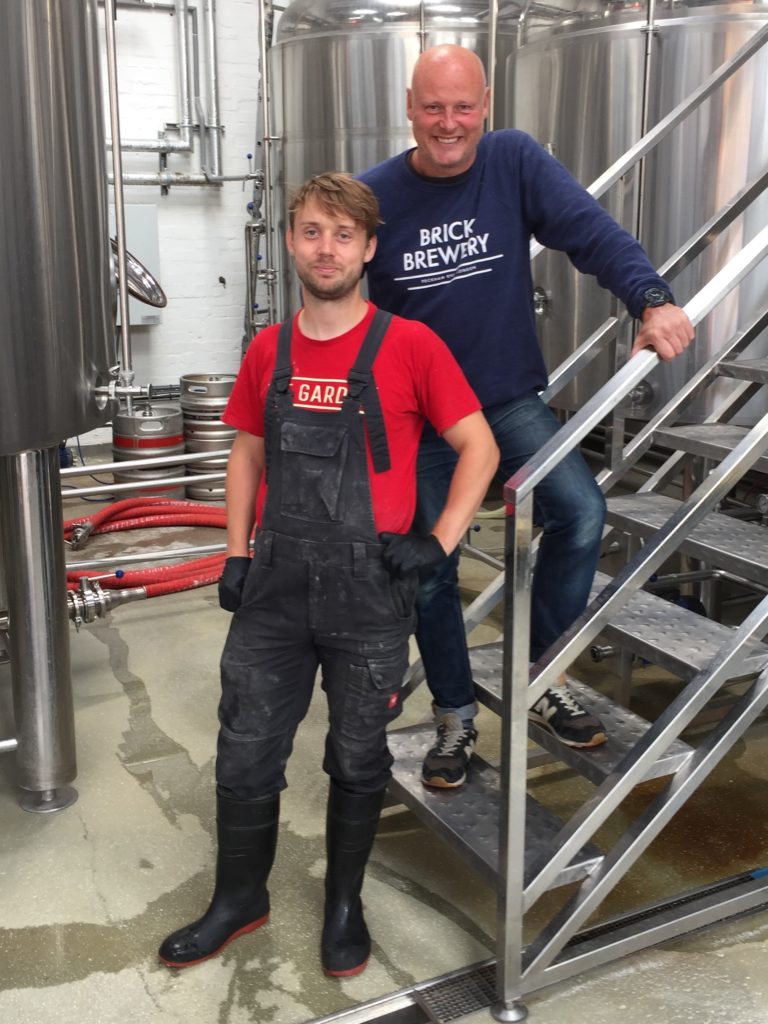
Former head brewer Pete Vick (left) and founder Ian Stewart of Brick.
Like countless others on the contemporary brewing scene, the epiphany for York-born Ian Stewart was a bottle from the Kernel. He began developing his own beers in a Peckham shed, and, working alongside his wife Sally, opened commercially in an arch under Peckham Rye station while still holding down his marketing job.
Starting with a Chinese-built 9 hl brewhouse, Brick extended fermentation capacity several times and expanded into a neighbouring arch in 2015, with the brewery becoming a full-time concern, but still struggled with space. By the end of 2017, production had moved to a much bigger site in two units on a Deptford industrial estate beside the route of the old Grand Surrey Canal.
Head brewer Pete Vick moved on in 2020 and was replaced by Tom Dixon, formerly at Stewart Brewing in Edinburgh. He and his team worked on a 32 hl brewhouse from Willis European, also Chinese-built, with plenty of fermenters, a souring tank, barrel ageing facilities, keg filler and canning line. The Deptford site was only occasionally open to the public for special events; the regular taproom remained in the original Peckham arch.
In the face of rising rents and energy costs, the cost-of-living crisis and other challenges, the company went into administration on 2 June 2023. Its brands and assets were subsequently bought out by private equity company the BREAL group, which a few weeks previously had acquired the equally troubled (and rather older established) Black Sheep brewery in Masham, North Yorkshire. BREAL subsequently acquired another London brewery, BBNo.
Initially Brick announced that production would continue as normal under the leadership of Ian and Sally, but brewing ceased by November and the equipment was removed to Black Sheep, with the Deptford site subsequently vacated. Both Brick and BBNo brands were then produced under an ex-Brick brewer at BBNo, but news reports on 12 February 2024 confirmed that BBNo was also slated to close ‘within three weeks’, with both brands moved to a new brewhouse created for them in Masham. In future some brewing may also take place at Purity in Alcester, Warwickshire, which BREAL bought in January 2024.
In late Febuary 2024, BREAL renamed itself the Keystone Brewing Group.
The Peckham taproom remains open, now selling a range of Keystone brands alongside Brick.
Beers were in keg and can, with some cask mainly for local outlets.