Promoting an international beer culture that recognises and celebrates beers of quality, distinctiveness and local character, brewed with care and passion.
Etiam pulvinar consectetur dolor sed malesuada. Ut convallis
euismod dolor nec pretium. Nunc ut tristique massa.
Nam sodales mi vitae dolor ullamcorper et vulputate enim accumsan.
Morbi orci magna, tincidunt vitae molestie nec, molestie at mi. Nulla nulla lorem,
suscipit in posuere in, interdum non magna.
Brewery no longer in London
Original site: 1 Sutherland Road Path E17 6BX leftbankbrewery.co.uk First sold beer: September 2014 Ceased brewing in London: by end 2017
On its inception, Left Bank described itself as “probably London’s smallest commercial brewery, ” brewing on a licensed pilot kit working alongside bread and pickle maker the Fermentarium in Walthamstow’s Black Horse workshop. The brewery specialised in working with wild yeast and mixed fermentations.
By 2017, Left Bank was no longer using its original kit but brewing at Ubrew in Berrmondsey. In spring 2018 it relocated out of London, to the much more rural surroundings of Pumsaint in Carmarthenshire, Wales, near the Dolaucothi Roman gold mines and close to the Brecon Beacons National Park.
Also contains information for Late Knights and Shamblemoose
Brewery 21 Southey Street SE20 7JD southeybrewing.co.uk First sold beer: 5 May 2013 (as Late Knights/Shamblemoose)
Southey is a successor to the Late Knights brewery, founded by former licensee Steve Keegan, who helped devise Fuller’s early ‘craft’ pubs the Barrel and Horn in Bromley and the Union in Westbourne Park. He began cuckoo brewing at Truefitt in his hometown of Middlesbrough in 2012, then formed a partnership with Graham Lawrence, longstanding owner of Brockley wine bar and importer Mr Lawrence, to create a small London brewery and pub chain.
They installed an 11.5 hl kit in a Victorian building just off Penge High Street that had once served as a slaughterhouse and a candle factory but had latterly been Graham’s warehouse. At first, the facility was also home to a separate brewing company, Shamblemoose, founded by Matthew and Lera O’Sullivan as a cuckoo at Sunny Republic in Dorset late in 2012. Both brewers used the same brewhouse, with each maintaining separate fermenters.
A few weeks later, Late Knights opened its first pub, Beer Rebellion, in Gipsy Hill, subsequently adding several others including some outside London. In September 2013, Sam Barber became head brewer after approaching Steve for feedback on his homebrewed beers. The rapid expansion contributed to both financial and beer quality problems and in August 2016 the company folded. The arrangement with Shamblemoose had already ended in June 2015 when Lera and Matthew moved to Montana in Lera’s native USA.
Sam and Graham then set up a new business and following a few months of closure and £20,000 of improvements, restarted brewing as Southey in December 2016 on a 10 hl kit formerly belonging to Clarkshaws. Output and beer range were both reduced to concentrate on quality and consistency. A taproom opened in March 2018, and the brewery retains three other former Late Knights outlets: the London Beer Dispensary (389 Brockley Road SE4 2PH), the Dulwich Beer Dispensary (481 Lordship Lane SE22 8PB) and the Brighton Beer Dispensary.
Of the other LK bars, the original Beer Rebellion in Gipsy Hill subsequently moved to a next-door unit and is now Bullfinch brewery pub the Bull and Finch; Beer Rebellion Peckham retains its name but is owned by cuckoo brewer and indoor skatepark operator Hop King, founded by an ex-LK brewer; Hopsmiths in Crouch Hill is now Brave Sir Robin, sharing ownership with the Rose and Crown in Kentish Town; and the Ravensgate Arms in Ramsgate is now operated by a former LK manager in partnership with Gadd’s. Steve briefly ran a brewery called Holler in Brighton, but this has since closed.
The name Southey is from the brewery’s street address, in turn named after the Romantic poet Robert Southey, so the vowel in the first syllable is pronounced like the one in ‘tough’.
Beers are in cask, keg and can, mainly sold online and through the taproom and bars.
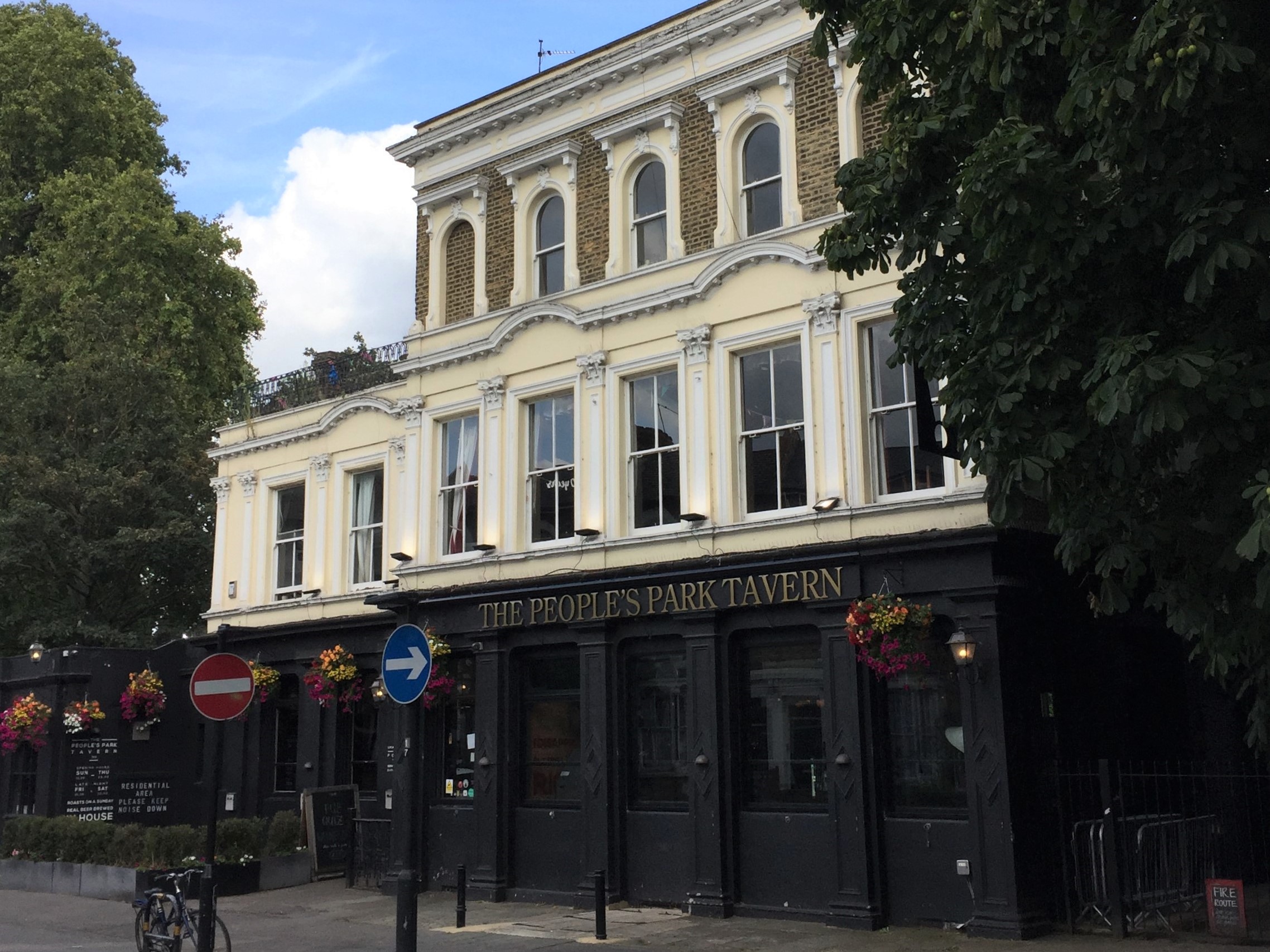
Peoples Park Tavern, London E9: Laine’s Beer Lab was on the side wing to the left.
Laine’s Brew Lab Brewpub no longer brewing Peoples Park Tavern, 360 Victoria Park Road E9 7BT (Hackney) peoplesparktavern.pub First sold beer: February 2014 Ceased brewing: by January 2022
Laine: Acton Brewpub no longer brewing The Aeronaut, 264 High Street W3 9BH (Ealing) First sold beer: November 2013 Ceased brewing: December 2016
Laine: Thieves Brewery Brewpub no longer brewing Four Thieves, 51 Lavender Gardens SW11 1DJ (Wandsworth) First sold beer: January 2015 Ceased brewing: by January 2020
Gavin George’s small Brighton-based pub chain InnBrighton first installed a brewery in October 2012 in its North Laine bar in the celebrated Brighton shopping area of the same name, thus the beer brand Laine which has since been extended to the whole pub group.
Its first London brewpub was the Aeronaut in Acton, reopened in November 2013 following a major refurbishment with an 8 hl brewery clearly visible behind the bar. The original head brewer was Nic Donald, whose achievements included persuading brewing legend Derek Prentice to collaborate on a guest beer in July 2014.
Another 8 hl kit had by then appeared in the eastern wing of the Peoples Park Tavern, a very large pub on the edge of Victoria Park. Jim Wilson, formerly of Brentwood Brewery and Tap East, was the first head brewer, though he’s since moved on. Interestingly, this was the second brewery on the site: in 1986 the pub became the Flounder and Firkin, the sixth brewpub in David Bruce’s pioneering Firkin chain, brewing until 1999. Beers brewed here were sometimes been branded ‘People’s Pints’ though the brewery was later renamed the Brew Lab and concentrated on more experimental and ‘extreme’ beers.
In January 2015, Laine opened the Four Thieves, in a sprawling former music hall off Lavender Hill in Battersea which had briefly been an Antic pub. As well as an 8 hl brewery, the pub was equipped with a small gin distillery, with the botanicals including lavender grown on the roof in a nod to the area’s horticultural past. Brewing here was initially overseen from Acton.
In April 2016, Laine appointed Jack Hibberd, formerly of Truman’s, to oversee its brewing operations. By then, as well as brewing in the pubs, the company was contracting out some of its best-selling brands, including a tank lager, to Hepworth in Pulborough, West Sussex, one of the breweries that emerged from the closure of historic Sussex brewery King & Barnes in 2000. Hepworth moved to a much bigger purpose-built site with a 65 hl kit at Adversane near Billingshurst, West Sussex, in April 2017: that site was also used as Laine’s ‘Brew Hub’ for its core beers, including the tank lager supplied to the pubs.
A major fire gutted Laine’s original London brewpub, the Aeronaut, in the early hours of the 1 January 2017, badly damaging the brewhouse. The pub was closed for rebuilding for most of that year, reopening in December but without a brewery.
Laine was sold in May 2018 to Vine Acquisitions Ltd, a company backed by private equity firm Patron, which also owned 1,300 leasehold pubs in the Punch Taverns estate not sold to Heineken when Punch was restructured in 2017. Laine continued as a separate unit under the existing management team led by Gavin. By the time of the takeover, the distillery at the Four Thieves was already mothballed, and the brewhouse eventually followed, with the kit removed early in 2020.
Brewing at the Peoples Park Tavern was suspended during the 2020-21 Covid-19 lockdowns but briefly revived in spring 2021 when the pub reopened.
An announcement on 15 December 2021 confirmed that both Laine and Punch had been sold to US-based Fortress Investment Group for an undisclosed sum, and subsequently the new owners began streamlining and integrating the two groups.
The brewhouse was finally removed from the Peoples Park Tavern early in 2022, with the space converted to customer use. The original intention was to resume brewing with the same kit in a standalone industrial unit nearby, but this was abandoned when the company expanded its brewing capacity outside the capital by buying former London brewery Redchurch in Harlow in October 2022. The kit has since been sold on.
The Ram Inn, Wandsworth, was rebranded by new owners Punch as a Laine pub in January 2023. The pub still houses the brewing kit installed by the previous leaseholders as the SlyBeast brewery which following the change of hands was used for cuckoo brewing by Coalition. This arrangement ended in January 2024 and Laine currently has no active brewpubs in London, and with no immediate plans to revive brewing activity, though brewing continued on a small scale for a while at the North Laine in Brighton.
In September 2025, the company announced it was pulling out of brewing entirely, closing Redchurch and disentangling itself from the Pulborough brewery. All Laine brands are now brewed for it by Keystone, the company that also now owns former London brands BBNo, Brick and Fourpure, at its subsidiaries Black Sheep in North Yorkshire and Purity in Warwickshire.
Beers were mainly in keg and cask and sold at the pub, and occasionally in other Laine pubs in London. Draught core brands, bottles and cans sold at Laine pubs are sourced from the hub brewery in Sussex, though some Brew Lab beers were formerly hand-bottled.
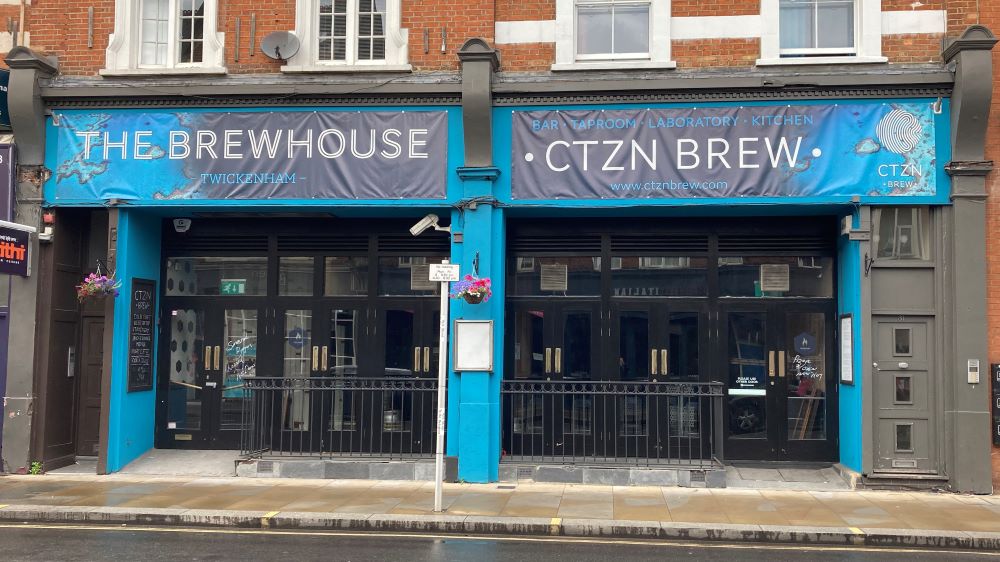
Closed brewery 477 Upper Richmond Road West SW14 7PU (Richmond upon Thames) ctznbrew.com First sold beer: 7 June 2015 (as Kew Brewery) Brewing ceased: December 2021
Ex-Weird Beard brewer Dave Scott struck out on own under the name Kew Brewery, originally jointly managed with his wife Rachel. A 10 hl kit from Oban Ales was installed in a garage at the back of a former shop unit in East Sheen, a little southeast of the Royal Botanic Gardens Kew, with fermenters and storage in the shop itself, and eventually a cold store on a separate site a short distance away. Beers went on sale for the first time at the Kew Village Market in 2015, and soon established a local reputation.
In December 2018, the Scotts sold the brewery to Jana Gray, formerly at the Amsterdam Brewery in Toronto, and her partner Jonathan, though Dave retained a minority shareholding, and the business continued the environmentally-friendly policies he established. During 2019 the front of the unit was sometimes open as a shop and occasional taproom, though this remained challenging due to lack of space.
During the 2020 lockdowns, the owners rethought the business and in May 2021 relaunched under a new brand, CTZN (or Citizen) Brew. The new approach placed still more emphasis on social and environmental concerns, with an ambition to include sustainable ingredients from Africa in the recipes.
An offsite taproom was opened in Twickenham (29 York Street TW1 3NR) and it was originally intended to shift brewing here. Sadly the business struggled to recover and ceased trading in December 2021. Originally the owners hoped to resume elsewhere, but by summer 2022 the company had been placed into liquidation.
Brewery Original site: 98 Druid Street SE1 2HQ (Southwark) Current site: 11 Dockley Road Industrial Estate (taproom at Arch 7) SE16 3SF (Southwark) thekernelbrewery.com First sold beer: 1 December 2009
Evin O’Riordan, originally from Waterford, Ireland, worked in the mid-2000s for specialist cheesemongers Neal’s Yard Dairy. His job took him to New York City, where he encountered brewers with a similar sense of artisanship and passion as the small-scale cheesemakers he already knew. Returning to London, he became a homebrewer and London Amateur Brewers member, then turned professional as the Kernel, originally with a 6.5 hl brewhouse in a Druid Street arch shared with a cheesemaker and a cheese and charcuterie importer.
Evin thus became the inadvertent founder not only of the Bermondsey ‘beer mile’ but also of the capital’s taproom scene by selling to the public from the rear of the arch on Saturdays alongside several neighbouring businesses. He also helped set up the London Brewers Alliance in May 2010 which in turn contributed to the growth of many other breweries.
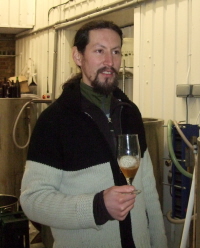
Evin O’Riordan of The Kernel brewery, photographed at the old Druid Street brewery in 2011.
In March 2012, the Kernel relocated with several of its neighbours to a run of arches further east at Spa Terminus, with the original kit given to Partizan. The original arch is now occupied by baker and patissier Comptoir Gourmand.
The Kernel’s new home at Arch 11 Dockley Road was equipped with a 32 hl brewhouse, and additional fermenters and a bottling line have since been installed, and in late 2014 the Kernel became the first to restore the practice of ageing in oak tuns to London brewing by buying several Belgian-style foeders. Production is currently around 10,000 hl a year.
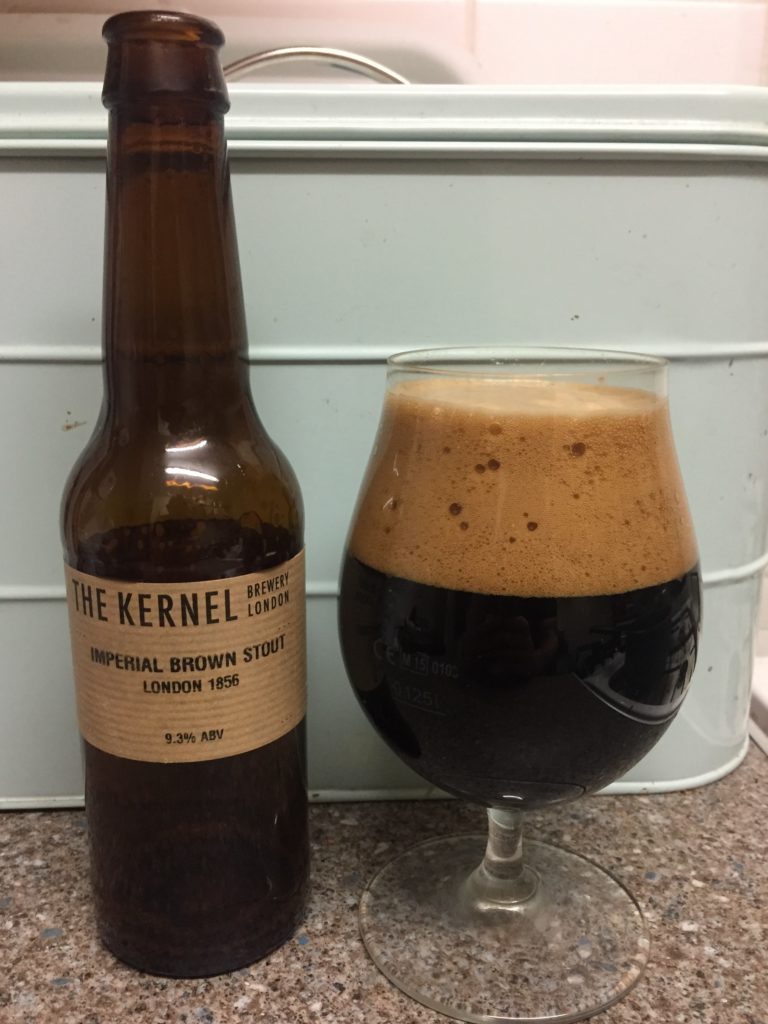
A London classic, Kernel Imperial Brown Stout London 1856
Following problems with overcrowding, the brewery closed its taproom in 2017 while retaining a takeaway shop, but in late 2019, in a much-welcomed move, it opened a new purpose-built taproom in Arch 7 a few doors away. Saturday morning bottle sales continued from Arch 11 for a while but in 2021 the bottle shop was relocated to the taproom: the brewery arch itself is no longer open to the public.
On 8 August 2024, the Kernel relocated its taproom and bottle shop round the corner to a retail unit on the ground floor of a new block of flats. This had long been the intention, to resolve the anomaly that the taproom provided a drink-in service while other businesses at Spa Terminus sold only provisions to take away.
Beers are keg and bottle conditioned, the latter in 330 ml, 500 ml and 750 ml sizes, with some cask. They are often variants on basic recipes, such as pale ales with changing single hop varieties and mixed fermentation saisons with various fruits. Cask was introduced at the taproom following the lockdowns in 2021 and is occasionally available at other outlets.
Cock Tavern Brewpub, brewing suspended 315 Mare Street E8 1EJ (Hackney) First sold beer: 24 July 2012 (as Howling Hops) Brewing suspended: by end 2019 (as Short Stack)
Howling Hops Tank bar Brewpub 9 Queens Yard E9 5EN (Tower Hamlets) howlinghops.co.uk First sold beer: June 2015
The Cock Tavern, a classic corner pub a few steps from the famous Empire music hall and Hackney’s ‘cultural quarter’, was reopened in 2012 by Pete Holt, owner of the Southampton Arms. The new venture included a 6.5 hl house brewery in the cellar, previously used by Camden Town at the Horseshoe pub in Hampstead. Named Howling Hops as a nod to blues musician Howlin’ Wolf, it brewed over 100 different beers in its first two years and was soon creating interest far beyond the pub under the supervision of brewer Tim O’Rourke.
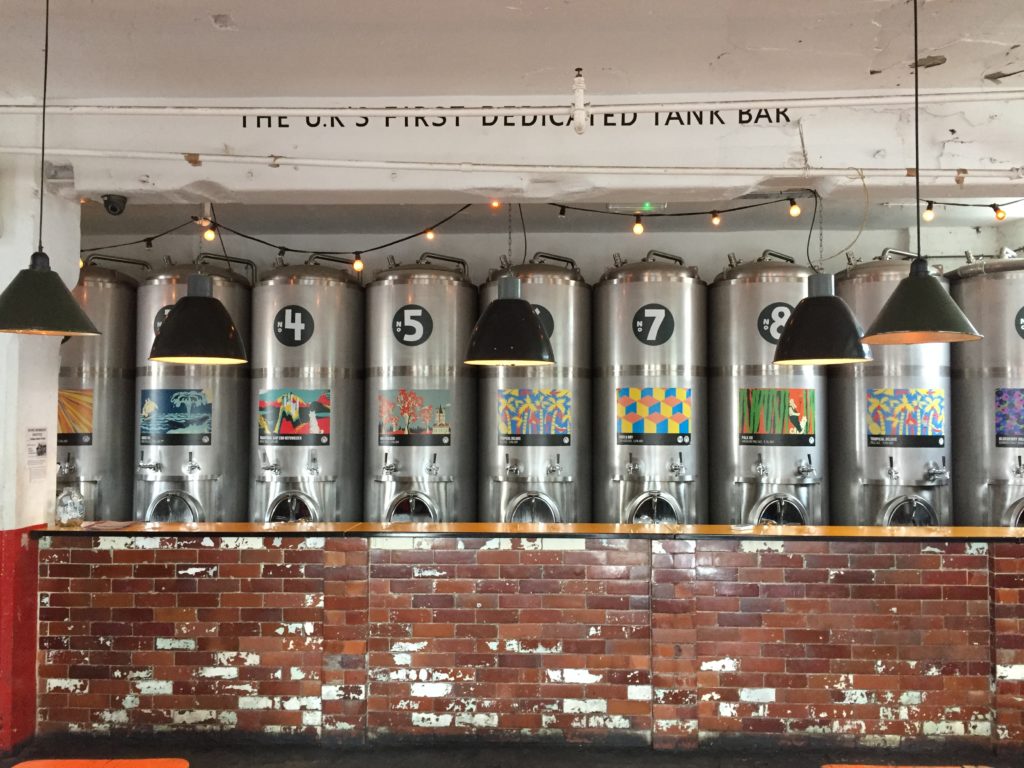
Tanks at Howling Hops Tank Bar, London E9
In June 2015, brewing operations relocated to a new brewpub in an upcycled warehouse at Hackney Wick billed as the UK’s first ‘tank bar’. Here, a much bigger 25 hl kit from Bavarian Brewing Technologies is used to fill a battery of 10 1,000 l conditioning tanks lined up behind the bar from which beer is poured directly.
The kit at the Cock remained in place, rented by the pub’s former assistant manager Ian Morton as the Maregade brewery. This moved out in November 2017 and subsequently closed. Early in 2018, Howling Hops renewed the brewing license at the Cock with the intention of reinstating brewing for specials, some of them served using a cut-down version of the tank system, under the name Short Stack. But thanks to the limited space in the cellar and demand at the Tank Bar, activity was intemittent and had lapsed by 2019.
Howling Hops beers are sold from tank at Hackney Wick, and in keg, can and sometimes cask outside it, both at other outlets in the group and elsewhere.
Brewery moved outside London, planned brewpub Unit 9, 35 White Hart Avenue SE28 0GU (Greenwich) First sold beer: August 2018 (as Hop Stuff) October 2018 (SALT Beer Factory at Shipley, West Yorkshire) Brewing suspended: April 2019 Brewing restarted: December 2019 Brewing suspended: March 2020 Brewing restarted: December 2021 (as SALT London) Ceased brewing in London: May 2023
Hop Stuff Brewery Original site: 7 Gunnery Terrace SE18 6SW (Greenwich) First sold beer: November 2013 (at original site)
London regained one of its larger craft brewers in December 2021 when West Yorkshire brewer SALT Beer Factory bought the former Hop Stuff brewery in Thamesmead and its associated bars in Woolwich and Deptford from multinational Molson Coors. By early December the bars had already been rebranded and test brews and flavour matching had commenced, with commercial brewing restarted by March 2022.
SALT is a contemporary craft-slanted offshoot of Ossett Brewery. This began behind a pub in Ossett, West Yorkshire, in 1998 before expanding to a much more substantial facility in a nearby industrial unit in June 2005. The original SALT Beer Factory opened in 2018 as a ‘craft’-focused brewpub in one of the historic buildings on the World Heritage Site at Saltaire near Bradford, and quickly established a good reputation. It was looking to expand its business in London and the south of England, so the Hop Stuff deal seemed a good fit.
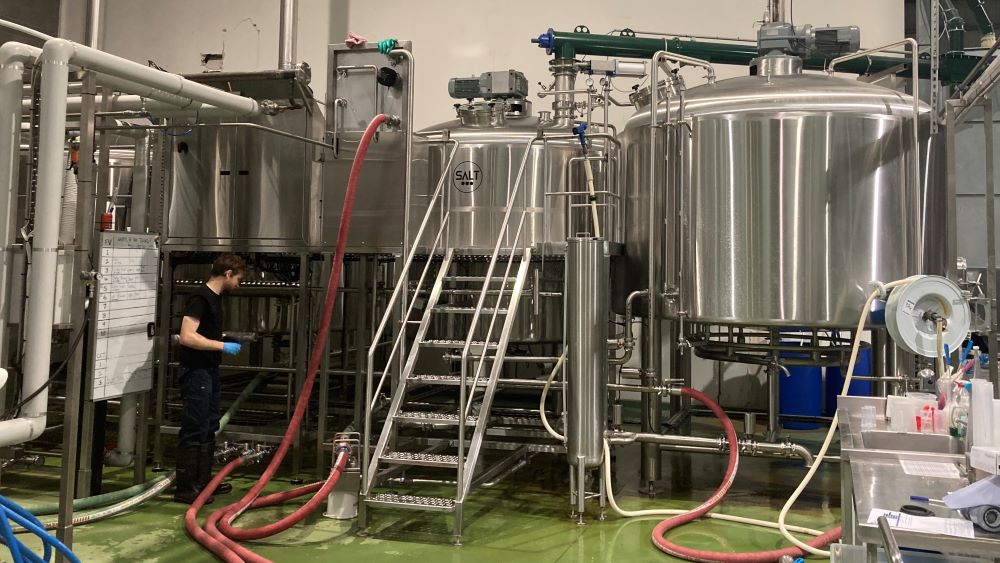
SALT continued to brew on its original site but planned to transfer production of its biggest-selling core brands, notably Jute Session IPA and Huckabuck NEIPA, to London. The five-vessel 70 hl brewhouse was designed to be steam-heated: the steam plant was never commissioned under Hop Stuff or Coors, with a temporary generator used instead, but was finally commissioned under SALT’s ownership.
The revival proved short-lived, as following a failure to agree a new lease on the property, brewing ceased in May 2023, with production once again concentrated in Yorkshire. SALT continues to operate the former Hop Stuff bars and there are long-term plans to revive London brewing on a small scale by converting one of them into a brewpub.
Brewhouse at SALT London.
Hop Stuff Brewery
Hop Stuff was created by ex-City worker James Yeomans, who learned to brew at Grainstore in Rutland, with his wife Emma. It grew largely through crowdfunding, with 71 investors securing the first facility, a 16 hl kit from Oban Ales, in a listed former warehouse on what was then the newly redeveloped Woolwich Arsenal complex.
An ad-hoc taproom at the brewery was succeeded in late 2015 by a bar on another part of the Arsenal site. Further crowdfunding in 2017 financed an ambitious upgrade to a much bigger site on former arsenal land near Belmarsh prison in West Thamesmead, increasing capacity to a potential 15,000 hl a year. Two more bars were added, in Deptford in December 2017 and outside London in Ashford, Kent in May 2018, with still more crowdfunding.
The business began to unravel in 2019, with production abruptly halted in April when staff were locked out by the landlord following problems with duty and rent payments. In July, James announced a pre-pack administration deal selling the business to US-Canadian group Molson Coors, owner of Carling and Sharp’s, which became the last of the major multinationals active in the UK to buy into a new London brewery – unfortunately with the loss of over £1.5 million to around 1,000 crowdfunding investors. James oversaw the transition but left before production restarted in December.
In the event, Coors managed 25 brews before the Covid-19 lockdowns struck in March 2020 and the brewery was mothballed. It was put on the market in August 2021 and subsequently bought by SALT as explained above. Coors retained the Hop Stuff brands with the possibility they could be brewed elsewhere, but they seem to have been quietly forgotten.
Brewery 8 Roman Way Industrial Estate, 149 Roman Way N7 8XH (Islington) hammertonbrewery.co.uk First sold beer: 30 April 2014
Former IT business analyst Lee Hammerton had already made plans to fill an obvious gap in the market by starting a brewery near his home in Islington when he discovered he was distantly related to a defunct London brewing dynasty which once owned a Hammerton brewery in Stockwell (below). The new Hammerton, which has doubled capacity since opening, occupies several units alongside rather than underneath the Overground at Caledonian Road and Barnsbury station, with a 25 hl brewhouse including components from Malrex and SSV.
The first head brewer was Sam Dickison, who went on to found Boxcar. He was succeeded by ex-Paulaner employee Daniel Fluess and, most recently, Charlotte Cook, formerly of Truman’s. As well as a taproom at the brewery, since April 2017 Hammerton has had its own pub closer to central Islington at Highbury, known as the House of Hammerton.
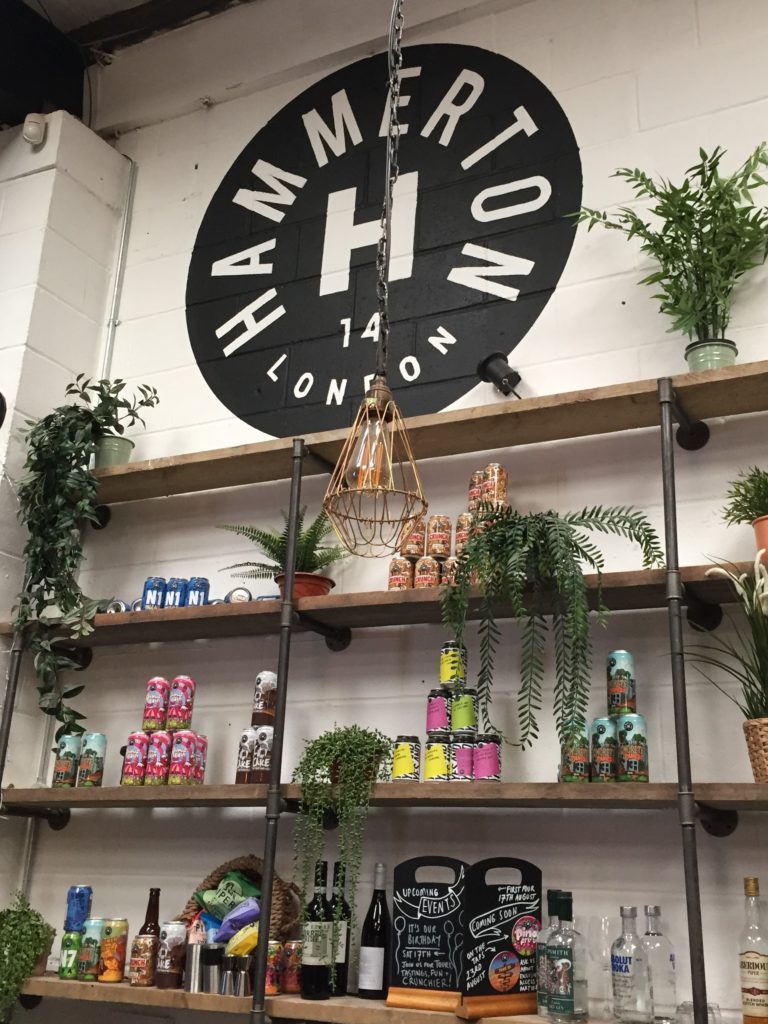
The bar at Hammerton’s taproom.
Beers are brewed for keg and can, with some in cask.
The Stockwell Brewery was founded in 1730, close to local springs (16 Stockwell Green SW9 9JF, Lambeth). It was run by Lee’s ancestor Charles Hammerton in the late 19th century and in 1938 became likely the first brewery in the world to put real oysters into stout. Watney bought it out in 1951, primarily for its lucrative off license chain rather than its pubs, which were sold on to Charrington. Brewing ceased, although the site remained in use as a bottling plant for a while before being redeveloped as housing. The brands eventually passed to Heineken, and Lee has now had the Dutch group’s claim to the trademark revoked on the grounds of non-use.
In July 2025, 40FT acquired the former Hackney Brewery site in Walthamstow, soon reopening the taproom and starting work on restoring brewing. Historical information about Hackney has been transferred to the 40FT page.
Brewery Unit 11, 160 Hamilton Road SE27 9SF (Lambeth) gipsyhillbrewing.com First sold beer: July 2014
Gipsy Hill was the creation of the three characters shown on the logo: founders Charlie Shaw (ex-Five Points), former City worker Sam McMeekin and head brewer Simon Wood, recruited from Dorset’s Piddle brewery. The first kit was a relatively generous 25 hl Malrex in a single unit on an industrial estate in Gipsy Hill. But production soon expanded with the addition of extra fermenters and warehousing.
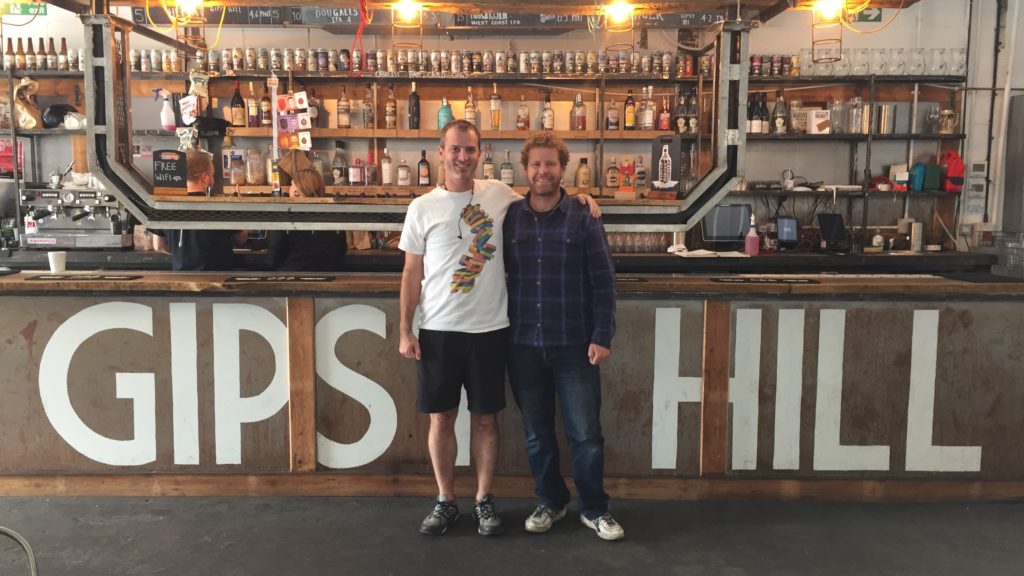
Charlie Shaw (left) and Sam McMeekin of Gipsy Hill.
A potential disaster in 2016 when the brewing floor began to collapse proved a turning point with investment in a new high-quality floor and an upgrade the following year to a 60 hl brewhouse with a pilot kit and a canning line. A dedicated taproom opened in 2018 across the yard from the brewery itself. By now the brewery had become one of London’s largest independents, occupying six neighbouring units and targeting an annual output of 24,000 hl.
The brewery’s pub the Douglas Fir, on the other side of Crystal Palace Park, opened as a popup in a former shop in 2016, soon becoming permanant. In April 2021, Gipsy Hill became London’s first employee-owned brewery, though as with many others in the industry it was now struggling with the fallout from the Covid-19 lockdowns.
On 30 October 2024, the brewery annouced it had entered a ‘strategic partnership’ with brewing group Sunrise Alliance, without which it ‘would almost certainly be looking at administration’. The company promised that the brewery will continue to function as before, on the same site, with co-founders Sam and Charlie still in charge.
The new owner originated in 2006 as St Peter’s brewery near Bungay, and began expanding in 2023 with the acquisition of Curious Brew in Ashford, Kent, which already owned the Wild Beer brand. A few weeks before the Gipsy Hill deal, Sunrise bought another London brewer, Portobello, and during 2025 some Gipsy Hill brands were brewed there.
The Douglas Fir closed in February 2025 but reopened again in April, once again as a ‘popup’, though it’s still open at the time of writing.
Sam moved on in October 2025, soon after the announcement that most of the brewing would be shifted out of London to Curious to avoid an ‘eye-watering’ rent increase. The company plans to give up much of its space in Gipsy Hill once beers have been satisfactorily matched in Ashford, though will retain its taproom, and there’s a hope that at least some brewing will continue on a small scale in London.
Beers are in keg and can, with some hand bottling for barrel-aged specials and occasional one-off casks.