Promoting an international beer culture that recognises and celebrates beers of quality, distinctiveness and local character, brewed with care and passion.
Etiam pulvinar consectetur dolor sed malesuada. Ut convallis
euismod dolor nec pretium. Nunc ut tristique massa.
Nam sodales mi vitae dolor ullamcorper et vulputate enim accumsan.
Morbi orci magna, tincidunt vitae molestie nec, molestie at mi. Nulla nulla lorem,
suscipit in posuere in, interdum non magna.
Brewery, taproom Original site (as London Fields): 374 Helmsley Place E8 3SB (Hackney) Current site: 4 Warburton Road E8 3RR (Hackney) saintmondaybrewery.uk First sold beer: 26 August 2011 (as London Fields at original site) Brewing suspended: March 2015 Brewing restarted: September 2019 Brewing suspended again: 8 December 2021 Brewing restarted again (as Saint Monday): August 2023
Saint Monday is the brewing arm of beer-friendly London pub and bar group Grace Land, which bought the former London Fields brewery in Hackney, founded in 2011, from owners Carlsberg in May 2023, selling the first beers under the new brand through its outlets from early August and reopening the taproom on 12 August. The head brewer is Mark Walewski, formerly at Signature and Mikkeller among others.
Grace Land is an offshoot of the Barworks group, founded in 1997 by Andreas Akerlund, Marc Francis-Baum and Patrik Franzenand, with a single venue, Soho cocktail bar Two Floors, opening in 1998 (since closed). Many more venues followed, with a growing interest in speciality beer, and in 2009 the group supported the expansion of Camden Town Brewery from its brewpub roots, with the venues providing key early outlets for its beer. The company’s direct interest in Camden Town ceased when the brewery was sold to AB InBev in 2015, but several of the venues continued to stock the beers.
That same year, Andreas set up Grace Land as a separate group in partnership with Anselm Chatwin, with a particular focus on venues specialising in craft beer. This eventually became independent of the parent group. The company briefly experimented with brewing in 2013-2014, installing the Earls Brewery in the cellar of its Islington pub the Earl of Essex, but this was discontinued following the departure of the brewer and problems with infections and cellar space.
Following the lockdowns, the majority of Barworks venues, apart from a handful largely focused on spirits and cocktails, were sold to Urban Pubs and Bars, with a consequent reduction in the beer range. But Grace Land continued as before with a firm focus on beer, so its move into brewing is particularly appropriate.
The original London Fields premises in Helmsley Place are also now leased by Saint Monday, but are used as a warehouse rather than an events venue.
A wide range of beers is sold from tank and keg at the taproom and from keg at Grace Land’s six other outlets. Canning may follow in 2024.
London Fields Brewery
The first new London brewery to be opened following publication of the first edition of London’s Best Beer in 2011, London Fields, around the corner from the historic open space of the same name, heralded a brewing renaissance in East London in general and Hackney in particular. The original site was in railway arches in Helmsley Place, with a small 4 hl kit, expanded to a bigger arch at the present address a few doors away in April 2012, with a 16 hl kit from the former Ventnor brewery on the Isle of Wight.
There was much speculation about the brewery’s future at the end of 2014 following publicity around founder Jules Whiteway, a convicted drug dealer overdue in repaying his criminal profits to the taxpayer, who was arrested again in December for alleged VAT avoidance, though later acquitted. By March 2015 the brewing kit had been sold and many of the staff made redundant, but the taproom seemed as busy as ever, selling own-branded beers now contract-brewed outside London, mainly at Tom Wood Beers in Lincolnshire.
When Copenhagen-based Carlsberg became the latest multinational to buy into the London ‘craft’ scene in July 2017 by acquiring London Fields in a joint venture with Brooklyn Brewery of New York City, some beer commentators were unconvinced it could turn around the brand’s reputation. But around £2.1 million of investment, alongside expert advice and support from Brooklyn staff, suggested a more promising future.
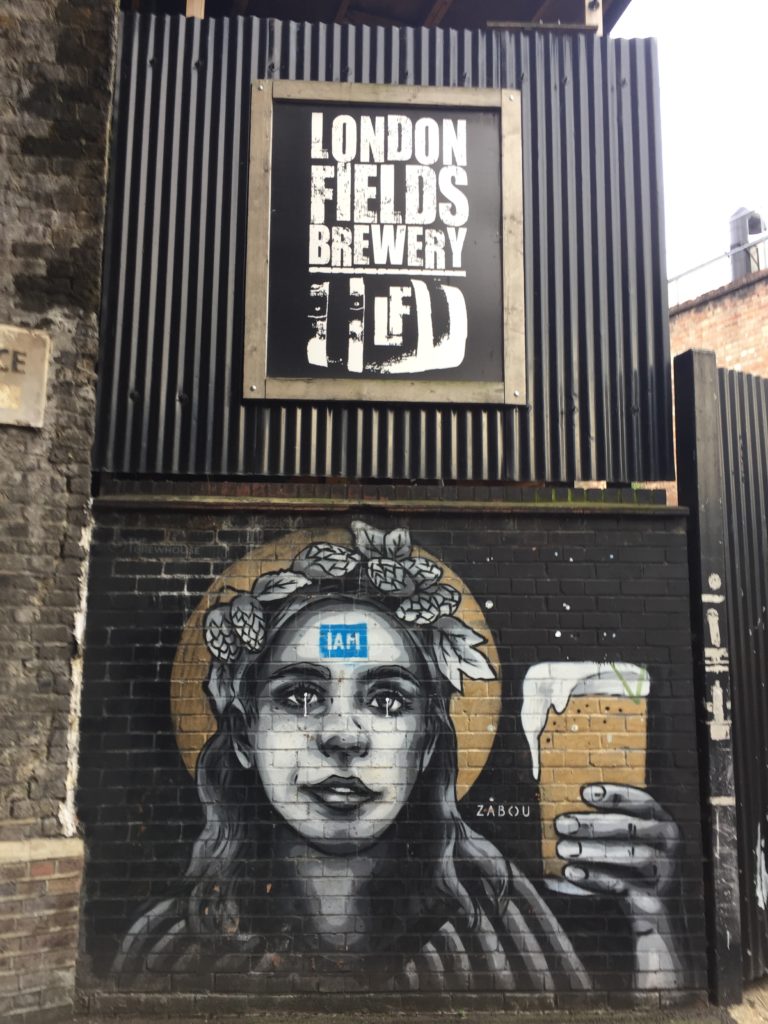
London Fields Brewery graffiti art, with old logo still in place.
Brewing of the core brands initially returned to London with the help of Truman’s (now Big Penny), and following an eight-month closure, the taproom reopened in September 2019 when the new owner delivered on its promise of restoring brewing to the site. Though the core brands continued to be outsourced to Truman’s, a new 15 hl automated German-built Kaspar Schultz two-vessel kit began producing specials and short runs.
With a higher spec than most London breweries of this size, the facility boasted steam heating, its own grist mill, a dedicated souring tank and a small canning line. The generously-sized taproom was refurbished and decorated with a 12 m mural by local artist Luke McLean, also responsible for the packaging design, while the original arches in Helmsley Place remained as an events space.
Production of the core brands had moved out of London again by mid-2020 as Truman’s was forced to relocate to a new site with reduced capacity. The contract shifted to Cameron’s in Hartlepool, northeast England, while in-house brewing continued largely for sale on-site, including various low alcohol options. Then the parent company restructured in November with the formation of the Carlsberg Marston’s Brewing Company (CMBC).
On 8 December 2021, CMBC unexpectedly announced that it was closing the brewery and taproom with immediate effect and putting them up for sale, along with the brands, and beginning a consultation with staff, all of whom were now under threat of redundancy. Contract brewing at Camerons would continue until the sale was complete. This was the second example in London of a multinational brewer buying and then shedding a ‘craft’ brewery, following Molson Coors’ sale of Hop Stuff earlier in the year.
According to CMBC CEO Paul Davies, the company had concluded that growing the brand sufficiently would require resources better allocated elsewhere. Following the announcement, there was much speculation on social media that sales had been disappointing because the brand was still toxified by its chequered past. But while the history seems important to those on the beer scene who know about it, I doubt it made much difference to the wider drinking public, who seemed happy to flock to the taproom even in the last days of the old regime. More likely the sale was the result of Carlsberg’s priorities shifting in response to more dramatic changes, such as the impact of Covid-19 and the incorporation of Marston’s brewing operations, which must have seemed much more significant internally.
The facility remained mothballed until May 2023 when, in a promising development, it was bought and revived by Grace Land, as described above. The new owner decided to break decisively with the past by creating a new Saint Monday brand. It’s not clear if CMBC have retained any interest in the former London Fields brands but they appear to have dropped from circulation, with a beer previously brewed for renowned Indian restaurant Dishoom now produced at Mondo.
Breweries Nano brews and tap: 41 Nursery Road SW9 8BP (Lambeth) Production brewery: 283 Belinda Road SW9 7DT (Lambeth) londonbeerlab.com First sold beer: December 2013 (Nano brews), February 2015 (production brewery)
This interesting combination of a brewing school, production brewery and taproom is the brainchild of French-born Bruno Alajouanine and Irishman Karl Durand O’Connor, who met playing football when they both had jobs in the City. It opened in 2013 primarily as a teaching facility in an arch tucked away behind Brixton town centre on Nursery Road, with an assortment of small homebrew kits such as 20 l Braumeisters. The owners also brewed for sale from an on-site shop and a few local outlets, an arrangement that initially confused HMRC.
Early in 2015, London Beer Lab launched a partnership with Clarkshaws, whose 8 hl kit was moved to an arch on the other side of Brixton at Belinda Road, close to Loughborough Junction. The idea was to open a shared brewery complete with taproom and shop known as the Beer Hive, used by both partners and available to other brewers too. Sadly, this didn’t work out and in 2017, Clarkshaws sold its kit and downsized to its present location around the corner.
London Beer Lab continues to operate at both sites, using Belinda Road as a production facility currently closed to the public, with a new 24 hl brewhouse from Oban Ales which also hosts occasional cuckoos, and a 5 hl pilot kit added in 2021. The original site at Nursery Road continues to offer brewing tuition on an upstairs mezzanine, with various 20 l homebrew kits and a 2 hl pilot kit for specials and experiments. Downstairs is a taproom and bottle shop also selling brewing supplies.
In August 2019, the brewery partnered with restaurant the Tapas Room to launch a beer and tapas matching outlet, Taps and Tapas, in Tooting. This struggled during the 2020-21 Covid-19 lockdowns and closed in August 2021.
Draught beers are in keg and can, with occasional cask and bottles. Specials brewed at the Nursery Road site are usually identified as ‘nano’ on lists and packaging. Various cuckoo brews and commissioned beers are also produced.
Brewery Original site: Fox Hill SE19 2XE (Croydon) Current site: Rookery Barn, 40 Streatham Common South Road SW16 3BX (Lambeth) theinkspotbrewery.com First sold beer: 25 February 2012
Ex-Army officer Tom Talbot and restaurateur and art dealer Bradley Ridge began working together on a beer endorsed by charity Help for Heroes cuckoo-brewed at Tunnel in Nuneaton. They subsequently brewed on a pilot kit in Norwood too, selling at a small scale through Bradley’s Streatham restaurant Perfect Blend, while looking for a more expansive home.
A site in Beckenham fell through when they discovered a 1920s covenant blocked alcohol production, but their luck changed when the head gardener at the Rookery on Streatham Common approached them to brew with hops grown by a local collective and alerted them to a vacant building. It’s taken a lot of work since, including 350 m of new power line, but Inkspot now has one of the most idyllic sites of any London brewery, in a barn right next to one of the capital’s most beautiful public gardens.
A 12 hl brewhouse bought new from Willis European has been in action since December 2018, with waste hops used on site as fertiliser and botanicals from the herb garden or honey from the apiary occasionally added to the beers. There’s an ambition to become the second brewery in London with its own well (after Enfield), digging 115 m into the underlying chalk to tap the water source discovered in 1659 that fed the famous Streatham Wells spa until the early 20th century. The name, recalling Tom’s past career, references a military strategy for occupying a hostile region by establishing several separate safe areas that are then enlarged until they overlap.
Bradley Ridge (left) and Tom Talbot of Inkspot.
Beers are in keg and canned using a mobile line. A taproom is open on site at least monthly, and the brewery also owns a chain of specialist bottle shop-bars, Art & Craft (artandcraft.london).
Founded by Hannah Rhodes, formerly at Meantime, Hiver specialises in honey beers, made partly with London honey but brewed at Hepworth in West Sussex. An office and warehouse on the Bermondsey ‘mile’ near the Maltby Street Ropewalk doubles as a weekend bar.
In 2020, the company added a honey-free range under the name Fabal. Building on the popularity of Fabal Lager, in August 2024 it opened a second venue in a Bermondsey arch, the Fabal Beer Hall.
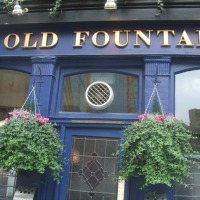
Brewpub, brewing currently suspended 3 Baldwin Street EC1V 9NU (Islington) oldfountain.co.uk First sold beer: July 2016 Brewing suspended: November 2019
This former Whitbread pub has been in the Durrant family since 1964 and has been a free house since 2002. In mid-2017, a small in-house brewery was added: a 50 l Braumeister kit in the cellar, operated by staff member Geoff Saulini.
Brewing had already dwindled before the 2020-21 Covid-19 lockdowns and Geoff has since moved on. The kit remains in place and there’s a long-term aspiration to revive its use, though this is unlikely to happen in the near future.
Own-badged lagers have since been sold in the pub but these are brewed elsewhere.
Beer was nearly all sold on cask through the pub, though with availability varying due to limited quantities.
Brewery 1A Elizabeth Industrial Estate, Juno Way SE14 5RW (Lewisham) forestroadbrewery.com First sold beer: October 2021
The outspoken Pete Brown (not to be confused with the like-named beer writer), originally from Massachusetts, began homebrewing when living in New York City. Moving to the UK, he worked at Siren and Camden Town, and first sold his own beer, brewed at Van Eecke (Leroy) in West Flanders, Belgium, early in 2016. It was named after Forest Road in Hackney where Pete was living at the time.
A London taproom opened the following year at Hackney’s Netil Market, and production shifted to Camerons in Hartlepool.
Pete always had an ambition for his own brewery, although the path to achieving this proved unexpectedly tortuous. Three potential sites fell through, the last when a second-hand brewhouse bought from Russian River in Santa Rosa, California, was already on the ship through the Panama Canal. Lockdown then struck and the build on the current site was beset by flooring and utilities problems and a distributor going into administration.
Thanks in part to investment from a friendly diner owner back home, the 60 hl brewhouse was finally commissioned in September 2021, joined by a kegging line from Austrian brewery Schloss Eggenberg. Head brewer is James Garstang, formerly at Camden Town, Partizan, the Kernel and White Rhino in India.
The building, just off the southern end of the Bermondsey ‘mile’, is part of a complex built in 1901 for the Mazawattee Tea Company, sited to take advantage of the Grand Surrey Canal which until the 1960s flowed along what’s now Surrey Canal Road. Several relics are on display, including the bricks of the back bar which were recycled from masonry found on site.
The Netil Market outlet has been retained alongside a taproom at the brewery itself. A pub in Westbourne Park, the Quiet Night Inn, was added in November 2022.
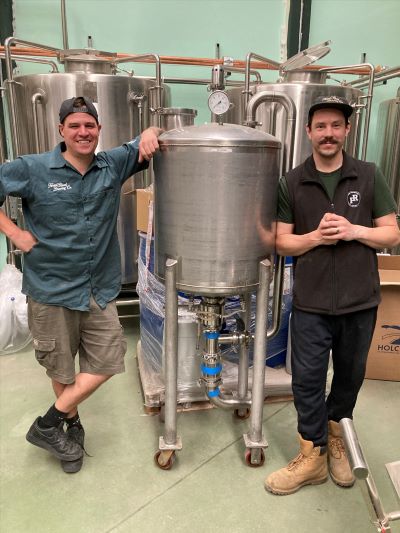
Pete Brown (left) and James Garstang of Forest Road with a hop cannon once used at Russian River to make the legendary Pliny the Elder.
In March 2025, the taproom at the brewery itself stopped opening on a regular basis, though remained available for private hire. In June, in response to unpaid taxes, HMRC filed a winding up petition; in August, the company entered a prepack administration, bought out by new owner Posh & Co, though with Pete Brown still the main shareholder, with brewing continuing for now.
The lease on the Quiet Night Inn wasn’t included in the deal and it had closed by the end of July.
Beers are in keg, bottle and can, with occasional cask.
Closed brewery 17A Eley Road N18 3BB (Enfield) enefeld.com First sold beer: June 2015 Ceased brewing: February 2022
This Lea Valley outfit was the only contemporary London brewery to source water from its own well. It was founded by Rahul Mulchandani on a site adjacent to his family’s cash and carry warehouse just off the North Circular Road in Edmonton as an ambitious operation with a high-spec 32 hl brewhouse from DME in Canada, a parade of cylindro-conical fermenters and a sophisticated bottling line inside a large warehouse with plenty of spare floorspace.
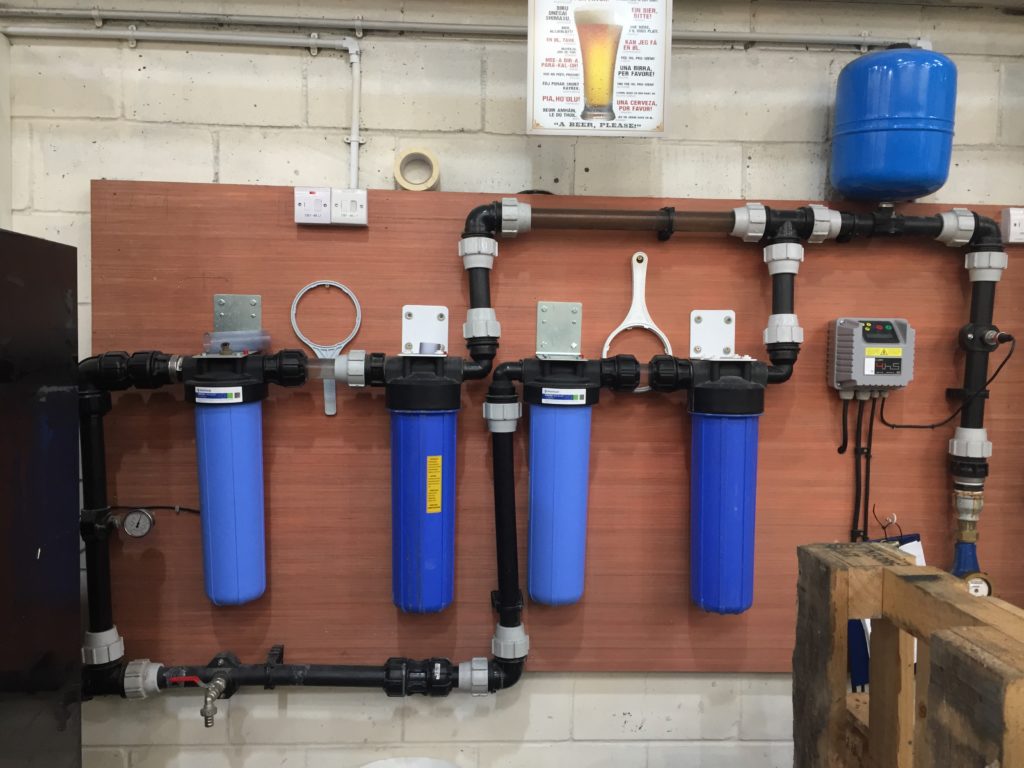
A 55 m water borehole tapped the same aquifer as the Coca-Cola bottling plant next door. The water was lightly filtered to remove larger chalk particles and treated with ultra-violet light as a precaution against bugs. Its mineral content is tweaked for certain styles, but as you’d expect from chalky London water, it turned out to be perfect for making porter without any further treatment.
The water inlet at Enefeld, currently London’s only brewery using liquor from its own well.
The first head brewer was Stuart Robson, founder of Shongweni, one of South Africa’s first craft breweries. When he left early in 2018, Rahul recruited brewing legend Don Burgess, who founded the Freeminer brewery in the Forest of Dean, Gloucestershire, in 1993. This was one of the most important small breweries of its time and among the first to break into supermarkets, surviving into 2016.
In response to the challenges of the 2020 Covid-19 lockdowns, Enfield switched largely to contract brewing on behalf of others, though it continued to produce small quantities of its own brands. Originally it planned to relaunch these in 2022, but by February brewing had ceased and the equipment was up for sale.
The brewery’s beers were branded Enefeld, using the spelling of the town name as it appeared in the Domesday survey of 1086. Beers were initially bottled but later supplied in cask and ecokeg too. Following Don’s recruitment, the output included revivals of some of the Freeminer brands.
Brewery Original site: 227 Whittington Road N22 8YW (Enfield) Current site: 5 Littleline House, 43 West Road N17 0RE (Haringey) bohembrewery.com First sold beer: June 2016 (at original site)
One of the most unusual and remarkable new breweries in London and indeed the UK, Bohem focuses on serious craft lagers in the Czech tradition, with just enough of a modern twist. Co-founder Petr Skoček, originally from Plzeň, began homebrewing when he moved here from Prague and found the local lagers expensive and disappointing. In 2015 he teamed up with a fellow expat enthusiast, businessman Zdeněk Kudr, to establish Bohem in Bounds Green, working on a small scale with a tiny 160 l kit, which meant brewing four times daily to fill one fermenter. The pair began selling their beers in 2016 and soon found demand outstripping capacity.
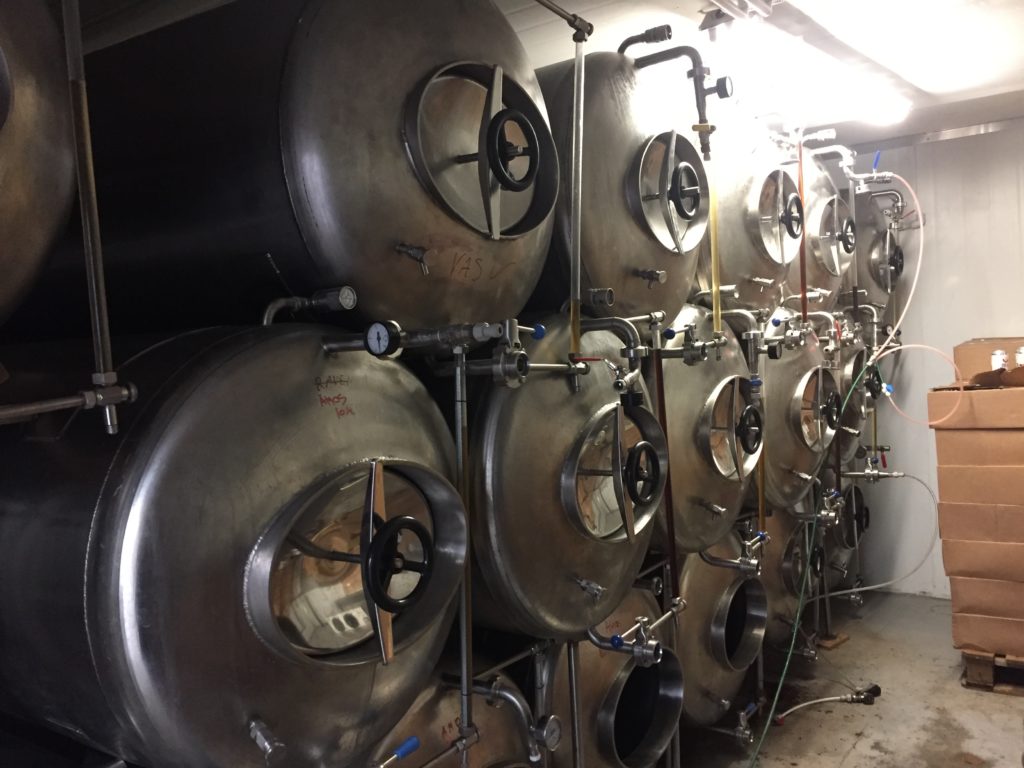
Lagering tanks at Bohem
Since April 2018, beers have been produced at the current address in a Tottenham industrial estate close to One Mile End and Redemption, using an ingeniously-designed 10 hl two-vessel brewhouse from Czech supplier Mini Brewery KS. Unlike typical British kits, this is capable of traditional Czech ‘decoction mashing’ which, in conjunction with key ingredients imported from the Czech Republic and Germany, helps achieve a suitably authentic result.
Bohem boasts several other items of equipment rare in a British brewery of this size, including a grist mill, necessary for grinding malt to the optimum size for the mashing system, and 17 750 l and 1,000 l cylindrical lagering tanks where the beer is stored at low temperature for a minimum of five weeks after primary fermentation before it’s packaged and shipped. Assistant brewer Matěj Křížek, formerly at Břevnov monastery brewery in Prague, has strengthened the team since the move.
There’s an offsite taproom close to the original Bounds Green site and the brewery itself offers a simple but welcoming taproom on Tottenham Hotspur match days. Since early 2020, Zdeněk has managed the historic Bohemia House in West Hampstead, formerly the Czechoslovak National House, founded as a club for Czech and Slovak expatriates following World War II: this now stocks Bohem beers alongside familiar Czech brands. In July 2024 the brewery took over a proper pub, the Nicholas Nickleby in Stroud Green.
Beers are packaged unfiltered and unpasteurised in keg only. Some beer formerly went into cans but these have been discontinued following concerns about quality and freshness.
Though a few early brews in 2014 were on a pilot kit under the name Bear Hug, this trio of friends based in Peckham reconciled themselves to hobo brewer status after a fruitless search for sites. The name was changed to Big Hug in May 2015. Beers are from a variety of facilities including Brewhouse & Kitchen, Gadds in Ramsgate and the Great Yorkshire Brewery. It’s a keen supporter of homeless charities.
Beatnikz Republic, previous reported as working at UBREW in 2015 with an ambition to open its own facility in London, instead moved to Manchester, where it’s been located since early 2017. beatnikzrepublic.com
Honest Brew, a London-based online retailer and subscription case service, evolved from a cuckoo brewing project working at Late Knights (see Southey), Signature and outside London in Durham from September 2013. The company continues to commission special beers from its suppliers but I’m no longer counting it as a separate cuckoo brewer. honestbrew.co.uk.
Lost Brewing was a company behind a cluster of bars in southwest London such as the Lost Bar and Powder Keg Diplomacy, commissioning own label beers from breweries in Belgium and the UK since 2011 and brewing. From 2013 it cuckoo-brewed in London at the Florence and Tap East, with an ambition to add its own facility, but this was never realised, with the bars changing hands and becoming less beer-aware by September 2017.