A sample text widget
Etiam pulvinar consectetur dolor sed malesuada. Ut convallis
euismod dolor nec pretium. Nunc ut tristique massa.
Nam sodales mi vitae dolor ullamcorper et vulputate enim accumsan.
Morbi orci magna, tincidunt vitae molestie nec, molestie at mi. Nulla nulla lorem,
suscipit in posuere in, interdum non magna.
|
Originally published in What’s Brewing July 2003
Origin: Horsham, Sussex, England
ABV: 4.2 per cent
Buy from supermarkets
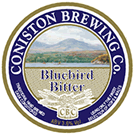 Coniston Bluebird Bitter When the directors of Brakspear cashed in their prime piece of Thames-side, not only their own brands were affected. Among the homeless were a number of contract brews, including supermarket-listed Coniston Bluebird, originally an award-winning cask beer from the tiny micro at the Black Bull pub at Coniston in the Lake District which in bottled form had moved south when demand outstripped capacity.
At a time when a recognised geographical origin and a distinctively local character are increasingly seen as the key to sustaining the market in fine traditional produce, contract brewing rings alarm bells. This is especially true when, like Bluebird, the product flaunts its local credentials: the name commemorates the craft in which Donald Campbell met his death while attempting the world speed record on Coniston Water, and the label calls the Black Bull “the home of Coniston Bluebird”.
The actual brewery of origin was acknowledged in the small print of the Brakspear version, but though the beer has now moved to Hepworths at Horsham, recent bottles still carry an Oxfordshire address. This turns out to be the business base of former Brakspear brewer Peter Scholey, who took the contract with him upon the Henley brewer’s demise.
Bottled Bluebird is still a slightly stronger version of the draught variety, made with Maris Otter pale malt, about 5% crystal, and Challenger as a single varietal hop. The result is a rich coppery-golden beer with a white head, a nicely even condition and a notably hoppy aroma: resinous and slightly sweaty at first, developing spicy and flowery honeysuckle and geranium notes later.
The crisp cereal-malt palate has drying hops evident from the first sip, with more floweriness and a slightly salty tang. The hops become more pronounced in a peppery swallow, developing over a complex finish which is always firmly hoppy but never overbearing, with cedar, grapefruit, ashy hints and a persistent but rounded bitterness.
Scholey has worked hard to match the Brakspear version, and the beer’s creator, Coniston’s Ian Bradley, says he can’t tell the difference. Based on my notes of its predecessor, I’d say the Horsham beer may be slightly heavier and less strikingly flowery, though with a longer finish.
Overall this is a refreshing ale that exhibits an American-style flair for hop character balanced by a very British idea of a rounded bitter, and I’m relieved that such an enjoyable beer is still on the shelves. Let’s hope the misleading labelling will be corrected: a beer this good doesn’t need to pretend.
Try also Butts Barbus Barbus, RCH Pitchfork, Anderson Valley Poleeko Gold (USA), Jopen Haarlems Hoppenbier (Netherlands)
Read more on ratebeer.com: http://www.ratebeer.com/beer/coniston-bluebird-bitter-bottle/5493/
Originally published in What’s Brewing June 2004
Origin: Saint Sylvestre Cappel, Nord, France
ABV: 8 per cent
Buy from Specialist shops, beer festivals
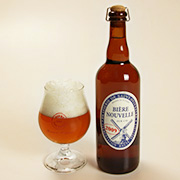 Saint-Sylvestre Bière Nouvelle The low-lying countryside of northern France is dotted with farmhouse breweries. Much of this area was formerly Flanders: Dutch personal and place names are everywhere and the language itself persists in places. But the local beer styles are distinct from those of neighbouring Belgium.
The village of Saint Sylvestre Cappel (St Sylvester’s Chapel) between Steenvoorde and Hazebrouck boasts around 1,100 inhabitants and one of the finest breweries in the region, simply named Brasserie de Saint-Sylvestre. Though ownership records date only from 1850, there was a brewery here since before the Revolution. It was sold in 1920 to the Ricour family who still own it today.
The brewery offers the characteristic local speciality, bière de garde, a strong pale ale style developed in the mid-19th century to quench the thirst of local miners and farm workers. Before modern refrigeration techniques became widely available, brewing good pale beer in summer was impossible, so these were “beers for keeping” to drink in the summer season.
Saint-Sylvestre’s flagship beer, Trois Monts, is named after the three modest hills that surround the village and once staked out the range of the brewery’s dray. This beer is now pasteurised and available all year round, but in 1985 the Ricours revived the seasonal tradition with a speciality brewed in December for release in May.
Borrowing from wine terminology, this beer is labelled “Bière nouvelle sur lie”, new beer on its lees, for the local market; export bottles bear the name Bière de Mars, March beer. The most recent harvest of pale and Munich malts, wheat and local hops are used. After its initial conditioning the beer is filtered and placed with yeast and sugar primings in thick brown 75cl bottles, their corks held in place with metal clips.
Bière nouvelle comes out an attractive ruby-tinged amber colour with a fine soft foam head. The restrained hops and malt aroma yields a little spice and creamy yeast, leading to a very full malty palate with a moussey texture and a firm nuttiness characteristic of the best bières de garde.
It’s slightly tannic on the swallow with the faintly sour signature of a stored beer, leading to a warming, nicely malty finish with more nuttiness and apple and pineapple fruit and, eventually, quite bitter hops. Overall this is a big, full-bodied and rather stern beer that takes its tradition seriously, very rewarding of a contemplative sip.
Try also: Trois Monts, Castelain Ch’ti Ambrée, Jeanne d’Arc Grain d’Orge, Vapeur Saison de Pipaix (Belgium)
Read more at ratebeer.com: http://www.ratebeer.com/beer/st-sylvestre-biere-nouvelle/7326/
Originally published in What’s Brewing May 2004. Note since publication the brewery has been taken over and closed by Fuller’s.
Origin: Horndean, Hampshire, England
ABV: 4.8 per cent
Buy from Specialist stockists, brewery’s pubs
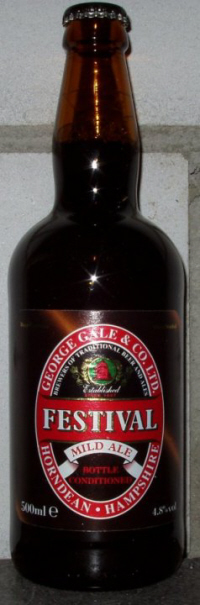 George Gale Festival Mild Bottle-conditioned mild must be one of Britain’s rarest styles, perhaps because the low strength of most modern milds isn’t thought robust enough. Even milds at more old-fashioned gravities are hard to find.
World classic Sarah Hughes Dark Ruby from the celebrated Beacon brewpub in Sedgeley is currently unavailable in bottled form while the brewer looks for a new bottler. B&T of Shefford are reviving last year’s successful seasonal, Black Dragon Mild, but hadn’t got any bottled in time for a review. Thankfully George Gale, a family-owned independent dating from 1847 and still operating from an 1869 “tower” brewery, was able to help this column mark Mild Month.
Gales are well-known for strong, long-maturing BCAs such as Prize Old Ale and for their well-regarded draught special bitter HSB. Festival Mild is so named because it first appeared in cask form by special request at the Farnham Beer Festival in May 1991.
It was successful enough to retain as a regular brand: although it is still the lowest-selling of the brewery’s draught range, its stability during conditioning makes it viable at low volumes. It’s won multiple awards, most recently best in class and reserve champion at the Winter Beer Festival.
It’s brewed with Maris Otter pale malt, with light crystal and black malt supplied by Simpsons, and hopped with Fuggles, Challenger and Goldings, the latter for aroma as well as bitterness. With enough residual gravity left from conditioning, no priming is used for the bottled version, which was originally aimed at the US market and is presented with a wine-style ‘capsule’.
The beer is a very dark brown colour, near black, and my well-matured bottle poured with almost no head, although there was a pleasantly restrained sparkle in the mouth. The aroma is typical of a good dark mild: restrained and warmly malty, with hints of chocolate, strawberry and straw-like.
The palate is smooth, dark and sweetish, almost like chocolate milk, with lightly acidic black cherry and raisin fruit and some spicy hoppiness that becomes clearly bitter as it develops.
Earthier hops asserts itself on the swallow, leaving a sting of bitterness and powdery dryness in the longish finish that places the beer among the less mild milds, although it’s never overdone. You’re also left with faint roasty-ashy notes and a little more soft fruit.
Overall it’s just what you’d want from a good mild: easily drinkable but with plenty of rich flavour to discover should you choose to linger, and an individual signature from well-judged hopping.
Read more at ratebeer.com: http://www.ratebeer.com/beer/gales-festival-mild/4331/
Originally published in What’s Brewing April 2003
Origin: Woodbastwick, Norfolk, England
ABV: 7 per cent
Buy from Specialist stockists, direct from the brewery (tel 01603 722218, www.woodfordes.co.uk)
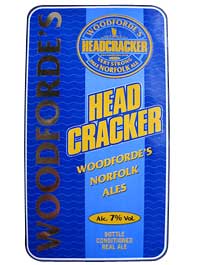 Woodfordes Headcracker East Anglia provides rich pickings for lovers of good speciality ales: the current Good Beer Guide lists 15 independent brewers in Suffolk and 11 in Norfolk, including a good number of award-winning names. Among these is Woodforde’s, perhaps best known for Wherry Best Bitter, a former Champion Beer of Britain, though in fact its most honoured beer is Headcracker, which in draught form recently won Champion Draught Barley Wine of Britain for the third time.
Wherry was Woodforde’s inaugural beer when the brewery was founded in 1981 at Drayton near Norwich by former homebrewers, who named it after an 18th century beer-loving Norfolk vicar. Since 1989 it’s been based at Woodbastwick, northeast of Norwich, on a site with its own water supply from a borehole. This pretty village in the Broads is much-visited by tourists, a market served by the brewery’s shop and visitor centre – and a range of its ales in bottle-conditioned form to take home. It also boasts three tied pubs.
Those familiar with Wherry won’t be surprised by the brewery’s take on a barley wine: Headcracker is also light in colour and notably hoppy for its style. The grist is almost entirely pale malt – Norfolk Maris Otter from Simpsons at nearby Tivetshall – with just a little caramalt. The result is an attractive golden colour, notably effervescent, and pours with a loose, foamy head. The heady aroma is instantly striking: full of peachy sherbet fruit and pungent spice, with the whiff of deeper, more earthy resins from Styrian Goldings hops.
The palate is tongue-tingling and slightly astringent, with a bitter-herbal, tea-tree oil-like character over an underlying slightly sweet malty body, and something of the vinous character appropriate to its style. Held in the mouth the beer becomes very warming, almost hot, while swallowing yields more hops and sherbety fruit salad. A deep, well-rounded resinous bitterness then slowly develops in the back of the mouth with a slight drying of the tongue and hints of sweetish nuttiness.
The name, with its encouragement to ABV-fixated headbanging, does the beer a disservice – though forward and uncompromising, this is overall a very elegant beer, inviting slow sipping with its refined malt palate, obvious alcohol and complex and distinctive but never aggressive hop flavours. And although officially given only six months of shelf life, it could also be laid down for much longer: I’d be interested to taste how it mellows with age.
Try also: Bush 7% (Belgium), Cottage Norman’s Conquest, Hogs Back A over T, Tegernsee Heller Bock (Germany)
Read more on ratebeer.com: http://www.ratebeer.com/beer/woodfordes-headcracker/18392/
Originally published in What’s Brewing March 2003
Origin: Amsterdam, North Holland, Netherlands
ABV: 6.5 and 8 per cent
Buy from Specialist suppliers, including Beer Barons (www.beerbarons.com)
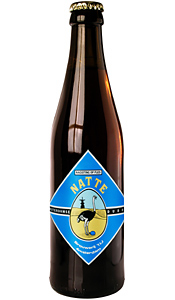 't IJ Natte In a matter of years the Netherlands has gone from a Heineken-dominated desert to boasting one of the most interesting beer scenes in Europe, with an eclectic and innovative approach that mixes national traditions with inspiration from neighbouring countries. ‘t IJ brewery is the oldest-established of the new breed of brewers, founded in 1985 by former pop star Kaspar Peterson.
The name is pronounced like the ‘et’ in ‘violet’ then a cross between ‘eye’ and ‘ay’ (not “tidge” as I once memorably heard from a British importer!), and refers to the body of water that separates Amsterdam’s historic centre from its northern suburbs. The brewery isn’t actually on the IJ, but under a windmill in the old harbour area to the northeast of the centre, in an old bathhouse, which also houses a basic but attractive and nearly always busy tasting room. All the bottled beers are unpasteurised and unfiltered.
Natte and Zatte (“wet” and “drunk”) were two of the brewery’s earliest lines. They’re labelled as a dubbel and tripel respectively, recalling the many Belgian brewers that pair a weaker monastic-style dark ale with a stronger golden one following the model of the Westmalle trappist brewery. But while these beers nod to the abbey style in strength, fruity complexity and slight sweetness, they otherwise go their own way.
Natte is more a deep ruby amber than the brown of a typical double, and its crystal malt tones recall some British micro-brewed strong bitters. There’s a spicy, yeasty, creamy aroma with vanilla and tobacco, and a full fruity palate with citric acidity, becoming slightly smoky and spicy. The beer stays fruity in the finish with well-rounded, faintly metallic hop flavours and a touch of chocolate. Overall this is a very drinkable, easy-going and cheerful beer.
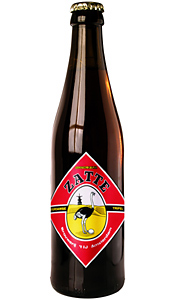 't IJ Zatte Zatte is a golden ale with an amber glow and a rich white head. Like Natte it has a lively, fecund and creamy aroma, but with a whiff of earthy hops and some pastille-like tones. The sweetish palate has a foamy texture and fruit and herb flavours, including coriander. A drying quality emerges from herbs and hops but overall this is much milder than the average triple. There’s a flash of alcohol on the swallow, and a long, custardy smooth finish with tangy herbal hints, remaining sweetish to the last but never cloying.
Though relatively easily to track down in their home country, ‘t IJ beers have been elusive in the UK: it’s good to see the specialist shops taking an interest at last.
Try also: De Leckere Dubbel, Maasland d’n Schele Os Tripel, Schelde Zeezuiper, La Trappe Tripel,
Read more at ratebeer.com:
http://www.ratebeer.com/beer/t-ij-natte/6057/
http://www.ratebeer.com/beer/t-ij-zatte/6058/
Originally published in What’s Brewing February 2003
Origin: Wiveliscombe, Somerset, England
ABV: 6.6 per cent
Buy from Tesco
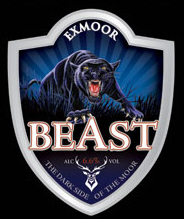 Exmoor Beast Wiveliscombe was once one of southwest England’s most important brewing towns, home to the Hancock brewery between 1807 and 1959. In 1979 a new independent company revived brewing at the Hancock site, and immediately started hoovering up awards. Now once again Somerset’s largest brewery, Exmoor entered the bottled beer market in 1997 when a bottled version of its popular Gold earned supermarket listings.
The winning streak continued in 2002 when Beast, the brewery’s second bottled beer, was named the best Autumn beer at the Tesco Beer Challenge. Once again it’s derived from a draught beer, a strong porter-style beer available from October to April and first brewed ten years ago.
The name commemorates the mysterious large animal that is said to stalk Exmoor, preying on the local livestock and thought by some to be an escaped black leopard. At 6.6% the beer certainly has a bite and 2002 was the first year it was eligible for the Challenge, which had formerly imposed a 6% limit on entries.
Brewed from pale, crystal and chocolate malts and hopped with Goldings, Challenger and Brewers Gold, the beer turns out as dark in colour as the beast, a deep chestnut brown with a bubbly beige head. There’s a fairly light aroma that is mainly malty and toffeeish, with scents of leather, coffee and gravy and faint fruity esters.
Initially the palate has a very roasted malt character which mellows out to become more like a succulent bitter, balanced by well-integrated hops, black coffee flavours and some orange fruit. The condition is quite sparkling but without too much gas.
The beer turns fruitier on the swallow, with a finish that contrives to be both satisfyingly roasty and refreshingly cool. It turns quite tangy around the edges of the mouth with moreish Challenger hop flavours emerging, but although the longish finish turns nicely chocolatey it is never really bitter.
Overall, Beast combines plenty of dark flavours at an old-fashioned strength with a light texture that makes it appealingly drinkable. To my mind this is just what you should expect from a good porter, setting it apart clearly from dark milds and stouts, and Beast does the job admirably.
The one gripe is that it’s not bottle-conditioned. While you shouldn’t let this put you off – even in pasteurised form it can give many BCA beers a good mauling – it would be interesting to meet a live beast with even sharper claws.
Try also:Aldaris Porteris (Estonia), Burton Bridge Porter, Salopian Entire Butt, Sierra Nevada Porter (USA), Wickwar Station Porter
Read more on ratebeer.com: http://www.ratebeer.com/beer/exmoor-beast-bottle/70258/
Originally published in What’s Brewing January 2003
Origin: Bury St Edmunds, Suffolk, England
ABV: 6.5 per cent
Buy from most supermarkets
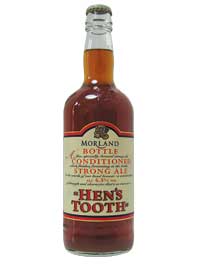 Greene King Morland Hen's Tooth Back in 2000 Greene King, now one of Britain’s biggest independent brewers, acquired and closed the old-established family brewery, Morland of Abingdon. Among the brands it acquired was a bottle-conditioned strong pale ale, Hen’s Tooth, launched in 1998 and already established as a supermarket favourite.
The name derived from the expression “rare as a hen’s tooth”, but also recalled the company’s popular cask ale Old Speckled Hen, originally named after a vintage car from neighbours MG. In fact Hen’s Tooth resembled a beefed-up bottled variation of this beer, using a similar recipe, with Pipkin pale malt, crystal malt, maltose syrup, Challenger and Goldings hops.
GK transferred production to their Bury base, taking with them the century-old Morland yeast culture. Indeed, you wouldn’t know this is a GK beer except for the Bury address that now appears on the label. They also kept the clear glass bottle: a shame, since such immodest packaging doesn’t do a long-maturing BCA like this any favours.
This bottle was still in superb condition despite being a week or so past its best before date – it was so eager to be drunk that some of it jumped out of the bottle of its own accord! Thankfully a very sticky sediment helped me pour it clear despite the liveliness.
The beer is deep amber with a warm orange glow and a lingering smooth white head. There’s a complex, fruity aroma (melons), with sharpish hops and yeasty creaminess, and some intriguing esters recalling cider or Belgian lambics: perhaps some wild yeasts have crept in? A firmly malty and fruity palate has plum and orange tones and a slight sharpish edge from the crystal malt. Chocolatey denseness and a fine bead give richness without the heaviness you might expect from the premium gravity.
Hops emerge as you swallow, with a slightly peppery and roasted coffee bitterness developing round the sides of the mouth, well-balanced by lots of fruit. The finish is lengthy and eventually quite drying but delightfully mellow, with a soft, almost salad-leaf quality about it.
Greene King might have abandoned Hen’s Tooth as an unwelcome anomaly; to their credit they kept it on, obviously going to some trouble to match the taste and quality of the Morland version. BCAs are still almost as rare as hens’ teeth on the average British high street as they were back in 1998, and examples such as this are far too good to lose.
Try also: Ceredigion Barcud Coch, Dolle Oerbier (Belgium) Freeminer Speculation Ale, St Sylvestre Sans Culottes (France)
Read more on ratebeer.com: http://www.ratebeer.com/beer/morland-hens-tooth/671/
Originally publsihed in What’s Brewing December 2002
Origin: West Hewish, Somerset, England
ABV: 6 per cent
Buy from some supermarkets, specialist beer shops, Wessex Craft Brewers (www.wessexcraftbeers.co.uk)
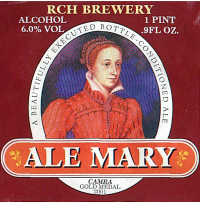 RCH Ale Mary The revival of spiced beer brewing in Britain is one of the most interesting developments of recent years. Opening the spice cupboard for the first time in centuries has set many brewers on a steep learning curve but the folk at RCH have got pretty near the top.
Originally established behind the Royal Clarence Hotel in Burnham-on-Sea in 1983 and relocated ten years later, RCH now has a strong slate of bottle-conditioned beers marketed through Wessex Craft Brewers (see WB, November). Ale Mary began as a 1998 Christmas special and this year is enjoying a new lease of life with supermarket listings.
The beer is actually the brewery’s strong ale Firebox, brewed from pale and chocolate malts, Progress and Target hops, and then pepped up with the addition of ginger, cloves, cinnamon, coriander, nutmeg and pimento pepper. The spices recall the cuisine of Elizabethan times, so it’s a shame that Mary Stuart has disappeared from the label, rendering the slogan “beautifully executed” rather puzzling.
The beer emerges rich coppery amber, with a lively bead and a large, foamy and very persistent white head which, combined with a generous sediment, made it difficult to pour clear (to negligible effect). The head concentrates the spicy aromas: before reading the ingredients, I detected cinnamon, ginger, herby hops, and scents of freshly crushed fennel seeds and liquorice.
If the seasonal packaging and spicing have led you to expect a liquid Christmas pudding, you’re in for a surprise: the palate is notably dry. There’s plenty of spicy complexity over a crisp malt base, with a fruitiness redolent of vine fruits and tangerine peel with hints of coriander. A subtle but warming ginger character then develops – this rhizome has arguably become a national characteristic of British spiced beers, reflecting its traditional use in the native cuisine.
The beer gets slightly softer on the swallow, leading to a long, rummy finish with spiced pear fruit, nutmeg and sage, warming ginger and a fine bitter-hop astringency puckering the cheeks. Treating a beer that was already well-flavoured to such a diverse and thorough spicing might not have seemed the obvious route to success, but the result is beautifully balanced, delightfully dry, and always intriguing, with a complex range of flavours making themselves heard without shouting. One to sip over the cheese footballs.
Try also: Museum Wulfric, Freeminer Shakemantle, Jopen Koyt (Netherlands), Anchor Our Special Ale (USA), Vapeur Saison de Pipaix (Belgium)
Read more at ratebeer.com: http://www.ratebeer.com/beer/rch-ale-mary/11075/
Originally published in What’s Brewing November 2002
Origin: Kelheim, Bavaria, Germany
ABV: 8 per cent
Buy from specialist beer shops and mail order, occasionally supermarkets
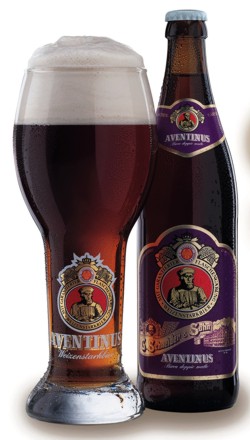 Schneider Aventinus The Schneider brewery, founded in 1872, is a relative newcomer by German standards. In 1927 the company acquired its present site, the former ducal brewery at Kelheim, north of Munich and on the edge of what is now the Altmühltal nature park. Wheat beer has been brewed continuously here since 1607, giving Schneider its current claim to be the oldest wheat beer brewery in Germany.
Schneider’s standard cloudy “Weisse” (white) is one of the most renowned examples of its kind. But the brewery also enjoys a cult reputation for this “Weizenbock”, the wheat equivalent of a barley wine. This potent brew is made from locally grown malted wheat and barley, with caramalt from Bamberg, and Hallertau and Hersbrücker hops – the famous Reinheitsgebot (purity law) forbids the use of unmalted wheat and spices, as in some other countries.
The label depicts Johannes Turmair (1477-1534), an early Bavarian humanist historian, known as Aventinus after the Latin name for his home town of Abensberg. His appearance is best explained by the fact that, when the beer was first produced in 1907, the brewery happened to be based in Munich’s Aventinstrasse (for more background see www.schneider-weisse.de).
The beer pours cloudy deep brown with an orange glow and a thick off-white head. The aroma is rich and malty with marked dried banana tones and spicy hints of cinnamon and cloves. At first the palate seems light and fruity, buoyed by the lively condition, but it rapidly reveals a dark malty depth, with smooth tarriness, liquorice toffee and spicy cinnamon hops way back in the throat, along with tangerine, figs, tobacco, coffee and a touch of wheaty phenol.
Herbal hops develop further in the lengthy finish with more spicy and fruity flavours on the tongue: banana, chocolate, roastiness and the estery bubblegum flavours often found in Bavarian wheat beer. The overall effect is sweetish and sometimes syrupy on the lips but so much is going on that it never becomes cloying.
The alcohol is evident too, of course: “Bavaria from its strongest side” claims the label, acknowledging the hefty gravity compared to standard wheat beers, but every degree is used to say something interesting. The usual German half-litre bottle seems too large at first for a monster like this (the 330ml bottles are rarely seen in Britain), but sip it over an hour or so and it’ll reward till the last dregs.
Try also: Kloster Andechs Doppelbock Dunkel, La Gauloise Brune (Belgium), Daleside Morocco Ale (UK), though Aventinus is really one of a kind.
Read more on ratebeer.com: http://www.ratebeer.com/beer/schneider-aventinus/2224/
Originally published in What’s Brewing October 2002
Origin: Bridge of Allan, Stirling, Scotland
ABV: 4 per cent
Buy from the brewery, tel 01786 834555, www.bridgeofallan.co.uk
 Traditional Scottish Ales Brig o'Allan 80/- / Stirling Brig Sadly, bottled beer drinkers haven’t done as well as their draught-quaffing counterparts in the current Scottish beer renaissance. The craft-brewed bottles lining the shelves of posh delis and carry-outs in Edinburgh and Glasgow stand tall alongside the single malts, wearing their saltires with pride – but almost none are bottle-conditioned. Even Champion Beer of Britain-winning Caledonian has withdrawn its toes from the BCA water (though they tell me a revival of bottle-conditioning is currently under discussion). Admittedly some of the brewery-conditioned bottles are still worth trying, but most are crying out for a little more life.
An exception is this entrant from Bridge of Allan, established in 1997 in the spa town of the same name, just north of Stirling. It’s based on draught beer Stirling Brig, and the vegetarian-friendly recipe includes Maris Otter pale, crystal, roast and wheat malts, Goldings, Fuggles and Bramling Cross hops. The designation 80/- goes back to the days before inflation and deep discounting, when beers were named after their price per barrel in now-obsolete units of currency (80/- = £4), and signals that this is a variant on the traditional malty Scottish style.
The beer is a lovely ruby-amber colour, easy to pour clear with only a little sticky sediment, and initially throws a creamy white head. The distinctively toasty, smoky, pastilley and slightly sharp aroma leads to a very malty, fruity and minerally mouthful that reminded me of “Scotland’s other national drink”, Irn Bru. There’s some burnt rubber smokiness, then a sudden brush of rounded ashy hops down the sides of the tongue in the finish. This quickly subsides, leaving a long-lingering fruitiness laced with flashes of powder-dry bitterness and a hint of salt.
Crystal malt produces some intensely smoky and toasty flavours that can easily overwhelm, but here it is well controlled and balanced by elegant hopping: in fact the beer is on the dry side for its style. Overall it’s a distinctive and refined yet easy-drinking ale.
Though its pasteurised stablemates are quite widely distributed in Scotland, as yet this beer is only available direct. Brewer Douglas Ross says wholesalers are still nervous of bottle-conditioned beers, but if he can turn this 80/- into a success he’ll consider adding more to his portfolio. A beer of this quality certainly deserves to succeed in its own right – and it might also encourage a few more Scottish brewers to start bottling the live product.
Try also: Beeck Veldwachter (Netherlands), Flying Dog Road Dog (US), Orkney The Red MacGregor (non-BCA), Pitfield Hoxton Best Bitter (formerly Hoxton Heavy)
Note the brewery is now part of Traditional Scottish Ales (12/2009)
Read more at ratebeer.com: http://www.ratebeer.com/beer/bridge-of-allan-brig-o-allan-80—ale/5885/
|
|
