They say…

Des de Moor
Best beer and travel writing award 2015, 2011 -- British Guild of Beer Writers Awards
Accredited Beer Sommelier
Writer of "Probably the best book about beer in London" - Londonist
"A necessity if you're a beer geek travelling to London town" - Beer Advocate
"A joy to read" - Roger Protz
"Very authoritative" - Tim Webb.
"One of the top beer writers in the UK" - Mark Dredge.
"A beer guru" - Popbitch.
Des de Moor

Ads


Hoegaarden Witbier

Originally published in What’s Brewing September 2002

Origin: Hoegaarden, Brabant, Belgium
ABV: 5%
Buy from: most supermarkets, beer shops
Hoegaarden Wit

Hoegaarden Wit

Unfiltered ‘white’ beers were once the local speciality of the northeast corner of Brabant. Brewers here used unmalted wheat, giving a very fruity, phenolic and distinctively wheaty flavour, and spiced their beers with coriander and curaçao orange peel, as they had been doing since long before the ubiquity of the hop. Such idiosyncratic beers found it hard to survive in the new world of industrialised brewing and they died a quiet death in the 1950s.

Then in 1966 Pierre Celis, who had helped out at a local white beer brewery as a teenager, opened De Kluis (the cloister) brewery in the once-important brewing village of Hoegaarden. Celis set about recreating the defunct style, with some success, especially among the young. Interbrew became financially involved in 1978 and eventually bought Celis out, using their marketing clout to turn this ancient style into a national and then an international brand.

Hoegaarden is still brewed at De Kluis, using barley malt, unmalted wheat, Saaz and Goldings hops, coriander seeds and dried curaçao peel. Some aficionados complain it has lost its character in Interbrew’s hands. I first tasted it in the early 1990s and though I have no detailed notes from the time, I do know it was so good then that it triggered off my enduring passion for Belgium and its beers. When I taste it today, for better or worse, I can still understand why.

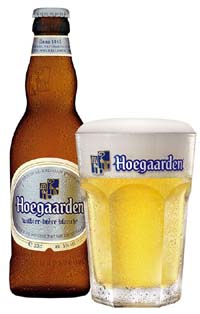
Served cool (and neat – in Belgium lemon is rarely added) in its distinctive chunky tumbler, Hoegaarden is pale cloudy straw-yellow with a rich white head. The aroma is smooth, creamy and spicy, with a whiff of coriander and restrained hops. The palate is soft and wheaty at first, but soon reveals complex herbal and hoppy flavours as it swirls over the tongue, with tangy and perfumed orange fruit. The hops become more rounded in the finish, dominated by a persistent fruity tanginess, and the final impression is creamy but clean and refreshing.

Together coriander and hops can easily turn a beer into a shouting match of flavours if mishandled, as many brewers have found to their cost. Hoegaarden gets it just right: the coriander is distinct but not overpowering, and beautifully integrated with a subtle blend of classic hop flavours that gives the beer a lift in just the right place.

Today every other Belgian brewery offers a wheat beer, and Celis’s revival has made brewers around the world realise there’s more to a good grist than barley malt. Connoisseurs sometimes overlook the original, perhaps because it’s too easy to find and no-one can quite believe a speciality of such quality could flow forth from a megabrewer. Such self-denial is misplaced, since Hoegaarden still well deserves its title as the benchmark of the style.

Try also: Abbaye des Rocs Blanche des Honelles (Belgium), Annoeullin L’Angelus (France), Gulpener Korenwolf (Netherlands), Lefèbvre Student/Blanche des Bruxelles (Belgium), Salopian Puzzle (UK).

Read more at ratebeer.com: http://www.ratebeer.com/beer/hoegaarden/399/
Hop Back Summer Lightning

Originally published in What’s Brewing August 2002
Also reviewed in a piece on beers to convert lager drinkers to ales with,
BEER Feburary 2009


Hop Back Summer Lightning

Hop Back Summer Lightning

Origin: Salisbury, Wiltshire, England
ABV: 5%
Buy from: most supermarkets, beer shops, mail order from the brewery (tel 01725 510986, www.hopback.co.uk)

Summer Lightning is arguably the most influential British beer of recent years, the first beer successfully to bridge the gap between traditional British bitters and imported quality blond lagers. It first emerged in cask form from the Wyndham Arms, John and Julie Gilbert’s brewpub in Salisbury, in the late 1980s, and became a mainstay when the Gilberts founded a separate brewery, Hop Back, in 1991. Soon the sincerest form of flattery was added to the beer’s critical and commercial success, with many other brewers copying the formula.

And it’s a formula that works. Summer Lightning and its imitators have managed to attract drinkers who would never have dreamed of touching a more traditional ale: I myself was introduced to it by a former lager drinker. Hop Back also anticipated the growth of bottled beer market when Summer Lightning inaugurated a new bottling line back in 1996, and the brewery has gone on to become a major supplier of BCAs to supermarkets.

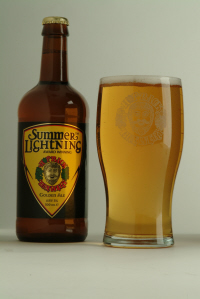
Poured clear as recommended on the label, and at a slightly cooler temperature than usual for a British ale, Summer Lightning comes out pale golden with a warm orange glow, a very lively bead, and a thin bubbly white head that eventually subsides to lace. The aroma of perfumed hops is forward but not overpowering, with faint orange-like traces and a distant earthy and minerally scent.

The palate is mainly dry, crisp and refreshing from the start. It’s also notably lively and prickly, soothed by a smooth, clean maltiness, flashes of tangerine sweetness and developing zesty hops. There’s some elusive fruitiness on the swallow: plum skins or maybe very fresh tomatoes. The beer dries out further in a very long and moreish finish, with a firm but nicely rounded bitter hoppiness at the back of the mouth and some cheek-puckering dryness still softened by malt and late flashes of juicy fruitiness.

While Summer Lightning recalls the appeal of certain mainland European styles, such as those Belgian golden ales that many British drinkers still mistake for lagers, or genuine quality German and Czech lagers, it is still very much a recognisably British beer. Perhaps surprisingly, its innovative taste has been fashioned out of the most traditional of ingredients, Maris Otter pale malt and East Kent Goldings hops.

Try also: RCH Pitchfork, Swale Indian Summer, Achouffe Kwelchouffe (Belgium), Saison Dupont (Belgium), Früh Kölsch (Germany), or a premium Czech lager like Budweiser Budwar or Pilsener Urquell

Read more at ratebeer.com: http://www.ratebeer.com/beer/hop-back-summer-lightning/1242/

Fuller’s 1845 Celebration Strong Ale

Originally published in What’s Brewing July 2002

Origin: Chiswick, London, England, UK
ABV: 6.3%
Buy from: most supermarkets, Fuller’s pubs and off licenses

Fuller's 1845

Fuller's 1845

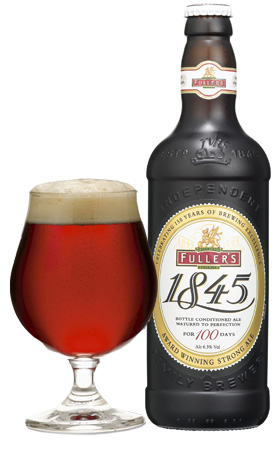
Alongside its renowned cask conditioned ales, the Griffin brewery for years offered only pasteurised beers in bottle. Then to celebrate the 150th birthday in 1995 Fuller’s brewers looked for inspiration to the brewing practices of the early days, coming up with a high-gravity bottle-conditioned brew that included amber malt and only Goldings hops. The beer, named 1845, hit the spot in terms of both quality and marketing: the combination of a well-loved brand with a ‘natural’ bottled product proved especially appealing to supermarkets. 1845 is now a member of the regular Fuller’s range and one of the most widely-distributed BCAs in Britain, also occasionally available in draught form.

Served cool, not chilled, and poured clear as advised on the label, the beer emerges a rich tawny brown with a sunny amber tinge, very little head, and an invitingly biscuity and malty fruit loaf aroma. The palate is full of juicy and nutty malt, with the biscuity quality of the amber malt to the fore. Briefly toffee-sweet, it soon dries with plenty of tasty, peppery and slightly astringent hops over subtle mallowy fruit. The hoppiness becomes quite intense and bitter in the finish, but is softened by fruity malt and spicy hints of nutmeg or cinnamon. This big but superbly balanced and very drinkable revivalist ale also has some ageing potential: best before dates are set a year after bottling and it’s worth experimenting with cellaring at least that long for a mellower result.

Try also: Brakspear Vintage Henley, Young’s Special London Ale (BCA version), Palm Aerts 1900 (Belgium)

Read more at ratebeer.com: http://www.ratebeer.com/beer/fullers-1845/294/