A sample text widget
Etiam pulvinar consectetur dolor sed malesuada. Ut convallis
euismod dolor nec pretium. Nunc ut tristique massa.
Nam sodales mi vitae dolor ullamcorper et vulputate enim accumsan.
Morbi orci magna, tincidunt vitae molestie nec, molestie at mi. Nulla nulla lorem,
suscipit in posuere in, interdum non magna.
|
Originally published in What’s Brewing October 2004
Origin: Burton upon Trent, Staffordshire, England
ABV: 4.5 per cent
Buy from Specialist suppliers, brewery’s pubs, regional Tesco
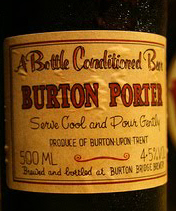 Burton Bridge Burton Porter There is a certain irony in a great porter coming from Burton upon Trent. Porter originated in 18th century London and became the first big commercial beer style, but it went into slow decline in the second half of the 19th century under competition from paler beers, and Burton, with its sulphate-rich waters ideal for working with new pale malts, became Britain’s new brewing capital.
Porter finally vanished after World War II, but the growing interest in traditional styles brought it back from the dead as a speciality in the late 1970s. Burton Bridge was established shortly afterwards in 1982, initially as a brewpub, by two ex-employees of what was then one of the town’s giants, Allied Breweries (Ind Coope). The brewery was an early pioneer of real ale in a bottle, appropriately in a town where one of the few remaining bottle conditioned ales of the older generation, Worthington White Shield, was still clinging on at nearby Bass.
Burton Porter, perhaps the longest-established of the revivalist porters, began as a draught festival special in 1983 and has been a steady seller as a bottled beer ever since. Interestingly, the brewery’s Geoff Mumford says it wasn’t intended as a simple recreation, but as a guess at how porter might have evolved if it had survived.
Once labelled with a simple stencil and a splash of yellow paint, its present more conventional paper label still maintains a minimalist style. The beer inside is made from crystal and chocolate malts besides pale, and hopped with Challenger and Target.
It’s a deep orangey-brown with reddish highlights and throws a copious bubbly fawn head. The aroma is tangy with orange and roast notes and a touch of caramel. The smooth palate is fruity and acidic, with an orange juice flavour that might be excessive were it not balanced by herbal, nutty and almost woody bitter hops and spicy liquorice flavours.
Hops move forward to dominate a drying finish whose bitterness is never excessive, with more nuts and herbs, sharpish fruit and some mineral tones. The beer bows out with a hint of bitter chocolate and roast notes on the tongue.
Some contemporary porters can’t make up their minds what distinguishes them from other dark beers like stouts and milds. Not so Burton’s entry, which combines roast and slightly sour flavours with the sort of drinkability you’d expect from a beer that quenched the thirst of manual workers to provide one of the best current interpretations of the style.
Try also Hogs Back OTT, Houston Teuchter (filtered), RCH Old Slug, Sierra Nevada Porter (USA)
Read more about this beer at ratebeer.com: http://www.ratebeer.com/beer/burton-bridge-burton-porter/5826/
Originally published in What’s Brewing September 2004
Origin: St Austell, Cornwall, England
ABV: 4.8 per cent
Buy from Supermarkets, brewery’s pubs, mail order
Website www.staustellbrewery.co.uk
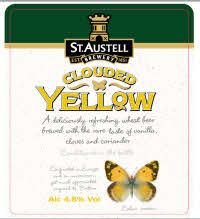 St Austell Clouded Yellow Clouded Yellow from St Austell, Cornwall’s only surviving traditional family brewery, must have one of Britain’s most evocative beer names. The clouded yellow is a butterfly, Colias Croceus, originating “in Europe and an uncommon yet much appreciated migrant to Britain” says the label, hinting at the beer’s exotic inspiration. But the name is also apt if interpreted literally. Clouded Yellow had a lucky escape — it could have been called Hagar the Horrible, the name under which it first appeared as a festival special back in 1999.
Brewer Roger Ryman had decided to have a go at a Bavarian-style wheat beer, but didn’t want to risk letting Bavarian yeast — responsible for many of the distinctive fruity and spicy flavours in these beers — loose in his brewery. Instead he tried using spices and flavourings, a practice strictly verboten in Bavaria, of course, but enthusiastically espoused by the brewers of that other great wheat beer country, Belgium.
A bottle conditioned version of this intriguing hybrid — mercifully renamed — won the Tesco Spring Beer Challenge the following year, and became a regular line. The recipe was tweaked further in 2003, reduced slightly in strength from 5 per cent, made rather less clovey and packed in more elegant green bottles.
It’s brewed from Maris Otter pale malt and malted wheat, hopped with Willamette and additionally flavoured with vanilla pods, cloves, coriander and maple syrup. Although brewed in Cornwall, it’s bottled at Hepworth’s in Horsham.
The beer is indeed yellow, and — if you pour with the traditional swirl — clouded, though less so than its continental inspirations. If this offends your delicate British sensibilities, the label suggests you can also pour it clear, but I think you’d be missing out.
There’s a thick, fine white head and a gently creamy, spicy and wheaty aroma with vanilla and banana tones. The very fruity banana and peach palate has emerging notes of vanilla, herbs and drying hops, none of which dominates.
The finish is mainly dry, with a deeper bitter tang that blends well with the vanilla flavour. There are late notes of orange peel, apple pips and cloves.
The beer is notably less spicy than it was, but still complex and unusual, and arguably more appealing. The brewery is keen to stress its suitability with food, recommending it with a Thai curry, but it’s also well worth drinking on its own, perhaps al fresco on a late September afternoon
Try also Baladin Isaac (Italy), Baltika 8 (Russia), Kaltenberg König Ludwig Weissbier (Germany), Salopian Puzzle
Read more about this beer at ratebeer.com: http://www.ratebeer.com/beer/st-austell-clouded-yellow/5731/
Originally published in What’s Brewing August 2004
Origin: Anderlecht, Brussels, Belgium
ABV: 5 per cent
Buy from Specialist stockists
Website www.cantillon.be
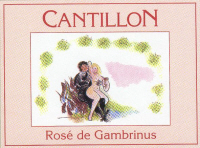 Cantillon Rosé de Gambrinus The lambic beers of the area in and around Brussels are the result of the ancient technique of “spontaneous” fermentation. Lambic brewers simply leave the wort exposed to the air overnight in a specially vented room so it becomes infected with wild yeasts, then seal it in closed vessels to continue fermentation.
Lambics contain a high proportion of unmalted wheat alongside lightly malted barley, with well-aged hops used as a preservative rather than for bitterness or aroma. To soften the sharp lactic character of the end result they are usually either sweetened, matured and blended or, most famously, flavoured with fruit such as sour cherries or raspberries.
Today lambic is a protected appellation of origin, and quite rightly so, because the success of the process and the character of the resulting beers is intimately linked to the local environment and its microflora. Even the room in which the wort is exposed makes a difference. As well as a goût de terroir, these beers even have a goût de chambre!
Big brewers have done their best to commercialise lambic production, resulting in a range of exotic fruit syrup concoctions dosed with enough sugar to keep the world’s dentists in business for centuries. But a few independents still offer more traditional, artisanal products and of these perhaps the most respected and uncompromising is the museum brewery of Cantillon, in the Brussels suburb of Anderlecht.
Lambics are always a challenge for the beginner since their taste is simply unlike any other beer, having more in common with real cider or fino sherry. Cantillon produces some of the most challenging examples of all, but you couldn’t find a better way in than Rosé de Gambrinus.
It’s an unfiltered, unpasteurised blend of two-year-old lambics and fresh raspberries, devised to contrast with the syrupy fruit beers of more commercial producers. But it’s also easily Cantillon’s most light hearted beer, its tone set by its cheekily playful label.
It pours a rich warm onion skin colour, lively and slightly cloudy, with a typical sharpish, musty and woody aroma, a sulphurous pinch and an immediate but restrained natural raspberry perfume.
The palate is tart, dry and puckering, softened by a subtle fruitiness with raspberry and cherry skin flavours and a touch of creamy vanilla. The finish is also tart, and very long, with dry cider, fresh lemon juice and tangy fruit.
Served lightly chilled in a champagne flute as suggested on the label, this most charming of lambics is a great al fresco treat on warm summer evenings.
Try also Cantillon Fou’Foune (apricot), Kriek Boon (cherry), Girardin Gueuze 1882 (black label), Hanssens Oudbeitje (strawberry)
Read more about this beer at ratebeer.com: http://www.ratebeer.com/beer/cantillon-rose-de-gambrinus/6014/
Originally published in What’s Brewing July 2004
Origin: Cologne, Nordrhein-Westfalen, Germany
ABV: 4.8 per cent
Buy from Specialist stockists
Website www.frueh.de
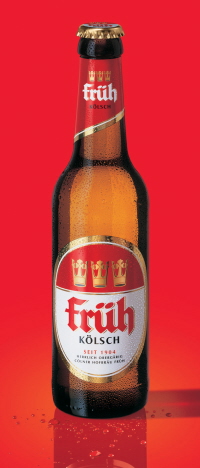 Früh Kölsch Kölsch is one of those delightfully idiosyncratic wrinkles of regional popular culture that makes life worth living: a beer that’s become part of the identity of a city. It might look like a pale lager, but actually it’s an ale that successfully held its own small corner against the lager tide.
The Garde brewery claims credit for the first modern Kölsch in 1892, but the style really became a local phenomenon post-World War II. In 1986 its status was assured when all the local brewers signed the Kölsch Convention, limiting the geographical origins and regulating ingredients and character. Recognised by the German government in 1996, the Convention even specifies the correct glass, the narrow cylindrical “Stange”.
Among the brand leaders of the style is Früh — or Cölner Hofbräu P J Früh to use its official title. Founded by Peter Josef Früh in 1904, originally as a small, traditional city centre brewpub, it only began bottling in 1969. Its growing popularity saw the brewery itself move in the early 1990s to a modern site in the northern suburbs while the pub swelled to become the biggest in the city. The family remains in control, however, unlike some other local brewers that have already been absorbed by the likes of major German group Brau und Brunnen and Turkish-based multinational Efes.
Früh Kölsch’s popularity is well-deserved since it’s easily one of the best and most typical examples of the style, even in the bottle. The Convention demands a clear beer so it’s filtered, though unpasteurised and, being German, made according to the Reinheitsgebot (purity law) with only water, malt and hops — in this case Hallertau and Tettnanger, with a single strain house yeast.
The resulting beer is a very delicate pale golden colour, with a lively bead and a thick, slightly bubbly white head with a hint of yellow. There’s a slight fruit sherbert quality to the aroma, along with estery bubblegum and apple scents and a delicate trace of hops.
The palate is dry and light at first but soon develops a juicy richness that betrays its warm-fermented origins, with crisp but nutty malt, grassy and flowery hops and a slightly oily texture reminiscent of some of the stronger, maltier German lagers.
The finish is soft and fresh with a subtle whiff of vanilla, emerging tangy notes and a firm but not overstated flourish of hops. Overall, it’s a subtle, characterful and very refreshing beer that’s perfect for a warm summer day.
Try also genuine Kölsch from Dom, Garde, Reissdorf, Sünner; Sainsbury’s Taste the Difference “Kölsch style lager” (UK)
Read more about this beer at ratebeer.com: http://www.ratebeer.com/beer/fruh-kolsch/7777/
Originally published in What’s Brewing June 2004
Note this beer is no longer available in a bottle conditioned version, only in cask or filtered versions.
Origin: Cinderford, Gloucestershire, England
ABV: 6 per cent
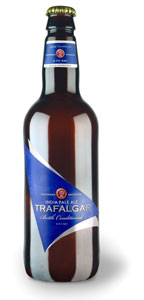 Freeminer Trafalgar India Pale Ale Freeminer Brewery, established in 1992 in the Royal Forest of Dean, is the source of some of the most distinctive and uncompromising bottled real ales in Britain: brews like seriously big Deep Shaft Stout or gingery Shakemantle wheat beer. The brewery celebrates the independently-minded local tradition even in its name: a “freeminer” is a local who has earned the ancient right to own a coal mine in the Forest.
Now, as Jeff Evans reported in last month’s Beer, the brewery is wisely investing spare cash from the cut in beer duty into marketing initiatives. As a result, several key bottled lines have had an image makeover, with labels and glassware more appropriate to high quality specialist products, and are enjoying supermarket listings.
Trafalgar is the brewery’s interpretation of a traditional India Pale Ale, strong and generously hopped to withstand a long sea voyage. At 6 per cent it’s a not quite 19th century strength but it’s also not one of the “inferior four point something” versions, as the brewery’s website puts it. It’s brewed from floor-malted Maris Otter pale malt sourced from Warminster Maltings in Wiltshire, with a touch of crystal and both wet and dry hopping with a single variety: Goldings grown around Ledbury, Herefordshire. Bottling is now at Marstons in Burton.
The result is a deep and glowing amber beer, quite dark for an IPA, with a busy sparkle and a thick yellowish head: a sticky sediment in my bottle made it easy to pour perfectly clear. Unsurprisingly, hops dominate a fresh and blossomy aroma, with touches of citrus, honey, faint gingery spice and hessian malt.
The complex palate is malty, soft and rounded at first, with traces of chaffy, cereal flavour and a slightly oily toffee quality. The hops kick in early, orangey at first and becoming quite bitter around the edges of the mouth. There’s perhaps some apple fruitiness and a slight burnt toffee flavour.
The finish brings a firm flourish of bitter hops, pronounced but never completely overwhelming tasty cereal malt. Big earthy resin tones emerge, turning more gentle and spicy as the finish develops.
Overall, this is a distinctive and flavoursome quality product, and it’s great to see it in packaging that does it justice: I’m not surprised to hear it’s doing well in posh Indian restaurants. Those brewers still disguising equally fine products with cartoon labels and laddish “joke” names take note.
Try also Burton Bridge Empire Pale Ale, Goose Island India Pale Ale (USA, filtered), Marstons Old Empire (filtered)
Read more about more recent versions of this beer at http://www.ratebeer.com/beer/freeminer-trafalgar-ipa/5832/29087/
Originally published in What’s Brewing May 2004.
Origin: Shefford, Bedfordshire, England
ABV: 4.3 per cent
Buy from Specialist stockists, brewery’s pubs, direct sales (tel 01462 815080, www.banksandtaylor.com)
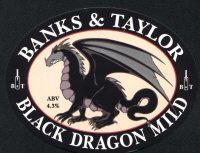 Banks & Taylor Black Dragon Mild As I noted this time last year, real mild in a bottle must be one of Britain’s rarest styles. Historically, “mild” refers to hopping rather than alcoholic strength, but these days people expect milds to be weak, and low strengths generally don’t bottle well. Some determined craft brewers are now reviving draught milds at more robust strengths, but few of these find their way into the bottle as live beers.
One that does is Black Dragon, from the B&T Brewery in the Bedfordshire market town of Shefford. This enterprise was launched as Banks & Taylor back in 1982; in 1994 it was sold to new owners and renamed B&T, though the full name is still used on labels. It now brews a range of over 30 beers including some excellent specialities.
Black Dragon was originally introduced in both cask and bottle conditioned form as a seasonal to celebrate Mild Month 2002 and has been revived every year since. At 4.3% ABV it’s the strength of a premium bitter, though still easily quaffable and several notches down on the strong milds of yesteryear.
It’s made from specialist mild malt, with 10% crystal, 8% black malt, 4% roasted malt and a touch of wheat malt for head retention, and hopped with Goldings. The bottled version is the same as the draught beer with a light sugar priming.
The result comes out a dark caramel brown, with a pale mushroom-coloured head that subsides to bubbles and lace, and a lively carbonation. The aroma is malty with slight roasted tones, and traces of treacle toffee, yeast and raspberry and redcurrant fruit.
The palate is light but full with an overall malty accent, but there’s also smoke and liquorice toffee. The rich malt is nicely balanced by acid sourness rather than hop bitterness, with sourish physali fruit giving the beer a slightly porterish character, and herbal flavours reminiscent of dandelion and burdock soft drink.
The beer finishes with an appealing and very moreish fruitiness, alongside more malt, smoke, and a drier, roasty edge with a touch of minerals. It’s notably long lasting and quite complex, with aromatic fruit tones emerging.
Overall this is an excellent interpretation of a rare and precious style that has evidently met with some deserving commercial success: B&T’s Mike Desquesnes tells me it’s likely to become a permanent, year-round fixture of the brewery’s range. Inspiration, I hope, for someone else to revive a strong bottled mild, so I’ll have something to review in next May’s column!
Read more about this beer at ratebeer.com: http://www.ratebeer.com/beer/b–t-black-dragon-mild/39712/
Originally published in What’s Brewing April 2004.
Origin: Wandsworth, London, England (now transferred to Wells and Youngs, Bedford, Bedfordshire, England)
ABV: 6.4 per cent
Buy from most supermarkets
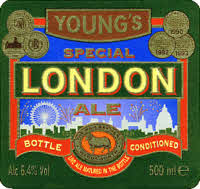 Youngs Special London Ale Youngs’ historic brewery site in the heart of Wandsworth, currently slated for possible redevelopment, produces some highly distinctive bottled beers. Most of these — for example luscious Double Chocolate Stout or barley wine Old Nick — are brewery conditioned, but there’s also a regular “real ale in a bottle” with numerous awards to its credit including Champion Bottle Conditioned Beer of Britain.
The beer began life in the late 1950s as Strong Export Bitter, a filtered strong pale ale inspired by Worthington White Shield, initially targeted at Belgium and brewed under license there for a while. It was renamed Special London Ale when the brewery started exporting to the US market in the late 1980s.
Interestingly, the switch to bottle conditioning in 1998 came about partly as a means of extending the beer’s shelf life in the export market, but the success of 1845 from arch-rival Fullers might also have been a factor. Now it’s the brewery’s second biggest selling bottle, after Waggle Dance, and stocked by numerous supermarkets. For a while the non-BCA version remained available from the brewery’s pubs, but all Special London is now live.
A very traditional ingredients list includes Maris Otter pale malt, crystal malt, and what the label describes as “a phenomenal amount” of Fuggles and Goldings hops. The beer spends several weeks conditioning on a bed of whole Goldings before being sterile-filtered and reseeded with yeast, but no primings, relying on residual sugars to re-start fermentation.
The result is notably easy to pour, emerging a coppery mid-brown, with a fine, lively bead, a loose but persistent off-white head and a minimum of sticky sediment. The malty and slightly meaty aroma is fairly restrained, with a touch of talcum powder and spice.
The big assertive palate begins with a pale malt accent, subdued fig and orange fruitiness and a slightly rough-edged chewiness I find typical of Youngs’ pales. Hops are evident from the start, beginning with a dry, sacky character and turning peppery and estery, with almond notes.
That generous hopping soon shows in a dryish finsih with a tonic water bitterness emerging in the back of the throat and powdery dryness on the tongue, always balanced by generous malt and tannic fruit.
It’s especially gratifying to see a well-established line enjoying such a vigorous new lease of life. But then, Youngs’ ability to balance innovation alongside a conscientious approach to tradition is one of the reasons why they are so appreciated, and why uncertainty about their future is viewed with such concern.
Try also Butts Barbus Barbus, Freeminer Speculation Ale, Museum Worthington White Shield, Woodforde’s Headcracker
Read more about this beer on ratebeer.com: http://www.ratebeer.com/beer/youngs-special-london-ale/140/
Originally published in What’s Brewing January 2004
Origin: Horsham, Sussex, England (now brewed in a filtered bottled or cask version only by the owning brewery, Bath Ales, Bristol, England)
ABV: 5 per cent
Buy from local supermarkets and outlets, Bath Ales (0117 952 7580, www.bathales.com)
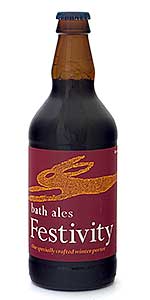 Bath Ales Festivity Festivity, originated by northeast Somerset micro Bath Ales, is one of the most pleasant and welcome of seasonal specials even if, like me, you have rather a bah-humbug attitude to the festive season. In bottled form, it has a short but eventful history. It began as the winter special in the regular draught range from Bath Ales, a micro operating from a steam-driven brewery at Webbs Heath on Bristol’s eastern edge. This success of this beer culminated in a best in class and overall runner up award at the Winter Beer Festival in 2002.
The brewery decided to capitalise on this by launching a bottled version, but faced capacity constraints so decided to contract brew. After a brief stint at Hopback, Festivity went to Brakspear, but with a number of other homeless former inhabitants of Henley it’s now ended up at Hepworths of Horsham. Normally I gripe about a label that doesn’t show the true origin of a beer, but given the many changes I’m inclined to be forgiving in this case.
Festivity describes itself as a “rum porter” though, despite some early experiments with essences, the slight rumminess of its character is derived from quite conventional ingredients: Maris Otter pale malt, crystal, chocolate and wheat malts, roasted barley, and Challenger and Bramling Cross hops. The recipe is the same as the draught version except for the yeast, with enough strength and robust flavour to stand up well to bottling. Though certainly a porter in British terms, it’s quite like one of the new unpasteurised and top fermented Dutch autumn bock beers: dark, malty, fruity and slightly acidic.
It pours a rich dark brown with a ruby tinge and a lovely soft, creamy fawn coloured head. There’s a very smooth aroma combining figgy fruitiness with a slight touch of vanilla and cream, with some leathery, roasty and iron-like mineral tones. The palate is rich but very soft and drinkable, with juicy and plummy fruit, refreshing dark marmalade flavours, a little salt, a porter-like roast quality and a hint of rumminess.
The beer turns quite dry on the swallow, with a remarkably long and complex finish: roasty, smokey notes blend with rich malt and black coffee flavours, a slow developing but never over-assertive hoppiness, and some late very smoky, ashy flavours. Overall it has a beautiful balance of strong, distinctive flavours and drinkability.
Try also Ballard’s Wassail, Hogs Back Wobble in a Bottle, Dolle Brouwers Stille Nacht (Belgium), Wye Valley Dorothy Goodbody’s Christmas Ale
Read more about this beer at ratebeer.com: http://www.ratebeer.com/beer/bath-festivity/13241/
Originally published in What’s Brewing December 2003
Origin: Greenwich, London
ABV: 4.5 per cent (since reformulated to 6.5%)
Buy from supermarkets
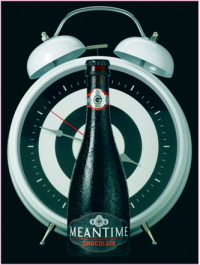 Meantime Chocolate Unlike most British brewers, Alastair Hook, who founded the Meantime microbrewery in Greenwich in 2000, comes to praise lager not to bury it. Alastair was trained both in Edinburgh and at the Weihenstephan school in Munich, and has a mission to brew quality lager in Britain, alongside a range of other European-inspired styles.
Discerning supermarket beer hunters may already have encountered Meantime beers without knowing: the brewery provides Sainsbury’s inspired Taste the Difference series. But it also has its own range in elegant and distinctive bottles, as well as on draught at its pub, the Greenwich Union.
Meantime does offer a tasty Pilsener-style beer that easily puts to shame the thin, weak, under-matured, cheap and nasty travesties of the style traditionally described in Britain as “lager”. But, perhaps even more interestingly, Alastair has acted on the realisation that there’s more to “lager” than Pils.
The Greenwich micro is one of very, very few in Britain to explore the wider repertoire of central European cold fermented and cold matured (or lagered) beers, which can come in as wide a variety of colours and flavours as ales. Non-mainstream lagers are now threatened niche products even in their home countries, so any attempts to popularise them deserve applause.
Chocolate, designed to be served “lightly chilled”, is a dark lager similar to German dunkel or Czech tmavý lagers, but with something of a tweak: the recipe uses chocolate malt for a smooth chocolatey flavour, coupled with a touch of vanilla. Since chocolate and vanilla notes sometimes crop up naturally in this sort of beer, it seems logical to experiment with giving them a helping hand. In the tradition of the style, this is a filtered, though unpasteurised, beer.
The beer itself is a very dark brown — “ebony”, says the label — with only a little head, and a pastilley aroma with a distinct whiff of vanilla pod alongside dark malt and strawberries. The palate is smoothly chocolatey, nicely malty and especially sweet, an authentic combination of richness and drinkability. The vanilla is still distinct, though subtly done, and some drying hop notes begin to emerge.
The finish is soothing, with hops — fresh Fuggles, perhaps surprisingly — starting very far back and slowly become more assertive with a late smoky hint. Although not intense, the finish is long lasting, with more tongue-soothing chocolate. Well worth trying alongside Meantime’s noteworthy takes on Kölsch, Vienna red and Munich-style Festbier in the Sainsbury’s range.
Try also Black Regent (Czech Republic), Franz Josef Urig-Schwarz (Germany), Köstritzer Schwarbier (Germany), Old Miller Dark (Russia), Vyskov Havran (Czech Republic)
Read more about this beer at ratebeer.com: http://www.ratebeer.com/beer/meantime-chocolate/23451/
Originally published in BEER December 2003.
NOTE This review concludes what was originally published as a single longer article. See previous posts for an introduction to Imperial stouts and some other reviews. Scroll down for a 2012 update.
See all parts of this article: http://desdemoor.co.uk/?tag=imperial-stouts-beer-2003
Origin: Tadcaster, North Yorkshire, England
ABV: 10%
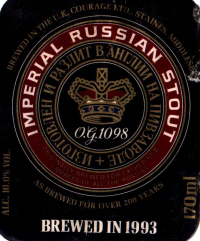 John Smith Courage Imperial Russian Stout I couldn’t conclude this survey without opening one of my few precious remaining 170ml “nip” bottles of the last John Smith-brewed Courage Imperial Russian Stout (10%) from 1993. Also very dark brown, it had an intense sweet malt loaf, coffee and leather aroma, a shockingly full-bodied but not oversweet gravyish malt palate with hints of coffee, orange juice, soft fruit, red wine, black treacle and mincemeat, and a tangily fruity finish with liquorice, blackcurrant, a flourish of hops and a late smokiness. Though the fact that the 2000 Harveys will probably be as complex in 2010 is some consolation, it’s still a great shame the last real link to the Imperial Stouts of an earlier era has finally been broken.
Update February 2012. Having acquired the rights to the Courage brands from Heineken, Wells & Young’s of Bedford revived Courage Imperial Russian Stout in 2011, initially aimed mainly at the US market but with plans to expand distribution in the UK in 2012. You can read more background on this heritage beer and tasting notes on the 2011 version here.
Immediately after tasting the Wells & Young’s revival I dug out one of my few remaining bottles of the John Smith 1993 version for comparison. This very dark brown, near black, beer poured with almost no head and relatively little carbonation (a notable contrast to the new beer). The aroma had soy sauce and marmite notes — the telltale hint of dead, autolysed yeast – but also some raisiny fruit and liquorice.
There was some soy sauce too on a tannic, vinous, malt bread palate with an orange juice note. A lasting, complex and quite bitter tonic water-tinged finish developed herbal and citric flavours reminiscent of Martini Rosso, with a bit of mineral and mint chocolate. At 18 years old, it was still fascinating to drink but perhaps starting to go down, though the remaining bottles may yet surprise me in years to come.
See all parts of this article: http://desdemoor.co.uk/?tag=imperial-stouts-beer-2003
Read more about this beer at ratebeer.com: http://www.ratebeer.com/beer/courage-russian-imperial-stout/9193/
|
|
