A sample text widget
Etiam pulvinar consectetur dolor sed malesuada. Ut convallis
euismod dolor nec pretium. Nunc ut tristique massa.
Nam sodales mi vitae dolor ullamcorper et vulputate enim accumsan.
Morbi orci magna, tincidunt vitae molestie nec, molestie at mi. Nulla nulla lorem,
suscipit in posuere in, interdum non magna.
|
Originally published in What’s Brewing November 2005
Origin: Burton Upon Trent, Staffordshire, England
ABV: 5.6 per cent
Buy from supermarkets
 White Shield Worthington White Shield Worthington White Shield was already a historic beer when CAMRA was founded in 1971. Then, it was one of only five bottle conditioned beers still in commercial production in the UK, only three of which are still around today.
It originated at Burton’s Worthington brewery in the 1820s as India Pale Ale, a domestic interpretation of the new, clear and hoppy ales that were proving so successful in the export market. The White Shield name, from the brewery trademark, came later, and survived the 1927 takeover and closure of Worthington by neighbour and rival Bass, while the beer flourished as a nationally distributed brand.
Miraculously, it retained its traditional bottle conditioning, and in the 1960s and 1970s became a welcome beacon in many a keg-only pub, with its own special glass and the need for careful pouring contributing to a growing cult status. Another quirk was its capacity for bottle ageing, normally the preserve of much stronger beers – devotees swore by at least six months and some even talked of years.
The good times couldn’t last forever: during the 1990s White Shield weathered a move from the union sets and even out of Burton, finally moving to King & Barnes in Horsham who licensed the brand when Bass lost interest in 1997, only to be bought and closed themselves in 2000.
But White Shield survived, returning to Burton and to the working micobrewery in Bass’s museum, now the Coors Visitor Centre. It’s even enjoyed a modest marketing push, with a new label – though hardly an improvement on the traditional design which had survived almost unchanged for decades – and numerous supermarket listings. The Museum Brewery has even been renamed the White Shield Brewery.
All this disruption has inevitably led to complaints that White Shield ain’t what it used to be. In the absence of detailed notes on the old Bass-brewed version, I can’t offer a definite opinion on such claims, but White Shield remains a very good beer.
The beer pours a beautifully glowing golden-amber, with a smooth near-white head and a notably lively sparkle. There’s fruity malt, barley sugar, orange, spicy flowery hops and apple tones on the aroma. A slightly sweet biscuity malt palate has emerging rooty hop flavours with a trace of ginger nuts and cough candy: it’s substantial but still light and refreshing.
A creamy swallow leads to a tasty finish with more barley sugar and apple core, with peppery, lettuce-bitter hops emerging slowly but surely in a beautifully long development. This isn’t just a museum piece but a delicious contemporary classic: here’s to the next two centuries.
Read more about this beer at ratebeer.com: http://www.ratebeer.com/beer/worthington-white-shield/286/
Originally published in What’s Brewing July 2005
Origin: Villers-devant-Orval, Luxembourg province, Belgium
ABV: 6 per cent
Buy from specialist suppliers
Website www.orval.be
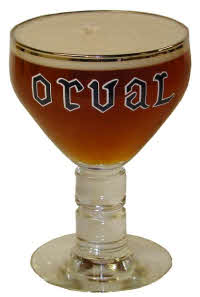 Orval Orval is one of the world’s most unusual and distinctive ales as well as one of its finest. It’s one of the family of Belgian beers brewed under the supervision of Trappist monks, but even among this select band it stands out as something different and special.
The monks of Orval, in the attractive wooded countryside of the Ardennes, concentrate on only one beer, which eschews the plump, fruity sweetness of most Trappist brews in favour of a comparatively low gravity and a big hop accent achieved, unusually for Belgium, by dry hopping.
Commercial brewing dates from 1931. The distinctive art deco design style of the bottle, label and glass has survived almost unchanged since then: though delightfully retro today, in its time it would have been as audaciously uncompromising as the beer.
A dash of caramalt colours a mainly pale malt mash, with local spring water and Bavarian Hallertau and Czech Styrian Goldings hops. Primary fermentation is with a pure cultured yeast, but a more complex mix including some wild yeast strains is then used for a three week secondary fermentation. The beer is bottled unpasteurised with priming syrup and matured for a further five weeks before release.
Even drunk young, the result it is bursting with complex aromas and flavours that are perfect to enliven a warm summer night. Resist the temptation to chill: it’s best served at cellar temperature (10-15°C) and the brewery recommends pouring without the deposit, then adding it later if wished.
The beer pours a rich peachy amber, with a thick smooth off-white head and a spicy aroma rich in hops and kumquat orange scents. It’s thick-textured on the palate but not sweet, with big pepper hops and deep, fecund herb flavours, a trace of leather and tobacco, a dash of acidity and a trace of warming alcohol.
A lively bead turns milky on the swallow, leading to a dryish and very peppery finish. Rootier notes emerge over a long development, with traces of sweet fruit, rolling tobacco, cloves and sulphur.
It can also be cellared for up to five years and becomes even more intense and complex as it ages: on a two-year-old bottle I noted intoxicating sandalwood incense on the aroma and a fantastically complex palate with more developed notes of fennel, cloves and fresh fruit marmalade. Sappy, bitterish Indian spices stood out in the finish.
If ever there was a beer with which to challenge the wine snob, then it’s this one, but perhaps we should be careful – a wine that could match Orval in complexity would most likely cost ten times as much!
Read more about this beer at ratebeer.com:
Originally published in What’s Brewing June 2005
Origin: Faversham, Kent, England
ABV: 6.5 per cent
Buy from supermarkets
Website www.shepherd-neame.co.uk
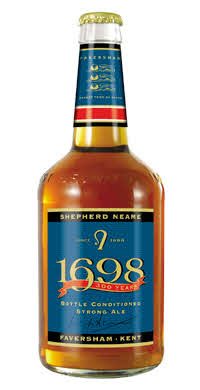 Shepherd Neame 1698 Shepherd Neame helped pioneer the new generation of real ale in a bottle back in the mid-1990s, when a gorgeous version of Spitfire, now the brewery’s biggest seller in cask, found its way onto supermarket shelves. I regarded bottled Spitfire as a near-world classic, considerably tastier than its draught counterpart. The Champion Beer of Britain judges also recognised its virtues, awarding it a bronze medal in its class in 1994.
However, consistency and quality problems persuaded the brewery to replace the real thing with a filtered and pasteurised version. I first tried the new Spitfire without noticing that the words “bottle conditioned” had disappeared from the label, but quickly noticed something was amiss. This beer, though pleasantly tasty, was several notches down and rather lifeless, a clear example of what a difference live yeast can make.
Now Sheps are once again experimenting with real ale in a bottle, only this time at a higher strength to help minimise the problems. Like Spitfire, originally a special for the 50th anniversary of the Battle of Britain, 1698 first appeared as celebratory draught ale, marking the brewery’s 300th birthday in 1998.
Those three and a bit centuries support Sheps’ claim to being Britain’s oldest brewery, and they’re keen on local identity as well as tradition. Up in the north of Kent, near the Swale, they’re close to some of Britain’s best hop country – the beers have an appropriately hoppy accent, and 1698 is no exception.
Target goes in first, followed by two doses of East Kent Goldings. The Pearl pale ale malt is also sourced within the county, and there’s a dose of crystal too, giving a rich amber-chestnut colour with a moderate but persistent white head. You catch the fecund, earthy, slightly sweaty whiff of Goldings the moment you open the bottle.
The aroma settles a bit in the glass, with toasty malt and boiled sweets coming to the fore. A rich, nutty, toffeeish palate has complex hints of dried fruit, marzipan and slightly spicy hops, but remains fresh and fruity despite the heftiness.
The beer turns peppery on the swallow, with a nicely balanced finish that slowly unfolds to reveal fresh fruit, rounded bitterness and more rooty, spicy flavours. There’s a late touch of sweetish sherry.
It’s heartening to see a brewer of Shep’s stature return to the Real Ale in a Bottle fold with as fine an example as this. They should reconsider using their traditional clear glass bottle in this case, though — it might look nice, but it won’t do the contents any favours.
Read more about this beer at ratebeer.com: http://www.ratebeer.com/beer/shepherd-neame-1698/4143/
Originally published in What’s Brewing May 2005.
This beer has since been discontinued.
Origin: St Peter Port, Guernsey, Channel Islands
ABV: 3.5 per cent
Buy from supermarkets
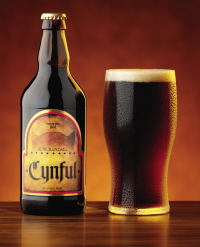 R W Randall Cynful It’s been an interesting year for bottled milds. Not only have more real milds appeared in bottle, but an excellent new example, craft brewed though sadly filtered and pasteurised, has found itself nationally distributed by a major supermarket chain.
That mild is Cynful, from sunny Guernsey, far from mild’s Black Country heartland. You’ll find the word “mild” in very small letters within a playfully decadent packaging design that bravely addresses trendy young things of both sexes rather than old codgers in cloth caps. Perhaps the local French connections have helped nurture a sense of style!
The brewery, R W Randall, dates from 1868, when a member of a brewing family from Jersey headed northwest to set up on his own. It’s now in its fifth generation of family control, with 18 pubs. Cynful takes its name from one of the brewery’s longstanding licensees, Cyndi de Jersey, who originally requested a cask version of what was then the brewery’s “bright” dark mild.
When Randall decided to enter the Tesco Beer Challenge in Spring 2004, they opted for a modification of draught Cynful. The beer won, leading to a year’s contract with Tesco, which may be renewed, and the brewery is also in talks with other supermarkets.
Bottled Cynful is a pure malt brew made from pale ale, crystal and chocolate malt and hopped with Sussex Fuggles and Styrian Goldings, with a dash of Challenger. It uses the brewery’s house yeast strain, descended from a yeast that originally came from Eldridge Pope of Dorchester back in the 1940s.
It pours a dark amber-brown, with a soft, close, just off-white head. The restrained aroma is gently hoppy and roasty with some fruit and a touch of vanilla. The palate is light but creamy and very tasty, delivering maximum flavour from a low gravity in classic mild fashion.
The flavour begins with malted milk notes reminiscent of German dark lagers, soon lifted by tangy hops and blackcurrant and orange notes. A refreshing swallow leads to a gently hoppy finish, with more malt, a subtle blackcurrant fruitiness and fleeting roast and charcoal touches.
So why not make this fine beer even finer by bottle conditioning it? The brewery’s Ben Randall tells me this was discussed, but given the lack of experience, the long distances and the low gravity, was judged too much of a risk. However the brewery is now enthusiastic about its cask beer range, and is planning further forays into the premium bottled ale market, so the possibility isn’t ruled out. And judging by the experience of landlady Cyndi, it’s always worth asking.
Read more about this beer at ratebeer.com: http://www.ratebeer.com/beer/randalls-cynful/37958/
Originally published in What’s Brewing April 2005.
Origin: Fürstenfeldbruck, Bavaria, Germany
ABV: 5.5 per cent
Buy from specialist suppliers
More information www.kaltenberg.de
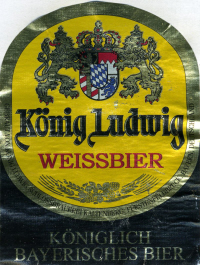 Kaltenberg König Ludwig Weissbier The connection between royalty and beer has perhaps never been so deep as in Bavaria, where secular, commercial brewing is a surprisingly recent invention. For most of recorded history, brewing in the historic south German territory was carved up between the church and the crown.
The Wittelsbacher dynasty, who ruled Bavaria over an astonishingly long period from 1180 to 1918, jealously guarded their grip on the local industry and especially their monopoly on wheat beer brewing, with taxes on beer making up a hefty slice of their wealth. It was a Wittelsbacher, Wilhelm IV, who passed the celebrated Reinheitsgebot (purity law), while another, Ludwig I, established the Oktoberfest, and in total the family has founded around 70 breweries.
Today Bavaria is a part, albeit a fiercely independently-minded one, of the Federal Republic of Germany, but the family is still around and still maintains its beery connections. Prince Luitpold, great-grandson of the last king, Ludwig III, revived the brewery in the cellar of his family pile, Kaltenberg Castle at Fürstenfeldbruck, east of Munich, back in 1976.
The prince built his brewing reputation on a traditional dark lager, König Ludwig Dunkel, but there are many other beers in the range and more recently he’s turned his attention to the style most associated with his ancestors: wheat beer.
König Ludwig Weissbier is a traditional cloudy, unpasteurised Bavarian wheat beer which also sometimes appears under the name Prinzregent Luitpold – dark, “kristall” (filtered) and low alcohol variations are also available under this latter name.
The classic light unfiltered version pours a typical yellow-golden colour, with a thick and smooth white head. There’s a beautifully fresh and spicy aroma, very wheaty with hints of new-mown hay, lime marmalade, roses, apple and cinnamon.
The palate is also smooth and clean but with a rich and robust graininess supporting flavours of custard cream with more apples and roses. It’s soft and milky, with emerging apple and slightly pippy hops, easily drinkable but very satisfying.
A more drying swallow leads to a tangy finish that still has a good creaminess, with slight strawberry hints. More wheaty cereal tastes emerge and the beer leaves you with well-rounded hops.
The beer’s fresh fruitiness gives it a distinctive edge which, in the hyper-traditional world of Bavarian brewing, does not always appeal to those weaned on more established wheat beer brands. But, speaking as a confirmed republican, I think it’s a delightful example, exquisitely balanced and well deserving of its place alongside the brewery’s benchmark dark lager.
Try also Schneider Weisse Original, Franziskaner Hefe-Weissbier, Unertl Weissbier, Baltika 8 Pshenichnoe Svetloe (Russia)
Read more about this beer at ratebeer.com: http://www.ratebeer.com/beer/konig-ludwig-weissbier/8946/
Originally published in What’s Brewing March 2005.
Note this brewery has since closed.
Origin: Llangefni, Isle of Anglesey, Wales
ABV: 4 and 4.5 per cent
Buy from local sources, brewery
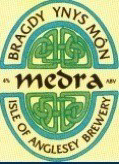 Ynys Môn Medra Only four Welsh breweries offering real ale in a bottle are listed in the current Good Bottled Beer Guide, and with St David’s Day only days away when this issue hits the streets, I’ve finally had a chance to feature one of them in this column.
Though small, Bragdy Ynys Môn – that’s ‘Isle of Anglesey Brewery’ in Saesneg – can still lay claim to being the biggest brewery in northwest Wales. It’s located in a farmhouse in open countryside in the southeast of the island, within sight of Snowdonia, where it’s been since it was founded by Martyn Lewis in 1999.
An enthusiastic bottler, the brewery has its own line, a shrewd investment given its location in a far-flung corner of the nation. All the beers are racked straight from the cask, unfiltered, unfined and vegan-friendly. With the help of Martyn I picked out two from a range of six to feature here, both of them beers of quality and distinction.
Medra (4 per cent), the most distinctive of the two by a hair, is a cheerful bitter with a stylish American twist from using Cascade hops alongside Fuggles. The name means ‘I can’ and refers to a local tradition that the island’s people were especially versatile, always giving this answer when asked if they could do a particular job.
Medra pours a lovely sunny amber with a persistent bubbly off-white head. There’s a pronounced honeybush aroma with some more resiny hoppiness.
The palate emphasises the smoky, roasty qualities of crystal malt, veering close to Rauchbier territory but with lots of fruit and a pleasing sweetish chaffiness. There’s more smoke in the finish, with cedarwood and a rounded hop bitterness.
This easy-going beer is as versatile as its name suggests, with a complex enough flavour for the demanding sipper and a drinkable and attractive fruitiness that would suit the food matcher – but at a weak enough strength to quench the thirst too.
Tarw Du (Black Bull, 4.5 per cent), the brewery’s first beer, is a big black stout that’s more intense than its gravity suggests. It pours extremely dark and oily with mushroom-brown lace, giving off the scents of roast nuts, strong drinking chocolate and malted milk.
In the mouth it’s beautifully soft and creamy, but dryish and roasty too, with flashes of sweet and sour fruit. The beer turns tangier on the swallow, with intense ash, roast and bitter chocolate dominating the finish, but with nice tangy fruit making the going very easy indeed. Iechyd da!
Read more about Medra at ratebeer.com: http://www.ratebeer.com/beer/bragdy-ynys-mon-medra/53662/
Originally published in What’s Brewing February 2005
Origin: Fremantle, Western Australia
ABV: 5.2 per cent
Buy from Sainsbury, Waitrose, Oddbins, specialist suppliers
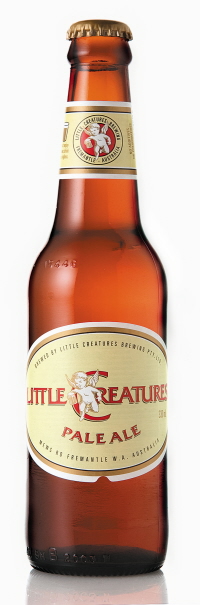 Little Creatures Pale Ale Aside from Coopers of Adelaide with their unique sparkling ales, Australia is a disappointing country beer-wise, awash with the sort of cheap and nasty lager that most discerning drinkers wouldn’t give a XXXX for. New brewpubs and micros are on the rise, however, and now one of their products has reached the UK.
The Little Creatures pub opened in 2000 on the fishing boat harbour at Fremantle, just outside Perth. The building was originally a boatyard and then a crocodile farm before being converted into a spacious modern brewpub.
Its original mission was to brew a well-hopped premium pale ale inspired by American examples. The resulting beer proved a major success with Australian critics and the public in a very short time, winning several trophies at the Australian International Beer Awards.
Australian malts are produced to the brewery’s specifications by a supplier in Ballarat. The beer is bottle-conditioned: in fact the name itself is intended as a reference to live yeast.
Hops figure highly in Little Creatures publicity: the brewery is proud of its large hopback. It is also the only brewery in Australia with a quarantine license allowing it to import and store whole hops from the USA. But rather than going for bitterness, the brewers have chosen to exploit the wide range of surprising flavours it’s possible to extract from the Cascade and Chinook varieties it selects for its pale ale.
The beer is a rich golden colour, with a light sediment and soft white lace. Take a sniff and you’re overwhelmed by aromatic fruit and flowers: honeysuckle, new mown hay, lychees and pineapple.
The refreshing palate is similarly rich in fruity hop notes: fruit salad, more pineapple, rosewater, fresh lemon and pine over a lightly syrupy malt backbone. More familiar bitterish hop resins become evident as the flavour develops.
Some bitterness does emerge on the swallow, slowly spreading in a long finish with more tangy flavours and a persistent honeysuckle and fruit lift. The hops become quite peppery, but always controlled and never overbitter.
Of course it wouldn’t take much to make a beer that looks good when compared with the desultory products of Australia’s megabrewers, but Little Creatures even stands up well in more international company: it could give some of its American inspirations a run for their money. Overall a light-hearted beer that gives this column a fresh and joyful start to 2005.
Try also ‘t IJ Plzeň (Netherlands, curiously similar to this beer), Sierra Nevada Pale Ale (USA), Butts Barbus Barbus (GB)
Read more about this beer at ratebeer.com: http://www.ratebeer.com/beer/little-creatures-pale-ale/7658/
Originally published in What’s Brewing January 2005
Origin: Knightwick, Worcestershire, England
ABV: 6 per cent
Buy from Brewery (tel 01886 821235, www.temevalley.co.uk ), specialist suppliers
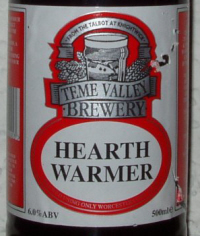 Teme Valley Hearth Warmer A few hundred years ago it wouldn’t have been uncommon for local breweries to keep their own patch of humulus lupus, but times have changed. When it was founded behind the Talbot, a celebrated 14th century coaching inn on the river Teme between Bromyard and Worcester, back in 1997, the Teme Valley Brewery became the only independent British brewer to use its own hops.
Pub and brewery are owned by the Clift family, who had also owned hop fields on the nearby Lulsley Court Estate, in the heart of Worcestershire’s hop growing country, since the 19th century. The estate was sold in September 2000, and while the brewery can no longer claim its singular distinction, it remains committed to local hops, with 90% coming from Lulsley Court and some of the beers using green hops fresh from the harvest.
These green hop beers by no means exhaust the noteworthy specialities in the brewery’s range. Hearth Warmer, which went by the punning name of Wass Ale when it was first launched as a draught Christmas beer in 1997, is one of the few British beers long matured at the brewery: it’s kept for up to nine months before release.
The real ale in a bottle version first appeared in December 2000, brewed from a complex grist of pale, crystal and chocolate malts with some wheat malt and roasted unmalted barley, plus locally sourced Northdown and Fuggles hops.
The result is a rich burgundy colour with an amber glow that pours with an off-white foamy head. The sweet-sour aroma is also striking, with plenty of sherberty, pastille-like fruit and hints of almonds.
The palate also makes an impression: it’s powerfully sweet and sour, with orange fruit, and the darker malts and roasted barley make themselves felt with unexpected but welcome roasty and chocolate notes.
There are toffee flavours in the swallow, leading to an intense finish with more fruity malt and a developing pleasant roast flavour. Unsurprisingly there’s a good dose of hops giving dry spiciness, but this never becomes overbearing, with plenty of sweet and juicy fruit and malt flavours still evident beneath the dryness.
The roasty flavours and the strength give Hearth Warmer the whiff of an old-fashioned country beer, calling to mind revivalist recipes such as Fullers 1845 and making it a particularly appropriate fuel for traditional seasonal cheer. If anything the flavours are a little too raw and vivid, and the beer could survive a bit more laying down after purchase, perhaps as a treat for the next festive season.
Read more about this beer at ratebeer.com: http://www.ratebeer.com/beer/teme-valley-hearth-warmer/39288/
Originally published in What’s Brewing December 2004
Origin: Vorchdorf, Upper Austria
ABV: 14 per cent
Buy from Specialist suppliers
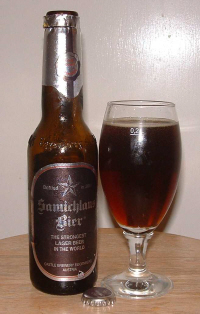 Schloss Eggenberg Samichlaus Bier Samichlaus, an ideal sipping beer for the festive season, used to be the world’s strongest regularly brewed beer, and still claims to be its strongest lager.
The name is Swiss German dialect for St Nicholas, aka Santa Claus, and the beer is brewed annually on his saint’s day, 6 December, in many European countries a jollier occasion than Christmas Day. It’s matured at the brewery for ten months before being released in time for the following season.
This Austrian brew’s Swiss name is explained by its origin at the Hürlimann brewery in Zürich, once a leader in the cultivation of pure yeast strains. It was first produced there in 1979 to test an experimental yeast that would not “go to sleep” at higher alcohol levels, but immediately became a regular speciality.
In 1996 Hürlimann merged with another big Swiss brewer, Feldschlösschen, and the combined group is now part of Carlsberg. Samichlaus was soon rationalised out of existence, but after an international outcry from enthusiasts, it was recreated under license across the border in Austria after a break of three years.
Its new home is at 10th century Castle Eggenberg, overlooking the village of Vorchdorf between Salzburg and Linz. The castle has boasted a commercial brewery since 1681: the Stöhr family, the present owners, date their involvement back to 1803.
The beer is made to the same recipe as before, including dark malts and Hallertau, Hersbrücker and Styrian hops. The original cold fermenting yeast brought from Hürlimann is now supplemented by a second strain from Eggenberg.
The beer comes out rich brown with a burgundy tinge, very slightly cloudy with a gentle carbonation and a low head that soon subsides. It has a malty, spirity aroma with touches of glacé cherry, fruit cake, sherry and old books.
There are also sherry notes on the sweetish, malty and very complex palate, with juicy cherry fruit and darker iron and coffee flavours. The alcohol is obvious but not overbearing and the texture is smooth rather than cloying, aided by the subtle sparkle.
Gently drying and slightly raspy hop tones emerge in the long, warming finish, which remains overall malty and fruity, with notes of sweet wine, brandy and dates. There’s also a faint but noticeable bitter and woody sting in the tail.
Although not bottle conditioned, Samichlaus is capable of bottle development — my sample was bottled in 2001 with a best before date of 2005 and certainly showed some additional complexity. A treasure of a beer, and one that deserves looking after following its narrow escape from corporate oblivion.
Read more about this beer at ratebeer.com: http://www.ratebeer.com/beer/schloss-eggenberg-samichlaus-bier/6245/
Originally published in What’s Brewing November 2004
Note this beer may no longer be available in a bottle conditioned version.
Origin: West Lydford, Somerset, England
ABV: 7 per cent
Buy from Specialist suppliers, regional Tesco
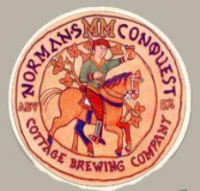 Cottage Norman's Conquest Back in the mid-1990s this superb Somerset ale seemed poised to lead the bottled beer renaissance. When Cottage Brewery founder Chris Norman and his wife Helen dreamed up the rather high concept of a beer called Norman’s Conquest at an original gravity of 1066, they couldn’t have known the result would prove such a hit, snatching Champion Beer of Britain in draught form only months after it first appeared in 1995.
Seeing the potential in a bottled version but short of capacity in their then tiny plant, Cottage contracted out to Thomas Hardy. Bottle conditioned Norman’s Conquest was duly launched in some style at Fortnum and Mason in November 1995, at a time when the mainstream media seemed to be taking beer seriously for once: the Guardian raved, and Oz Clarke and Jilly Goolden rhapsodised on the BBC.
But the food and drink editors soon went back to glugging their supermarket Chardonnay, and Cottage ran into consistency problems. For a while Norman’s Conquest was brewed and marketed by Hampshire Brewery, then disappeared altogether in bottled form.
Eighteen months ago it made a welcome return, this time produced in house by a newly expanded brewery, and bottled at IBS, successor to Wessex Craft Brewers. Cottage’s Mark Dearman promises to build on its renewed success with at least three new bottled “classic ale styles” and a packaging upgrade by next spring.
Conquest is a beer that’s difficult to pigeon-hole; hardly the “barley wine” it’s sometimes designated, it’s more an idiosyncratic old ale with shades of a Belgian double. A grist of Maris Otter pale, crystal and chocolate malts and Challenger hops results in a beer that the label now describes simply as a “strong ale”.
It pours very dark ruby, with a fine, persistent yellowish head, and a roasty aroma with leather, vanilla, banana and cigar ash. It’s creamy in the mouth, with rich malt loaf and winey fruit and traces of raspberry, apple and brown sugar. Tar, chocolate, and hoppy, flinty flavours give some dryness.
The long finish has roast flavours coming to the fore over more malt loaf, hops and dry bitter chocolate on the tongue, and late cigar smoke and geranium notes.
All in all, the new Conquest seems at least as good as the old and should be just as well suited to fly the standard for fine British beer — if only the superplonkers of the media could be persuaded to wake up and smell the hops more than once a decade.
Try also Dent T’Owd Tup (filtered), Hog’s Back Wobble in a Bottle, Val-Dieu Brune (Belgium)
Read more about this beer at ratebeer.com: http://www.ratebeer.com/beer/cottage-normans-conquest/11408/
|
|
