A sample text widget
Etiam pulvinar consectetur dolor sed malesuada. Ut convallis
euismod dolor nec pretium. Nunc ut tristique massa.
Nam sodales mi vitae dolor ullamcorper et vulputate enim accumsan.
Morbi orci magna, tincidunt vitae molestie nec, molestie at mi. Nulla nulla lorem,
suscipit in posuere in, interdum non magna.
|
Originally published in BEER February 2006.
To read about more beers stocked by Morrisons, see previous post.
ABV 6.5 per cent
Origin Berkel-Enschot, North Brabant, the Netherlands
Buy from Morrisons, other supermarkets and specialist shops
Website www.latrappe.nl
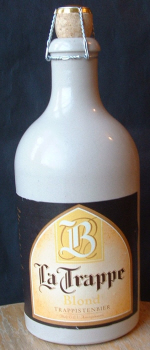 Koningshoeven La Trappe Blond In October 2005 the number of official Trappist breweries in the world rose from six to seven, with the only such monastery brewing commercially outside Belgium given the right to use the official Trappist seal once more.
Since its first beers emerged in 1885, the history of the brewery at the abbey of Our Lady of Koningshoeven, 3km outside Tilburg, has been complicated. Originally branded Schaapskooi, since 1980 the traditional monastic-style ales have borne the name La Trappe (Koningshoeven in North America), but other styles of beer have been produced under different names.
Twice, secular brewers have been involved: Interbrew’s predecessor operated the brewery between 1969 and 1980 and it was leased to Dutch national brewer Bavaria in 1998, which led to the withdrawing of the Trappist seal by the International Trappist Association – it’s not clear whether the abbey asked for this or was forced to accept it.
In any case, last year the ITA re-examined the deal with Bavaria and found that since the monks maintain control of the La Trappe brands, these beers if not the brewery’s other products should be entitled to display the coveted seal.
It might be heresy to say so, but the blond ale, which replaced a nondescript beer called Enkel (single) and is now stocked by Morrisons in 50cl ceramic crocks, is a good example of how the brews have improved since Bavaria’s involvement.
This bottle conditioned beer pours a slightly cloudy rich golden with a pillowy white head that leaves a good lace. There’s a spicy hop aroma with fennel notes and a slight phenolic character with banana and pineapple.
More fruity banana follows in a dryish and nicely malty palate with tart fruit, spices and vanilla cream emerging. The tangy finish has some pleasing hopsack notes with pineapple and custard. Leffe Blond might be like this if it was made by a brewery that cared.
Look out at specialist retailers for the rest of the range: Dubbel, Tripel, Quadrupel (10 per cent ABV), and a new Trappist wheat beer.
Read more about beers stocked by Morrisons in the next post.
Read more about this beer at ratebeer.com: http://www.ratebeer.com/beer/la-trappe-blond/10380/
Originally published in BEER February 2006
ABV 5.5 per cent
Origin Purnode, Namur, Belgium
Buy from Morrisons, specialist shops
Website www.bocq.be
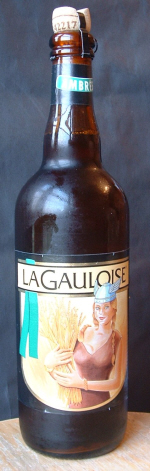 Du Bocq La Gauloise Ambrée In March 2004, when Yorkshire-based grocer Morrisons turned itself into the fourth largest supermarket chain in the UK by swallowing up rival Safeway and converting all its stores, the news was greeted with some alarm by bottled beer lovers: of all the national chains Safeway had boasted easily the most interesting beer range.
Last Autumn Morrisons went some way to making up the loss by launching a range of over 20 imported specialities, but hardened beer hunters hoping for the sort of surprises Safeway once served up may be disappointed by a list heavy on Interbrew and S&N/Kronenbourg brands and beers already fairly widely available in Britain.
La Gauloise Ambrée, a bottle conditioned Belgian amber ale from an old-established family-owned Wallonian independent, is one of the more interesting inclusions. Brewery Du Bocq specialises in decent warm fermented beers, though an irritating habit of marketing identical brews under different names hasn’t helped its reputation with beer lovers.
The Ambrée is one of a series of three Gauloise beers with labels depicting the classical goddess of grain Ceres. Though the label claims this is “the beer of our ancestors”, the recipes are modern. The advised serving temperature of 5°C should be taken even less seriously – it’s far too low in my opinion.
This is a cheerful enough lightly spiced ale that pours clear and sparkling from its corked 750ml bottle, with a rich amber colour (30 EBC) and a fluffy off-white head. Herbs including coriander show in the spicy, mallowy aroma.
There’s plenty of juicy sweet malt, drying hops and herbal flashes on the palate but also a papery note. The finish is the beer’s strongest suit: it’s tangily fruity with rounded burry hops (30 IBU) and a ginger cake touch.
The blond and brown sister beers are not stocked by Morrisons but often pop up in specialist shops – the brown is the strongest and best of the three.
See next post to read about more beers stocked by Morrisons.
Read more about this beer at ratebeer.com: http://www.ratebeer.com/beer/la-gauloise-ambree/6152/
First published in BEER March 2007
ABV: 4.8 and 5 per cent
Origin: Newquay, Cornwall
Buy from: Local outlets, specialists
Website: www.atlanticbrewery.com
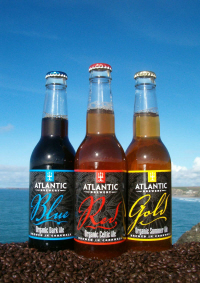 Atlantic Blue, Red and Gold Meanwhile, Britain’s other Celtic peninsula is providing ever richer pickings for the beer connoisseur [see previous post reviewing two Welsh beers], with one of our few remaining traditional regionals, St Austell, going from strength to strength and outstanding newcomers like Sharps and Skinners also making their mark.
Atlantic, a brewery specialising in organic Real Ale in a Bottle located near Newquay on the coast of the eponymous ocean, is one of the most recent startups, dating from 2005. Judging by the two excellent beers I tasted for this piece, it should have a great future.
Remarkably, Atlantic grows its own hops and also produces special malts as well as brewing and bottling in-house – a level of vertical integration that was common in pre-industrial days but is very rare now.
Atlantic’s cottage industry status was confirmed when I phoned and was told brewer Stuart Thomson couldn’t speak to me as he was literally in the mash tun. I assume it was empty at the time and this wasn’t some experiment with unusual adjuncts!
All the beers are packaged in 330ml clear glass bottles – elegant but looking worryingly like alcopops. Anyone expecting from its name that Atlantic Blue might also resemble some of the sillier alcopops in colour will be reassured to know it’s actually a sensible dark ruby brown, and pours with a fine yellowish head.
A smooth dark malt and liquorice aroma leads to a light textured but very flavoursome palate with roast malt, sharpish fruit, fresh coffee, burnt toast and a faint medicinal note. The finish is rather sternly dry, roasty and hoppy but softened by flashes of juicy raisin fruit.
Crystal, chocolate and black malt provide the colour and there’s a dash of wheat malt too, with Fuggles and First Gold hops.
Brewed to a similar recipe but without the darker malts, Red Organic Celtic Ale does some pan-Celtic borrowing from Irish styles to create a very tasty reddish-amber beer with a soft and sticky off-white head, and a nutty and resiny aroma with hints of autumn fruit.
The palate is nicely fruity and slightly phenolic, with marmalade and hop resins over chewy malt. An initially soft finish soon turns moreishly hoppy with a touch of ginger spice and lingering orange peel. Yeghes da!
Read more about these beers at ratebeer.com:
http://www.ratebeer.com/beer/atlantic-blue/51066/
http://www.ratebeer.com/beer/atlantic-red/62999/
First published in BEER March 2007
ABV: 3.7 and 4.6
Origin: Porthmadog, Gwynedd, Wales
Buy from: Local outlets, specialists
Website www.purplemoose.co.uk
 Mŵs Piws Cwrw Madog The daffodils are blooming, the days are getting longer and Gŵyl Ddewi is upon us – time to celebrate the coming of spring with a glass of cwrw cymreig da.
Wales has a reasonable sprinkling of craft brewers offering Real Ale in a Bottle, most of them very small producers trading through local outlets and farmers markets. It’s a sector where distinctiveness and provenance matter to the consumer, especially in a part of Britain with its own separate and strong national identity.
So it’s pleasing to see so many beer bottles flying the Red Dragon and bearing the Welsh language, alongside more local references to the geography and history of brewery sites.
Porthmadog’s Bragdy Mŵs Piws is a good example. The name – Purple Moose – is a little puzzling as Gwynedd is rather out of range of any kind of moose, let alone a purple one. But founder Lawrence Washington, who first used the name on his home brew, says purple is his favourite colour and everyone loves a moose.
Lawrence conceived the brewery while based in Cheltenham, and it was a connection with the Ffestiniog railway that led him to choose Porthmadog as a location when he went commercial in 2005. He’s been picking up SIBA and CAMRA awards for his cask beer ever since.
The beers are proud to celebrate their home town, a small port on the Irish Sea coast and the edge of Snowdonia, founded in the early 19th century by landowner and agricultural improver William Madocks, who reclaimed land at the estuary of the afon Glaslyn.
The town’s founding father is namechecked in Cwrw Madog. Two varieties of crystal malt give a reddish-amber glow to a Maris Otter grist, with a bubbly off-white head and a broadly malty aroma with a touch of earthy hops and fruit salad. The palate is very dry and tannic with oily hop resins – Pioneer and Goldings –over light fruit.
There’s an unusual and interesting paraffin-like note on the swallow, leading to a resiny and peppery bitter finish with pleasant fruit and long lasting hops. Overall this is a rich and flavoursome bitter on the hoppier side of the style.
 Mŵs Piws Ochr Tywyll y Mŵs An obvious fondness for hop bitterness expresses itself across the Purple Moose range, even in dark ale Ochr Tywyll y Mŵs – Dark Side of the Moose in English. This is a deep amber-brown ale with a loose and bubbly head, again with crystal and dark crystal malts and a dash of roasted barley.
A spicy coffee aroma introduces a roasty palate with cola notes and a surprisingly hefty dose of Pioneer and Bramling Cross hops, with the sort of citric, pineapple and blackcurrant tones that are more usually found in paler summer ales.
It’s an intriguing and surprisingly successful combination that also includes a touch of powder-dry plain chocolate, and more blackcurrant on a very long finish with burnt roast flavours.
These are bottle conditioned beers, but be warned that Lawrence is planning to introduce contract-bottled filtered (though unpasteurised) versions alongside his RAIBs in future. This is in response to demand from some local restaurants whose staff and customers can’t quite get their head round the idea of a sediment yet.
I admit I have some sympathy with craft brewers considering filtering bottled ales. I’d originally planned to feature a second small Welsh RAIB producer this month, but every one of four different bottles I sampled was off.
Read more about these beers on ratebeer.com:
http://www.ratebeer.com/beer/purple-moose-madogs-ale-cwrw-madog/50456/
http://www.ratebeer.com/beer/purple-moose–dark-side-of-the-moose-ochr-tywyll-y-mws/53618/
Originally published in BEER April 2006
CAMRA North London tasting 2010
ABV: 4 and 4.2 per cent
Origin: Cropton, North Yorkshire, England
Buy from: Local Tesco, specialists
Mail order: 01751 417330, www.croptonbrewery.com
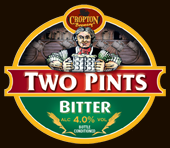 Cropton Two Pints From Jacobite Ale [see previous post] to a brewery offering a beer called King Billy might once have seemed a jump too far, but anyone who appreciates great beer should find room for them both. Cropton is an outgrown brewpub dating from 1984 and based at the New Inn pub in a tiny village near Pickering in the North York Moors national park.
Its range of nine bottled beers are all bottle conditioned and all vegetarian and vegan. The ones I’ve tried are distinctive and packed full of flavour, and you can shop for a mail order mixed case on the web or over the phone.
Two Pints Bitter was the brewery’s first brew as a draught beer, so named because it was so good that drinking one pint was as good as drinking two. It’s a rich lively golden colour with a fine but low white head and a tart spiced apple and blackberry aroma, made from pale and crystal malt and hopped with Challenger and East Kent Goldings.
A dry, slightly milky and nicely biscuity palate has blackcurrant notes, with a bitter sting in the swallow leading to a delicate leafy finish with slight roasty notes. This is a subtle, elegant and very refreshing beer with an exquisite balance.
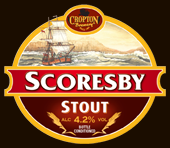 Cropton Scoresby Stout Scoresby Stout is a more robust beer taking its name from a local whaling captain who is credited with inventing the crow’s nest. This adds roasted barley to a grist similar to Two Pints, to produce a very dark brown beer with a thick brown head subsiding to bubbly lace.
The aroma is relatively restrained, with malt, dark sugar, roast and cola, followed by lots of fruit on a very tangy palate with the sting of roasted barley. There’s charred wood well-blended with malt and a moreish touch of hop bitterness on the rounded finish.
At the CAMRA North London tasting in February 2010 we started with Two Pints, which was generally enjoyed as a well balanced straightforward session beer, although with a notably short finish with little hop character.
Read more about these beers at ratebeer.com:
http://www.ratebeer.com/beer/cropton-two-pints-bitter/6685/
http://www.ratebeer.com/beer/cropton-scoresby-stout/6695/
Originally published in BEER January 2006
ABV: 7.2 and 8 per cent
Origin: Traquair, Scottish Borders, Scotland
Buy from: Specialists
Website: www.traquair.co.uk
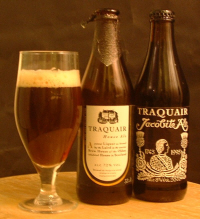 Traquair House Ale and Jacobite Ale Scotland also offers a few filtered bottled beers of note: for example, Williams Brothers Heather Ale range, which includes the unhopped Alba Ale; the wood-matured Innis & Gunn; or Orkney Brewery’s barley wine, Skullsplitter. But outstanding among all of them are the beers of Traquair House, the country’s oldest established micro based in its oldest-inhabited castle.
The brewhouse at Traquair, so the romantic story goes, was rediscovered with equipment intact by the laird, Peter Maxwell Stuart, in 1965, and since his death in 1990 has been run by his daughter Catherine. The principal beer, simply called Traquair House Ale, is an acknowledged classic, made with malt from Hugh Baird in East Lothian and East Kent Goldings hops, filtered but unpasteurised and capable of developing with age.
A five-year-old bottle from my cellar poured a very dark ruby brown with a soft, fine and very persistent yellowish head. A potent amontillado sherry aroma with woody hints led to a generous and very complex palate with dark sherryish fruit, well-rounded sour roasty notes and a hint of artichoke.
A lightly warming and gently mouth-tingling finish had burnt raisins, chocolate milk, burry hops, spices and orange fruit. This is a complex and intoxicating beer that you’d be a fool to turn your back on since it doesn’t technically qualify as “real”.
At Traquair the family sympathies lay with the Jacobite cause: Charles Edward Stuart stayed at the castle in 1745, and having closed the distinctive Bear Gates behind him, the laird vowed not to open them again until a Stuart returned to the throne. The gates remain closed, but the link is now celebrated in the spiced Jacobite Ale, first produced in 1995 to commemorate 250 years since the rebellion.
Also a dark brown and with a very light sparkle, this beer has a blackcurrant pastille and herb aroma and a lacy off-white head. The richly malty palate is sweetish on the lips but well-balanced by a slight sourness and emerging herbs, especially coriander.
The dry finish still has a syrupy feel, and a long, subtle development with unwinding herbal flavours. Perhaps not as impressive as the regular Ale, this is still worth getting to know as one of Britain’s most successful spiced beers.
Read more about these beers at ratebeer.com:
http://www.ratebeer.com/beer/traquair-house-ale/2012/
http://www.ratebeer.com/beer/traquair-jacobite-ale/5711/
Originally published in BEER January 2006
ABV 5 per cent
Origin Munlochy, Highland, Scotland
Buy from local Tesco, specialist beer and organic shops
Mail order 01463 811871, www.blackislebrewery.com
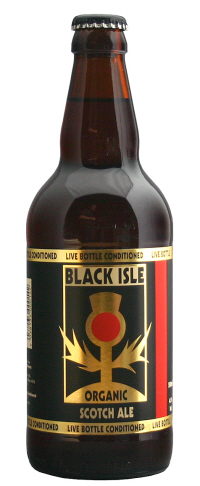 Black Isle Organic Scotch Ale There’s something of a beer renaissance going on in Scotland, with a vibrant micro scene busily innovating as well as reinventing the country’s own distinctive traditional styles. Bottled beers are also playing their part, perhaps unsurprisingly given the cachet of the words “produit d’Ecosse” in the export market.
But sadly, real ale in a bottle remains a rarity. The current Good Bottled Beer Guide lists only three brewers north of the border bottling live beer and one of those, Isle of Skye, offers only a seasonal summer wheat beer.
The second, Bridge of Allan, is responsible for the fine Brig o’Allan 80% which won praise in this column back in 2002 and has gone on to win awards at the Scottish beer festival. The brewery has now added several new organic RAIBs including a porridge oat stout and a ginger-flavoured beer, but sadly sample bottles weren’t available at the time of going to press.
Several other brewers north of the border are also serving the organic market: the only other brewer offering a range of bottled real ales is a dedicated organic specialist. The “intensely independent” Black Isle Brewery was founded by David Gladwin in 1998 at Allangrange, right up in the north near Inverness, on the Black Isle between the firths of Moray and Cromarty.
It now offers four bottle conditioned beers: a wheat beer, a blond and the two review bottles. Organic Scotch Ale and Organic Porter. These are beers you’re as likely to see on the shelves of trendy organic supermarket Fresh & Wild as in a beer shop.
Over the years I’ve found the beers distinctive and vivid but also sometimes a little raw and sharp-edged. The yeast in the sample bottles simply wouldn’t settle and the Scotch Ale came out a very murky, muddy colour, though with a rich off-white head and an attractive aroma with banana milk shake notes.
If you’re hoping for a real bottled version of a traditional malty heavy, you’re in for a surprise: the unusual flavours result partly from the use of whisky-style peated malt and bog myrtle, alongside pale, crystal and wheat malt and Challenger and Goldings hops. The sweetish, gingery palate has acidic orange flavours and a curious herbal cough sweet note, leading to a roasty finish.
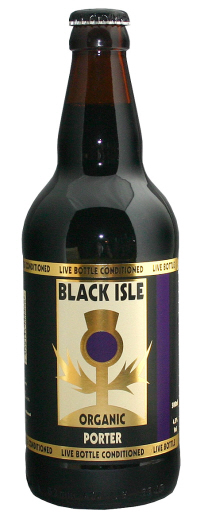 There’s a similar sharpness to the Porter but here it’s more appropriate to the style. A complex grist contains malted wheat and oats alongside pale, crystal and chocolate malts, Challenger and Goldings hops. There’s a similar sharpness to the Porter but here it’s more appropriate to the style. A complex grist contains malted wheat and oats alongside pale, crystal and chocolate malts, Challenger and Goldings hops.
The result is is a dark brown beer with a black coffee aroma and a gravy-like malty palate with roast and liquorice notes. The finish is roastier still with chocolate, malt syrup and faint burry hops.
Read more about these beers at ratebeer.com:
http://www.ratebeer.com/beer/black-isle-organic-scotch-ale/16468/
http://www.ratebeer.com/beer/black-isle-organic-porter/16268/
Originally published in BEER January 2007
ABV: 4.6 and 5 per cent
Origin: Bridgend, Islay (Argyll and Bute)
Buy from: Brewery (tel 01496 810014), local outlets, specialists
Website: www.islayales.com
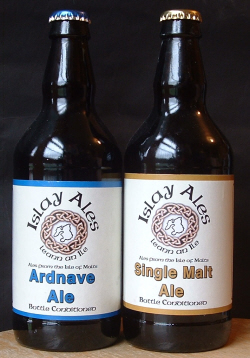 Islay Ales Ardnave Ale and Single Malt Ale I never really “got” whisky until I tasted the pungent, peaty single malts of the Isle of Islay, the southernmost of the Hebrides and the former seat of the Lord of the Isles. So I was delighted to encounter the products of the island’s only brewery, an Anglo-German-run micro launched in 2003.
Supplying craft-brewed bottled ales alongside cask makes real sense in this relatively remote but well-visited location. Islay Ales’ beers trade on the local Celtic heritage and are available in a range of key local outlets including hotels and restaurants.
The brewery – Leann an Ile in Gaelic – boasts a range unusually wide for a small micro hand bottling its beers, and every bottle in the selection I tried, from light session beer Finlaggan Ale to dark and substantial 7.1 per cent Ballinaby Ale, had something to say for itself.
One standout was Ardnave Ale, named after Ardnave Point at the north end of Loch Gruinart. This characterful and refreshing bitter is made from pale malt and “small amounts” of crystal, with four hop varieties – Goldings, Mount Hood, Fuggles and Styrian Goldings.
It’s a warm rich amber with a thick pinkish white head and a pungent, slightly sulphurous aroma with cream and mineral notes. A fruity, biscuity palate is distinctive and unusual, with mineral and complex blackcurrant notes.
The long slightly nutty finish has peppery notes and a hint of ashy roast and, if it doesn’t sound too fanciful, a slight whiff of the seaweed note sometimes found in the island’s whiskies.
There’s an obvious whisky link, too, to Single Malt Ale, originally a special for local malt and music festival the Feis Ile. Amarillo and Bramling Cross hops flavour pure pale malt in this deep golden brew with a creamy white head that, perhaps unexpectedly, emphasises hop character at least as much as malt.
A nettly grapefruit and blackcurrant aroma heralds a very fresh and crisp palate with good malt character, toffee notes and plenty of dry grapefruity hops. The rooty, peppery finish is quite stern and astringent, but with soft fruity malt beneath. Sláinte!
Read more about these beers at ratebeer.com:
http://www.ratebeer.com/beer/islay-ardnave-ale/51591/
http://www.ratebeer.com/beer/islay-single-malt-ale/71980/
Originally published in BEER January 2007
ABV: 3.8 and 4.2 per cent
Origin: Larbert, Falkirk
Buy from: Brewery (tel 01324 554000), specialists
Website www.trystbrewery.co.uk
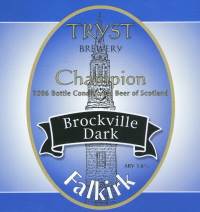 Tryst Brockville Dark Hogmanay is imminent as this issue leaves the press, with Burns Night soon to follow, so it’s the time of year for this column to look north of the border.
In previous years I’ve bemoaned the relatively rarity of Real Ale in a Bottle in an otherwise innovative and dynamic Scottish craft brewing scene. That situation now seems to have changed decisively, with several new names appearing in the recent Good Bottled Beer Guide and others expanding existing ranges.
And there’s more to follow: I was particularly excited to hear that Williams Brothers, originators of Fraoch heather ale, plan to bottle condition some lines, though samples weren’t ready by the time of writing.
With its generally rugged geography and low population density, Scotland will always be a challenge for cask ale producers, partly explaining why its brewers once embraced keg even more wholeheartedly than their English counterparts.
So RAIBs surely have a key role to play as a way for pubs and restaurants even in the remotest corners of the Highlands to offer a choice of natural and distinctive regional bottled beers, much as many of them already do with the country’s standout whiskies.
Then there’s the important tourist trade, and an export market fuelled by both the Scottish diaspora and the romantic and distinctive image Scotland enjoys in the eyes of the world’s consumers.
Tryst Brewery, in the small town of Larbert, near Falkirk in the Central Belt, is one of the new RAIB specialists. Owner John McGarva is a former home brewer who went commercial in 2004, and the brewery name, pronounced to rhyme with “spiced”, commemorates Falkirk’s historic cattle market.
John started by brewing cask, but following requests from drinkers he soon invested in a small bottling plant, and found his bottled beers winning acclaim. A varied and interesting selection of five RAIBs are now available, all in elegant bottles bearing distinctive labels featuring Falkirk’s town steeple.
Tryst won Champion Bottle Conditioned Beer of Scotland 2006 for Brockville Dark, an unusual example of a Scottish-brewed mild named after Falkirk FC’s ground at Brockville Park. It’s made from Optic pale, crystal, amber and chocolate malts, roasted barley and Challenger and Goldings hops.
The result is a dark brown beer with a ruby note, an off-white foam head, and a minerally, salty aroma with a whiff of roast grain. The soft malty palate is gently tingly and slightly briny, with herb notes, a touch of chocolate and a sting of drying hops.
The beer turns liquoricey in a long lasting and very satisfying roasty finish with hints of coal tar and frothy chocolate.
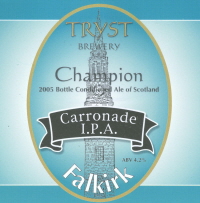 Tryst Carronade IPA The well deserved CBoS win was the second in a row for the brewery: in 2005 the RAIB medal went to Carronade IPA, named after a cannon made by a local ironworks and used at the battle of Trafalgar.
The beer is in the modern Scottish rather than the historic English IPA mould, a hoppy golden session ale that invites comparison with Caledonian’s classic Deuchars IPA, but is more robustly and intensely flavoured.
Its clear golden colour and fine but sparse white head result from pure Optic pale malt. Cascade and Columbus hop varieties from Washington State contribute to a fresh and complex aroma of pollen, ginger, lemon grass and elderflower.
There’s more elderflower on a crisp and very dry palate with a smooth malty backdrop. A citric swallow leads to a biscuity finish with a firm peppery hop bite, pineapple notes and a late hint of grapefruit.
What’s especially remarkable is that Carronade’s 4.2 per cent ABV is currently as strong as Tryst gets – John skilfully packs massive amounts of flavour into modest gravities, and still ensures the beers work well in bottle.
Tryst Brockville Dark was also featured as a mild for May in BEER May 2009. To read the previous review in this piece, see Hoggleys Mill Lane Mild.
Finally, one of my favourite craft-brewed bottled milds comes from north of the border, where the distinct, and now near-extinct, 60/- style originally filled mild’s ecological niche. Tryst Brockville Dark, from Larbert near Falkirk is a well-balanced award-winning interpretation with a gently tingly and slightly briny malty palate and a liquorice and frothy chocolate finish. Smooth and suave perhaps, of manners gentle and affections mild indeed.
Read more about these beers at ratebeer.com:
http://www.ratebeer.com/beer/tryst-brockville-dark/33826/
http://www.ratebeer.com/beer/tryst-carronade-ipa/39477/
First published in BEER December 2005
Origin: Lochristi, East Flanders, Belgium
ABV: 7.5 per cent
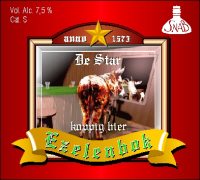 Dutch autumn bokbier must be one of the most underpublicised beer styles outside its home country: world beer surveys often don’t mention it all, or treat it as a footnote to German Bock. Yet it’s really a style in its own right, and in the Netherlands it holds a special place at the heart of the craft beer revival. Dutch autumn bokbier must be one of the most underpublicised beer styles outside its home country: world beer surveys often don’t mention it all, or treat it as a footnote to German Bock. Yet it’s really a style in its own right, and in the Netherlands it holds a special place at the heart of the craft beer revival.
The annual Bokbierfest at the end of October in Amsterdam is the world’s only major beer festival dedicated to a single style, and attracts thousands from all over the Netherlands and beyond. To coincide with the festival, a series of panel tastings names the tastiest boks, and this year top prize went to Ezelenbok (Donkey’s Bock).
The fact that this beer is not actually brewed in the Netherlands but in Belgium is yet another twist in the intriguing history of a border-crossing style from a small trading nation.
The town of Einbeck in Lower Saxony, Germany, claims credit for inventing Bock, and the local brewery, now part of the vast Radeberger group, still labels its strong beers “Ur-Bock”, original Bock. The word “Einbecker”, so the story goes, got mangled into “Bock” when the style took root in Bavaria. But the fact that the word “Bock” (or “bok” in modern Dutch spelling) means billy goat in both German and Dutch indicates a simpler explanation for the origin of the name.
German Bocks are strong lagers, often pale or amber and associated with the spring season, but Dutch boks are dark winter warmers. They first appeared in the late 19th century, when Dutch commercial brewers were converting to cold fermentation and buying in German kit and expertise, so were originally probably always brewed as lagers.
Prior to 1913, boks appeared in February but the start of the season has since suffered a century of anticipation creep, slipping back past Christmas to the beginning of October by 1950. This year it was moved still earlier to 21 September which, given the warm weather, has resulted in the unlikely sight of drinkers enjoying a bok while basking in the sun on café terraces.
By the early 1980s, bok was one of the only alternatives to the ubiquitous “pils” churned out by Heineken and its competitors, and was itself coming under threat. Resistance arrived in the form of PINT, the Dutch beer consumers’ organisation which celebrated its silver anniversary this year. Bokbier was PINT’s early cause célèbre and the annual festival, originally started by a pioneering speciality beer pub, became a flagship event.
The revived interest in speciality beer spearheaded by PINT led to a new wave of Dutch microbrewers. Since most of these were equipped for ale rather than lager production, a new style of warm-fermented bok emerged, often unfiltered and unpasteurised. This development has offered a rare opportunity to compare both ale and lager interpretations of the same basic style side to side.
Today’s bokbiers offer a surprisingly wide range of flavours united by a few key themes. All the beers are dark (ruby red or brown, though some brewers now offer a paler spring variant), strong (the classic gravity is 6.5 per cent but some go up to 8 or 9) and malt-accented. Balancing bitterness comes more from roasted grain than hops.
Broadly, the lager versions are smoother, more consistent and more reliable, while the ales are fruitier, often more complex, and sadly more hit-and-miss in terms of consistency and quality.
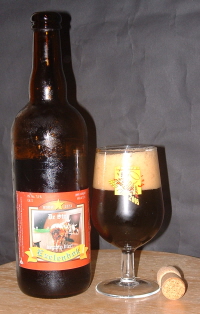 Proef SNAB Ezelenbok Ezelenbok is a bottle- and cask-conditioned ale-style bok that can’t be faulted for quality, perhaps because it emerges not from a tiny Dutch micro but from Belgium’s Proef brewery, where they specialise in brewing small batches under contract. It’s commissioned by SNAB (The North Holland Alternative Brewers’ Society), who also devise and market several other excellent specialities.
Such “brewers without breweries” are more common in countries like the Netherlands and although the arrangement might provoke suspicion from British drinkers, SNAB are honest and transparent about it, with the brewery of origin clearly stated on the label as well as a full ingredients list: Munich, crystal, pilsener and chocolate malts, and Hallertau Hersbrücker hops.
The beer itself is a superb and very refined example of an ale-type. It’s a very dark burgundy (80 EBC) with a thick foamy fawn head and a candyish malty aroma with herbal, blackcurrant and liquorice traces.
A smooth, malty and very nutty palate yields a sweetness balanced by good roasty notes and burry hops (32 EBU), leading to a long dry slightly herbal finish softened by light fruity syrup. The brewer advises up to one year maturing in bottle but it could probably develop for a longer period.
Unfortunately, I’ve never seen a Dutch bok on sale in Britain, but if you’re in Amsterdam over the next couple of months you’ll find a great selection of bottled boks at the Bierkoning beer shop just round the corner from Damplein (Paleisstraat 125, tel +31 (0)20 625 2336, www.bierkoning.nl ). Comparing Ezelenbok with one of the better lager styles like Amstel or Brand is a good place to start exploring this intriguing seasonal style.
Read more about this beer at ratebeer.com: http://www.ratebeer.com/beer/snab-ezelenbok/18134/
|
|
