A sample text widget
Etiam pulvinar consectetur dolor sed malesuada. Ut convallis
euismod dolor nec pretium. Nunc ut tristique massa.
Nam sodales mi vitae dolor ullamcorper et vulputate enim accumsan.
Morbi orci magna, tincidunt vitae molestie nec, molestie at mi. Nulla nulla lorem,
suscipit in posuere in, interdum non magna.
|
Top Tastings 2009
A shorter version of this piece originally appeared in BEER May 2009 as one of several milds for May.
ABV: 4.4%
Origin: Cleobury Mortimer, Worcestershire, England
Website: www.hobsons-brewery.co.uk
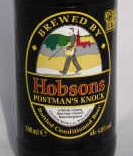 Hobsons Postman's Knock May is the month to celebrate beers which in the words of the promotional materials for CAMRA’s endangered beer styles campaign are “smooth and suave, tall, dark and mysterious and effortlessly tasteful”. Yes, it’s mild month again, as this captivating British beer style continues to shed what’s usually referred to as its “cloth cap” image and establishes itself as a must-have for the portfolios of innovative craft brewers. Research for this review even unearthed examples from Switzerland – Two Reverends from real ale specialist Spiffing Ales at Uetikon near Zürich – and Canada – website ratebeer.com lists Mill Race, from Grand River Brewing, Cambridge, Ontario, as the world’s fifth best mild.
For British Real Milds in a Bottle, let’s start in the style’s heartland of the West Midlands. Hobsons, founded in 1993 at Cleobury Mortimer, South Shropshire, caused a stir in 2007 when its cask interpretation became only the second mild to be declared Supreme Champion Beer of Britain. Its stronger bottle conditioned mild, Postman’s Knock, is equally outstanding. The name commemorates writer, broadcaster, postman and Cleobury character Simon Evans (1895-1940).
Brewed with Maris Otter pale, dark crystal, pale chocolate and wheat malts, dashes of caramel, salt and vanilla, and Worcestershire Fuggles and Goldings hops, this is a deep amber brown beer with a smooth fine yellowish head and a very chocolately character. The fresh aroma has milk chocolate, vanilla and roast malt with a leathery note, leading to a malty but dry and very chocolatey palate. Hints of soot, petrol, vanilla and lead like minerals mix with orangy fruitiness.
The petrol note persists in a roasty and very smoky finish with a burr of slightly peppery hops round the edges and a late developing final touch of chocolate. An intriguing and very drinkable beer that confirms the Worcestershire brewery’s place among the leading mild producers.
For the next mild reviewed in this piece see Vale Black Swan.
Read more about this beer at ratebeer.com: http://www.ratebeer.com/beer/hobsons-postmans-knock/67594/
Top Tastings 2009, Beer sellers: The Beermongers
ABV: 10%
Origin: Portland, Oregon, USA
Website: www.hairofthedog.com
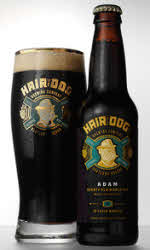 Hair of the Dog Adam
Hair of the Dog, founded in 1993 by Alan Sprints, is now known as one of the most adventurous and consistently high-hitting breweries in the craft brewing heartland of the Pacific Northwest. They clearly started as they meant to go on — this massive and world-beating bottle conditioned ale was the first Hair of the Dog beer. It was originally inspired by brewing historian Fred Eckhardt’s writings on an extinct beer style from Dortmund known as Adambier, but has since been rededicated by the brewers to a late fellow brewer and friend, Adam Kerchival.
Brewed from a grist of organic pilsner barley malt, coloured malts and unmalted barley specially roasted to the brewer’s specification, with a substantial amount of Pacific Northwest hops, the beer comes out near black with a massive light beige head. There’s a sharpish herbal aroma with a note of angelica over leathery dark malt, while the huge palate yields prunes, chocolate, Stilton rind and a complex mix of herbs and spices, with obvious alcoholic weight and a firm hoppy note. The beer softens in a very long finish, with luscious caramel and raisins a prelude to developing drying hops that play out on a complex bitterness.
As well as being rich and beautifully made, it’s a truly distinctive beer and if you haven’t tried it you probably haven’t tasted anything quite like it either. That was certainly my thought when I encountered my first bottle in the salubrious surroundings of speciality gastropub The Monk’s Kettle in San Francisco.
Read more about this beer at ratebeer.com: http://www.ratebeer.com/beer/hair-of-the-dog-adam/568/
Top Tastings 2009, Beer Sellers: Landbierparadies, Nürnberg
ABV: 5%
Origin: Huppendorf, Franken/Bayern, Germany
Website: www.huppendorfer-bier.de
 Grasser Hupperdorfer Bier Vollbier, “full beer”, is a tax category that accounts for the vast majority of German beers and rarely appears on labels, except in Franconia where it’s become specialised to full-bodied standard strength lagers that come out a deeper shade of blond. This delicious unpasteurised, unfiltered example is from a village brewery and brewpub in Huppendorf near Königsfeld which dates back to 1688, and has been in the Grasser family since 1742.
It’s a deep golden beer with a fine off-white head and a lightly hoppy and malty aroma with creamy yeast tones and a slight hint of farmyard. The generously malty palate is smooth, straightforward and slightly peachy, with a slight dry edge. The beer dries further in the finish which is full of flavour, with a biscuit malt keynote, a slightly warming sweet tang and a light sprinkling of hops. It was part of my haul from beer shop Landbierparadies in Nürnberg, a fresh, honest, impeccably made and wonderfully drinkable quencher.
Read more about this beer at ratebeer.com: http://www.ratebeer.com/beer/grasser-huppendorfer-vollbier/29781/
Top Tastings 2009
ABV: 9 per cent
Origin: Erpe-Mere, Oost Vlaanderen
Website: www.glazentoren.be
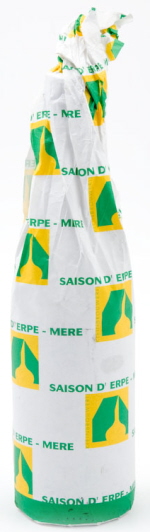 Glazen Toren Saison d'Erpe-Mere You’d expect something special from the “glass tower”, a relatively young micro tucked away in the hilly country of the so-called “Flemish Ardennes” — it was co-founded by beer writer and leading Belgian beer expert Jef Van den Steen, editor of De Zytholoog, magazine of beer consumer organisation Zythos. Its beers are beautifully presented in tissue-wrapped 750ml bottles and the contents don’t disappoint, particularly in the case of this saison which, though brewed in Flanders, challenges many of the Wallonian examples as a paragon of the style.
This “eindejaar” (New Year) edition is more special still, with the strength racked up from 6.9% to 9% ABV. It’s a hazy pale straw with a thick white head and a meaty, hoppy aroma scented with caraway seed, dried orange peel and a trace of wild yeast. The spiciness is notable as no spices are actually added — the ingredients include only barley and wheat malts, hops and liquid sugar.
The palate is firm, complex and lightly astringent, with exotic fruit, orange and muscat grapes giving a winy note, followed by a big burst of spicy hops. The lovely moreish finish has vanilla, apricot nectar and a bitterish peppermint-like note.
Read more about this beer at ratebeer.com: http://www.ratebeer.com/beer/glazen-toren-saison-derpe-mere-speciaal-ende-jaar/116677/
Note this post has been superceded. It has been left here for archival reasons. Read a more complete and up-to-date post about this beer.
Top Tastings 2009
CAMRA North London tasting 2010
ABV: 8%
Origin: Chiswick, London, England
Website: www.fullers.co.uk
Note: tasting notes on further vintages can be found after the main article.
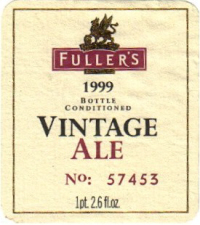 Fuller's Vintage Ale 1999 My favourite beer event of 2009 took place in the historic Hock Cellar at Fuller’s brewery, London’s last surviving classic family brewery and an icon of English ale. In early December, members of the Fuller’s Fine Ale Club gathered with brewery managers and staff and a smattering of beer writers to celebrate that club’s 10th anniversary with a special tutored tasting. Our host was head brewer John Keeling, a man whose world class skills with malt, hops and yeast, encyclopaedic knowledge and good taste are almost matched by his ability to deliver an informative and entertaining presentation brimming with obvious enthusiasm for his products. John is clearly a man who could have successfully followed a whole range of careers — people who care about beer should be glad he chose brewing.
John has a fascination for the process of maturation and ageing, and took that as his theme for the evening, beginning with the relatively short but vital maturation Fuller’s famous cask beers undergo at the brewery and in the pub cellar. We then moved on to explore the portfolio of strong bottle conditioned beers the brewery has built over the last couple of decades, including Prize Old Ale, inherited from the takeover of George Gale, and the recently launched Brewer’s Reserve matured in malt whisky casks. The grand finale was a succession of three examples of Vintage Ale, the bottle conditioned barley wine Fuller’s has been issuing annually since 1997.
Essentially Vintage Ale is a version of Golden Pride, the brewery’s regular filtered barley wine, though each year there’s a slightly different recipe, so this wasn’t a strict parallel tasting of the “same” beer at different ages. But it was still a superb demonstration of the potential of bottle ageing, and a reaffirmation that in Vintage Ale John has come up with one of the world’s best beers.
The new 2009 version was an amber beer with a big foamy yellow-orange head, a slightly phenolic smooth malty aroma with a biscuity note, and a zesty fruit sherbet palate with savoury malt flavours and that spicy orange note that’s part of the house character. A warming smoothly malty finish began with orange flavoured foam from the high condition and settled into mouth coating fruit, hops and nuts. A fine beer packed with vivid flavours, but perhaps still too fresh and bright.
The 2005 version came next and demonstrated what a difference four years can make to a beer of this type, as evidenced by the vocalisations that filled the room once glasses had been lifted to noses and lips. This one was also amber, brewed with floor malted Optic pale barley malt and a single hop, Fuggles, and though still lively it poured with a much less bubbly and energetic head. The aroma was still full of fruit but had taken on a mature woody pencil lead note and had more complex spicing. Also gaining in complexity was the palate, with fruity berry and orange flavours, sherry and that note of “madeirised” oxidation often found in aged beers (and mature red Bordeaux-type wines) that always tastes minty to me. A lovely sappy mouth-coating finish followed, with cream, oranges, nuts and a light roast touch.
Finally the decade-old 1999 version emerged, exhibiting some of the characteristics John mentioned when covering the effects of ageing, such as a thinning body, mellowing hops and darkening colours. Again this had been a pure pale malt beer (Champion Optic) but was now a nut brown, with only the smidgen of a head and a very complex port-like aroma rich in malt and fruit cake notes. The Chamption Fuggles hops that had gone into the beer was notably less pronounced. The palate had lots to say, with orange, cherries, mellow red wine, mint and meaty flavours and a sweeter effect than its predecessors. That spiced orange was back in the finish, though mellowed, with gritty slightly roasty notes and mildly bitter wash, and all sorts of intriguing retronasal hints.
The oldest beer was extraordinary, and got the majority vote when John called for a show of hands. Only one or two hands were raised in support of the 2009 as the best of the three. Myself, on balance I enjoyed the 2005 the most, but I’ll remain grateful I had the chance to try all of them.
Further vintages:
A case of mature Vintage Ale 2004 generously provided by the brewery turned out to be the majority favourite beer at the bottled beer tasting I hosted for North London CAMRA in February 2010. That particular beer, made to a very simple recipe of Maris Otter pale malt and Goldings hops, was more widely available than some vintages have been, and I’ve tasted it at different stages of maturation.
Drunk young in January 2005, the beer was a lively copper-amber with a yellowish head and a rich, hoppy and complex aroma with seeds, burnt wood, nail varnish and yeast. A creamily malty and fruity palate had nutty hops, almond toffee flavours, orange marmalade and a touch of meatiness. A sharply fruity swallow was followed by a hoppy citrus pith finish that turned winy and warming.
That summer a rare cask version turned up at the Catford Beer Festival – I found this a rich, if slightly cloudy, brownish amber, with a bubbly persistent white head and a complex strawberry and banana toffee aroma with a touch of liquorice. There was more strawberry on a salty, oily palate with marmalade and varnish notes and emerging hops. A sweet swallow led to a firm and warming finish with complex tongue-drying hops.
In December 2006 I noted that bottle 37209 poured a rich reddish-amber, with a smooth, nutmeggy head and a very rich and complex petrol, fruit and new leather aroma. A gum-tingling fruiy malt palate was chewy with intense orange flavours, cake, mint and jammy fruit. A cleansing swallow introduced a long and warming tangerine peel finish that ended very dry with late tongue puckering hops.
Tasting bottle 04560 from the beer tasting batch in March 2010, I noted how dark a shade of ruby the beer had become, with a thick and fine slightly orange tinged head. The aroma was intoxicating, with orange, apricot and raisin fruit, mature port and cream. A full but quite dry and woody madeirised fruit palate yielded complex spices and notes of chewy hops, turning quite woody and slightly tannic. Raisin fruit and bitter herbs emerged on a warming, tingling finish with nuttiness in the back of the mouth, some olive flavours and a slightly pursing woody note. I’d hazard the 2004 overall is a little less complex and a bit sterner than some other years, especially as its fruity intensity seems to be mellowing with age, but still, what a treat.
Read more about these beers at ratebeer.com:
http://www.ratebeer.com/beer/fullers-vintage-ale-1999/1038/
http://www.ratebeer.com/beer/fullers-vintage-ale-2004/39460/
http://www.ratebeer.com/beer/fullers-vintage-ale-2005/51040/
http://www.ratebeer.com/beer/fullers-vintage-ale-2009/108168/
Top Tastings 2009
ABV: 8%
Origin: Esen, West Vlaanderen
Website: www.dedollebrouwers.be
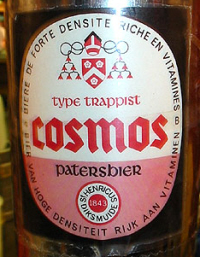 De Dolle Brouwers Cosmos Porter This experimental brew divides opinion. I’ve spoken to several people who have hated it, and even its brewer, Kris Herteleer, seemed in two minds about it when serving it to the public at the 2009 Zythos beer festival in Sint-Niklaas, but it was voted Beer of the Festival at that event by visitors and has stirred up some interest subsequently.
De Dolle Brouwers — the “Mad Brewers” — need no introduction to world beer devotees as they’re well known for producing several remarkable beers from their base at Esen near Diksmuide in the “Westhoek”, the far west corner of Flanders. Regulars like Oerbier and Arabier are eccentric in anyone’s terms but still unmistakably Belgian, though Kris has a long held interest in British traditional styles, perhaps prompted by the fact that he began his brewing career with a Boots homebrew kit. In particular he’s interested in stout and porter, and quite how sour from mixed fermentations these styles would have been in their heyday, a question posed in liquid terms by the whiff of brettanomyces in Dolle’s own Imperial Stout.
Dolle’s beers are so contemporary it’s easy to forget the Herteleers established themselves by taking over a pre-existing, though near-defunct, brewery, previously known as Costenoble after its owning family. Under its previous ownership it brewed a dark “patersbier” — “father’s beer” or abbey beer — known as Cosmos that clearly had a relationship to British porter styles. Kris’s version is an unhopped dark beer using the sourness of lactic fermentation to offset the malt, lent body by being blended with the brewery’s wood-aged Oerbier Riserva. The widow of the brewery’s previous owner apparently thought the new version appropriately similar to its earlier namesake.
I found it a dark brown beer with a low fawn-coloured head and an intoxicating aroma with pencilly malt, minerals and chocolate over sour overripe Autumn fruit. The palate was initially very sweet and malty, rapidly souring with lambic-like notes to give a sweet and sour sauce effect with hints of cherry wood. The finish was moreish and tangy, turning nutty at the back of the throat with a brown sugar sweetness coming through. Unexpected sour flavours might be a barrier to some, but to me Cosmos was not only interesting but enjoyable in its own right.
Top Tastings 2009
ABV: 9%
Origin: Milton, Delaware, USA
Website: www.dogfish.com
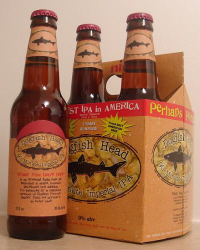 Dogfish Head 90 minute Imperial IPA From a modest British session India Pale Ale (see previous posting) to an all-cylinders-firing modern North American twist on the style.
Dogfish Head started in 1995 as the first brewpub in Delaware, in Reheboth Beach, in its day the smallest brewery in the United States. Success drove the ambition to expand but doing so meant contesting state law which at the time prohibited a brewpub distributing its products. Since breaking out of that particular legal straitjacket it’s gone on to become one of the jewels of the East Coast craft brewing scene, particularly known for strong and interesting specialities, more of which are now popping up in Europe thanks to the efforts of distibutors Bier & Co in Amsterdam and Vertical Drinks in Leeds.
“90 minute” refers to the time period during which the mash is subjected to the brewery’s own process of “continual hopping”. It’s also dry-hopped, and the hop character shines through, though not as aggressively as you might expect, and there’s plenty of rich malt character from the two-row English barley malt that forms the grist to balance the bitterness.
It’s an amber beer with a fine parchment coloured head and a slightly odd hoppy aroma with notes of ripe fruit, sulphur, starched laundry and chocolate. The palate is full of peachy generous amber malt but with a bony, burry, leafy hop intensity, offset by toffee and fruit necater flavours. The finish is dry but not overbitter, with plenty of herbal, rooty flavours over more peachy fruit.
Read more about this beer at ratebeer.com: http://www.ratebeer.com/beer/dogfish-head-90-minute-imperial-ipa/10569/
Top Tastings 2009.
ABV: 4.5%
Origin: Mexborough, South Yorkshire, England
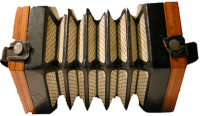 This tiny brewery was set up in 1992 in the Concertina Band Club at Mexborough, near Doncaster, essentially to brew beer for the club, though occasionally its beers seep out to beer festivals, especially since Roger Protz featured this particular beer in his 300 Beers To Try Before You Die. Concertina bands are a minor but significant tradition in the north of England, linked to the better known brass band movement which emerged in the 1880s. This tiny brewery was set up in 1992 in the Concertina Band Club at Mexborough, near Doncaster, essentially to brew beer for the club, though occasionally its beers seep out to beer festivals, especially since Roger Protz featured this particular beer in his 300 Beers To Try Before You Die. Concertina bands are a minor but significant tradition in the north of England, linked to the better known brass band movement which emerged in the 1880s.
Always keen to take recommendations from Roger, I was delighted when Bengal Tiger appeared in cask at the Great British Beer Festival in 2009, and not at all disappointed with my sample. Despite the relatively low gravity this is intended as an English India Pale Ale with rather more character than other common session beers bearing that designation, thus the name.
It’s a slightly hazy warm amber beer with an off-white head and a glyceriney, nettly and very fragrant aroma, with almost an elderflower perfume. The flowery theme continues on the sweetish palate which also has notes of ginger and grapefruit marmalade, artichokes and peach, meaty tones and a fresh hopsack bitterness. The sacky bittersweet finish has developing pepper over apricot nectar. So lots of hops character, but not overwhelming or overbalanced, resulting in a superbly drinkable beer.
Read more about this beer at ratebeer.com: http://www.ratebeer.com/beer/concertina-bengal-tiger/39295/
Top Tastings 2009
ABV: 4%
Origin: Ystradgynlais, Powys, Cymru
Website: Currently unavailable
Bryncelyn began as a tiny brewery in the cellar of the Wern Fawr Inn at Ystalyfera in 1999 and steadily built up a reputation as one of Wales’ best small cask ale breweries — it’s since expanded to new premises in industrial workshops at Ystradgynlais. The name means Holly Hill, linking to the wordplay of the beer names which almost all contain some reference to Buddy Holly. Unsurprisingly brewery founder Will Hopton is a huge fan of the ill-fated bespectacled pop star.
At British beer festivals I head first for the dark milds, and so it was that I encountered Buddy Marvellous from the cask at the National Winter Ales Festival in Manchester last year. It’s a chestnut-brown beer with a fine yellowy head and a pronounced malty, fruity, nutty aroma with notes of toast and fruit cake. The sappy, rich and fruity palate turns slightly astringent, with chalky hops offset by kind brown sugar, and there’s a very slight touch of smoke and cinder toffee in a finish that ends with woody flavours and a controlled note of peppery hops. That subtle smoke touch at the end was a pleasant surprise and kicked this beer, a former Champion Beer of Wales, into the Top Tastings list as an impressive and enjoyable example of its kind.
Read more about this beer at ratebeer.com: http://www.ratebeer.com/beer/bryncelyn-buddy-marvellous/31611/
Top Tastings 2009
ABV: 6.5%
Origin: Binche, Hainaut, Wallonie
Website: www.belgoobeer.be
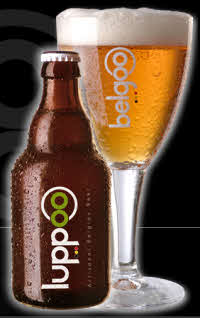 Binche / Belgoo Luppoo Historically, hop character hasn’t figured highly on the list of all the many and varied features of Belgian beers, which are better known for their richly malty, sweetish, sour and spicy flavours. According to lambic brewer Frank Boon, in the pre-war period high hop rates had become associated with bad brewing, as some local brewers saw hopping as an easy cheat to mask off flavours and other flaws. Over the past two or three years, however, a number of new beers have started to emerge that make hops a selling point. The trend has been driven first and foremost by the demands of the import market in the USA, where highly hopped beers are a key feature of the craft brewing scene, but there are signs that domestic consumers are also appreciating this new performance space for the resinous talents of humulus lupus.
Dry-hopped Luppoo is probably the best of these hoppy newcomers I’ve tasted in the past year. It comes from a small brewing concern that shares premises and kit with the longer established Binchoise brewery in the market town of Binche, also known as one of Belgium’s capitals of mardi gras carnival revelry. Both Belgoo and Binchoise have their own sets of recipes and do their own marketing.
The beer, which contains oats as well as barley malt and other than hops is left unspiced, pours a hazy blond with a massive just off-white head. There’s a fresh piny hop aroma with a slight detergent note and also hints of phenol and yeast. The lively palate has a complex grainy flavour and firm oily texture (the oats no doubt help here), with artichoke, salt toffee and vaniall pastry notes and a bite of hoppy lime flavours. The finish has that malty weight typical of a Belgian blond, but also lingering citric and piny hops with a pithy orange flavour. Like the other beers I’ve tried in the style, it’s nowhere near as aggressive as the IBU-busting monsters from some American craft brewers, and is one of the examples that gets the balance just right between preserving some traditional national character and giving the hop its voice.
A short piece by me about the emergence of Belgium’s new hoppy generation will appear in the next issue of Fuller’s Fine Ale Club‘s First Draught magazine. Other examples I”ve enjoyed are Chouffe Houblon, the beer that started the current trend, and Hopsinjoor, an entry from the Anker brewery of Mechelen, better known for its rich, dark Gouden Carolus.
Read more about this beer at ratebeer.com: http://www.ratebeer.com/beer/belgoo-luppo/98186/
|
|
