A sample text widget
Etiam pulvinar consectetur dolor sed malesuada. Ut convallis
euismod dolor nec pretium. Nunc ut tristique massa.
Nam sodales mi vitae dolor ullamcorper et vulputate enim accumsan.
Morbi orci magna, tincidunt vitae molestie nec, molestie at mi. Nulla nulla lorem,
suscipit in posuere in, interdum non magna.
|
Top Tastings 2009
ABV: 5.6%
Origin: Masham, North Yorkshire, England
Website: www.theakstons.co.uk
 Theakston Old Peculier Theakston Old Peculier is a stalwart icon of British real ale. Back in the 1970s it was the sort of beer enthusiasts discussed in hushed and reverential tones, with a pedigree dating back to the 1890s, appreciated not only for its quality but for its heritage as one of the few surviving examples of what appeared to be the fast disappearing traditional style of old ale.
And then there was that wonderful, evocative name with its aberrant spelling, the sort of name a roomful of brainstorming marketeers wouldn’t have come up with in a month of focus groups, but which seemed to connote a whole value system for the real ale movement. Inevitably it became the target first of homage then of parody and ridicule.
In fact the name refers not to the beer but to the Peculier of Masham, a mediaeval adminstrative arrangement under which the brewery’s home town was a theocracy, exempt from secular law. The town, in the Yorkshire Dales, was once an important brewing centre, and Theakston is the sole surviving historic brewery –Masham’s second brewery, Black Sheep, is a new wave establishment presided over by a prodigal member of the Theakston family. Theakston is also remarkable as one of the few independents to emerge intact from an entanglement with a multinational: between 1987 and 2004 it was owned by Scottish & Newcastle (now Heineken) but then the family bought it back.
Theakston’s most famous product is brewed from pale and crystal malts, maize, Challenger, Fuggles and Goldings hops, cane sugar and caramel, emerging a dark amber brown colour with a little off-white head. The aroma is malty and treacly with big estery fruit and a cinder toffee whiff. A sweet fruit cake palate is lifted by estery fruit and roast notes, while a soft and lightly cleansing swallow leads to a long and complex finish that turns surprisingly dry after a sweetish start, with chewy vegetal hops over soft malt and a late note of brown sugar. Overall it’s a big and satisfying beer.
I hadn’t tasted Old Peculier for some years — these days I’m usually drinking a beer new to me — but spotting it on offer at the 2009 National Winter Ales Festival in Manchester, alongside a plethora of upstart micros, I took the opportunity to update my tasting notes by revisiting an old friend. I’m delighted to report that, in the age of myriad micros both revivalist and inventive, where things old and peculiar are thankfully no longer so central to the ideology of beer appreciation, Old Peculier still stands up very well indeed. In top condition, the cask version remains a benchmark of the style.
Read more about this beer at ratebeer.com: http://www.ratebeer.com/beer/theakston-old-peculier-cask/44739/
Top Tastings 2009
ABV: 7.3%
Origin: Santa Rosa, California, USA
Website: www.russianriverbrewing.com
 Russian River Temptation Barrel Aged Ale My first encounter with a US brewpub was a fortuitous one. When I first crossed the Atlantic some years back, it was to San Francisco, but rather than head straight for the city we first went to Santa Rosa in the North Bay Area, where my partner’s aunt and uncle live. The conversation turned to beer — at that time my knowledge of the US scene was relatively slim. Ian’s relatives bemoaned the loss of their local in 4th Street, which had been taken over by a craft brewery, Russian River. I’d probably like it — they did unusual beers and decent pizzas, but they weren’t as homely as the old place. We went for lunch: yes, the pizzas were good, and of course I was very interested in the beers. The hop hit from a half of Pliny the Elder Double IPA almost knocked me over. More intriguing still was the array of corked bottles purporting to contain “Belgian Style Ales” and “Oak Aged Beers.”
I’d unwittingly stumbled upon one of the leading lights of the West Coast craft brewing scene, and I’ve since returned with eager anticipation to both the brewpub and its beers. The area is part of Sonoma County, second only to neighbouring Napa County as a centre of activity for the Californian wine industry, and brewery founder Vinnie Cilurzo is a winemaker who first set up the brewery on Korbel’s vineyard in Guerneville, to the north. The town is on the Russian River, so called because it was first explored by Russian trappers, thus the brewery name, but it’s probably more famous as a major gay resort. The brewery separated from the vineyard in 2003 when the brewpub in Santa Rosa opened — brewing does still take place on site but expanding sales resulted in the business adding additional capacity on an out-of-town site in 2007.
Multi-award winning Temptation is one of the brewery’s most appreciated specialities and one that best illustrates the vinous influence on Russian River’s approach to beer. It’s a strongish Belgian-influenced blond ale aged that has a secondary fermentation in French oak chardonnay barrels, including a dose of brettanomyces, and is also conditioned in the bottle. Brewed in limited batches, it doesn’t come cheap — this 750ml bottle from batch 004X3 came from San Francisco’s excellent City Beer Store and set me back $22.99.
The beer is a cloudy blond with some fine white head. It has a sour, cidery and old wine aroma with an oaky touch. The base pale malt comes through on soft and smooth palate with tropical fruit notes, but you can’t ignore the complex cider and wine like flavours from the ageing process, masterfully integrated with the sourness in excellent balance. A woody and sappy finish has a gentle hint of hops, with apple and oak flavours emerging and a warming quality that’s unusual for the strength.
Read more about this beer at ratebeer.com: http://www.ratebeer.com/beer/russian-river-temptation/13145/
Top Tastings 2009
ABV: 10%
Origin: Roeselare, Oost Vlaanderen
Website: www.rodenbach.be
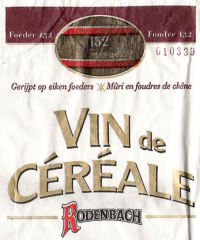 Rodenbach Vin de Céréale Rodenbach of Roeselare is a Belgian beer icon, one of the key breweries celebrated by Michael Jackson back in the 1980s when he first introduced the country’s remarkable beer culture to the wider world. It’s renowned then as now for perpetuating the historic style of sour red East Flanders ale and the traditional technology behind it, notably the brewery’s 294 “foeders”, the Slavonian oak maturation vessels, some of them more than 150 years old, that host the microflora, including brettanomyces, responsible for the beer’s characterisitic acidity. Beer historians delight in this living connection to a western European brewing tradition of maturing “stale” beer for blending that also links to the tantalisingly near-lost history of British porter and old ale.
Rodenbach was founded in 1836 by an expatriate from Koblenz and remained in the same family for generations. Since 1998 it’s been owned by national brewery Palm, who despite the fears of beer lovers have proved relatively responsible custodians, recognising the uniqueness of Rodenbach’s products as its unique selling point.
In 2007 the brewery capitalised on its reputation with vintage dated Vin de Céréale (grain wine), a beer that clearly responds to both the US interest in barrel aged limited edition brews and the growing Belgian penchant for posh beers to serve with food. The standard Rodenbach is a blend of aged and new beers; Grand Cru is the pure aged beer and Vin de Céréale goes a step further in presenting a higher gravity product matured for three years in a specific vessel, number 132, in attractive paper-wrapped form.
The beer pours a clear amber with hardly any head, yielding a biscuity, oaky and corky aroma with notes of vanilla bread and wine and a pencilley perfume. The palate is acidic, winey and very complex, starting almost as tart as a lambic then sweetening up with cherry flavours. A tartish winy finish has more oak on the tongue. Overall this is a delicately flavoured beer which I found very moreish when I sampled it one quiet afternoon in the famous Kulminator specialist beer pub in Antwerpen, accompanied by an excellent portion of oudekaas and mustard.
Zie een videoclip van de Rodenbachse foeders van de TV-serie Tournée Générale hier / See a video clip of the Rodenbach vats from the TV series Tournée Générale here: http://video.canvas.be/rodenbach
Read more about this beer at ratebeer.com: http://www.ratebeer.com/beer/rodenbach-vin-de-cereale/81890/
Top Tastings 2009
CAMRA North London tasting 2010
A shorter version of this review was first published in BEER February 2010 as part of a piece about beers to taste with chocolate. For more beers tasted with chocolate, see Hoggleys Solstice Stout.
Also known as IPA in the USA, under which name it was reviewed.
ABV: 5.4%
Origin: Hertford, Hertfordshire, England
Website: www.redsquirrelbrewery.co.uk
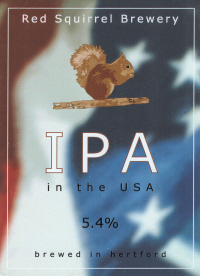 Red Squirrel IPA in the USA A more experimental pairing to taste with chocolate [compared to the darker beers reviewed in previous posts] is a hoppy IPA: again bitter chocolate notes will calm the hops as the sweetness of the confectionery offsets them. A great new discovery among contemporary British IPAs is Red Squirrel American IPA (formerly IPA in the USA) from a Hertford-based micro.
Established in 2004 by Gary Hayward, the brewery is a supporter of red squirrel conservation in the UK, where this native species has largely been supplanted by the North American grey squirrel, but is unafraid to use North American hops, as with the Cascade and Chinook that appear alongside Fuggles in this beer. Complexity is also added by a grist that includes pale crystal, carapils and Munich malt alongside standard pale ale malt.
My sample was a good amber colour, if slightly cloudy, with a foamy yellowish head and thick resiny tobacco like aromas with chocolate and tangerine notes. A notably US-inspired firm malt palate had peppery grapefruit juice hops and a touch of biscuit crystal malt. A smooth swallow heralded a long bittersweet finish with developing rooty pepper hops and grassy pineppale flavours. Tasting with chocolate brought out some tropical fruit notes and contextualised the bitterness. “You’ll either love it or hate it,” says Gary, and when I presented the beer at a tasting it did indeed split the room, but I think it’s a very approachable British version of this newly reinterpreted style.
One final point: when tasting with chocolate, forget Dairy Milk and go for the premium stuff – great beer deserves great chocolate, and 70% plain works best.
Read more about this beer at ratebeer.com: http://www.ratebeer.com/beer/red-squirrel-ipa-in-the-usa/39104/
Top Tastings 2009
ABV: 10%
Origin: San Marcos, California, USA
Website: www.portbrewing.com
 Port Old Viscosity Ale Port Brewing has its origins in the Pizza Port restaurant founded by Vince and Gina Marsaglia at Solana Beach, California, one of the pioneers of the craft-beer-and-pizza formula now found throughout the USA. The original Pizza Port brewery was opened in 1987 and as the business expanded through more restaurants and increasing external demands for beer, the Marsaglias decided to increase their brewing capacity, in 2006 taking over the old Stone brewery site in San Marcos, though they also still brew at Solana Beach. The story is complicated further by the fact that the San Marcos brewery is also the source of the über-cult Lost Abbey range of beers, produced under a separate brand.
Old Viscosity is a fine name for a strong and special ale and the beer behind the name doesn’t disappoint. It’s brewed from a complex grist of two row pale, US and English crystal, Carafa III and chocolate barley malts, with wheat malt and German Magnum hops, and two yeast strains, including White Labs California Ale yeast. My bottle came from the welcoming Ledgers Liquors store in Berkeley, a treasure trove of rare craft beers and speciality spirits.
The beer pours near-black with amber highlights and a creamy beige head. There’s a thick and distinctive aroma of chocolate, spiced prunes and raisins, leading to an intense but smooth palate, vinous and chocolatey, spicy around the edges and with a tangy tart note, oily orange flavours and emerging hops. There’s more of that tang as the beer goes down, and the finish has dark chocolate cake, marmalade and roast notes, with slowly unfolding hops, late prunes and chocolate and a whiff of bacon smoke. An impressively complex beer that more than fills its gravity with flavour.
Read more about this beer at ratebeer.com: http://www.ratebeer.com/beer/port-brewing-old-viscosity/19220/
Beer sellers: Scottish Real Ale Shop
Top Tastings 2009 (bottled 2007), Top Tastings 2011 (draught 2010)
ABV: 10%
Origin: Quoyloo, Orkney, Scotland
Website: www.orkneybrewery.co.uk
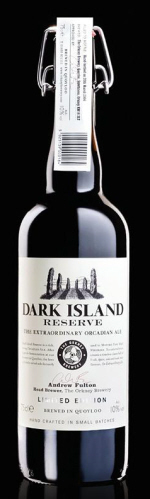 Orkney Dark Island Reserve One of Britain’s northernmost breweries and one of Scotland’s strong collection of distinctive micros, Orkney was founded in a derelict schoolhouse by an Englishman in 1988. It later formed a partnership with the Atlas brewery and since 2006 both have been owned by Orcadian restaurateur Gordon Sinclair.
The standard Dark Island, in cask or filtered bottled versions, is the brewery’s signature brand and a natural choice on which to base its move into the upmarket gourmet beer sector. The Reserve is a souped up version of Dark Island at twice the strength that has been matured for three months in refill malt whisky casks from an uncredited Orkney distillery — in fact the world renowned Highland Park. It comes handsomely presented in 750ml swing top bottles labelled with a gyle number — mine was Gyle 2, brewed in June 2007 and one of 1,498 bottles.
The mahogany beer has a thick light brown head with a complex spirity malt aroma yielding notes of vanilla, artichoke and liqeur coffee and a slightly acidic vinous hint. There’s a soft chocolatey palate, again with a lightly acidic touch, chewy sappy fruit and peaty whisky notes. A drying well-balanced finish has oak and ashy roast, with salty, lingering with complex salt and blackcurranty flavours to mull over. It’s warming but nicely soft, one of the gentler examples of whisky cask-matured ale.
Update September 2011: There have been other releases of Dark Island Reserve since, including a cask version, still at the full 10%, that appeared in summer 2011. The recipe, is far as I’m aware, is unchanged: pale, chocolate and crystal barley malts, malted wheat, and First Gold and Goldings hops.
A sample of the cask beer tasted at Wetherspoon’s Counting House in Glasgow was jet black, with a fine beige head and a very fruity rum and raisin aroma. Slick dark cake and drying wood notes dominated the palate, with a slightly aged sharpness and developing oak, sultana and chocolate flavours. The beer warmed the mouth and slipped down silkily, with more chewy wood and a touch of molasses on a long and dry but still rich and sticky finish. Rich and sophisticated but astonishingly on sale at only £1.25 a half pint (285ml), this must have been the beer bargain of the year.
Orkney’s sister brewery Atlas, incidentally, was closed in 2010 and all production including the Atlas brands centred at the Quoyloo site.
Read more about this beer at ratebeer.com: http://www.ratebeer.com/beer/orkney-dark-island-reserve/66103/
Top Tastings 2009
ABV: 9.4%
Origin: Fort Bragg, California, USA
Website: www.northcoastbrewing.com
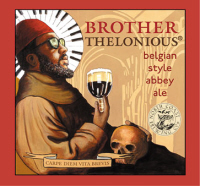 North Coast Brother Thelonious Belgian style abbey ale There are multiple puns in the name and marketing of Brother Thelonious, a Belgian-inspired strong abbey ale that is indeed connected to a monk. The monk in question is, however, not one of the mash tun stirring Trappist variety but eccentric and influential jazz colossus Thelonious Sphere Monk (1917-82), composer of the timeless standard ‘Round Midnight’. I’m not sure whether Monk was really a beer drinker — the fact that he named one of his best known tunes ‘Straight No Chaser’ rather suggests a preference for harder stuff. But it’s still a cool idea, and has inspired a cool label design with a Monk-like figure in monk-like robes looking enigmatically hip while wreathed in a piano key halo. It’s also perhaps symbolic of the way Americans have taken European models of brewing, shaken them up with all sorts of cross cultural influences and produced something native and unique, a little like the way African Americans invented jazz. A donation to the Monk Institute of Jazz is made from sales.
North Coast brewery, which is indeed on the north coast of California in Mendocino county, is another outgrown brewpub which under brewer Mark Ruedrich has earned renown for superb strong ales loosely based on European models — I also couldn’t fault Old No 38 Stout, Rasputin Imperial Stout and Old Stock Ale. Brother Thelonious pays some homage to those dark ales at the upper end of the Trappist scale, like Rochefort 12 and Westvleteren Abt, the sort that US beer style gurus, following the Dutch Trappists at Koningshoeven though not their Belgian brothers, term Quadruple, though with a slightly sour touch that has more in common with secular Flemish browns, and a vividness that is wholly Californian.
The dark ruby bottle conditioned beer has a loose bubbly pinkish head and a complex and elusive aroma with cherry brandy tones at first, becoming more broadly fruity with a touch of milk shake syrup and sourness. There’s also a cherry tartness to the dark chocolate malt palate, which develops an edgy roast note and a slug of hops. A long and weighty finish has lightly tart cherry fruit with a tapestry of hoppy flavours, lead pencil notes and a roasty bite. This is a distinctive and excellent beer that, like Monk’s music, makes you question received categories.
This was one of several bottles I enjoyed at the excellent Monk’s Kettle gastropub in San Francisco’s Misión.
Read more about this beer at ratebeer.com: http://www.ratebeer.com/beer/north-coast-brother-thelonious/58540/
Top Tastings 2009, Beer sellers: Landbierparadies
ABV: 5.2%
Origin: Forchheim, Franken/Bayern, Germany
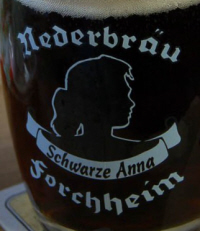 Neder Schwarze Anna Franconia is still the secret garden of beer appreciation. There are about 300 breweries in the three districts that make up modern day Franconia, a culturally and historically distinct region of what’s now the German “Land” of Bavaria. Most of them are in Upper Franconia, which boasts a staggering concentration of one brewery to every 1,000 inhabitants. The beers span a range of styles, many of them locally specific, unusual and still brewed by traditional methods, and standards of quality are overall impressively high. But despite these riches, many of the beers are unknown and untasted outside their brewery’s immediate locality, let alone the wider world. Breweries are mainly small and rural, only supplying their own pub and maybe a couple of neighbouring outlets. Some beers only appear on selected summer days at outdoor beer gardens tucked away in the countryside.
A few outlets in the bigger cities specialise in making some of these obscure delights available to a wider population. Last year I went to Nürnberg to investigate one of them, Landbierparadies (Country Beer Heaven), for Beers of the World magazine. Sadly the magazine folded; the resulting piece was eventually posted here. The enterprise is run by expert enthusiast Joachim Glawe, who actively seeks out smaller breweries in the more rustic reaches of the region, persuading them to bottle their beer or put it into small casks, which are then sold through a shop near the station and in a mini chain of pubs around the city.
Black beer Schwarze Anna was among the most impressive of a range of excellent beers I sampled on the trip, recommended to me by Joachim’s daughter Sabine, who turns out to have been brought up on Tyneside. It’s from Neder, founded in 1554 and now the oldest of four breweries in the important and historic town of Forchheim. Neder makes some astoundingly good beers, some of which are now popping up at UK beer festivals. Its Erstes Forchheimer Braunbier (first Forchheim brown beer) also earned a near-maximum score from me.
The town is known for its Annafest, a folk festival on and around St Anne’s Day, 26 July. It’s now a massive visitor attraction but has its roots in an annual pilgrimage to a nearby chapel dedicated to the saint. All four breweries brew a Festbier for the occasion. Schwarze Anna is not one of these — it’s a Franconian Dunkel in the clothing of a northeast German Schwarzbier — but its name invokes the local saintly connection. By tradition Anne (Channah) was the mother of the virgin Mary, grandmother of Jesus, and the label with its silhouette reminded me of the numerous historical depictions of members of the holy family as black skinned.
It’s a very dark amber-tinged brown with a fine light beige-grey head. The sweetish malty aroma has notes of cola and an unusual and beguiling perfumed and slightly fruity whiff. The roasty, malty and slightly smoky palate is wonderfully grainy under the tongue, with rich chocolate emerging. The beer finishes lightly dry with more of those perfumed notes, a gentle whiff of smoke and subtle hops. All in all a delight, especially when supped in a leafy beer garden on a sunny July day while grazing on Obatzda, the local cheese-based delicacy pepped with paprika and raw onions and served with black bread.
Read more about this beer at ratebeer.com: http://www.ratebeer.com/beer/neder-schwarze-anna/26205/
Top tastings 2009
ABV: 8.1%
Origin: Bodegraven, Zuid Holland, Netherlands
Website: www.brouwerijdemolen.nl
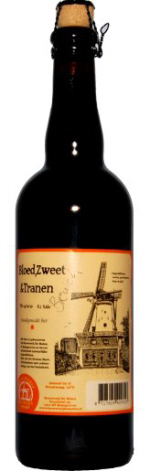 De Molen Bloed, Zweet en Tranen Menno Olivier’s De Molen (“the mill”) brewery is in a 17th century windmill called De Ardkuif beside the Oude Rijn river bang in the middle of the Groene Hart, the rural “green heart” within the urban cordon of the Netherlands’ major cities. From this unlikely location streams forth a succession of vibrant, category-challenging beers that place Menno more in the line of the North American “extreme” brewer in a country with a microbrewing scene that, though burgeoning, is still sometimes hidebound to cloning Belgian and British models and rather too often tripped up on quality. Unsurprisingly this approach has won admiration on the international beer geek scene — De Molen is easily the highest scoring Dutch brewery on online rating sites.
The standard Bloed, Zweet en Tranen (Blood Sweat and Tears) is a beer inspired by Bamberg smoked lagers, but upped in alcohol and with the addition of English peated malt to the Franconian smoked stuff. This variant is the result of an incident in which Scottish peated malt intended for Bruichladdich whisky got into the mash tun by mistake. Some of the resulting beer was matured in a sizeable Bordeaux cask which ended up alongside its brewer at 2009’s Great British Beer Festival. Some drinkers wrongly assumed it was a whisky cask — I would have done too, without Menno there to explain it to me.
The beer is very dark brown, with a bubbly beige head and a casky, winy aroma with a very definite smoked peaty hit and a note of witch hazel. The dry, malty, winy palate has caramel but also notes of soy sauce, balsamic vinegar, chocolate, cider and firm hops, with the peat also yielding flavours which in whisky are often tagged as iodine and seaweed. After this succession of taste sensations on the palate, the finish is more straigtforward, sappy and sweet-sour with more peaty notes and malty richness balanced by drying woody tones.
Read more about this beer at ratebeer.com: http://www.ratebeer.com/beer/de-molen-bloed-zweet–tranen-40bruichladdich-oak-aged-version41/108198/
Top Tastings 2009
The beer also featured in BEER May 2011 as part of a piece on the influence of different malts on beer flavour. See additional text below, and to read about other beers featured see Vale Black Swan.
ABV: 4.8%
Origin: Market Deeping, Lincolnshire
Website: www.hopshacklebrewery.co.uk
 Hopshackle Nigel Wright’s Hopshackle brewery, specialising since its founding in 2006 in beers inspired by historic recipes, was undoubtedly my top British beer discovery in 2009. For this I’m grateful to fellow beer writer Jeff Evans — this year also saw publication of the latest edition of his Good Bottled Beer Guide, and as with the previous edition I suggested we do a tie-in with my column in BEER, asking Jeff to recommend brewers or beers new to the guide that I could feature. Hopshackle came back high on his list, and with good reason. Every one of the review bottles Nigel sent me contained something exceptional, displaying not only quality but the sort of ambition and flair that’s sadly not as common as it should be among British microbrewers.
To balance the mix of beer styles in my piece, I ended up featuring the brewery’s Double Momentum India Pale Ale in BEER, but my personal favourite was actually this wonderful porter, brewed with a dollop of treacle.
It’s a very dark ruby brown, with a bubbly beige head and a big chocolatey aroma with blackcurrant and cherry fruit and notes of led pencil and burnt rubber. The creamy palate starts with tart fruit then develops rich chocolatey tones with a sting of roast and hops. The lingering finish has dark malt, fine plain chocolate, a controlled roasty note and fleeting hints of geraniums. The whole thing hangs together beautifully as a seriously rich and complex delight.
The brewery name, incidentally, is from a word Nigel once heard on vintage TV game show Call My Bluff — to hopshackle something is to hobble it, restricting its gait, so for example you might hopshackle a horse. Thankfully Nigel’s brewing skills seem far from hobbled, so let’s hope he gallops ahead over the next few years and gets recognised as one of the country’s top craft brewers.
Added May 2011: Roasted flavours come into their own in stouts and porters, usually achieved with roasted malts or even roasted unmalted barley. Award winning Hopshackle Historic Porter (4.8 per cent) from Lincolnshire avoids the latter in favour of highly kilned chocolate and black malts and a touch of black treacle. This dark ruby beer is seriously rich and complex, with cherry and blackcurrant fruit, smooth chocolate and a prominent but controlled roasty note – a modern classic of the style.
To download BEER if you’re a CAMRA member, see http://www.camra.org.uk/page.aspx?o=beer.
To find out more about CAMRA membership, see http://www.camra.org.uk/page.aspx?o=joinus.
For more on malts in beer see Breconshire Winter Beacon.
Read more about this beer at ratebeer.com: http://www.ratebeer.com/beer/hopshackle-historic-porter/85496/
|
|
