A sample text widget
Etiam pulvinar consectetur dolor sed malesuada. Ut convallis
euismod dolor nec pretium. Nunc ut tristique massa.
Nam sodales mi vitae dolor ullamcorper et vulputate enim accumsan.
Morbi orci magna, tincidunt vitae molestie nec, molestie at mi. Nulla nulla lorem,
suscipit in posuere in, interdum non magna.
|
Top Tastings 2010 (Oldgott Barique)
ABV: 5.2% and 12.6%
Origin: Praha 1, Hlavní město Praha, Czech Republic
Website: www.umedvidku.cz
 U Medvidků, Praha 1 The Czech lands gave birth to the world’s most ubiquitous brewing style and the modern day Czech Republic is still one of the great beer nations, so it’s rather remiss of me to wait almost a year before finally adding a Czech brewery to this ste. Sadly only a severely limited range of Czech beers is available in the UK, so it’s taken a long overdue trip to Prague to furnish some recent tasting notes of the more interesting stuff.
And more interesting stuff there definitely is besides the obvious “heritage” pale lagers. Following a rapacious period of consolidation and globalisation ushered in by the restoration of the market, pockets of independent thinking are developing, and a new craft brewing culture is starting to emerge that both takes pride in indigenous brewing traditions and is open to innovation, and influence from abroad.
The microbrewery at Medvidků, on the edge of the historic Staré Město (Old Town) district right in the city centre, is a great example. U Medvidků (‘At the [sign of the] Little Bears’) is a classic sprawling Prague pub and hotel with half a millennium’s worth of history behind it, long appreciated by discerning drinkers as a more amenable and less tourist-saturated alternative to slightly better known drinking holes like U Fleků and U Zlatého tygra. For years it stocked only one beer, the standard draught 12° golden lager from Budějovický Budvar, which it was renowned for keeping exceptionally well. Then on 17 November 2004, the 15th anniversary of the Velvet Revolution, onsite brewing was revived for the first time since 1895 using a 250l-capacity microbrewery newly installed in the former malthouse. Wisely the brewers chose not to challenge the popularity of Budvar but instead developed a range of their own specialities, traditionally lagered in wooden barrels and served unpasteurised and unfiltered.
Oldgott Barique, the regular beer, is an amber polotmavý or ‘half-dark’ lager, a traditional style near extinct by the turn of the millennium and since rejuvenated, though still a relatively rare speciality. Its closeness to the more widely known Vienna style associated with Anton Dreher reflects the region’s history as a former province of Austria-Hungary.
This example is a cloudy amber with a thick nutmeggy light beige head, served at the pub in a chunky multifaceted glass mug. A fresh, slightly yeasty aroma has lightly tart strawberry notes. The palate is dry-sweet and spicy with a slight touch of burnt wood, a hint of dates and strawberries and a bite of herbal hops over very smooth and generous toffeeish malt, with perhaps a fleeting touch of mint. The dry, spicy smack persists in a quite rooty, hoppy and bittering finish with tart plummy notes softened by yeasty malt. It’s a striking, unusual and very distinctive beer.
 U Medvidků X Beer 33 Better still is X Beer 33, an extraordinary strong lager brewed once a month from Pilsner and caramel barley malts at an original gravity of over 33° Plato and matured for up to a year in oak barrels using a special yeast. It’s also available bottled, but I sampled the draught version, which arrived at my table a deep hazy ruby-brown with a thick beige head. A tannic, grapy, oaky aroma has some fresh fruity esters, heralding a big bodied grapy-fruity palate, notably sweet but with a plummy, tannic, balsamic edge, Rodenbach-like sour tones and complex spiced orange liqueur notes. For all the complexity, there’s a soft, clean character that identifies the beer as a lager rather than an ale. The finish is long, complex and marmaladey, with a little powdery dry pursing hops and a late splash of vanilla. Of course it’s by no means the strongest beer in the world, as its publicity still claims, but it’s certainly among the most remarkable.
Read more about this beer at ratebeer.com: http://www.ratebeer.com/beer/u-medvidk367-x33-beer/58029/
ABV: 7.7%
Origin: Ashford-in-the-Water, Derbyshire, England
Website: www.thornbridgebrewery.co.uk
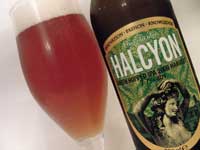 Thornbridge Halcyon Green Hopped IPA. Pic: Mark Dredge, www.pencilandspoon.com Peak District-based Thornbridge continues to demonstrate its world class credentials with its latest batch of special bottles. This limited edition of Halcyon, already an impressive India Pale Ale, was brewed during last year’s hop harvest and dosed with “massive amounts of freshly picked Target hops from Mr Capper’s farm in Herefordshire”. Target is not a variety commonly linked with the phrase “massive amounts” in the brewers’ vocabulary but it certainly makes the best of its turn in the spotlight here.
For those unfamiliar with green hopped beers, unlike most beers which use dry whole hops, pellets or extract, these use fresh hops straight from the farm. The result, well demonstrated here, should be a definite hop character accompanied by a freshness and slightly vegetal quality that’s notably distinct from conventional hopping.
This pale gold hop-hazed beer pours with a thick off-white head, exuding a piny, resiny and peachy aroma with slightly sulphurous and lightly honeyed notes. There’s peach and strawberry fruit up front on the palate but intense piny, resiny hop flavours soon develop on the tongue, although with a very smooth and creamy touch. A clean, lightly malty finish stays smooth while developing an assertive lettucey bitterness.
Thornbridge has flourished as one of Britain’s most innovative and consistent craft breweries under brewery manager Kelly Ryan. Kelly is about to return to his native New Zealand. Beer Culture wishes him the very best of luck and looks forward to sampling the great beers he’s sure to continue brewing in the southern hemisphere. He’ll be a hard act to follow in the northern one.
Read more about this beer at ratebeer.com: http://www.ratebeer.com/beer/thornbridge-halcyon/84956/
ABV: 6.5%
Origin: Kobbegem, Vlaams-Brabant
Website: http://www.mort-subite.be
 De Keersmaeker Mort Subite Oude Kriek This is an expanded review of a beer that featured as a fruit beer on the bottled beer review page in the August 2010 issue of
BEER magazine, sent free every quarter to CAMRA members, who can also view it online. The magazine is also available in selected newsagents.
Belgium is the country most associated with fruit beers but its reputation has become a little tarnished thanks to a glut of oversweet commercial varieties dosed with artificial fruit syrups. So it’s pleasing to see a subsidiary of one of the world’s biggest brewers, Heineken, working hard to produce a beer that complies with the EU-recognised designation of Oude Kriek (“old cherry beer”), a category originally lobbied for by smaller producers to protect the most traditional and artisanal spontaneously fermented cherry lambic beers.
The brand name might mean “Sudden Death” (derived originally from the name of a pub game played at a famous Brussels café) but this bottle conditioned beer, from De Keersmaeker brewery at Kobbegem in the heart of the lambic country of the Pajottenland west of Brussels, is life affirming. It’s made to a traditional lambic grist of barley malt, unmalted wheat and aged hops, and matured for a minimum of two months with a 25% proportion of fresh cherries.
The result is a hazy warm cherry red with a fine pinkish head and a plump cherry skin aroma with a sour lambic touch and a farmyardy note. A beautifully balanced palate has obvious natural-tasting cherry fruit and a dry, sour, foamy, slightly cidery and woody lambic sting, but it’s not overtart, with broader malt than some. There’s more juicy but sour cherry in the long finish which turns oaky with lovely lightly vinegary tart notes. It’s an authentic example that’s less challenging than some and a good entry point if you’re new to the style.
Buy this beer from AlesbyMail.com as part of a special pack containing all the beers featured on my beer review page in BEER this month. BEER readers receive a special discount by entering the voucher code shown in the magazine.
To download BEER if you’re a CAMRA member, see http://www.camra.org.uk/page.aspx?o=beer.
To find out more about CAMRA membership, see http://www.camra.org.uk/page.aspx?o=joinus.
Read more about this beer at ratebeer.com: http://www.ratebeer.com/beer/mort-subite-oude-kriek/56718/
ABV: 4%
Origin: Larbert, Falkirk, Scotland
Website: http://www.trystbrewery.co.uk
This is an expanded review of a beer that featured as a fruit beer on the bottled beer review page in the August 2010 issue of BEER magazine, sent free every quarter to CAMRA members, who can also view it online. The magazine is also available in selected newsagents.
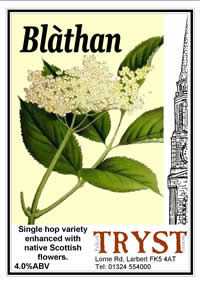 Tryst Blàthan Hops and ale yeasts can lend beers flowery notes, so adding real flowers seems a logical step. The perfumed but refreshingly spicy flavour of elderflower, already indelibly associated with balmy British summer days, makes a good match for quenching golden beers, and one of the best such uses is in this magnificently engineered example from excellent Scottish brewer Tryst, based near Falkirk in the Forth Valley. The name, pronounced BLAH-hun, means “little blossom” in Gaelic, reflecting the inclusion of Scottish flowers alongside a single hop, Challenger.
The beer is a pale delicate gold and lively with a thick fine white head. A rich elderflower aroma has crisp hop and lemon notes, leading to a complex but refreshing palate, with a notable weight of pale malt that recalls a Belgian blond. The spicy elderflower notes are beautifully matched with nicely bitterish hops, some sweetish fruit and a hint of toast. A hoppy finish has a slightly floury, bready quality, finally turning quite bitter, chewy and peppery. An ideal al fresco ale.
Buy this beer from AlesbyMail.com as part of a special pack containing all the beers featured on my beer review page in BEER this month. BEER readers receive a special discount by entering the voucher code shown in the magazine.
To download BEER if you’re a CAMRA member, see http://www.camra.org.uk/page.aspx?o=beer.
To find out more about CAMRA membership, see http://www.camra.org.uk/page.aspx?o=joinus.
Read more about this beer at ratebeer.com: http://www.ratebeer.com/beer/tryst-blathan/98788/
ABV: 6.5%
Origin: London SE7, England
Website: www.meantimebrewing.com
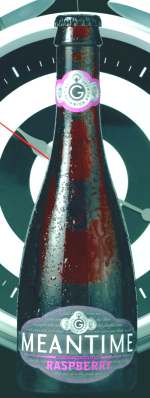 Meantime Raspberry Grand Cru This is an expanded review of a beer that featured as a fruit beer on the bottled beer review page in the August 2010 issue of
BEER magazine, sent free every quarter to CAMRA members, who can also view it online. The magazine is also available in selected newsagents.
London brewer Meantime, currently based in Charlton but soon to move a little upriver to Greenwich, set out from the start to brew beers outside the usual British micro parameters, including a range of fruit and wheat beers with a detectable Belgian inspiration. Raspberry Grand Cru, at a serious 6.5%, is one of the best, created by adding fresh raspberries to the brewery’s strong wheat beer before secondary fermentation.
It’s a reddish gold, with some fine white head, and a natural raspberry and sharp hops aroma with a touch of grassy wheat quality. The crisp and dry palate has a slight ciderish note, with definite hops and a more subtle raspberry flavour than the aroma has led you to expect. A shortish lightly fruity and tangy cereal finish closes off a perilously refreshing beer.
Buy this beer from AlesbyMail.com as part of a special pack containing all the beers featured on my beer review page in BEER this month. BEER readers receive a special discount by entering the voucher code shown in the magazine.
To download BEER if you’re a CAMRA member, see http://www.camra.org.uk/page.aspx?o=beer.
To find out more about CAMRA membership, see http://www.camra.org.uk/page.aspx?o=joinus.
Read more about this beer at ratebeer.com: http://www.ratebeer.com/beer/meantime-raspberry-grand-cru/55323/
ABV: 5.5%
Origin: Newquay, Cornwall
Website: www.atlanticbrewery.com
This is an expanded review of a beer that featured as a fruit beer on the bottled beer review page in the August 2010 issue of BEER magazine, sent free every quarter to CAMRA members, who can also view it online. The magazine is also available in selected newsagents.
 Atlantic Brewery Atlantic, just outside Newquay, is one of the smallest of Cornwall’s impressive band of craft brewers, mainly specialising in bottle conditioned beers. As with Sharps, Atlantic beers found a market in the local restaurant trade, leading to brewer Stuart Thomson teaming up with chef Nathan Outlaw to create a “Discovery” series of “fine dining beers” flavoured with well-chosen ingredients, each one labelled with food suggestions. And while it’d be a shame if Cornwall’s fine diners got the mistaken impression only beers with added stuff are suitable for dining, there’s no denying some of these beers work very well.
This recipe might sound like a posh pseudo-Mexican flavour of chocolate or crisps, but it works well as a beer: the lime peel is a twist on the more familiar use of orange citrus peel, root ginger has some pedigree as a brewer’s spice. Chilli is botanically a fruit, and not unknown as an ingredient in beer. Vindaloo-gorging capsaicin addicts will be disappointed, though, as it’s used here with admirable discretion to give a warming glow rather than a sweat-raising flush.
This is a pale golden beer with a fine white head and a very marked ginger and lime aroma that’s just a little cough mixturish. There’s a slightly astringent tang of citrus on the palate, with soft malt and a light chilli touch, and earthy ginger developing, well matched with bitterish hops. A lightly spicy finish turns bitterish rather than chilli-hot, with malt cut by an enduring citric tang. Chicken, fish and pasta are the recommended food pairings, but this could cut through oily foods too. It only loses marks for the clear glass bottle.
Buy this beer from AlesbyMail.com as part of a special pack containing all the beers featured on my beer review page in BEER this month. BEER readers receive a special discount by entering the voucher code shown in the magazine.
To download BEER if you’re a CAMRA member, see http://www.camra.org.uk/page.aspx?o=beer.
To find out more about CAMRA membership, see http://www.camra.org.uk/page.aspx?o=joinus.
Read more about Atlantic beers at ratebeer.com: http://www.ratebeer.com/brewers//atlantic-uk/6227/
ABV: 4.5%
Origin: Llanarth, Ceredigion, Cymru
Website: www.penlon.biz
This is an expanded review of a beer that featured as a fruit beer on the bottled beer review page in the August 2010 issue of BEER magazine, sent free every quarter to CAMRA members, who can also view it online. The magazine is also available in selected newsagents.
 This beer's namesake, a Torwen sheep. Tiny farmhouse brewery Pen-Lon Cottage, founded in 2005 in the wilds of Ceredigion by former home brewers Penny and Stefan Samociuk, is one of the few British breweries devoted exclusively to real ale in a bottle, with no cask, opting instead to sell through specialist food shops and markets as a quality artisanal product. The range is impressive, and the commitment to local origin is exhibited two beers featuring local fruit, pale Torddu and dark Torwen, both named after Welsh sheep. The exact fruit used varies according to season and availability.
I sampled a plum version of Torwen, darkened with roasted and flaked barley and hopped with Target. The beer poured near black with a thick creamy beige head. A fresh, lightly roasty and tarry aroma had fruity coffee and new plastic notes, leading to a full but lively dark malt and coffee palate, with a slightly chewy and tannic plum note emerging and both fruit sweetness and acid subtly present in a complex mineral-tinged mix of flavours. More marked fruity flavours emerged on the finish over firm dry chocolate and coffee, with more tannins developing later, a well-judged use of fruit in a thoroughly decent beer.
Buy this beer from AlesbyMail.com as part of a special pack containing all the beers featured on my beer review page in BEER this month. BEER readers receive a special discount by entering the voucher code shown in the magazine.
To download BEER if you’re a CAMRA member, see http://www.camra.org.uk/page.aspx?o=beer.
To find out more about CAMRA membership, see http://www.camra.org.uk/page.aspx?o=joinus.
Read more about this beer at ratebeer.com: http://www.ratebeer.com/beer/pen-lon-cottage-torwen-blackberry/87701/
ABV: 10%
Origin: Innerleithen, Scottish Borders
Website: www.traquair.co.uk
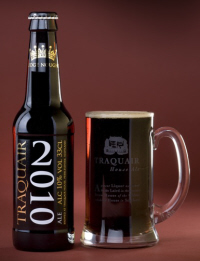 Traquair 2010 An extended review of a beer featured as a strong and special beer on the bottled beer review page in the November 2010 issue of BEER magazine, sent free every quarter to CAMRA members, who can also view it online. The magazine is additionally available in selected newsagents.
The 18th century brewhouse rediscovered and recommissioned at Traquair House, Scotland’s oldest inhabited house, in 1965 remains a unique source of strong and old-fashioned beers, all of which are fermented in the original unlined oak vessels. Owner-brewer Catherine Maxwell-Stuart is also a dab hand at producing special celebration ales with ageing potential. I’m still sitting on a bottle of 2001’s 1000th Brew and was intrigued to see Catherine is marking the second decade of the third millennium with another special, Traquair 2010, in a limited edition of 20,000.
The stylish stencilled bottle contains a deep amber brown beer with a fine, thick beige head and rich malty and spicy aroma with notes of vanilla and cloves. The palate has faithfully Scottish firm and generous malt character that’s slightly cakey but with a light spicy and tangy touch with notes of banana and oak. A long lingering malty finish is slightly powdery dry and perhaps just a little thin and fizzy at the moment, with minerals, wood and vine fruits. Already a luxurious beer that’s big but not overbearing, this should continue to offer a taste experience into 2020 and perhaps beyond.
Buy this beer from http://AlesbyMail.com as part of a special pack containing all the beers featured on my beer review page in BEER this month. BEER readers receive a special discount by entering the voucher code shown in the magazine.
To download BEER if you’re a CAMRA member, see http://www.camra.org.uk/page.aspx?o=beer.
To find out more about CAMRA membership, see http://www.camra.org.uk/page.aspx?o=joinus.
Read more about this beer at ratebeer.com: http://www.ratebeer.com/beer/traquair-2010/125568/
ABV: 7%
Origin: Stoke Lacy, Herefordshire, England
Website: www.wyevalleybrewery.co.uk
 Wye Valley Dorothy Goodbody's Imperial Stout An extended review of a beer featured as a strong and special beer on the bottled beer review page in the November 2010 issue of BEER magazine, sent free every quarter to CAMRA members, who can also view it online. The magazine is additionally available in selected newsagents.
When you’re a brewer puzzling over how to mark an anniversary with a special brew, you could either go out on a limb by doing something completely different, or choose one of your old favourites and give it a special twist. Herefordshire-based Wye Valley is one of Britain’s oldest established new wave micros: in 2010 it’s celebrating its 25th anniversary, having been founded in 1985 by well-known industry figure Peter Amor, whose son Vernon is now MD.
Its outstanding range of bottled beers under the Dorothy Goodbody brand always provides a reliable Real Ale in a Bottle option on supermarket and speciality off license shelves, including one of Britain’s very best bottled dry stouts. So there’s an obvious logic to a limited edition of 6,000 bottles of anniversary Imperial Stout, presented in an attractive presentation box.
Wye Valley makes a virtue of local suppliers and the stout contains Maris Otter pale malt specially grown for the brewery in nearby Canon Pyon, where it was once based, alongside crystal and chocolate malts, roasted and flaked barley, and Northdown and Challenger hops from Penningtons in Madley.
The result is a very dark ruby beer with a bubbly nutmeg head and a milk chocolate and caramel aroma. There’s more chocolate and caramel in the smooth and creamy palate, which is sweetish with touches of blackcurrant fruit and bitter coffee and a notably low condition with only a gentle sparkle. A slightly sticky, cakey finish has more chocolate and a crackle of roast and hops, with a late rooty spiciness emerging.
It’s an unctuous and satisfying beer that’s enjoyable as a bigger sister of Dorothy’s regular Wholesome Stout – but if you’re expecting an imperial stout with challenging and intense flavours, you might be a little disappointed.
Buy this beer from http://AlesbyMail.com as part of a special pack containing all the beers featured on my beer review page in BEER this month. BEER readers receive a special discount by entering the voucher code shown in the magazine.
To download BEER if you’re a CAMRA member, see http://www.camra.org.uk/page.aspx?o=beer.
To find out more about CAMRA membership, see http://www.camra.org.uk/page.aspx?o=joinus.
Read more about this beer at ratebeer.com: http://www.ratebeer.com/beer/wye-valley-dorothy-goodbodys-imperial-stout/129149/
Top Tastings 2010
ABV: 9%
Origin: Tadcaster, Yorkshire, England
Website: www.samuelsmithsbrewery.co.uk
 Samuel Smith Yorkshire Stingo An extended review of a beer featured as a strong and special beer on the bottled beer review page in the November 2010 issue of BEER magazine, sent free every quarter to CAMRA members, who can also view it online. The magazine is additionally available in selected newsagents.
Samuel Smith’s, one of the three remaining historic breweries in the once important North Yorkshire brewing town of Tadcaster and the only one that’s still a family-owned independent, is best known for three things. London real ale drinkers will be familiar with the brewery’s curious estate of pleasantly traditional central London pubs selling their single cask ale, Old Brewery Bitter, at jaw-droppingly low prices. International beer hunters will be familiar with the range of impressive speciality bottled beers they developed mainly for their US importer in the 1990s. And beer writers and researchers will know them as one of the most publicity-shy of all brewers, with not even a website to their name.
Running a business in this way, you rely on the products to speak for themselves, and this they most certainly do. At the cost of some frustration to real ale fans, the speciality bottled range, excellent though it is, has been limited to filtered beers. In 2008, an unexpected exception appeared in the form of Yorkshire Stingo, which is not only bottle conditioned but matured for over a year before bottling in the brewery’s unique collection of oak casks, some of which date back over a century. Stingo is a traditional term in some regions of England for a strong barley wine, but the emphasis on oak ageing reflects the growing interest in wood aged beers in the US craft beer market.
It’s a deep burgundy beer with an orangey-beige head and a malty, cakey and lightly woody aroma, with notes of spiced toffee, grapes and raspberries. A tight, dryish palate is rich with nutty flavours, generous splashes of red fruit and a definite broad oaky note. The finish has that wood-sucking dryness of similarly matured beers but is well balanced by mouth-coating cakey malt, spiced candy and a light peppery bitterness way back in the throat, with some lightly charred notes. A beer that will do nothing to harm the brewery’s reputation for quiet excellence with traditional styles.
Buy this beer from http://AlesbyMail.com as part of a special pack containing all the beers featured on my beer review page in BEER this month. BEER readers receive a special discount by entering the voucher code shown in the magazine.
To download BEER if you’re a CAMRA member, see http://www.camra.org.uk/page.aspx?o=beer.
To find out more about CAMRA membership, see http://www.camra.org.uk/page.aspx?o=joinus.
Read more about this beer at ratebeer.com: http://www.ratebeer.com/beer/samuel-smiths-yorkshire-stingo/90838/
|
|
