A sample text widget
Etiam pulvinar consectetur dolor sed malesuada. Ut convallis
euismod dolor nec pretium. Nunc ut tristique massa.
Nam sodales mi vitae dolor ullamcorper et vulputate enim accumsan.
Morbi orci magna, tincidunt vitae molestie nec, molestie at mi. Nulla nulla lorem,
suscipit in posuere in, interdum non magna.
|
London ’s Best Beer, Pubs and Bars updates
Central London – Bloomsbury, Euston & St Pancras
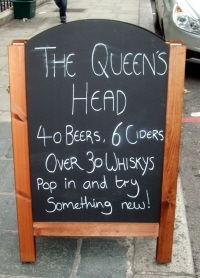 The Queens Head London WC1 Contemporary pub
66 Acton Street WC1X 9NB
T (020) 7713 5772 W www.queensheadlondon.com f The-Queens-Head tw TheQueens_Head
Open 1200 (1500 Sat, 1600 Sun) – 2300. Children welcome until 1900.
Cask beer 3 (Oakham, unusual guests), Other beer 7 keg, 40 bottles, Also 4 ciders/perries
Food Cheese, ham, pork pies, with beer matching, Outdoor Small rear courtyard
Tue comedy, Wed folk, Thu swing jazz, quiz planned, pub for hire
Another beer-focused modern makeover of a forgotten and decaying local, this place reopened in June 2010 but seems to have slipped under the radar of many of the capital’s beer hunters, perhaps because while pursuing quality and a warm welcome it’s gone for a more accessible and less geeky approach than some. Tucked down a side street off Grays Inn Road a short walk from Kings Cross, this handsome pub benefits from some fine original features happily preserved thanks to decades of underinvestment, including extensive ceramic tiling, engraved glass, mirrors and light fittings from the gaslight era, with several strikingly unusual standards on the bar. An open main bar with simple furniture and plenty of standing room is extended by a lovely green painted snug at the back.
Oakham JHB is near-permanent on cask, alongside beers from the likes of Dark Star, Harviestoun, Redemption and Windsor & Eton. Imported lagers come from Kaiserdom, König and Licher, with craft keg from BrewDog, Camden Town and Harviestoun. Suppliers of bottles include BrewDog, Coopers, Kernel, Meantime, Odell, Samuel Smith, St Austell and Timothy Taylor – note there’s considerably more in the fridges than appears on the printed list. Food is limited to cold plates of cheese and charcuterie, some of which are helpfully provided with matching beer suggestions. A friendly place that deserves wider recognition, under the same ownership as Simon the Tanner in SE1.
National Rail, Underground Kings Cross St Pancras Cycling LCN+0 Walking Links to Jubilee Greenway, Jubilee Walkway
First published in Beers of the World, February 2009
 La Cerveteca, Barcelona Catalunya may be some way south of Europe’s “beer belt” and its Penedès vineyards may have a well-earned place in world wine guides, but this corner of the northern Mediterranean is also the heartland of Spain’s industrial revolution. In the mid-19th century, railways and textile factories changed the face of the ancient port of Barcelona, the region’s capital, and breweries soon followed to slake the thirsts of its legions of new workers.
The only survivor of this period is Damm, established in 1876 by an expat from Strasbourg. Now a 5million hectolitre business, its key Estrella brand, the self-proclaimed “beer of Barcelnoa”, is an unexciting industrial lager. Truer to its Rhineland heritage are dark Damm Bock and strong Märzen-style Voll Damm, but beyond these and a few bars and restaurants offering better-known Belgian and German imports, what else does this otherwise beautiful, cosmopolitan and much-visited city have to offer the beer lover?
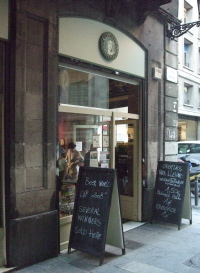 Exterior of La Cerveteca, Barcelona To find the glimmerings of craft beer culture, head southeast off the celebrated Rambla promenade, where street hawkers sell cans of Estrella and San Miguel to evening strollers, into the narrow alleys of the old city’s Barri Gòtic. On a corner not far from Plaça George Orwell (now, ironically, under surveillance from CCTV), beer shop and “cultural encounter space” La Cerveteca has been on a mission to educate since 2006.
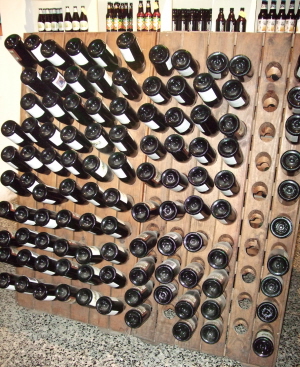 Cantillon in abundance Unsurprisingly for a style-conscious city, this is a good looking place with big windows, surreal artwork and around 100 changing craft brews in a wide variety of styles, mainly from Belgium, Germany, the USA and the UK, with products of smaller and lesser-known breweries like Belgium’s Senne and Germany’s Hoepfner sourced through regular buying trips abroad.
All bottles can be drunk in as well as carried out and there are four draught taps behind the counter – indeed, with a scattering of stools and tables fashioned from old casks, the place also functions as a bar, hosting an enthusiastic crowd that mixes remarkably youthful and trendy locals with visiting beer tourists. Glassware is on sale, and Cerveteca’s higher mission is advanced through regular tastings and teaching sessions. And there are plans to open a micro and to equip the cellar for cask beer.
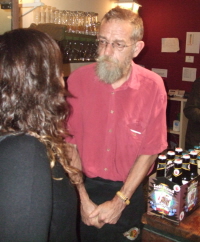 Steve Huxley advises a customer Young owner-managers Rubén Rios and Guillem Laporta are two friends with a passion for beer, but the spiritual guru, and now full-time employee, of the enterprise is Steve Huxley, a Liverpudlian long resident in Barcelona and author of the first comprehensive Spanish guide to brewing and beer appreciation, La cerveza…poesía líquida (Beer…liquid poetry). In 1993 Steve founded a pioneering brewpub which enjoyed great success until it was shut down two years later by the excise men. “No one had started a brewery here for so long,” says Steve, “we didn’t even know there was paperwork.”
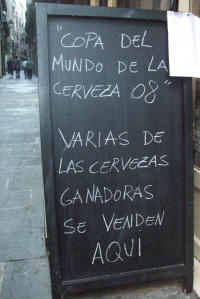 La Cerveteca celebrates World Beer Cup winners Steve subsequently founded beer enthusiasts’ organisation Humulus Lupulus, which has acted as an inspiration to a handful of recently founded local micros. You’ll find some of their products on Cerveteca’s shelves, though few can yet match the imports for quality. One exception is tiny farmhouse brewery Agullons, whose US-inspired craft ales have benefitted from Steve’s advice and have even appeared at festivals in Belgium and the UK. Catalunya is renowned for its fine architecture, art, food and drink – Catalans deserve a beer renaissance too, and Cerveteca could just be its epicentre.
Fact file
Address:Gignàs 25, 08002 Barcelona
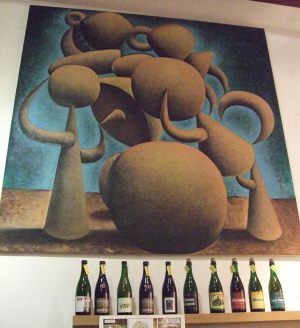 The art of beer Phone: +34 93 315 0407
Web: www.lacerveteca.com
Hours: Mon-Tues 1600-2200, Wed-Sun 1200-2200
Drink in? Yes
Mail order: No.
Manager’s favourites: Guillem: Senne Stouteric; Rubén: Agullons Pura Pale; Steve: Anderson Valley Boont Amber, “1960s Draught Bass from the Union system”.
Beer picks
- Agullons Bruno 4.5% Mediona, Catalunya, Spain. Substantial but refreshing unfiltered pale ale with a dash of sappy crystal malt and a perfumed grapefruit bite from a new micro in wine country.
- Cantillon Lou Pepe Gueuze 5% Anderlecht, Bruxelles, Belgium. Made only with mature lambics refermented with sugar primings, a mellower but still biting and complex gueuze from an uncompromising artisanal brewery.
- Coopers Vintage Ale 7.5% Regency Park, South Australia. A stronger matured beer from the celebrated Sparkling Ale brewer, rich with apple and soft fruit, whiskyish oak and late roast almonds.
- Hoepfner Kräusen 5.1% Karlsruhe, Baden-Württemberg, Germany. This superb and subtle unfiltered lager with vanilla honey, citrus, cleansing berry notes and a refined finish was a 2008 World Beer Cup category winner.
- Left Hand Milk Stout 5.2% Longmont, Colorado, USA. Malty liquorice coffee cake, cola, strawberry fruit, gentle hops and milk gum stickiness distinguish this version of a rare style from an innovative brewer.
Beer sellers: Cerveteca
ABV: 5%
Origin: Anderlecht, Brussel-Bruxelles, Belgium
Website: www.cantillon.be
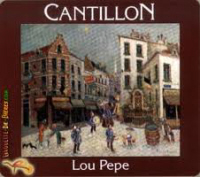 Cantillon Lou Pepe Gueuze Cantillon, with its unforgivingly dry oude geuze, has a reputation as the most hypertraditional of the lambic breweries, but proprietors the Van Roy family have developed quite a repertoire of innovative variations on the traditional techniques. This special edition Lou Pepe Gueuze is one good example.
Standard geuze is blended from lambics of between one and three years old, with the youngest beers still lively enough to awake a secondary fermentation in the bottle. The blender aims to produce a year-on-year consistency from these famously unpredictable spontaneously fermented beers. This beer, in contrast, is an annual blend of specially selected two-year-old lambics, most of them matured in former wine casks, allowing more of the character of mature base lambic to come through. With no younger beer to add sparkle, the blend is dosed with sugar dissolved in water at bottling to reawaken the yeast.
A 2001 vintage I tasted when it was seven years old poured a hazy golden with some white foamy head and a relatively low carbonation. A tart, complex aroma had musky lambic sharpness with lemon and pine notes. There was more lemon alongside apples, elderflowers, wine and woody, pippy flavours on the chewy palate, with a long development in the mouth. A tart, chewy woody finish has lemon sherbert and twiggy notes. This very complex beer is full of authentic lambic character but notably mellower than the regular Cantillon.
Lou Pepe, incidentally, is an affectionate nickname for a grandfather in southwest France, but the label, with its period townscape of the Vossenplein/Place du Jeu de Balle in Brussels’ historic working class Marollen/Marolles district, is distinctly bruxellois. A kriek and a framboise also appear under the Lou Pepe name.
Read more about this beer at ratebeer.com: http://www.ratebeer.com/beer/cantillon-lou-pepe-gueuze/7501/
Beer sellers: Cerveteca
ABV: 7.5%
Origin: Regency Park, South Australia
Website: www.coopers.com.au
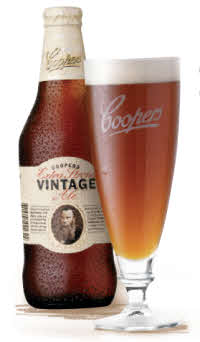 Coopers Extra Strong Vintage Ale The historic Coopers brewery near Adelaide is known as the hypertraditional custodian of the unique style of Sparkling Ale, as well as several other old established beers. But in 1998 head brewer Tim Cooper decided to create something new, coming up with this strong bottle conditioned amber ale that has evolved with every annual brew, making a virtue of bearing a “best after” date. “If fine wine were beer it would no doubt be Coopers Extra Strong Vintage Ale,” claims the publicity.
My sample, drunk a year after that “best after” date, was a cloudy amber, with a subsiding off-white head and a restrained fruity and nutty aroma. The palate was rich but quite closed, with more fruit and nuts underlined by firm malt, pippy apple and oaky whisky notes. A slightly fudgy swallow yielded to a nutty, caramelly finish with more apple pips, fresh yeast, a nugget of bitter hops and late almonds. Tasty stuff.
Read more about this beer at ratebeer.com: http://www.ratebeer.com/beer/coopers-vintage-ale/4063/
Beer sellers: Cerveteca
ABV: 6%
Origin: Longmont, Colorado, USA
Website: www.lefthandbrewing.com
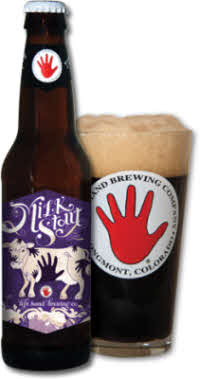 Left Hand Milk Stout A typical US craft brewing success story in one of North America’s fine beer heartlands, Colorado, Left Hand first brewed commercially in 1994, on the initiative of home brewer Dick Doore and his old friend Eric Wallace. Its original name was Indian Peaks after a nearby mountain range but this turned out be in use already as a beer name by another brewery, so the brewery became Left Hand after a local Arapahoe chief. The operation has subsequently expanded several times, buying out Denver’s Tabernash brewery in 1998, and now has a capacity of 41,000hl (35,000 US barrels) a year.
Left Hand’s wide range does a good job of bridging the gap between approachable but quality everyday beers like its flagship Sawtooth Ale, and more esoteric stuff like barrel aged beers and wheat double bocks. One interesting stalwart is this successful and multi-award winning sweet stout inspired by the near-vanished style of sweet milk stout. In Britain sweet stouts have tended to low gravities of 3% or less, often with added unfermentable lactose sugars extracted from milk. Left Hand’s answer is at a rather more robust gravity, and the ingredients on the website no longer list lactose, but it has added chocolate instead, with two-row pale, crystal and Munich barley malts, roast and flaked barley, flaked oats and Magnum and US-grown Goldings hops at a modest 25 IBUs.
The result is nearly black, with a deep mid-brown head. A malty liquorice, coffee and fruit cake aroma has hints of soft fruit, leading to a smooth oily palate with flavours of cola, roast and a definite gummy sweetness, though well controlled and not cloying. Strawberry fruit emerges before a dry, roasty and gently hopped finish that develops rich roast coffee notes and a pleasantly sticky sweet quality. A great modern twist on a neglected style.
Read more about this beer at ratebeer.com: http://www.ratebeer.com/beer/left-hand-milk-stout/12028/
First published in Beers of the World December 2008
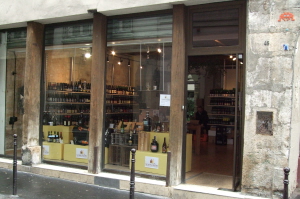 La cave à bulles, Paris Regular readers will already know that not all French beer comes from multinational-owned Alsatian fizz factories, but even if you’ve encountered the odd bière de garde or Breton brew, you probably have little idea of the scope and breadth of French craft brewing. Overshadowed by the country’s behemoth of a wine industry, many brewers – in common with other producers in a country hugely proud of its regional food and drink – don’t aspire beyond making an excellent product for local sale.
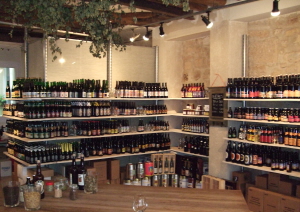 L'interieur de la cave à bulles, Paris. And then there’s the fact that Paris, while a great place to buy fine cheese, wine, baked goods, chocolate and much else besides, still does an abysmal job of showcasing French beer, with the few self-proclaimed specialist beer pubs majoring on well-known Belgian imports at staggeringly inflated prices.
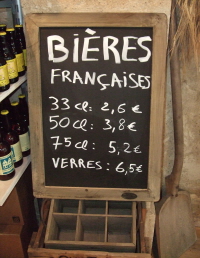 Les prix des bières françaises Be thankful, then, for the Cave à bulles, the one unmissable place for the amateur des bières passing through gai Paris. Owner Simon Thillou is a former building trade journalist who travelled all over the country in the course of his work, discovering great beers from tiny producers and wishing they were on sale in his native city. He finally opened his cave on 8 July 2006, quite unintentionally on the feast day of patron saint of brewers St Arnold.
Centrally located just round the corner from the tourist magnet of the Centre Georges Pompidou, it offers an amazing 150 French craft brews, all from small producers – even the bigger bière de garde brewers are shunned here.
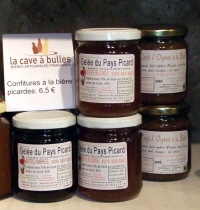 Confitures à la bière picarde You won’t be surprised to see bottles from the north and Brittany, but there are also beers from Normandy, the centre, even the south, with many unfamiliar names worth exploring, and several rare one-offs and specials. Nearly all are unpasteurised, many are bottle conditioned, and quite a few are otherwise only found in a handful of shops and pubs local to the brewery. Alongside them are around 40 Belgian lines, mainly Trappists, lambics and Wallonian beers, plus mini-casks, gift boxes and baskets, cider, glasses and beer conserves, mustards and vinegars. There are public monthly tastings, some focused on one brewery with the head brewers themselves often present, and private “dégustations découverts” for pre-booked groups.
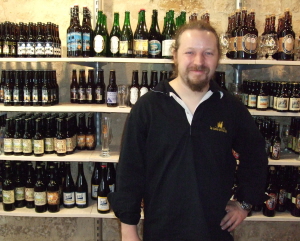 Chef de la cave Simon Thillou Like many in the business, Simon is a fan who’s clearly delighted to be making a living from his passion. The shop’s name translates as “the bubble cellar” but I’m unclear if it’s bubbles in beer we’re talking about, or Simon’s bubbling and infectious enthusiasm as he advises customers understandably overwhelmed by the choice, in fluent English as well as French. His language skills are put to good use with numerous North American and British beer tourists who’ve found the shop online (he’s hosted several private tastings for the US embassy), supplementing locals tired of the limited choice on supermarket shelves.
“I really believe that if you give people good, tasty products and give them the choice, they’ll naturally choose the good over the bad,” he says. “When I was 17 I went into a pub in Liège, Belgium, and asked for a bourbon. They insisted on bringing me a beer instead. I’d drunk beer before, of course, crappy beer, but this beer was Rochefort 10. A light came on in my head – it was a revelation. I’m not saying it’s the best, they’re all different, but if I could marry a beer, it’d be that one.”
But then, with a shopful like this to choose from, it would be hard not to be tempted into adultery.
Fact file
Address: 45 rue Quincampoix, 75004 Paris
Phone: +33 (0)1 40 29 03 69
Web: www.caveabulles.fr
Hours: Tues-Sat 1000-1200, 16oo-2000
Drink in? No (except at organised tastings)
Mail order: No.
Manager’s favourites: Rochefort 10, Rabourdin Brie Ambrée, anything from La Motte Juillet, St Rieul or Thiriez.
Beer picks
- Bailleux Cuvée des Jonquilles 7%, Gussignies, North. Lively blond bière de garde from a tiny café brewery, with vanilla, banana and flowery notes, as cheerful as its name – “daffodil vat” – suggests.
- St Rieul Brune 7%, Trumilly, Oise (Picardy). Actually a superb stout from a micro better known for Belgian influences: rummy, spicy aroma, fruity caramel palate and a long ashy finish.
- Rabourdin Bière de Brie Ambrée 7.5%, Courpalay, Seine-et-Marne (Île-de-France). Outstanding rustic amber ale from a farmhouse brewery, brimming with toasted biscuit malt, intense orange fruit and a hint of cheese.
- Thiriez Rouge Flamande 5.8%, Esquelbecq, North. You could safely pick anything from world class craft brewer Daniel Thiriez, but this nutty, smoky and meaty red beer named after a breed of cattle is very special.
- Tri Martolod Blonde 4.6%, Konk Kerne, Finistère (Brittany). Honey, lanolin and teatime aromas introduce a mild, fruity, tangy and refreshing blond from the “3 sailors” brewing coop.
From the archive: First published in the Oxford Bottled Beer Database May 2002.
Beer sellers: Cave à bulles
ABV: 7%
Origin: Gussignies, Nord, France
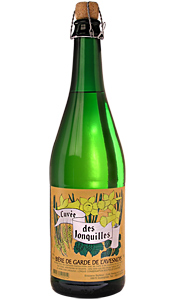 Bailleux Cuvée des Jonquilles ‘Daffodil harvest’, a bottle-conditioned blond ale with a suitably floral label full of the cheer of spring, comes from an artisanal brewery at the Baron brewpub and restaurant, Gussignies, northern France. I picked up this bottle at the London Drinker Beer Festival as one of the more unusual choices on the imported beer stand. It claims to be a bière de garde but isn’t typical for the style, being more of a light beer appropriate to the daffodil season. It’s also not meant for lengthy storage: the label informs you both of its bottling date in January 2002 and its best before date in June.
The beer is mid-blond, cloudy from a plentiful sediment and very lively: I lost some when I popped the champagne-style cork despite the fact the bottle had been standing for some days. The aroma is an inviting mix of vanilla, bananas, yeast, traces of hops and a light woody quality. The palate is lively and prickly with light vanilla-ish malt, with spreading flavours of dry and slightly flowery hops and washes of tangy fruit. Bananas and toffee are apparent on the swallow, and the tangy malt aftertaste lingers with a slight aniseed hint. Overall the beer is suitably wholesome, cheerful and refreshing, though the texture is a little thin and this bottle delivered a bit too much fizz for my taste.
Read more about this beer at ratebeer.com: http://www.ratebeer.com/beer/bailleux-cuvee-des-jonquilles-biere-de-garde/9285/
Beer sellers: Cave à bulles
ABV: 7%
Origin: Trumilly, Oise (Picardie), France
Website: www.st-rieul.com
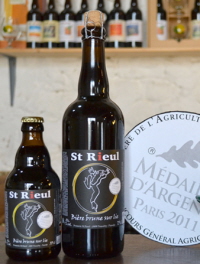 St Rieul bière brune sur lie avec sa medaille d'argent de Concours Général d'Agricole, Paris 2011 The single frog on the label of these impressive beers from northern France refers to a sweet little parable about standing out from the crowd and refusing to bow to authority. The eponymous 7th century cleric St Rieul, after whom the farm on which the brewery is based is named, was the first bishop of nearby Senlis and later bishop of Rheims. There’s a legend that once, when his open air preaching was interrupted by the croaking of frogs, he commanded them to fall silent, and all obeyed — except one. The enterprise was founded in 1998 by Thomas Vandôme and Thomas de Villeroche as the first brewery in the département in modern times.
The bottle conditioned brune is one of their award winners, with three Concours Général Agricole medals to its name, most recently a silver in 2011. You might expect a Belgian-style brown but it’s marketed to “lovers of stout”, containing four roasted speciality malts besides pale malt, and four hop varieties.
It’s a dark ruby beer with a thick, bubbly yellowy fawn head and a spicy aroma with roasted notes that turns rather rummy after a while in the glass. There are sacky hops and yeast on a dry, slightly mouth numbing palate, with plenty of fruit, caramel, a slightly soapy note and winey acidity. A long ashy finish has fruit and smooth chocolate malt, still sltly sharp and turning very dry. Enough to shut the frog up?
Read more about this beer at ratebeer.com: http://www.ratebeer.com/beer/saint-rieul-brune/84667/
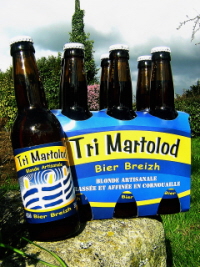 Tri Martolod Blonde Artisanale Beer sellers: Cave à bulles
ABV: 4.6%
Origin: Konk Kerne, Penn-ar-Bed (Breizh), France
Website: www.trimartolod.fr
One of a cluster of small breweries in Celtic Brittany, Tri Martolod — or ‘Three Sailors’, a reference to a Breton folk song — was founded in 1999 in the fashionable seaside resort of Benoded, operating as a cooperative. Prizes at the Concours Général Agricole and spreading appreciation for its beers led to expansion and in 2008 it moved to its present location in an industrial estate in Konk Kerne (Colguen), still near the sea.
Its best selling Blonde, unfiltered and unpasteurised, is sometimes labelled as a take on a pils-style beer, but I doubt it’s brewed by genuine pils methods and to me it’s more of a light golden ale with a hazy rich golden colour and a fine white head. A toasty teatime aroma has waxy, honey and pale malt notes with hints of lanolin and spice. the clean but full palate has twiggy hops, mineral notes and plenty of fruit with a hint of acidity. A sappy, tangy swallow leads to a sweetish pale malt finish with light bitterness and a light touch of roast. The overall impression is a mild and juicy beer given bite by touches of minerals and hops.
Read more about this beer at ratebeer.com: http://www.ratebeer.com/beer/tri-martolod-blonde/41591/
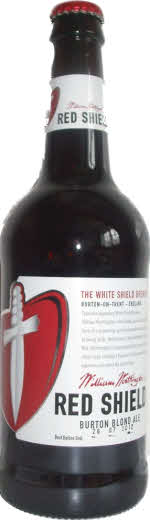 William Worthington Red Shield European Beer Bloggers Conference 2011
ABV: 4.2%
Origin: Burton upon Trent, Staffordshire, England
Website: www.molsoncoors.co.uk
Legendary former Bass brewer Steve Wellington, who still presides over the microbrewery at what is now the Coors Visitor Centre in Burton though is set to retire this summer, developed this bottle conditioned “blond Burton ale” as a contemporary, more easy drinking, sister to historic pale ale White Shield. While some of the extensions currently planned around the venerable White Shield brand sound less than convincing (Summer Shield, Autumn Shield, Winter Shield and Spring Shield, apparently), this tasty and very modern brew lives up to its Worthington shield pretty well.
The colour names are rather the wrong way round as the Red is a lighter beer than the White, a warm gold colour with a thick, creamy, pink-tinged white head. A notably hoppy, creamy and very delicate aroma betrays a fruity hop mix of Centennial, Cascade and Bramling Cross. The palate is also creamy but delicate and floral, with fruity hop flavours first and a developing peppery bitterness. That lovely creamy malt persists into the finish which is resinous but not overbearing, the hops finally lingering in a gentle signature with a touch of citrus and glucose. Tasty, refreshing and top quality, though whether it proves as enduring as its stablemate remains to be seen.
Read more about this beer at ratebeer.com: http://www.ratebeer.com/beer/worthington-red-shield/108242/
|
|
