Includes information for Ram Brewery during the redevelopment of the Ram site. For the current brewery on the site, see Sambrook’s. See also Ram Inn.
Closed/private brewery, beer firm
68 Wandsworth High Street SW18 4LB
youngs.co.uk, youngsbeers.co.uk
First sold beer: by 1533 (as the Ram Inn)
Ceased brewing commercially: September 2006 (as Young & Co’s Brewery, beers still brewed elsewhere)
Continued brewing privately as the Ram Brewery 2007-20
Brewing resumed on site as Sambrook’s 2021
The Ram brewery in Wandsworth is likely the oldest continuous documented brewing site in Britain, with records of an inn, the Ram, undoubtedly with its own brewhouse, in 1533. Wandsworth was then a separate Surrey market town, located at the point where the Portsmouth Road, linking London and the important naval port of Portsmouth, crossed Thames tributary the river Wandle just a little south of its confluence. The Ram stood right beside this road just before the bridge, as does the present Ram Inn on the west corner of the junction of High Street and Ram Street.
In 1581, the Ram was occupied by a known brewer, Humphrey Langridge, and by 1675 it was a significant commercial brewery owned by the Draper family and had already expanded into adjacent buildings. By the time it was bought by the Tritton family, who also brewed in Ashford, Kent, in 1763, it was known as a porter brewery.
The Ram’s most famous owners, the Youngs, were prominent manufacturers of brewing vessels based in Southwark: it was a Young’s porter tun that triggered the Great Beer Flood of 1814. Charles Allen Young bought the Ram in 1831, initially in partnership with Anthony Bainbridge. The partnership was dissolved abruptly in 1883 when Anthony’s son Herbert was discovered pursuing an adulterous affair in Paris with the wife of Charles’s son, Charles Florance.
Now simply known as Young & Co, the brewery had successfully shifted its focus from porter towards the lighter, more sparkling beers for which the Young’s name would become famous. The site, which gradually expanded west to the Wandle and some way north to occupy almost 2 ha, was rebuilt several times: much of what’s visible today was erected in the years following a major fire in 1882.
The beer consumer movement of the 1970s and 1980s knew Young’s as a fiercely independent fortress of brewing tradition, which stuck resolutely to cask beer at a time the industry was pushing towards keg. Steam engines remained in use as late as 1976, wooden casks were retained long after almost everyone else had converted to steel, a live ram was kept on the site as a mascot and local deliveries were made with horse-drawn drays into the 21st century. The brewery remained in close family ownership and management, with the board chaired by John Young, great-great-grandson of Charles Allen Young, between 1964 and 2006.
Young’s cask range in the early 1970s encompassed a dark mild, Best Malt Ale (around 3%); Bitter (around 3.8%), known locally as ‘Ordinary’ though John Young famously objected to the term and upbraided brewery staff heard using it; a stronger parti-gyled variant of bitter, Special Bitter, at around 5%, the strongest beer sampled in a milestone Sunday Mirror investigation into declining beer strengths in 1971; and a dark, sweetish winter seasonal, Burton Ale (around 5.6%), a rare surviving example of a style associated with Burton upon Trent before it became known for its pale ales, renamed Winter Warmer in 1971.
The bitter was also available in keg, as was one concession to the changing times, Saxon Lager (3.2%). Introduced in 1969, this was really a hybrid Kölsch-style beer, fermented by the Young’s house ale yeast rather than a lager yeast but then lagered at cold temperatures for 10 weeks.
Besides standard bottled brown and pale ales, Young’s offered several noted bottled beers. Ram Rod Pale Ale was another stronger parti-gyled variant of bitter at around 5.6%, popular among customers for blending with cask Special as a ‘Ram and Spesh’. An even stronger variant was Old Nick Barley Wine (likely then at over 8% but ending up at 7.2%). Strong Export Bitter (around 6.5%) was a bottled pale partly inspired by Worthington White Shield, developed in the late 1950s for the Belgian market where Young’s was hoping to grow its business, and at times brewed under license there.
Though London Lager replaced Saxon in 1981 and the mild was dropped in 1983, all the others remained in the portfolio into the 21st century, albeit often with slightly reduced strengths. Strong Export Bitter, originally brewery conditioned like the other Young’s bottled beers, was relaunched in 1996 in bottle-conditioned form under the name Special London Ale. Another successful 1990s launch was bottled (and occasionally draught) Double Chocolate Stout (5.3%), so-named as it contained real chocolate as well as chocolate malt.
Sticking with tradition helped grow Young’s from a relatively small, if much-loved, largely local brewery with an estate of around 140 pubs largely concentrated in its southwest London heartland, to a major cask name by the early 2000s. Facilities were expanded to cope with increased demand, with several large modern conical fermenters added in 1976, and £5 million spent on a new brewhouse in 1982.
Given Young’s history, it was something of a shock when in 2006, John Young admitted he’d let his head rule his heart as he announced Young’s was partnering with Charles Wells and relocating all production to the latter’s big 1970s Eagle brewery plant in Bedford. He died aged 85 the very week his company brewed its last beer at the Ram.
Where are they now?: Brewing at the Ram
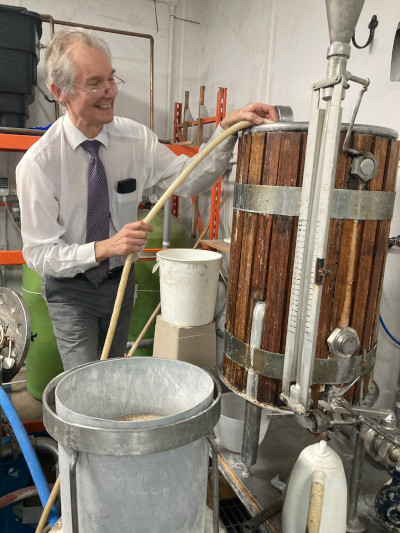
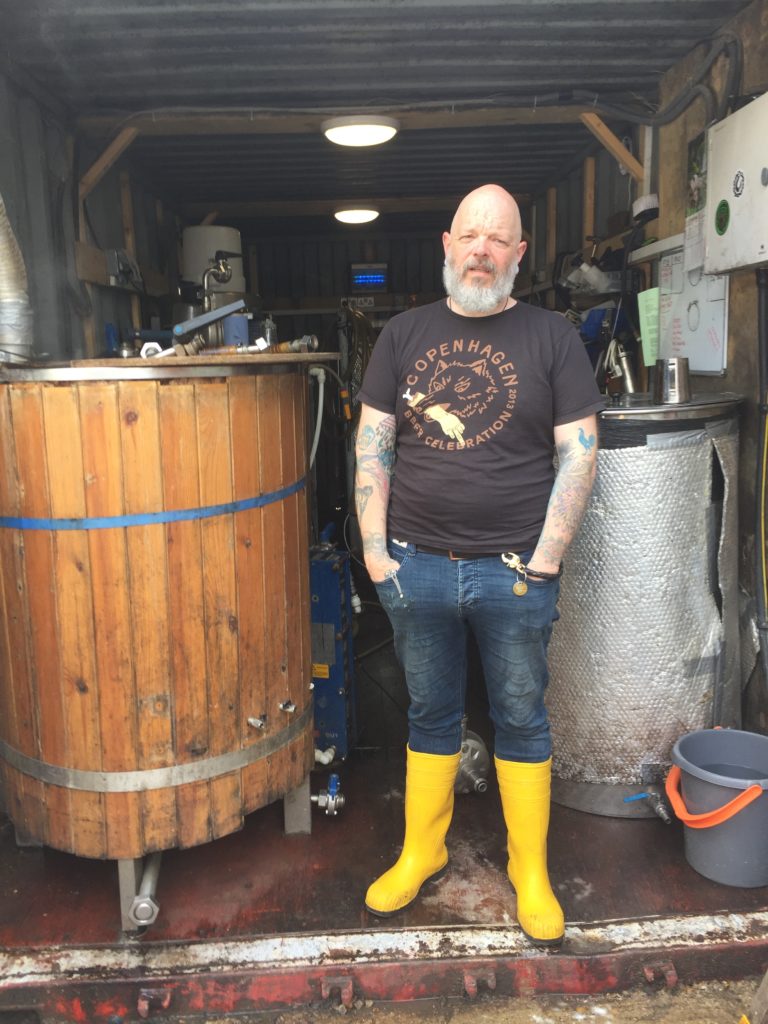
Following an intervention by two Young’s staff, John Hatch and ex-Truman brewer Derek Prentice, Wandsworth council resolved to make provision of a microbrewery one of the conditions of planning permission for future redevelopment. John, a former homebrewer who had joined Young’s in 1988 as a biochemist before becoming brewhouse manager and health and safety supervisor, became site manager, and persuaded the new owner and Young’s to allow him to preserve the site’s brewing heritage using a nanobrewery, but only on condition the beer wasn’t sold.
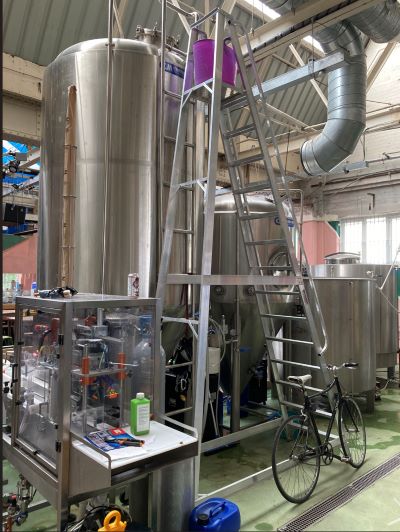
One final gyle from the old brewhouse was used to fill bottles with a year’s supply of wort, keeping fermentation going while John cobbled together a tiny 50 l kit from bits and pieces found around the site. The cold liquor tank was a cloakroom water tank, the hot liquor tanks immersion heaters from mess rooms and the mash tun a waste receptacle from the bottling line, adapted with some of the insulation from the main mash tun. In place of a sparge arm, John ingeniously rigged up a device that sprayed hot liquor onto a tiny electrically powered plastic propeller. A tea urn was repurposed as a copper and two filtration tanks were turned upside down and fitted with cooling coils to serve as fermentation vessels.
John served the beer from this in cask to visitors touring the site, film and TV crews working there and, later, to audience members at a series of popular comedy nights, with an honesty box to fund further brewing supplies. Lacking a lab, he simply continued to repitch the Young’s house yeast, which over many hundreds of repitches began to develop a character of its own.
The arrangement was originally supposed to cover only a few years until space for a commercial brewpub became available on the site, but in the event lasted for 15 years. The council rejected the first plan for the site, triggering a lengthy public inquiry, and construction work didn’t start until 2014 when the original developer Minerva sold the Ram to a Chinese firm, Greenland. The nanobrewery moved from the 1980s brewhouse, which was soon demolished, to the stable block which, as a listed building, was due to be retained.
The first new flats were occupied in 2018, and in 2019 Sambrook’s brewery confirmed it would be relocating to the Ram to honour the obligation of reviving commercial brewing on the site, as well as managing the visitor centre and museum. It was an appropriate choice: Sambrook’s was founded in 2008 in nearby Battersea partly out of frustration with what was then a dearth of brewing in London exacerbated by the closure of Young’s. Its two best-known cask beers, Wandle and Junction, while certainly not clones of Bitter and Special, filled a similar market niche and were already on sale in some Young’s pubs where customers preferred a London-brewed product.
Following further unexpected delays, including the Covid-19 lockdowns, during which John distributed free beer in polypins to local residents, it wasn’t until April 2021 that Sambrook’s brewed on the site, occupying part of the range of 1883 Grade II*-listed brewery buildings along Ram Street, including an extensive taproom as well as the visitor centre. At this point, John joined the Sambrook’s team, relocating his nanobrewery inside the Sambrook’s brewhouse, with beers made on it now on sale commercially in the taproom, almost entirely from cask. For more on current activities, see Sambrook’s.
Separately, in October 2019 the Ram Inn, which remained under Young’s ownership but was leased to a local pub operator, reopened as a brewpub. Brewing under the name SlyBeast, it pre-empted the official restoration of brewing on the site. Young’s later sold the lease, the pub changed hands and brewing finally ceased early in 2024. See the Ram Inn page for more.
Where are they now?: Young’s beers
Young’s remained as a pub company following the brewery closure and set up a joint venture with Charles Wells’ Eagle brewery in Bedford to continue to brew the brands. Known as Wells & Young’s, this was 40% owned by the latter. The Young’s beers were flavour-matched at Bedford and fermented using the Young’s yeast.
Young’s sold its shares in Wells & Young’s, including the Young’s beer brand, to Wells in 2011, effectively withdrawing from brewing entirely. Wells continued to supply Young’s brands brewed at the Eagle to Young’s pubs on a rolling contract, and to market them elsewhere.
Then in 2017, Wells too opted to restructure and to concentrate on its pubs. It sold the Eagle brewery and its own core brands as well as its interest in the Young’s brands to national brewer Marston’s and set up a new company, Wells & Co, to run its pubs. For a while it continued to source beer from the Eagle, but in 2020 opened a new brewpub and microbrewery, Brewpoint, elsewhere in Bedford. This new company has no link to Young’s.
Following the Wells move, Marston’s continued to produced Young’s beers at the Eagle, rebranding them in 2019 with London in their names and marketing them, disingenuously in my view, with the slogan ‘London will always be Young’s’.
In May 2020, Marston’s also split off its pubs from its brewing activities, with a majority share in the latter taken sold to Carlsberg to create Carlsberg Marston’s Brewing Company (CMBC). Young’s beers were still brewed at the Eagle until late 2022, when CMBC sold the brewery to the Estrella Damm brewery of Barcelona, Catalunya, whose brands it had long produced and distributed under license. The new owner converted it entirely to lager production.
Most Young’s brands were then transferred to another CMBC subsidiary, Wychwood, in Witney, Oxfordshire, with seasonal Winter Warmer made at Marston’s Albion Brewery in Burton upon Trent (which had once belonged to London brewer Mann’s). But Wychwood was closed in November 2023, with the beers transferred to Marston’s at Burton. In July 2024, Carlsberg bought out Marston’s share of CMBC to become the sole owner.
In July 2021, Young’s sold off almost all of its leasehold pubs, including the Ram Inn as mentioned above, to major pubco Punch, which in December 2021 was sold to US-based investment group Fortress. Young’s retains its managed pubs which still sell Young’s beers brewed by CMBC under the rolling contract. The portfolio now includes cask London Original (the rebranded Bitter, 3.7%), London Special (rebranded Special, 4.5%) and seasonal Winter Warmer (5%), plus keg London Stout (5.3%), added since the brewery closed, and Double Chocolate Stout (5.2%) in keg, can and bottle. Some bottled beers like Light Ale and Ram Rod (now 5%) remain available but aren’t widely promoted.
Young’s has also become a brewer of sorts again through its ownership of brewpubs. The Ram Inn, as mentioned above, brewed under ultimate Young’s ownership between 2019 and 2021. Then in November 2023, Young’s acquired the City Pubs chain, which included several brewpubs, including the Temple Brew House in London. That pub ceased brewing in June 2025, but brewing continues at another former City brewpub outside London, the King Street Brew House in Bristol. In September 2025, retired Young’s honey beer Waggle Dance, a brand originally acquired from the defunct Vaux brewery in Sunderland, was recreated here as a special and further revivals of old Young’s beers may follow.
The other obvious Young’s legacy is John Hatch’s initially non-commercial continuation of the Ram Brewery recounted above, which now operates commercially under the Sambrook’s banner. Ram beers still use a descendant of the Young’s house yeast, and, though its regular beers are new recipes, the brewery retains the old brewing books, intermittently reviving recipes for heritage brands.
Things to see
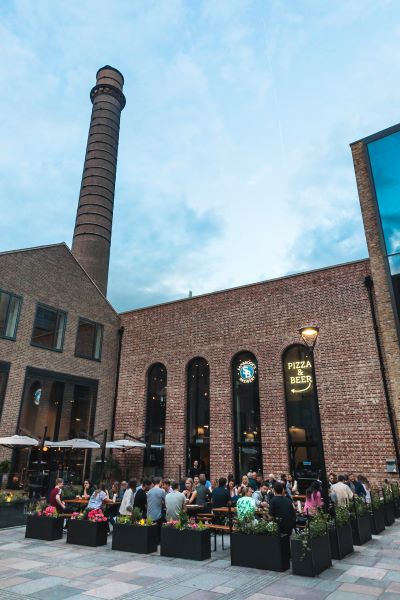
Now known as the Ram Quarter, the site covers 3.2 ha bounded by Armoury Way (A205), Ram Street, Wandsworth High Street and the river Wandle. Numerous heritage buildings have been retained and restored in what so far has been a relatively sympathetic redevelopment, with extensive public space. The demolition of more recent brewery buildings from the 1970s and 1980s has arguably created a better impression of how the Ram might have looked in Victorian times. All the heritage buildings, except for the pub, Brewery House and stable block, are Grade II*-listed.
The Ram Inn on the corner of Ram Street and the High Street (68 High Street SW18 4LB) is on the site of the original inn where brewing likely commenced in the 16th century, though the current Grade II-listed building dates from 1883, with 1930s remodelling. It has a carriage entrance round the corner on Ram Street, attractive plaques promoting Young’s at ground level and a terracotta relief of a ram on the rounded section at the corner, above the door. It long functioned as a brewery tap and indeed was named the Brewery Tap between 1974 and its closure for redevelopment of the site in 2008. As mentioned above, it was a brewpub again between 2019 and 2024. It’s no longer owned by Young’s but is part of Punch’s Laine chain and not especially notable for beer.
Diagonally opposite, and strictly speaking offsite but still of related interest, is the Grade II-listed Spread Eagle Hotel (79 High Street SW18 2PT), rebuilt by Young’s in 1898 on the site of an existing pub as a landmark large pub and hotel. Externally, it’s in elaborate Flemish Renaissance style with a striking glazed canopy. Inside, many of the lavish 1890s fittings and decorations have been preserved in a three-star heritage interior, subdivided into several rooms with much etched glass, wooden screens and imposing bar furniture. Still owned by Young’s, it was carefully refurbished in 2020: the upper storeys now house the pub company’s offices as well as newly reopened hotel rooms.
Next door to the Ram Inn on the left, the building with three tall partially weatherboarded windows, now a bowling alley (no 74), was originally a fermentation room, built in 1883-84. The red brick house next to this, set a little back from the road behind a wall and gateposts, is the oldest on the site. Known as the Brewery House (no 77), it was built as a private home for the owners by bricklayer John Porter in the early 18th century and later used as brewery offices. Blocks of flats dating from the 2010s redevelopment stand between this and the river Wandle.
Following Bellwether Lane between the Brewery House and the flats and bearing right takes you into a yard where the main cluster of remaining brewery buildings stands on the right. Parts of these date from the 1800s and 1830s, but there was extensive rebuilding in the 1880s following the fire under the direction of architect Henry Stork.
The building with the distinctive gable and large high window on the right, also visible from the High Street overlooking the Ram Inn, forms an L-shape with a wing now faced in glass fronting onto Ram Street: this is the 1880s brewhouse, which was largely abandoned in the 1980s following the construction of a now-demolished replacement closer to the Wandle. The glazed part is known as the Beam Engine House as it was used for the brewery’s steam engines.
An arched entrance in the Beam Engine House provides public access to Ram Street through a short passageway. Along the passageway is a plaque commemorating the Surrey Iron Railway, operational between 1802-46 as arguably London’s first public railway, though it was horse-drawn and for goods only, predating the steam railway age. It ran from a wharf on the Wandle to the north, likely through part of the brewery site to terminate near today’s West Croydon station.
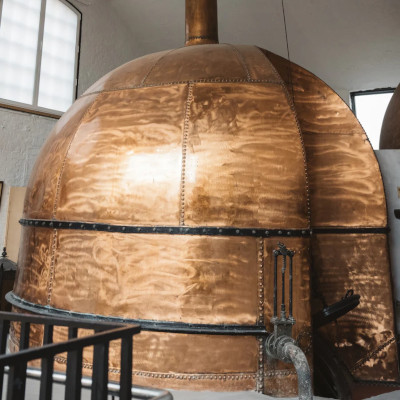
The beam engine house and adjacent part of the brewhouse now house the Sambrook’s Visitor Centre. Inside are two beam engines dating from 1835 and 1867, and two boiling coppers from 1869 and 1885, as well as an extensive collection of other brewery artifacts, many of them salvaged by John Hatch. On the ground floor, in what’s now the shop, a former brewery well is visible under glass. Currently these interiors are only viewable on booked tours, which are highly recommended. They’re usually led by John Hatch himself and include a visit to the current brewhouse.
To the left of the engine house, the building with four tall arched windows originated as a boiler house in the 1830s but was later converted to a porter tun room. It’s now the Sambrook’s taproom. The block at right angles to this on the left, with its landmark chimney, dates from between 1834 and 1869 and was originally built as coopers’ and carpenters’ shops, though was also used for porter tuns at various stages, and partly converted to a new boilerhouse in 1903 when the chimney was added. The rear part of this, backing onto Ram Street, now houses Sambrook’s modern brewhouse and John’s nanobrewery. Accessible from the taproom, though sometimes used for ticketed events and private functions, is a room where the chimney base is clearly visible.
Continue north along Bellwether Lane through the recently built flats to the north end of the site to find the attractive low-rise Grade II-listed Stable Block with its cupola sporting a clock and weather vane, built in 1896. This formerly housed the famous dray horses and ram. Redevelopment is still incomplete on this part of the site, with a controversial proposal to build a tall tower, although the stable block itself will be conserved and is likely to be converted to a restaurant.
Updated 16 December 2025.
More London breweries
Closed London breweries