
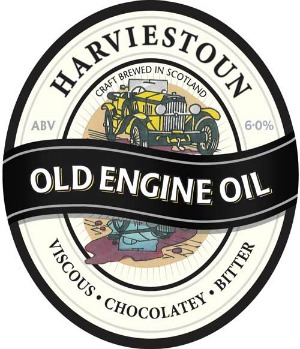
Harviestoun Old Engine Oil
ABV: 6%
Origin: Alva, Clackmannanshire, Scotland
Website: www.harviestoun.com
First published: 8 January 2001
Another review from the archive written for the pioneering Oxford Bottled Beer Database (OBBD). I’ve left it uncorrected — so please read it in that historical spirit.
Old Engine Oil hadn’t been around very long when I wrote this review: although based on an old porter recipe, it was devised for the first ever Tesco Beer Challenge in 2000, which it won. Unlike many other winners of that competition, it’s still one of its brewery’s best known beers today, despite my reservations about its name. Over the years since, Harviestoun, founded in 1986, has been part of a bigger group (Caledonian and briefly Scottish Courage/Heineken) then once again independent, and if anything is regarded even more highly now than in 2001. The beer has been available in a variety of strengths including a cask version at 4.5%.
Another speciality thrown up by Tesco supermarket’s Beer Challenge, this apparently won the Winter 2000 competition. Since it’s an unusual but very pleasant beer, this fact is easy to understand; what’s harder to fathom is the mindset of the marketing bods that first gave it such an unattractive name and then tried to claim that it’s “derived from a traditional Celtic recipe”!
Its only resemblance to old engine oil is its colour: it’s dark almost to the point of ebony, with ruby highlights in the light. It’s not bottle-conditioned but pours lively, with little head, giving off scents of liquorice and chocolate. The palate is full and malty, with dark burnt fruits and the promised liquorice and chocolate in abundance, with a slightly wine-gum-like quality offset by a bracing coffeish hop bitterness.
The finish is dry and tangy with hints of strawberry fruit. A welcome new departure for a brewery known for their lightness of touch, it’s a difficult beer to classify, with many of the flavours of a stout but the texture and drinkability of an ‘old peculier’-type ale. Far too good to waste on an engine.
Leave a Reply