A sample text widget
Etiam pulvinar consectetur dolor sed malesuada. Ut convallis
euismod dolor nec pretium. Nunc ut tristique massa.
Nam sodales mi vitae dolor ullamcorper et vulputate enim accumsan.
Morbi orci magna, tincidunt vitae molestie nec, molestie at mi. Nulla nulla lorem,
suscipit in posuere in, interdum non magna.
|
Top Tastings 2010
ABV: 11.5%
Origin: Esen, West-Vlaanderen, Belgium
Website: www.dedollebrouwers.be
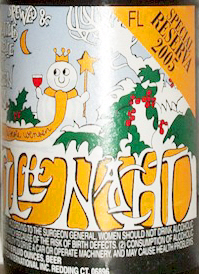 De Dolle Brouwers Stille Nacht Reserva 2005 An extreme development of the cult classic ‘Silent Night’ strong, sweet Christmas ale from the eccentric Dolle Brouwers, this wood aged version takes a slighty stronger implementation of the same recipe, generously hopped with Nugget and matured for 18 months in refill Bordeaux barrels. There have been other vintage dated releases since, but I found this beautifully aged 2005 on the lengthy list of mature beers at Kulminator in Antwerpen.
This is an amber beer which poured with a light foamy head. A sweet liqueurish aroma was heavy with estery fruit. The palate had a very sweet, heavy, luxuriouslly peachy broad body with notes of sherry and very ripe — not to mention rotting — fruit, with obvious alcohol and a definite woody note. Oranges, peaches and apricot liqueur emerged in a coating, lingering finish with that slightly honeyed note often found in Dolle beers. There was also a notable and very pleasing touch of acid — the wood ageing would have encouraged this and other reviewers have described more recent versions as funky and ‘bretty’, but the characteristic was relatively restrained on this sample, perhaps mellowed out by age.
Read more about this beer at ratebeer.com: http://www.ratebeer.com/beer/de-dolle-stille-nacht-special-reserva-2005/59477/
Top Tastings 2010
ABV: 27%
Origin: Boston, Massachusetts, USA
Website: www.samueladams.com
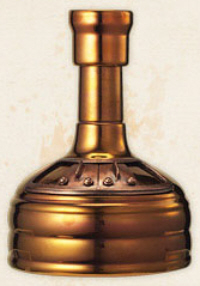 Boston Beer Company Samuel Adams Utopias 2009 I got an opportunity to try Utopias at a beer judging — it was presented anonymously but others on our judging team who’d tried it before instantly recognised it, and we later confirmed what it was, with the opportunity to taste it again. If you’re lucky enough to stumble across it — and it’s rare stuff, one of the first beers deliberately to be marketed as a premium price collectible, a limited edition retailing at up to $200 a bottle or more on the collectors’ market — you’ll realise why my colleagues found it so instantly recognisable.
The Boston Beer Company is one of the USA’s most successful and established new wave craft brewers, founded in 1985 by Jim Koch. It had already started to push the envelope with extra strong and extreme beers when it started experimenting with what became Utopias in the early 1990s, using a blend of yeasts including champagne yeast and a grist fortified with maple syrup to achieve a gravity of 24% by natural fermentation. The beer was then aged in a variety of refill barrels — Scotch whisky, bourbon, port and cognac — for up to a decade and blended to produce the first release of Utopias in 2001, distributed in a bottle designed to resemble a brewing copper.
This third version, released in 2009, has upped the gravity still further to 27% and includes a wider variety of barrel-aged beers, some of them 16 years old. Two-row pale Harrington and Metcalfe, Caramel 60, and Munich are the barley malts with a very European mix of Hallertau Mittelfrüh, Spalt and Tettnager hops. Buffalo Trace bourbon and Portugese muscatel finishing barrels have joined the ageing armoury.
The result is a completely flat iodine brown beer with no head, leaving forbidding yellow traces on the edge of the glass as it swirls. The aroma is rich and complex, with vanilla, sawn wooden boards, leather, cherries and an obvious alcoholic note. The palate is sweet and spirity with cherries, madeire fruit cake, mint and a gaseous cloud of woody retronasals. A hugely long finish has a sweet, alcoholic slick with vanilla, crackling herbal hoppy notes around the edges and the mouth coating dryness of sappy sucked wood.
I hesitated to include Utopias in this top tastings list as it’s not really like a beer at all, more like a sherry or a port, although rather more expensive than some examples of the former that are comparable in quality. But it’s certainly well worth experiencing.
Read more about this beer at ratebeer.com: http://www.ratebeer.com/beer/samuel-adams-utopias/12228/
Top Tastings 2010
ABV: 8%
Origin: Lembeek, Vlaams-Brabant, Belgium
Website: www.boon.be
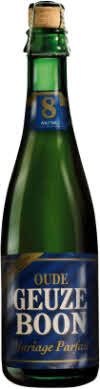 Boon Oude Geuze Mariage Parfait In 1977, after a period perfecting the skill of lambic blending at the old De Vit blender and former brewery in Lembeek, Frank Boon became the first person in decades to start a new brewery specialising in spontaneously fermented lambic beers on the same site, in the village that’s the spiritual home of the style in the Pajottenland near Brussels. At the time lambic seemed in terminal decline, but Frank was one of the people that helped establish its profile on the developing international beer appreciation scene, and he’s since become one of the most successful ambassadors for real lambics. A longstanding partnership with Belgian new national Palm has helped provide wide distribution.
The ‘Perfect Marriage’ series of beers, blended from the best barrels of lambic selected by the brewer and at a considerably higher strength than is normal for the style, are the pinnacle of Boon’s craft. 90% of the blend for this geuze comprises mature lambic of around 18 months old, about 5% is three year old beer and the rest young beer with adequate unfermented sugar and live yeast to develop a fresh sparkle. The various beers are mixed in a 25,000l capacity blending vessel, cooled, bottled and returned to fermentation temperature in a temperature controlled room. They then enjoy a long, cool maturation before being released.
A well-matured 2001 example made an appearance at the Zythos Beer Festival in 2010. With the reddish-amber ‘foxy’ colour of a good mature lambic, it had a fine white head and a sweet-sour aroma reminiscent of wet plastic, with a vinegar note. The palate was beautifully lambic-sour, but very approachable for the style, with tasty, complex apple pippy fruit, and a slightly creamy texture with some sweet notes. A chewy, fruity applecore finish developed tart notes way back in the mouth, with an emerging and lasting nuttiness and edges softered and rounded by maturity. Sublime.
Read more about this beer at ratebeer.com: http://www.ratebeer.com/beer/boon-oude-geuze-mariage-parfait/12027/
Top Tastings 2010
ABV: 5.8
Origin: Trabelsdorf (Lisberg), Franken/Bayern, Germany
Website: www.beck-braeu.de
 Beck Bräu Trabelsdorf Not to be confused with the massive AB InBev subsidiary in Bremen, Beck Bräu is a brewpub in a small village in the hilly, wooded country of Upper Franconia’s Steigerwald. Over the past few years a number of its beers have found their way to British beer festivals, but the brewer responsible for expanding this trade, Andreas Gänstaller, gave up the lease at the end of 2010 and took over the old Friedel brewery in Schnaid. Brewing in Trabelsdorf may yet be revived by the property owner’s son but the brands might be different.
This fresh, unfiltered lager, enjoyed several months before the move at the Battersea Beer Festival, was an excellent example of Andreas’ skill. A deep gold, almost amber, in colour, it had a generous off-white head, and a relatively restrained malty and creamy aroma with a lightly perfumed touch. The palate was full, natural and rather yeasty with honeyed malt, generous biscuity flavours and a notably edgy and very clean and distinct dose of hops. A long, drying chewy finish with a slightly vegetal hop character turned slightly peppery and chalky. A delightfully refreshing beer — Andreas will be one to watch at his new home.
Read more about this brewery’s beers at ratebeer.com: http://www.ratebeer.com/brewers/brauerei-beck-trabelsdorf/3701/
Top Tastings 2010
ABV: 10.5%
Origin: Boulder, Colorado, USA
Website: www.averybrewing.com
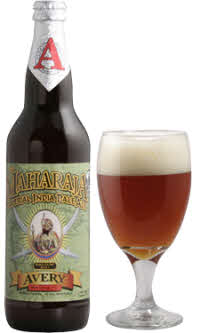 Avery Maharaja Imperial India Pale Ale Regularly topping polls of the world’s best beers, this super-hopped pale ale comes from a Colorado brewery founded by home brewer Adam Avery in 1993, since much expanded and greatly admired for its cutting edge repertoire of extreme hop beers and barrel aged specialities. I picked up my ‘bomber’ bottle at Argonaut in Denver.
Made from two-row pale, caramel 120L and Victory barley malt, with Simcoe, Columbus, Centennial and Chinook hops added in numerous additions to a whopping 102 IBUs, this is a reddish copper beer with a fine yellowy off-white head, taking its name from the Sanskrit word meaning ‘Great King’. Unsurprisingly the aroma is pungently hop dominated, a complex haze of soapy, piny, coconut and fruit notes.
The smooth nectary palate soon develops a piny hop bite, with notes of citrus, wood polish and tropical fruit. The finish is drying but surprisingly rounded, with pungent and vivid resinous hop flavours and mint, though softened by an almost honeyed touch. It is indeed a very hoppy beer, but achieves an impressive delicacy around its vivid flavours which should explain why it’s held in high regard compared to some more aggressive entries in the genre.
Read more about this beer at ratebeer.com: http://www.ratebeer.com/beer/avery-the-maharaja-imperial-india-pale-ale/44485/
Originally published in BEER February 2011. Click on the links for extended reviews.
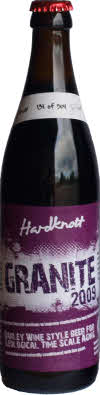 Hardknott Granite 2009 The good Real Ale in a Bottle just keeps on coming, and this column can barely keep pace! And pleasingly, many of the new bottlers aren’t just bottling cask but aim to tempt a discerning audience with something special.
An excellent example is the Hardknott Brewery deep in the Lake District. Their bottled range includes a tasty 6.5% “oxymoronic ruby red IPA” and a complex 8% barrel aged Imperial Stout. But my pick of a very strong bunch is Hardknott Granite (10.4 per cent), a dry hopped dark ruby barley wine with a rich caramel malt palate set off by chewy hops, spice and an odd but pleasing whiff of Stilton cheese. A vinous, sherryish finish yields chewy roast and slightly burnt tones, plum jam and tobacco. Brewer Dave Bailey is also one of Britain’s most respected and perceptive beer bloggers, and demonstrably practices what he preaches. The flair and imagination in these beers marks him out as a brewer to watch.
Also exercising his imagination is John Bates at Ole Slewfoot brewery near Norwich, named after a bear in a Johnny Horton song. His range of corked and wired 375ml bottles includes Red Wing (5.1 per cent), an attempt at a Flemish red ale with a whiff of roses on the woody aroma. It’s lightly sour – I suspect the addition of brettanomyces yeast – with fruity malt, chocolate, and an authentic irony tang. While not a clone of any Belgian original it’s impressively true to style and very drinkable in its own right.
Green Jack in Lowestoft are unafraid to put strong stuff on the bar and they’re now putting some of it in handsome swing top 750ml bottles, including Green Jack Ripper (8.5 per cent), their award winning barley wine-cum-abbey tripel. This blond beer has a citric, peaches and cream aroma with mineral notes and a grainy, herby palate (coriander, perhaps?) with a distinct note of apricot jam. Rooty hops finally emerge on a spicy dry finish to give a bitter kick that’s pronounced but not excessive.
I admire Edinburgh micro Stewart’s for reflecting Scotland’s distinct brewing tradition in their beers, unlike some of their peers. Among their new bottle conditioned range is the very Scottish Stewart’s St Giles, named after the landmark Presbyterian High Kirk on the capital’s Royal Mile. It’s a cherry red beer with a ripe cinder toffee and malt aroma and a classic malty-fruity palate. Burnt cake and a gentle hint of hops dry the soothing caramel-tinged finish, ideal for relaxing with after a bracing winter stroll in Holyrood Park.
Blythe Ridware Pale, hand bottled deep in rural Staffordshire, is a strikingly pale and delicate yellow colour with a fruity and flowery lemon and honey aroma. A crisp, dry, lightly bitter palate has floral and mineral hints and the tasty finish develops earthy pepper flavours over plenty of firm and fruity malt. This perfectly balanced and very refreshing beer is one of the best I’ve tried of the new breed of bitterish golden ales.
Top Tastings 2010
An extended review of a beer featured as a new real ale in a bottle on the bottled beer review page in the February 2011 issue of BEER magazine, sent free every quarter to CAMRA members, who can also view it online. The magazine is additionally available in selected newsagents.
ABV: 4.3%
Origin: Hamstall Ridware, Staffordshire
Website: www.blythebrewery.co.uk
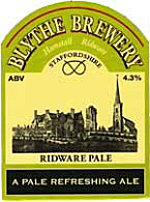 Blythe Ridware Pale Relatively new to bottle conditioning is the Blythe brewery at Hamstall Ridware in rural Staffordshire, which very successfully produces packaged versions of its cask beers by hand bottling. The standout beer from the range is Ridware Pale, a very pale, hoppy bitter that started as a summer seasonal but is now available year round.
A delicate yellow with fine white foam, the beer gives off a delightful fruity and flowery lemon and honey aroma with perhaps a slight sulphury note. A crisp, dry, lightly bitter palate is superbly balanced, with decent pale malt and poised hop bitterness enlivened by floral and mineral hints.
A refreshing swallow leads to a fresh, tasty finish with the very British resiny burr of quite assertive but not overstated hops. Earthy pepper flavours slowly emerge over plenty of firm and fruity malt. One of the best I’ve tried of the new breed of bitterish golden ales.
To download BEER if you’re a CAMRA member, see http://www.camra.org.uk/page.aspx?o=beer.
To find out more about CAMRA membership, see http://www.camra.org.uk/page.aspx?o=joinus.
Read more about this beer at ratebeer.com: http://www.ratebeer.com/beer/blythe-ridware-pale/88027/
An extended review of a beer featured as a new real ale in a bottle on the bottled beer review page in the February 2011 issue of BEER magazine, sent free every quarter to CAMRA members, who can also view it online. The magazine is additionally available in selected newsagents.
ABV: 5%
Origin: Newington, Edinburgh, Scotland
Website: www.stewartbrewing.co.uk
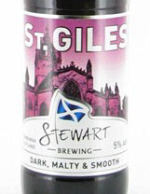 Stewart St Giles I appreciate Edinburgh micro Stewart’s, founded by ex-Bass brewer Steve Stewart and his partner Jo in 2004, for brewing at least some cask ales that are unapologetically Scottish in character, reflecting the country’s distinct tradition – not always the case with the current crop of micros north of the border. I was delighted to hear they now have a bottle conditioned range, from which St Giles, named after the landmark Presbyterian High Kirk on the capital’s Royal Mile, stands out as the best and most Scottish of the ones I’ve tried.
This deep cherry red beer has a ripe and malty aroma with spiced cinder toffee notes, and a classic malty-fruity palate with cereal malt and toffee lifted by gently roasty dryness. A long chewy sappy light caramel finish is mainly dried by developing burnt cake and roast notes, with a gentle hint of hops. A warming, soothing glassful for an Edinburgh winter day.
To download BEER if you’re a CAMRA member, see http://www.camra.org.uk/page.aspx?o=beer.
To find out more about CAMRA membership, see http://www.camra.org.uk/page.aspx?o=joinus.
Read more about this beer at ratebeer.com: http://www.ratebeer.com/beer/stewart-st-giles/115585/
An extended review of a beer featured as a new real ale in a bottle on the bottled beer review page in the February 2011 issue of BEER magazine, sent free every quarter to CAMRA members, who can also view it online. The magazine is additionally available in selected newsagents.
ABV: 5.1% and 7.7%
Origin: Hainford, Norwich, England
Website: www.oleslewfootbrewery.co.uk
 Ole Slewfoot Red Wing John Bates’ Old Slewfoot brewery at Hainford near Norwich, founded in 2009, is one of a small but growing number of brewers using bottle conditioning to explore unusual styles in controllable batches. There’s an nod across the Atlantic in the brewery name – from a bear in a song by Johnny Horton and the bottled beers I’ve tried take something of an American approach to mixing and matching styles in a range of Belgian-inspired beers in 375ml corked and wired bottles.
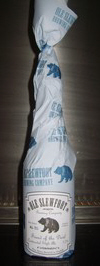 Ole Slewfoot Friend of the Devil Red Wing (5.1%) is John’s take on a Flemish sour red ale. It’s a burgundy colour with some pinkish head and quite a low carbonation, with a sharpish cherry note and a whiff of roses on a fruity, slightly woody aroma. The palate is only lightly sour – presumably through the use of an inoculated wild yeast – with chocolate, fruity malt and an irony tang appropriate to the style. A satisfying finish has tangy fruit, wood polish and a bit more chocolate. An intriguing beer – not a clone of the Belgian originals but recognisably in the style, and distinctive in its own right.
Friend of the Devil (7.7%) acknowledges a debt to strong golden ales of the Duvel variety in its name and a notable pear hint, but its deeper colour puts it into the amber camp. Aside from pear there’s malt and brown sugar in the aroma, and biscuity, fruity malt on the palate, which is slightly sugary, nutty and perhaps a touch musty. A touch of hops lifts a nutty, chewy finish, but overall the beer didn’t quite work for me.
The experimental Friend of the Devil Brett Version, dosed with Brettanomyces yeast and not tasted yet by John himself when he sent me the bottle, shifts the character of the base beer in an interesting way. This beer had a good condition with a champagne like fizz and that distinctive wet plastic brett aroma. A flowery, lightly biscuity and nutty palate had tangy acid balanced by firm malt, leading to a slightly figgy, chewy, toasty finish with lingering nuttiness and a touch of hops. An experiment worth pursuing.
To download BEER if you’re a CAMRA member, see http://www.camra.org.uk/page.aspx?o=beer.
To find out more about CAMRA membership, see http://www.camra.org.uk/page.aspx?o=joinus.
Read more about these beers at ratebeer.com:
http://www.ratebeer.com/beer/ole-slewfoot-red-wing-flemish-style-red-ale/138541/
http://www.ratebeer.com/beer/ole-slewfoot-friend-of-the-devil/138540/
An extended review of a beer featured as a new real ale in a bottle on the bottled beer review page in the February 2011 issue of BEER magazine, sent free every quarter to CAMRA members, who can also view it online. The magazine is additionally available in selected newsagents.
ABV: 8.5%
Origin: Lowestoft, Suffolk, Engand
Website: www.green-jack.com
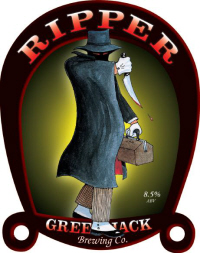 Green Jack Ripper One of very many great breweries in the east of England, Green Jack is a well appreciated, award winning and commercially savvy cask ale brewer that’s recently started doing some interesting things with bottles. Tim Dunford and his wife and business partner Lee haven’t had an entirely smooth ride – their first brewery in Oulton Broad ceased trading eight years after opening in 1993, but they were soon back with a new one, behind Lowestoft’s Triangle Tavern, which claims to be the most easterly real ale pub in England. Early in 2009 they expanded to a much bigger standalone plant and are now one of the largest brewers in the region.
Tim has long been unafraid to offer stronger beers in cask besides the session regulars – his Ripper (8.5%) strong ale, a barley wine with a deliberate nod to Belgian tripels, is a renowned local award winner, and Baltic Trader Imperial Stout (10.5%) also appears intermittently on the bar. Both these are now available bottle conditioned in attractive 750ml flip top bottles with labels detailing not only the best before date but the dates when the beer was brewed and bottled.
Ripper seems to have taken to the bottle best. It’s a hazy blond beer with a fine orangey-white head and a citric, slightly minerally and sulphury aroma, tones of burnt rubber mixing incongruously with peaches and cream. A firm but dry palate has a grainy, roast quality with a herbal hint – I’m not sure if coriander was actually used but there’s a definite Belgian herbal flourish — and a distinct note of apricot jam. It’s fruity and very spicy, leading to a dry finish with more apricot, obvious alcohol and complex shifting spice textures. Rooty hops finally emerge on a long development – the brewery prides itself on generous use of whole hop cones and while there’s plenty of hop character here, it’s intriguing rather than overstated. Very decent.
To download BEER if you’re a CAMRA member, see http://www.camra.org.uk/page.aspx?o=beer.
To find out more about CAMRA membership, see http://www.camra.org.uk/page.aspx?o=joinus.
Read more about this beer at ratebeer.com: http://www.ratebeer.com/beer/green-jack-ripper/37914/
|
|
