A sample text widget
Etiam pulvinar consectetur dolor sed malesuada. Ut convallis
euismod dolor nec pretium. Nunc ut tristique massa.
Nam sodales mi vitae dolor ullamcorper et vulputate enim accumsan.
Morbi orci magna, tincidunt vitae molestie nec, molestie at mi. Nulla nulla lorem,
suscipit in posuere in, interdum non magna.
|
Toer de Geuze 2011
ABV: 5.7%
Origin: Wambeek, Vlaams-Brabant, Vlaanderen
Website: www.detroch.be
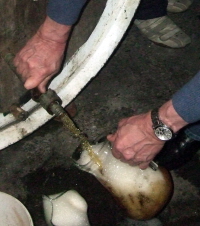 Lambic straight from the cask at De Troch, Wambeek Much of De Troch’s lambic ends up in its sweetened fruit beers which, if this rather fine example is anything to go on, is a great shame. Part of the pleasure of sampling it on the 2011 Toer de Geuze was watching a brewery worker expertly catch the stuff in a jug as it gushed in golden gouts from a big oak vat. A chalk mark on this gave the brewing date as 22 January 2009.
The beer was pale golden and lightly bubbly, with a nutty dried fruit note on the mellow aroma. The wild and fruity citric palate had definite notes of pineapple and other tangy fruits alongside vanilla. A tangy finish spread across the tongue with tart orange flavours, lingering long with fleeting notes of nuts and apricot. It was my first lambic of the day, and a very good start.
Read more about this beer at ratebeer.com: http://www.ratebeer.com/beer/de-troch-oude-lambik/24075/
First published in Beers of the World October 2008
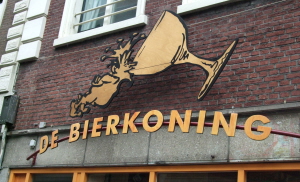 De Bierkoning bierwinkel, Amsterdam Amsterdam has always had a good line in pubs with its celebrated bruine cafés oozing traditional gezelligheid (cosiness, homeliness). But a couple of decades ago you’d have been lucky to find anything other than a foaming but bland Dutch pils with which to soak up the atmosphere. Nowadays the range of beers is massively improved, and, as befits the capital of a trading nation, they are sourced from all over. In fact Belgian specialities can be easier to find than the products of the emerging crop of Dutch micros.
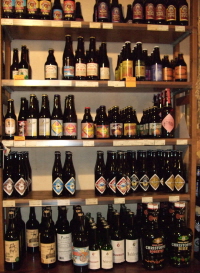 Binnen de Bierkoning: een grote assortiment Nederlandse bieren City centre beer shop De Bierkoning – the Beer King – has been widening the tastes of Amsterdammers since 1985. Former market trader and sound engineer Jos van Niele opened it out of frustration with the difficulty of buying speciality beer locally. Jos is still in charge, and now employs a staff of three. Though no longer the only specialist beer shop in the city, it’s the biggest and best-established and, with its impressive and well-chosen range and enthusiastic and expert customer service, it’s arguably one of the best in Europe.
Around 900 different beers are cleverly shoehorned into a modestly-sized space, while leaving room to browse in a pleasant natural wood interior while filling up your attractive woven basket. Almost half are Belgian, with several rarities and aged beers, and a small downstairs area devoted to quality lambics. Brits and Germans get a good showing, and there are some well-chosen bottles from the USA, Czech Republic, Russia and elsewhere. But perhaps most impressive is the large range of Dutch specialities, from veterans like Brand and Gulpener alongside relative newcomers such as local brewer ’t IJ, which brews a special beer, Vlo, for the shop, and current international cult success De Molen.
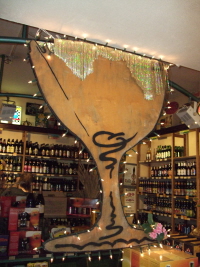 Een glas voor een koning gepast “We focus on specialities, not supermarket beers,” says Jos, “preferably from smaller brewers. The quality of Dutch microbrewers is improving – we’re particularly enthusiastic about the beers from De Molen right now. And we’ve commissioned another new beer ourselves, Labelle’s Chocoladestout (chocolate stout) from De Schans in Uithoorn, which I just tasted and found sublime.” There are shelves for seasonal beers – visit in the autumn and you’ll find a comprehensive range of Dutch and other boks – and preselected mixed cases. Then there’s around 300 different glasses, plus books, T-shirts and breweriana. Organised tastings can also be arranged.
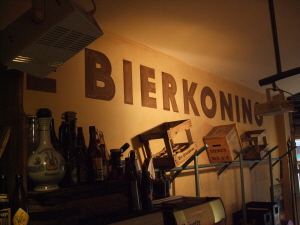 De Bierkoning, Amsterdam Like the beers, the customers come from far and wide including the US and Britain – as usual for cosmopolitan Amsterdam, English is fluently spoken. The shop enjoys a prime site a few paces from Damplein and, fittingly for a beer king, around the corner from the Royal Palace. As beer sellers go, this is one of the crown jewels.
Fact file
Address: Paleisstraat 125, 1012 RK Amsterdam
Phone: +31 (0)20 625 2336
Web: www.bierkoning.nl
Hours: Mon 1300-1900, Tues-Fri 1100-1900, Sat 1100-1800, Sun 1300-1800
Drink in? No
Mail order: Currently selected mixed cases and glasses only, though upgrade is planned. Email for delivery charges if outside Netherlands.
Manager’s favourites: “Hoppy beers, from blond to black”
Beer picks
- ’t IJ Speciale Vlo 7%, Amsterdam, North Holland. No half measures for this house beer, a big, vivid golden ale with sweetish body, bready yeast, bitter hop and powerful coriander notes.
- De Molen 1914 Porter 5.8%, Bodegraven, South Holland. Limited production authentic chocolate biscuit and roast porter from restlessly inventive rising international star.
- St Christoffel Blond 5%, Roermond, Limburg. One of the world’s best pale lagers, unfiltered, unpasteurised, long, dry and packed with peachy malt and intoxicating hops.
- Schans Van Vollenhoven’s Extra Stout 7%, Uithoorn, North Holland. Blackcurrant, smoky bacon, malt loaf, nuts, caramel and charred wood mix in a complex and welcome revival of a speciality abandoned by Heineken.
- Schelde Schoenlappertje 6.5%, Bergen op Zoom, North Brabant. “The only genuine Dutch fruit beer”: real blackcurrants from South Beveland add red tinge and a minty Cabernet Sauvignon tartness to a juicy, malty amber ale.
Beer sellers: De Bierkoning
ABV: 5%
Origin: ’s-Gravenpolder, Zeeland, Netherlands (now at Meer, Antwerpen, Vlaanderen)
Website: www.scheldebrouwerij.nl
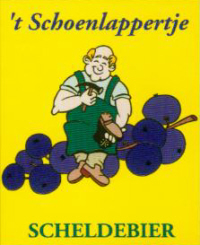 Scheldebrouwerij 't Schoenlappertje Scheldebrouwerij is that rare thing, a microbrewery that moved countries. Founded by home brewers Kees van Loenhout and Peter van der Eijnden in 1994, it was originally in Zeeuwse-Vlaanderen, a detached southern exclave of the Dutch province of Zeeland with Belgium to the south and the Schelde estuary to the north, thus the name. Establishing a good reputation for inventive and consistent beers, it was in need of more space by 2008, and the most convenient option turned out to be over the border at Meer in Belgium, in the former premises of the old established but now defunct Sterkens brewery. The fact that the bottles could now carry the legend ‘Belgisch bier’ was another bonus given the cachet of Belgian brewing in the Dutch market.
My notes on Schoenlappertje are based on a Dutch-brewed version from before the move. It’s brewed with blackcurrant juice and natural blackcurrant flavour, pale and caramalts, candy sugar and hops. The blackcurrants are sourced from Zuid-Beveland on the north bank of the Schelde, where 75% of Dutch production of the fruit originates, and where the old dialect term for these tart little gems is ‘schoenlappertje’ – ‘little cobbler’.
The blackcurrants have given this bottle conditioned beer a ruby red colour with a lowish white head and a Ribena-tinged candied aroma with a light malty note. The palate is rounded with sweetish toffee malt well balanced with blackcurrant tartness and a well-judged note of hops. On the swallow the blackcurrant flavours are reminiscent of Cabernet Sauvignon wine, and there’s a long finish with a splash of herby hops and minty toffee. Boasting a genuine local connection to the brewery’s origin, this is a contemporary fruit beer worth trying.
Read more about this beer at ratebeer.com: http://www.ratebeer.com/beer/scheldebrouwerij-t-schoenlappertje/6936/1/2/
Beer sellers: De Bierkoning
ABV: 5.8%
Origin: Bodegraven, Zuid-Holland, Netherlands
Website: www.brouwerijdemolen.nl
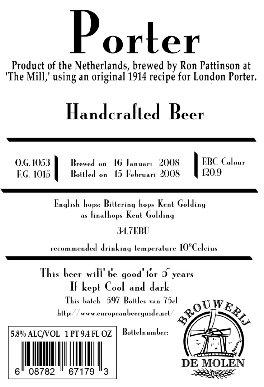 De Molen 1914 Porter Another of the impressive range of porters and stouts to have emerged from under the “ark dove” windmill in Bodegraven, this limited edition beer was produced in 2008 by brewer Menno Olivier and beer historian Ron Pattinson, based on a Whitbread recipe from 1914 – the last year of the glory days of stout and porter brewing in London before World War I drove down gravities and left the style terminally pigeonholed as an old man’s drink.
Brewed with pale, brown and black malts and sugar and hopped with East Kent Goldings, the beer is very dark brown with an amber tinge and a lowish fawn head. A smooth, quite light chocolate, fruit and roast aroma heralds a full malty chocolate milk palate, a little thin and gently tangy with smoke, biscuits and fleeting herbs. A gently roasty finish has sappy fruit and more chocolate. Overall a well-made beer with a straightforwardness that strengthens its claim to authenticity.
Ron’s joy at the opportunity to recreate this beer and its stronger sister SSS Triple Stout should inform your joy in drinking them, if you can still track them down. See his blog post at http://barclayperkins.blogspot.com/2008/01/joy-unbound.html.
Read more about this beer at ratebeer.com: http://www.ratebeer.com/beer/de-molen-1914-porter/84684/
Beer sellers: De Bierkoning
ABV: 7%
Origin: Amsterdam, Noord-Holland, Netherlands
Website: www.brouwerijhetij.nl
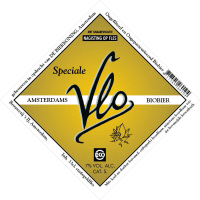 't IJ Speciale Vlo Amsterdams Biobier From one of the Netherlands’ best established and most consistently good micros, this is a decidedly local beer, commissioned from ’t IJ on Amsterdam’s Funenkade by the Bierkoning beer shop by the Dam, not more than two kilometres away. The name Vlo means ‘flea’ but also apparently stands for ‘Vodden, Lompen, Ongeregeld’ – ‘Rags, more rags, irregular.’ That last word describes its availability on draught at the brewery’s tasting room, but it’s always on sale bottle conditioned at the shop. These days all the ingredients are organic, including judiciously deployed coriander.
There’s nothing raggy or fleabitten about this rich amber, heavily sedimented beer with its creamy off-white head. A sweetish, yeasty and orangey aroma has notes of coriander and toffee, while the smooth brown sugar palate is soon dried by a complex mix of hops and medicinal herbs. Following a smooth swallow there are more hops and bitter herbs over barley sugar and spiced orange in the finish. A big and vivid beer that’s perhaps worth ageing a couple of months to round off its raw edges.
Read more about this beer at ratebeer.com: http://www.ratebeer.com/beer/t-ij-speciale-vlo/6060/
First published in Beers of the World August 2008
 Meadow Farm Shop, Tyndyrn No longer a land of keg-only pubs closed on Sundays, Wales is currently one of Britain’s most dynamic brewing regions. The nation’s cultural independence and distinctiveness has been boosted further by devolution, including a renewed pride in its beer – whether from old-established independents celebrating their traditions, or the innovative new crop of small breweries springing from the hills and valleys of the mountainous principality. And many of them are finding that bottling plays an increasingly important role in the business plan, as craft-brewed beer complements other local produce in village shops and on market stalls for the pleasure and interest of visitors and residents alike.
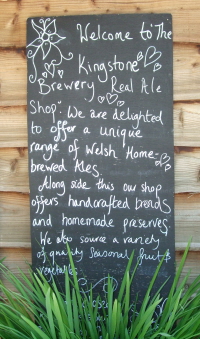 Meadow Farm Shop blackboard A good time, then, for someone to specialise in selling Welsh bottled beer, which is just what Edward Biggs and his wife Tori thought when considering options for expanding their Monmouthshire farm shop. They’d given up earning a living renovating property and opened Meadow Farm Shop as an outlet for their organic fruit and veg and homemade produce in 2004. Last summer they added The Welsh Beer Shop, and soon afterwards heard one of their suppliers, Kingstone Brewery in nearby Whitebrook, was to close. Edward, a former home brewer, seized the opportunity to buy the name, recipes and plant, which is now back in action at Meadow Farm.
Around a dozen other brewers from all over Wales are featured besides the extensive Kingstone range: Breconshire and Ffos y Ffin are best sellers but they also stock the rare and delightful Jolly Brewers beers, Otley’s stylish products, Conwy, Cwmbran and several others, mainly Real Ale in a Bottle. Beers can be enjoyed at the café and beer garden and there are occasional tastings.
Shop and brewery occupy an idyllic setting in an Area of Outstanding Natural Beauty, halfway up the richly wooded western slope of the Wye valley, just off the A466 north of Tintern and almost literally a stone’s throw from England. A two-hourly bus between Chepstow and Monmouth stops at the bottom of the drive. The Wye Valley Walk passes close by, running through the gorgeous riverside Old Station countryside site to Tintern village with its haunting ruined abbey. Offa’s Dyke Path traces the dramatic hillside of the English bank of the Wye opposite. I visit on a fine June day when the mouthwatering smell of a fired-up mash tun mingles with the scent of wild garlic from the woods. “It’s lovely working in a place like this,” sighs brewery worker Mark Gardner with feeling.
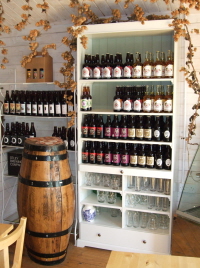 Inside Meadow Farm Shop “More and more people are turning to real ale, which has helped the growth of small producers,” says Edward. “We now have such diversity and the quality is fantastic, though some are a challenge to track down – I go straight to brewers themselves but even then it’s hard to get hold of some that are produced in very small quantities. We’re helping set up the Association of Welsh Independent Brewers to help with the overall promotion and distribution of Welsh ales, so there are exciting times ahead.”
Fact file
Address: Meadow Farm, Tintern, Chepstow NP16 7NX
Phone: +44 (0)1291 680111
Web: www.kingstonebrewery.co.uk
Hours: Mon-Wed, Fri-Sat 0900-1600
Drink in? Yes
Mail order: Only Kingstone’s own beers
Manager’s favourites: Kingstone Classic, Humpty’s Fuddle; Jolly Brewer Cwrw Du
Beer picks
- Breconshire Red Dragon 4.7%, Aberhonddu, Powys. Distinctive and unusual cherry red beer that nods to Tyneside browns and Irish reds: nutty, twiggy, dry and finally spicy.
- Conwy Cwrw Castell 3.8%, Conwy. Refreshing amber bitter with a Cascade hop flourish and spicy ginger and blackcurrant and rounded bitterness over classic biscuity malt.
- Jolly Brewer Taid’s Garden 4.3%, Wrecsam. One of several delightful beers from tiny brewery linked to homebrew supplies shop: pale, flowery, grassy, aromatic and citric refresher.
- Kingstone 1503 4.8%, Tyndyrn, Sir Fynwy. Chestnut brown fruity, chewy and smoky beer with sappy chocolate finish, adapted from a 1503 recipe.
- Otley O8 8%, Pontypridd, Rhondda Cynon Taf. Moist apple cake, sherbet, orange liqueur and a rooty hop finish in a vivid but well-balanced barley wine.
 The Wye Valley landscape near Kingstone Brewery -- brewing inspiration.
Beer sellers: Meadow Farm Shop
ABV: 3.7% and 4.3%
Origin: Wrecsam, Cymru
Website: www.jollybrewer.co.uk
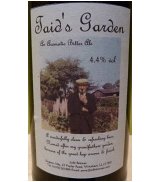 Jolly Brewer Taid's Garden Beside the better known likes of BrewDog, Dark Star and Thornbridge in the first rank of innovative and top quality British microbreweries are a handful of names that, despite limited production and distribution, deserve to be much more widely known and celebrated than they are. One of them is brewster Pene Coles at the Jolly Brewer brewery and brewing supplies shop in the North Wales town of Wrexham: I don’t think I’ve tasted one of her beers that I haven’t enjoyed. Both those below are bottle conditioned.
Cwrw du, which simply means ‘black beer’ in Welsh, is a lovely dark mild, near black in colour with a good, thick head that’s a notably deep shade of mid brown. The smooth and tangy minerally aroma has a touch of roast, while a thick roasty dark malt loaf and vine fruit palate has good cereal and some savoury touches — a salty, smoky tang with perhaps a pinch of oregano. The mellow finish lingers with caramel, liqourice, more malt loaf and subtle roast.
Taid’s Garden is a beautifully refreshing and flowery summer ale with a little inspiration from lager brewing, made with pale and pilsner malts and Goldings, Fuggles and Hallertau hops. It pours a hazy straw colour with a foamy white head. There’s a distinct geranium tinge to an aroma which also yields grass, minerals, honeysuckle and cream. A crisp grassy palate has lemon barley water notes and aromatic hops, reminiscent of elderflower, and the beer dries on the finish to leave deep pepper hop tones and soft lemon on the tongue. It’s named after Pene’s grandfather’s garden, Taid being a dialect word for Grandad.
Read more about these beers at ratebeer.com:
http://www.ratebeer.com/beer/jolly-brewer-cwrw-du/92235/
http://www.ratebeer.com/beer/jolly-brewer-taids-garden/107846/
Beer sellers: Meadow Farm Shop
ABV: 4.5%, 4.8% and 58%
Origin: Tyndyrn, Sir Fynwy, Cymru
Website: www.kingstonebrewery.co.uk
 Kingstone Classic Bitter I tasted several bottle conditioned Kingstone beers during a visit to the adjoining Meadow Farm Shop in the breathtakingly beautiful Wye Valley for a Beers of the World piece in 2008. There’s more background to the brewery in my review of Kingstone Gold, but these beers were also notable either as favourites of the brewery owner or ones that impressed me.
Award winning Classic Bitter is an orange-amber beer with a slightly bubbly off-white head made from pale and crystal malt, hopped with four quite distinctive hop varieties: Northern Brewer, Bramling Cross, Cascade and Willamette. The aroma is fresh and creamy but relatively restrained with citric and malt notes. A dry and tangy palate has cracker-like malt and marmalade, with a slight burnt rubber touch. A note of roasty crystal makes its presence felt on a biscuity dry finish with long lasting peppery hops turning quite earthy and rooty. A decent, well-made bitter with an unusual hop profile.
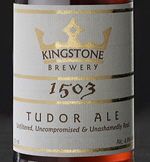 Kingstone 1503 Tudor Ale
1503 Tudor Ale commemorates the date of the first manuscript reference to the use of hops in British brewing, as recorded by Richard Arnold. The idea that this old ale closely resembles something Arnold might have brewed is surely fanciful, but 1503 tastes pretty good in its own right, and is certainly old fashioned in inspiration. Brown and smoked malts, used alongside pale and chocolate malts and some malted wheat and oats, recall the darker, smokier malt flavours of centuries past, while the single hop is the old established Fuggles variety. The result is chestnut brown, with a thick fawn head and a roasty burnt toffee and fruit aroma. The palate is dry but slightly treacly, with orange and apple notes, slightly musty yeast flavours, burnt rubber, smoke, lemon squash and caramel notes, but remains light in texture given the vivid flavours. There’s ripe orange on a juicy, slightly nutty and very moreish finish that develops late chocolate hints.
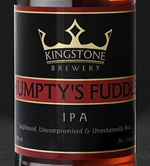 Kingstone Humpty's Fuddle IPA Humpty’s Fuddle, previously known as Humpty Dumpty’s Downfall, is the brewery’s fair enough version of an old-style strong IPA, again hopped only with Fuggles, its pale malt bolstered with crystal malt and maize. This mid-amber beer has a thick and creamy pale fawn head and a yeasty ,malty aroma with a touch of banana. A firm pale malt palate has orange notes, peach syrup and oily spices. There are more orange and spice flavours in the finish which is slightly vinous, distantly reminiscent of Orval, with fennel and peach flavours and a late sprinkling of hops.
Read more about these beers at ratebeer.com:
http://www.ratebeer.com/beer/kingstone-classic-bitter/58236/
http://www.ratebeer.com/beer/kingstone-1503-tudor-ale/79622/
http://www.ratebeer.com/beer/kingstone-humptys-fuddle/104672/
London’s Best Beer, Pubs and Bars updates
Central London – Borough
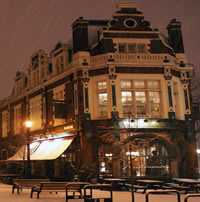 The Roebuck, London SE1 4YG Contemporary pub
50 Great Dover Street, SE1 4YG
T (020) 7357 7324
W http://theroebuck.net
Open 1200-2400 (0100 Fri & Sat; 2300 Sun). Children welcome until 2100
Cask beer 3 (Purity, Sambrook’s), Other beer 6 keg (Meantime and imports), 5 bottles
Food Short but imaginative gastro/pub grub menu, Outdoor tables on small public square
Tue quiz, Thu poetry night, big screen sport in separate room, functions, board games
This big former Truman pub right on the historic highway from the Borough to the Kent Coast has benefitted from a makeover of its already favoured wedge shaped site: the junction of Great Dover Street, Trinity Road and Falmouth Road was converted a couple of years back into a small but pleasant public space open only to walkers and cyclists. The pub, owned by the same small independent pubco that also administers the Montpelier in Peckham, still looks fresh and attractive from an arty but comfortable 2003 reinvention: all cream and maroon with iron pillars, an island bar, a mix of seats, retro lampshades, eccentric pictures and a rear lounge dominated by a portrait of Bambi’s mum (actually a doe and not a buck, and portrayed by Disney as a white tailed deer rather than a roe, but never mind).
The cask beer range has stablised on Purity Mad Goose and Pure Ubu and Sambrook’s Wandle, though may occasionally change. Three Meantime keg taps dispense Helles, Wheat and a changing seasonal, while three quality specialist imported lagers — Budvar dark, Stiegl Goldbräu and Schremser Roggen — add to the range alongside Anchor Steam and Sierra Nevada Pale in bottles. The menu has a bigger choice than usual for veggies — celeriac rösti and a three bean stew with polenta and walnut tapenade when I looked — as well as rare breed sausages, burgers, salads and the like. A big upstairs lounge can be booked for private parties, and on Thursdays hosts one of London’s top performance poetry nights, Bang said the gun, billed as “poetry not ponce”. A worthy entry in the outer reaches of London’s beery centre of gravity.
National Rail London Bridge Underground Borough, London Bridge Cycling Links to NCN4, CS5, 7, LCN+ Deptford, Peckham Walking Link to Jubilee Greeway, Thames Path
 Jonathan Williams (left) and James Bull attending Friday night's kiss-in. Pic: BBC For all the undeniable advances of the past few decades, just how comfortable can beer lovers who happen not to be heterosexual really afford to feel when out enjoying a drink in a “straight” pub, even in a big and cosmopolitan city like London? This question has been on my mind over the past few months as I’ve been putting together my forthcoming guidebook to London beer, but the news over the past few days that two gay men had been expelled from a Soho pub for kissing each other has brought it sharply into focus.
I ended up putting two gay pubs in the book (The CAMRA Guide to London’s Best Beer, Pubs and Bars — see under London above) because I was keen to reflect the diversity of London’s pub culture as much as I could as a secondary mission to celebrating good beer. As most LGBT beer fans will know, London’s gay pubs aren’t exactly overflowing with craft beer, but with the help of an old friend I found a couple I was happy with. The last thing I wanted to do was discourage anyone of any sexuality from visiting any of the other places in the book and enjoying the true diversity of London’s beer.
Introducing the first of my “out” choices, I pointed out the dearth of gay pubs serving good beer, and commented: “Perhaps things will change if the development of a more youthful image for good beer continues, or perhaps as attitudes have grown ever more tolerant and people of all sexualities feel more relaxed in mixed company, there’s no need for a fine range of ales to be tagged with a rainbow flag. I hope that lesbian and gay readers, like me, will feel able to enjoy a beer in any place in this book.”
I confess to feeling slightly uncomfortable as I wrote these words. Yes, as a gay man, I do feel able to enjoy a drink in pretty much every decent beer outlet I’ve found in London, and certainly everywhere in the book. But I’m not so sure I’d be happy to express my affection openly to my partner in all of them, in the same way that straight customers do without a thought. A handful of venues spring to mind in the book where I’d be extremely wary of doing this if I wanted a peaceful drink — particularly some places that I admire in all sorts of other ways for being unpretentious, old fashioned local boozers of the sort that are becoming increasingly rare. I contemplated reflecting some of this in the book, but concluded it wasn’t entirely appropriate, especially considering the already lengthy word count. And I could trust most of my LGBT readers to pick up potential issues anyway — we’re all too used to being sensitive and discreet.
Then, the day after I signed off the final text, the news of the John Snow incident emerged to drive home the point. For those who haven’t followed the story, on Wednesday evening (13 April 2011) James Bull and Jonathan Williams, both in their 20s, went out on a first date in Soho. Though in an area full of gay venues, they opted instead to visit the John Snow, a smallish and fairly standard Samuel Smith pub in Broadwick Street, for the sort of reasons that anyone might choose a pub — they liked the cider stocked at Sam’s pubs and appreciated the generally cheap prices. But when the pair started kissing — in a relatively chaste and inoffensive way, according to bystanders — they first attracted complaints from a man drinking at a nearby table who claimed to be the landlord, and were then asked to leave by a female staff member, who accused them of behaving obscenely.
In a fine example of how a small incident affecting hitherto obscure individuals can quickly take on much wider resonance in our socially networked world, the two men’s unpleasant experience became a news story after Jonathan’s disgruntled tweet about it “went viral”, eventually being picked up by the BBC and the Guardian. Prominent gay rights campaigner Peter Tatchell offered his support. On Friday a hastily organised kiss-in at the pub attracted 300 people, and messages of support from a variety of groups including even the Conservative party gay group. Predictably, the pub played safe and closed its doors, so the event took place outside. Another has been called for Thursday.
Journalists’ sympathies for the couple were bolstered when approaches to the pub itself for comment were met with a hostile response, culminating in threats to report people for harassment if they continued to call. The landlord allegedly told one enquirer unapologetically that he could kick people out if he wished. The pub’s owners, fiercely independent and slightly eccentric Yorkshire brewery Samuel Smith, have also refused to comment so far — no surprise to beer writers as they’re well-known for their lack of media friendliness, and are no doubt all at sea in trying to cope with this unwanted attention. Their reaction contrasts with that of pub owning company Punch Taverns, who were involved in a comparable incident last summer when members of a Labour Party LGBT Group were refused service at the Greencoat Boy in Westminster — the pubco quickly apologised.
The legal situation is interesting. Licensees do indeed have the discretion to exclude anyone from their premises, but they musn’t discriminate on the grounds of sexuality in the provision of services. If a case was brought under the Equality Act, the pub would have to prove it treated heterosexual couples in the same way. And while it’s possible staff are equally squeamish about snogging straight couples, it’s rather unlikely.
In some respects this incident seems relatively minor — there are arguably more pernicious forms of discrimination and certainly much more serious outcomes of individual homophobia, such as the brutal murder of Ian Baynham in Trafalgar Square in October 2009. But the way James and Jonathan were apparently treated in the John Snow, and the discomfort I felt when writing the lines quoted above, demonstrate in a very significant and intimate way just how far we still have to go to achieve true equality in our everyday lives.
Expressing affection in public, within reasonable limits, is something that heterosexual people take for granted, and quite rightly, as the affectionate bonds we form with others are at the core of our humanity. For gay men, and others whose relationships don’t conform to the traditional stereotypes, it’s constantly in the back of our minds that such an apparently natural act could provoke hostility and even violence. Seeing this demonstrated in the apparently convivial atmosphere of a pub selling craft beer sadly reminds me that, no matter how much as a gay man I value beer and pubs, I remain an emotional second class citizen in most of them, forever feeling circumspect about things that others are openly able to express. And that’s why we still need places like the two gay pubs listed in my book.
Luckily I didn’t include the Snow in my book, but a couple of other Sam’s places are in there. I hope that James and Jonathan pursue their complaint against Sam’s as far as they can and hopefully exact at least an apology, which may discourage other places from behaving similarly. In the meantime, wouldn’t it be great if some of London’s many other “straight” pubs made a point of welcoming kissing couples of any gender? Particularly the ones that do good beer.
Read more about this story:
http://www.bbc.co.uk/news/uk-england-london-13103647
http://www.guardian.co.uk/uk/2011/apr/15/john-snow-kiss-in-london?INTCMP=SRCH
http://londonist.com/2011/04/gay-couple-removed-from-a-soho-pub-for-kissing.php
http://www.petertatchell.net/lgbt_rights/homophobia/pub-ban-on-gay-kisses-is-illegal-under-equality-laws.htm
|
|
